DbcultAccessing Vault...
Cult Review
Senior Film Conservator
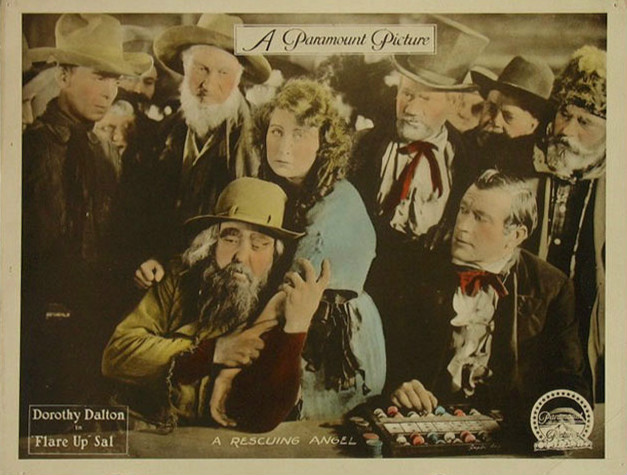
Step back into the silent era, where narratives unfolded through the sheer force of visual storytelling and the magnetic presence of its stars. Among the myriad of melodramas and social commentaries that graced the silver screen, J.G. Hawks’s 'Flare-Up Sal' emerges as a particularly potent distillation of human resilience and the burning pursuit of retribution. This is not merely a story; it is a primal scream against injustice, a cinematic testament to the indomitable spirit of a young woman who refuses to be silenced by the cruel machinations of a world stacked against her.
At its core, 'Flare-Up Sal' is an exploration of radical agency, a narrative that centers on a protagonist whose motivations are as clear as they are compelling. Dorothy Dalton, in a performance that must have crackled with an almost tangible energy, embodies Sal, a character whose very name suggests an explosive temperament, a readiness to ignite when provoked. Sal's world is one of stark contrasts, where the shadow of poverty looms large, and the promise of a fair shake seems perpetually out of reach. The film waste no time establishing the precariousness of her existence before plunging her into the crucible of personal tragedy: a profound wrong inflicted upon her father. This isn't some minor slight; it's a foundational blow, a betrayal that shatters the fragile equilibrium of their lives and ignites a righteous fury within Sal that will not be quenched.
Dalton's portrayal of Sal is a masterclass in silent film acting. Without the crutch of dialogue, she conveys a spectrum of emotions – the initial shock, the quiet grief, the simmering indignation, and finally, the hardened resolve – through her expressive eyes, her determined posture, and the subtle yet powerful gestures that define her every move. She is not a damsel in distress, nor is she a passive observer of her own fate. Sal is a force of nature, a woman driven by a singular purpose: to right the wrong done to her father. This quest is not born of abstract ideals of justice, but from a deeply personal, almost visceral need for balance, for a restoration of honor that has been brutally stripped away. Her path is a solitary one, marked by a steely determination that brooks no interference, no compromise.
What distinguishes 'Flare-Up Sal' is its unflinching depiction of a protagonist who actively confronts the forces arrayed against her. Sal's journey is a testament to the power of an individual will pitted against institutional or societal obstacles. The plot, deceptively simple on the surface, unravels into a complex tapestry of confrontation and perseverance. We witness Sal navigate a landscape populated by those who would obstruct her – whether through malice, indifference, or a misguided sense of duty. The film excels at building tension, meticulously crafting scenarios where Sal's intelligence and grit are tested at every turn. Her adversaries are not mere caricatures; they represent the systemic inequities and personal failings that often allow injustice to flourish unchecked.
The film’s narrative structure, though adhering to the conventions of its time, feels remarkably modern in its focus on character-driven motivation. Sal’s relentless pursuit is not haphazard; it’s a calculated campaign, even if fueled by intense emotion. She learns, adapts, and pushes forward, often relying on her wits and an innate understanding of human nature. This makes her a compelling figure, one whose struggles resonate beyond the specific details of her father's plight. Her fight becomes a universal symbol for anyone who has ever felt powerless against a larger, unfair system. In this regard, 'Flare-Up Sal' shares a spiritual kinship with films like 'Paid in Full', where characters grapple with the heavy cost of past transgressions and the complex nature of restitution, though Sal's journey is perhaps more overtly confrontational.
The supporting cast, including talents like Milton Ross, William Conklin, and J.P. Lockney, each contribute to the rich texture of Sal's world. While Dalton is undeniably the sun around which this cinematic system revolves, these actors provide the gravitational pull, the obstacles, and sometimes, the unexpected allies that shape Sal's trajectory. Their performances, communicated through exaggerated gestures and stark facial expressions typical of the era, paint a vivid picture of the societal fabric Sal must navigate. The antagonists, in particular, are crafted to embody the very forces of corruption and apathy that Sal is determined to dismantle, making her victories, however small, feel profoundly earned.
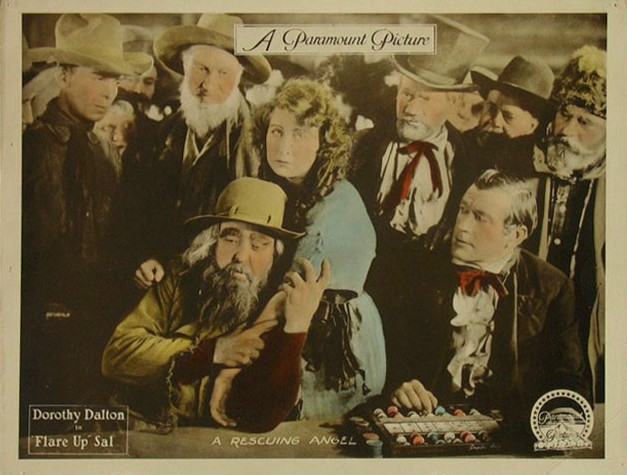
The visual language of 'Flare-Up Sal' is, as expected for a silent film, paramount. The director (J.G. Hawks is credited as writer, but the directorial hand is evident in the execution) expertly uses framing, shot composition, and rudimentary editing techniques to heighten dramatic impact. Close-ups on Dalton's face amplify her emotional states, allowing the audience to intimately connect with her anger, her sorrow, and her unwavering resolve. The settings, whether opulent interiors or stark, working-class environments, are employed to underscore the thematic divide between the powerful and the downtrodden, further emphasizing the uphill battle Sal faces. The use of light and shadow, a hallmark of early cinema, is employed to great effect, often mirroring Sal's internal struggle or the moral ambiguity of her situation.
Beyond the immediate narrative of revenge, 'Flare-Up Sal' touches upon broader themes that remain relevant even today. It's a commentary on class disparity, the inherent difficulty for the poor to find justice when pitted against the wealthy, and the often-corrupting influence of power. Sal's refusal to be intimidated or bought off speaks volumes about the integrity of the individual versus the compromises demanded by society. Her character embodies a fierce independence, a trait that, while celebrated in some cinematic heroines, often leads to isolation and extreme peril. This film, therefore, can be viewed as an early exploration of female agency, presenting a woman who takes her destiny into her own hands, challenging the passive roles often ascribed to women in earlier narratives. Her journey shares a certain spirit with the determined protagonists found in films like 'The Goose Girl', where a young woman overcomes immense obstacles through sheer force of will and a commitment to her truth, albeit in a more fantastical setting.
While 'Flare-Up Sal' might not possess the grand scale of an epic like 'Attila, the Scourge of God' or the intricate espionage of 'The Mysterious Mrs. Musslewhite', its power lies in its intensely personal and deeply resonant story. It’s a film that speaks to the universal desire for fairness and the visceral human response when that fairness is denied. The enduring appeal of such narratives is clear; audiences are perpetually drawn to stories of the underdog, especially when that underdog possesses the courage and conviction to challenge seemingly insurmountable odds.
The film’s historical significance also cannot be overstated. As a product of its time, it offers a window into the social anxieties and narrative conventions of the early 20th century. Yet, its themes transcend its era, proving that the human struggle for justice is a timeless one. Dorothy Dalton's performance, in particular, solidifies her place as a formidable actress of the silent screen, capable of conveying profound emotional depth and strength without uttering a single word. Her Sal is not just a character; she is an archetype, a progenitor of countless cinematic heroines who would later take up arms, metaphorically or literally, against the forces of oppression.
The absence of sound, far from being a limitation, forces a heightened appreciation for the visual artistry and the raw power of performance. Every gesture, every facial contortion, every carefully composed shot becomes a crucial piece of the narrative puzzle. This demands an active engagement from the viewer, an interpretation of visual cues that is both intellectual and emotional. In an age saturated with dialogue and elaborate soundscapes, revisiting a film like 'Flare-Up Sal' is a refreshing reminder of the fundamental elements of cinematic storytelling.
Ultimately, 'Flare-Up Sal' is more than just a historical curiosity; it is a vibrant, compelling drama that holds its own even against the backdrop of modern cinema. It is a story of fire and fury, of a spirit that refuses to be extinguished, and of a relentless pursuit of what is right. For those seeking a glimpse into the passionate heart of early American filmmaking, or simply a gripping tale of personal vendetta and ultimate triumph, 'Flare-Up Sal' remains an essential viewing experience. It’s a film that might have flickered into existence a century ago, but its flame still burns bright, illuminating the enduring power of a single, determined soul.
IMDb 7
1936
Community
Log in to comment.