DbcultAccessing Vault...
Cult Review
Senior Film Conservator
The Architecture of Vanity
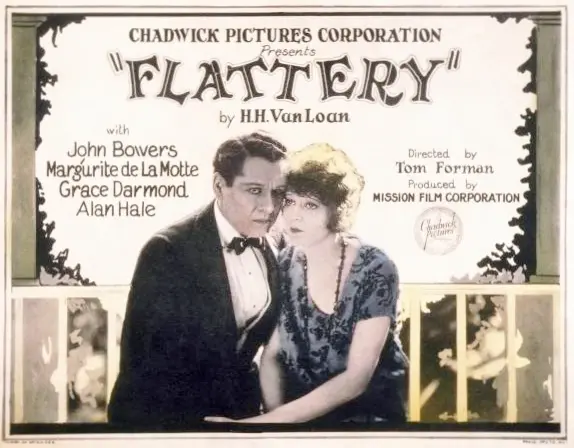
In the pantheon of silent-era morality plays, few films dissect the fragility of the masculine ego with such surgical precision as 1925's Flattery. Directed with a keen eye for social stratification, the film introduces us to Reginald Mallory, portrayed by John Bowers with a nuanced blend of earnestness and oblivious narcissism. Mallory is not a villain in the traditional sense; rather, he is a man whose internal compass has been demagnetized by a lifetime of coddling. This psychological predisposition makes him the perfect quarry for the predatory political machine that governs the unnamed metropolis of the story. Unlike the overt heroism found in The Lucky Devil, Mallory’s journey is one of internal erosion and external explosion.
The narrative tapestry is woven with threads of civic corruption that remain hauntingly relevant today. When a cartel of contractors and politicians selects Mallory as the City Engineer, they aren't looking for his expertise in stress-strain curves or fluid dynamics; they are scouting for a signature that can be bought with a compliment. The film brilliantly captures the seductive nature of being 'the man of the hour,' showing how easily technical probity can be traded for the warm glow of public approval. It is a cautionary tale that echoes the themes of social standing seen in A Very Good Young Man, though Flattery leans much harder into the systemic consequences of personal failure.
The antagonists of Flattery are not mustache-twirling caricatures but rather the personification of institutional rot. Alan Hale, an actor of immense presence, provides a grounding force to the film, navigating the murky waters of 1920s power dynamics. The conflict centers on the construction of a new City Hall—a project intended to be the crown jewel of Mallory's career but destined to be a hollow shell of substandard materials and inflated invoices. The tension arises not from a 'whodunit' mystery, but from the agonizing slow-motion car crash of Mallory’s reputation.
As Mallory signs away his integrity, the film utilizes visual metaphors of structural integrity to mirror his moral decay. The blueprints he approves are a map of his own spiritual bankruptcy. This focus on the 'behind-the-scenes' machinations of industry reminds one of the Danish classic Bag Filmens Kulisser, where the artifice of the setting is as important as the actors themselves. In Flattery, the City Hall is more than a building; it is a manifestation of the lie Mallory has been told about himself.
The dialogue—conveyed through sharp, economical title cards—illustrates the oily rhetoric used by the cartel. They don't threaten him; they 'appreciate' him. They don't bribe him with cash initially; they bribe him with the status of being an indispensable visionary. It is a masterclass in psychological manipulation that feels far more sophisticated than many of its contemporaries. The audience watches, frustrated and enthralled, as Mallory ignores the warnings of his peers, blinded by the incandescent light of his own ego.
The Anchor of Affection: Betty Biddle
Amidst the sea of sycophants, Marguerite De La Motte’s Betty Biddle serves as the narrative’s moral ballast. As the daughter of a legitimate construction magnate, she possesses the industry vernacular to see the fraud and the emotional intelligence to see the man behind the vanity. Her faith in Mallory is the film’s most poignant element. While the public turns on him with a ferocity reminiscent of the social ostracization in No Woman Knows, Betty remains steadfast.
Her role is not merely that of the 'supportive sweetheart.' She acts as the catalyst for Mallory’s eventual awakening. The chemistry between Bowers and De La Motte is palpable even through the flickering frames of silent celluloid. Their relationship provides the stakes for Mallory’s redemption; he isn't just saving his career, he is attempting to become the man Betty already believes him to be. This romantic tension is handled with a delicacy that avoids the saccharine traps of the era, providing a grounded counterpoint to the high-stakes political drama.
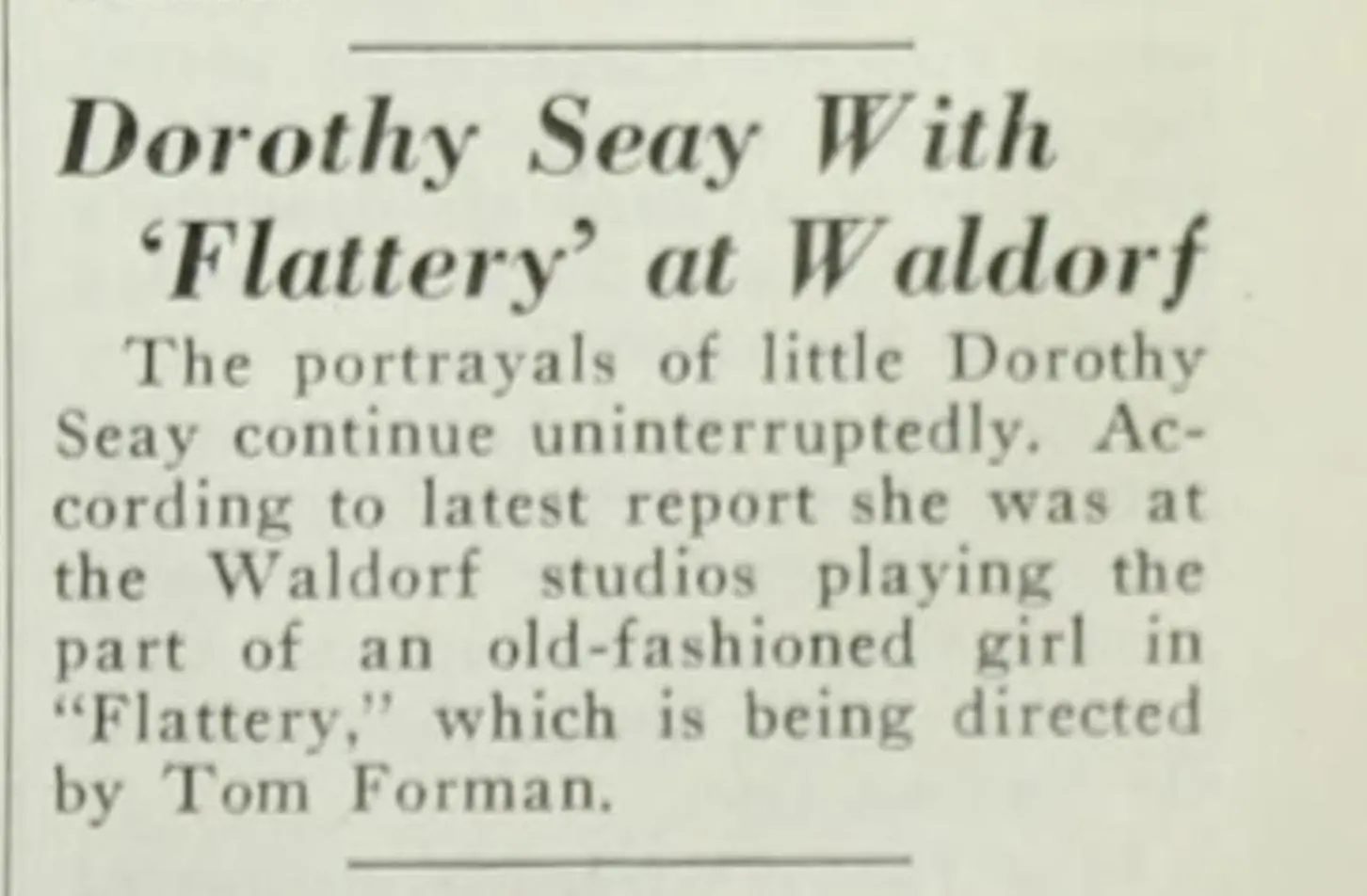
The final act of Flattery is a masterstroke of cinematic catharsis. Mallory’s realization of his own complicity doesn't lead to a quiet confession or a courtroom plea; it leads to a calculated, explosive reclamation of his identity. The decision to blow up the partially finished City Hall is a daring narrative choice. It serves as a literal demolition of the corruption he helped build. In an era where many films ended with a simple embrace or a convenient inheritance, Flattery opts for a violent, spectacular 'reset' button.
The technical execution of the explosion, for 1925, is a marvel of practical effects. It provides a visceral thrill that satisfies the audience's desire for justice while demonstrating Mallory’s expertise in the very field he almost disgraced. This use of technological destruction to expose a greater truth shares a spiritual DNA with the much later Sneakers, where the manipulation of systems is the primary weapon of the protagonist. However, here, the stakes are etched in stone and dynamite rather than silicon and code.
Before the dust settles, Mallory produces the documentary evidence—the receipts of his own vanity and the cartel's greed. This double-pronged attack on his enemies shows a character who has finally matured. He has moved from being a man who is 'moved by others' to a man who 'moves the world.' The legal victory ensures the villains are incarcerated, but the physical destruction of the building ensures that the stain of their work is erased from the skyline. It is a total victory, albeit one achieved through the ashes of his initial failure.
When examining Flattery against the backdrop of its peers, its unique flavor becomes even more apparent. While Pagan Passions explores the primal urges that drive men to ruin, Flattery focuses on the more subtle, civilized urge to be liked. It is perhaps a more terrifying prospect because it is so relatable. Most of us will never be tempted by 'pagan' extremes, but all of us are susceptible to a well-placed compliment.
Furthermore, the film’s exploration of the 'honest man turned crooked' trope is handled with more nuance than in A Prince in a Pawnshop. In Mallory, we see a man who is genuinely confused by his own fall from grace. He didn't set out to be a villain; he simply lacked the ego-strength to say no to the siren song of adulation. The film’s resolution suggests that honesty is not just a state of being, but an active, sometimes destructive, force that must be fought for.
The inclusion of Alan Hale and John Bowers ensures that the performances carry a weight that transcends the silent medium. Bowers, in particular, excels at portraying the 'dawning realization'—that moment when the fog of flattery clears to reveal the precipice he is standing on. It is a performance that should be studied by anyone interested in the transition of acting styles from the stage-theatrics of the early 1910s to the more psychological realism of the late 1920s.
Visually, Flattery utilizes the grand scale of 1920s urban development to create a sense of awe and impending doom. The shots of the rising City Hall are framed to feel oppressive, a looming shadow over Mallory’s conscience. The lighting often casts Mallory in bright, artificial highlights when he is being praised, contrasting with the cold, hard shadows of the construction site where the reality of his compromise lives. This visual storytelling is as effective as the complex plot of The Carpet from Bagdad, using the environment to dictate the emotional tone.
The editing during the climax is particularly noteworthy. The rhythmic cutting between the fuse burning and the faces of the corrupt officials at a celebratory banquet creates a mounting sense of dread and excitement. It is a primitive but perfect example of parallel editing that heightens the narrative impact. The film understands that for a story about 'flattery' to work, the ending must be as blunt and honest as possible. There is no flattery in an explosion; there is only the truth of physics.
In the broader context of 1925 cinema, Flattery stands out as a sophisticated work of social commentary. It doesn't just ask us to root for the hero; it asks us to examine why we want to be liked and what we are willing to sacrifice for that feeling. It is a film that rewards multiple viewings, as the subtle manipulations of the cartel become clearer once the viewer knows the outcome. It is a testament to the writing of H.H. Van Loan that the script feels so tight and the character motivations so clear, even without the benefit of spoken dialogue.
Ultimately, Flattery is a cinematic cornerstone that bridges the gap between the moralistic fables of the early silent era and the complex noir-inflected dramas that would follow. It remains a vital piece of film history, reminding us that the most dangerous lies are the ones that tell us exactly what we want to hear. Whether compared to the grand historical scale of The Battle of Jutland or the intimate character studies of the time, Flattery holds its own as a compelling, explosive, and deeply human story.

IMDb 5.2
1933
Community
Log in to comment.