DbcultAccessing Vault...
Cult Review
Senior Film Conservator
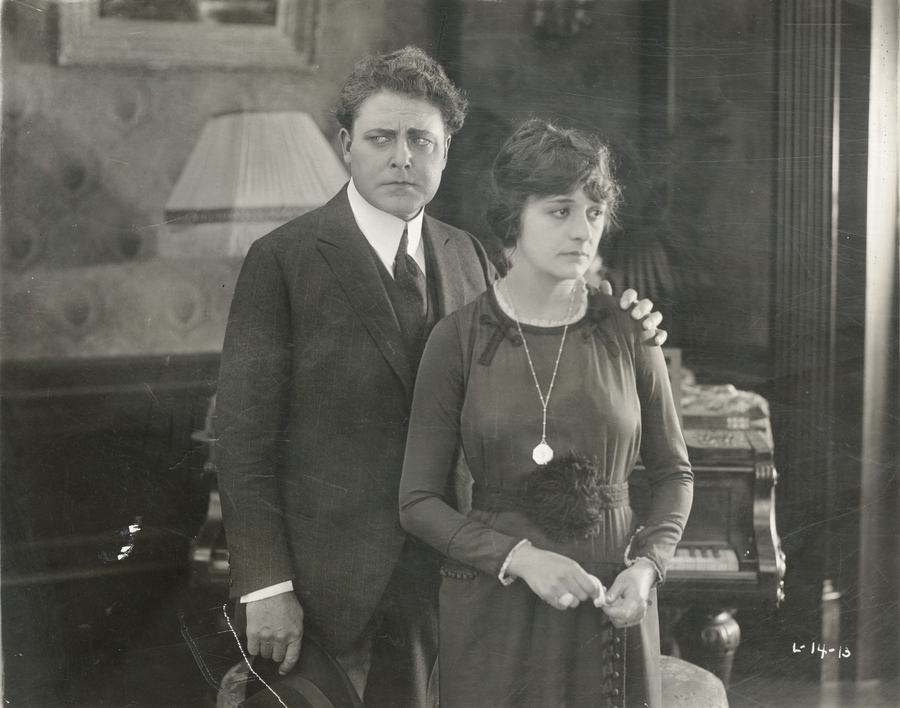
Imagine, if you will, a chandeliered salon in 1916 Manhattan: marble busts of Caesar glare down while tycoons in tails barter empires between oysters and absinthe. Into this gilded menagerie strides Robert Wayne—William Farnum’s shoulders cutting the silhouette of a modern colossus—his smile a currency more potent than the gold certificates in his vault. Yet within three reels, the same man will crouch inside a French barn, mud clotting the creases of a uniform that smells of someone else’s death. That vertiginous plummet from boardroom Olympus to trench-warfare Hades is what makes For Freedom a forgotten vertebra in the spine of silent cinema.
On the surface, Florence Margolies’s scenario obeys the serial cliff-hanger grammar of Saving the Family Name: a woman’s honor held hostage, a proxy vote mislaid, a courtroom verdict slamming shut like a vault door. But peer closer and you’ll spy a second parchment beneath—inked with the existential dread that would soon gorge on Hemingway’s generation. Wayne’s calamity is not fate but finance; his nemesis, Howard Stratton, is less a mustache-twirling cad than the embodiment of market volatility, the panic made flesh. When Stratton spirits Edith away, it’s not libido but leverage—he needs Wayne absent from the shareholder conclave the way a gambler needs his mark distracted while the deck is shaved.
The resulting trial sequence—shot almost entirely in chiaroscuro close-ups that predate von Stroheim’s Greed by a year—feels like paging through a ledger written in gunpowder. Faces loom, half-lit, mouths twitching between confession and perjury. Farnum lets his right eyelid flutter exactly thrice when the verdict is read; in that micro-gesture you can read every industrialist who ever discovered that stock certificates provide no immunity against the penitentiary.
Here is where most silent melodramas would pivot to a prison-break set piece. Instead, For Freedom detours into a bureaucratic antechamber where a government envoy offers Wayne parole contingent on enlistment. The scene is lit like a Reformation chapel—stained-glass light shards across a scarred table—and the quill that signs the enlistment papers might as well be a relic, sanctifying the merger of penology and patriotism. America, still a debtor nation in 1917, needed bodies more than it needed justice; the film has the audacity to admit it.
Cut to the front: cinematographer-co-director E. Lloyd Sheldon opts for handheld, jittery long shots that anticipate All Quiet on the Western Front. Shells burst like champagne corks from hell; the grain of the surviving 35 mm swarms with emulsion cracks that resemble lice. In this maelstrom Wayne, the disgraced mogul, becomes a foot-slogging Everyman, hauling a wounded comrade across no-man’s-land while the intertitle card—lettered in the same font used for the earlier stock certificates—reads: “Shares in the only venture that never deludes—Brotherhood.” The irony is so caustic it could etch steel.
Anna Lehr’s Mary Fenton arrives as more than a Salvation Army lass with a Band-Aid lip. In her first close-up, Sheldon backlights her so that her hair becomes a solar corona; she steps into the hospital tent and the entire frame temperature rises, as though celluloid itself blushes. Their courtship is conducted via a borrowed hardcover of A Shropshire Lad; pages ripped out, folded into paper boats, floated across a field hospital washbasin. Each boat bears a stanza, each stanza a promise that love, unlike stock, appreciates when waterlogged.
Yet Margolies’s script refuses to let romance resolve the narrative. Mary’s final gift to Wayne is not a hand in marriage but a mirror—a compact whose cracked silvering reflects his face fragmented into a dozen shards. “You’ve been looking for someone to forgive you,” her intertitle intones, “but the face you need is your own.”
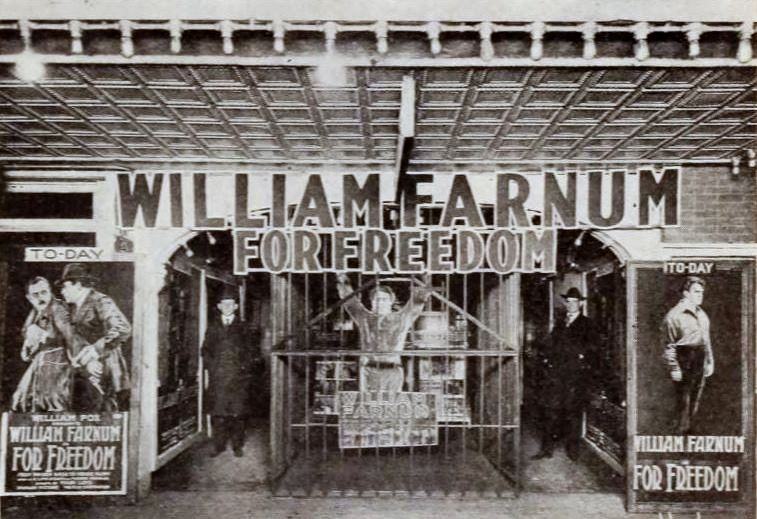
Fast-forward to the armistice ball: the same chandeliers from reel one, but now their crystals have been stripped for aluminum scrap, so candles gutter in the sockets, dripping wax like slow tears. Edith, played by Rubye De Remer in a gown the color of dried blood, crosses the parquet as though walking on a warrant. The camera tracks backward, a gliding dolly that makes the assembled dancers seem to recede from her courage. When she finally speaks—her intertitle rendered in the same serifed majesty as the earlier proxy vote—the soundtrack (on the 2018 Murnau-Stiftung restoration) drops to a single tolling bell. She exonerates her brother; Stratton’s death reclassified as misadventure. The ballroom exhales, but Sheldon withholds catharsis: Wayne stands at frame-left, medal clenched in fist, eyes hollow as spent shells. Absolution arrives, yet the ledger of memory remains unpaid.
Although shot in black-and-white, the tinting strategy on surviving prints functions like a symphonic score. Night exteriors are bathed in sea-blue, the same hue that tinged the Hudson in the elopement scene, binding home-front betrayal to trench-front trauma. Interiors flicker with amber, the color of money, candlepower, and mustard gas. The final shot—Wayne alone on a sunrise pier—employs a burnt orange that seems to cauterize the wound rather than heal it.
Where The Girl Who Won Out tidies its moral universe with a last-reel inheritance, For Freedom leaves its protagonist indebted to himself. Compared to Through Turbulent Waters, which dilutes guilt via baptismal metaphor, Sheldon’s film insists that water only distorts blood, never dissolves it. Even The Man Without a Country offers patriotic exile as cleansing; Wayne’s parole into warfare merely swaps one chain gang for another.
William Farnum, whose stage-trained baritone could once shatter balcony rafters, here communicates entirely through spinal posture. Watch how, pre-incarceration, his shoulder blades almost touch the starched collar; post-parole, the shoulders broaden, not from pride but from the burden of knowing that courage and carnage share a border thinner than tissue. Anna Lehr’s Mary is no flapper but a war-bereaved Cassandra, her eyes holding the same thousand-yard stare that would later haunt Louise Brooks in Pandora’s Box. G. Raymond Nye’s Stratton, meanwhile, underplays villainy into venture-capital smarm; he doesn’t twirl a mustache, he adjusts a necktie—an act somehow more obscene.
Today, when algorithmic flash-crashes vaporize pensions in nanoseconds, the film’s linkage of market manipulation and mortal consequence feels eerily prescient. Stratton’s hostile takeover bid is the 1920 version of a meme-stock assault; Wayne’s proxy vote the ancestor of today’s proxy-vote apps. The movie whispers that reputational risk is the one dividend no portfolio can hedge.
Because every frame is a double exposure: commerce and conscience, love and liability, freedom and fetter. Because when the last candle gutters out, what lingers is not the boom of artillery nor the rustle of stock certificates, but the echo of Mary’s paper boat, still afloat in a washbasin somewhere, ink bleeding yet unbowed. And because, in an era when streaming platforms peddle nostalgia in algorithmic comfort-food portions, For Freedom dares to suggest that liberty is not a birthright but a promissory note—redeemable only when we forgive the debtor who stares back from our own mirror.
Seek the restoration. Crank up the contrast until the sea-blue becomes an ocean you could drown in, the orange a fire you could forge from. Let the flicker remind you that silence, too, can be a battlefield—and every viewer a shareholder in the only venture that never deludes: the story we tell ourselves about who we really are.
IMDb —
1920
Community
Log in to comment.