DbcultAccessing Vault...
Cult Review
Senior Film Conservator
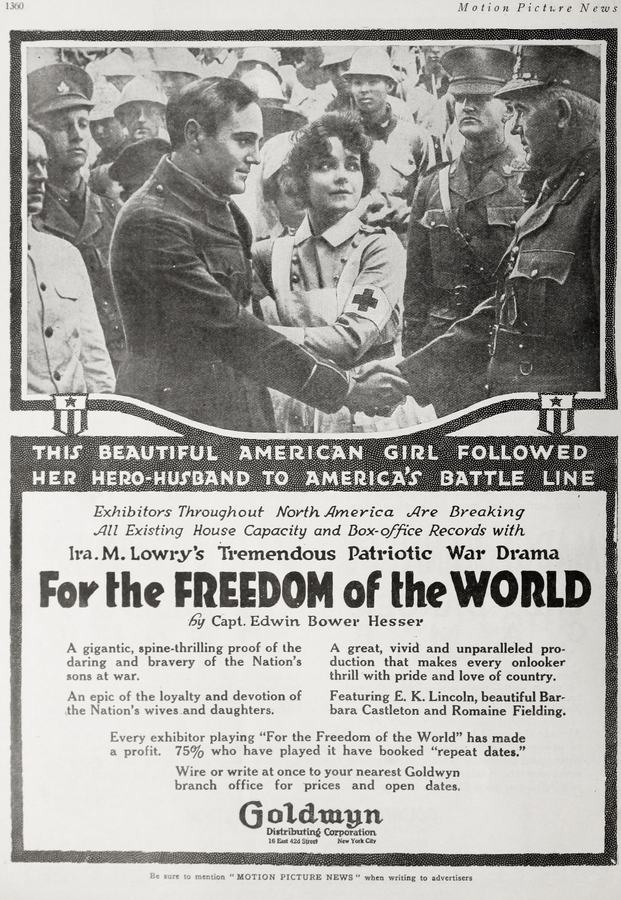
Stepping back into the hallowed, often overlooked, annals of early cinema, we encounter For the Freedom of the World, a 1918 silent film that, despite its age, pulses with a raw, melodramatic energy that few contemporary productions dare to emulate. This isn't just a historical artifact; it's a vibrant, if sometimes overwrought, tapestry woven from threads of patriotism, forbidden love, and the brutal, indiscriminate hand of war. Directed by Edwin Bower Hesser, this cinematic endeavor plunges viewers into the tumultuous heart of World War I, offering a lens through which to examine the period's prevailing sentiments, anxieties, and the nascent conventions of narrative filmmaking.
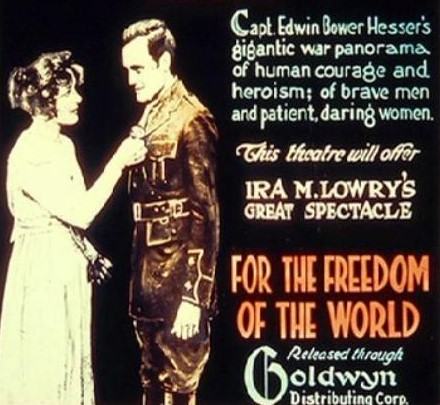
The narrative unfurls with a compelling urgency, introducing us to Gordon Harvey, portrayed with a compelling blend of youthful idealism and stoic resolve by Romaine Fielding. Harvey, a scion of American affluence, embodies a fervent, almost romanticized, patriotism. He doesn't wait for his nation's official entry into the global conflagration; instead, he volunteers for the Canadian Army's American Legion, effectively jumping into the fray. This decision immediately sets him apart, painting him as a man driven by deeply held convictions, willing to forsake comfort and safety for a cause he believes in. It's a character archetype that resonated profoundly with audiences of the era, reflecting a widespread desire for heroic figures in times of profound uncertainty. His journey from civilian life to the harsh realities of the front lines forms the emotional bedrock of the film, and Fielding's portrayal, while constrained by the conventions of silent acting, manages to convey a palpable sense of internal struggle and external determination.
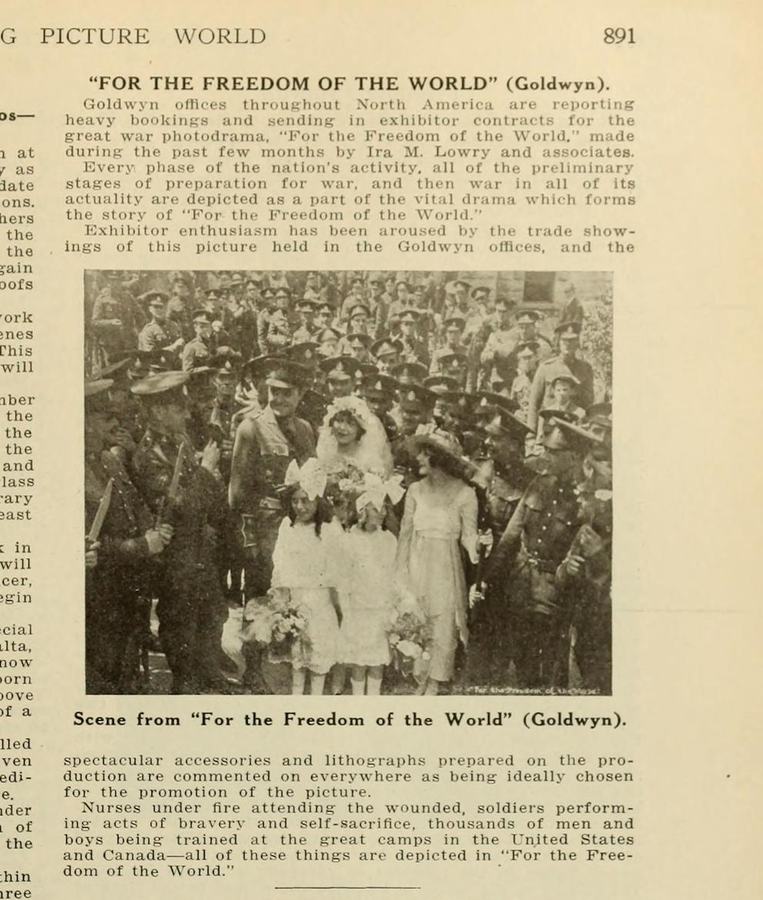
The plot thickens with the swift introduction of Betty Milburn, brought to life by the luminous Barbara Castleton. Betty is not merely a damsel in distress; she is a woman of formidable spirit, whose love for Gordon transcends societal expectations and wartime regulations. Their courtship is a whirlwind, a cinematic shorthand for intense, immediate connection, culminating in a rapid marriage that underscores the urgency and unpredictability of life during wartime. The bond forged between them is presented as an almost spiritual necessity, a bulwark against the encroaching darkness of conflict. Castleton imbues Betty with a captivating blend of vulnerability and audacious courage, making her subsequent actions feel not just plausible, but inevitable for a character so deeply devoted.
Betty's decision to accompany Gordon to France, disguised as a Red Cross nurse, is perhaps the film's most striking example of melodramatic ingenuity. This isn't realism; it's heightened reality, designed to ratchet up the tension and showcase the extraordinary lengths love can drive individuals to. The disguise itself is a narrative device that allows for a thrilling subversion of gender roles, placing Betty directly into the heart of the conflict, albeit in a non-combatant capacity. It’s a bold move, both for the character and for the narrative, echoing themes of female resourcefulness seen in other films of the period, such as The Ventures of Marguerite, where women often had to navigate challenging circumstances with cunning and resilience. The inherent danger of her deception is palpable, creating a constant undercurrent of dread, as the audience is acutely aware of the severe penalties for such a transgression.
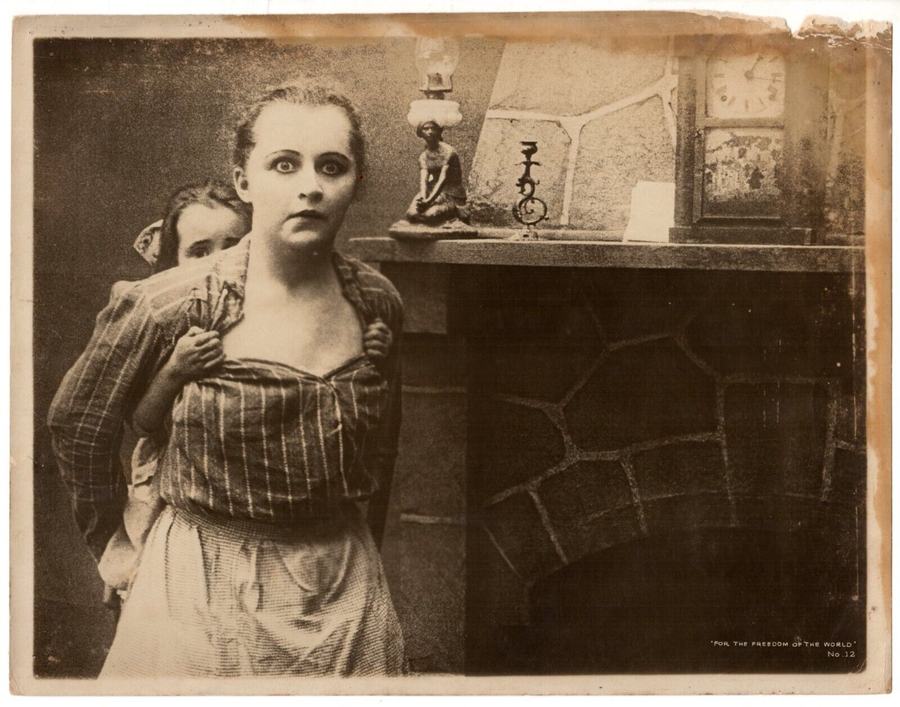
Enter Ralph Perry, the spurned suitor, whose bitter resentment fuels the film's central conflict. Perry, whose affections Betty clearly rejected, becomes the catalyst for the couple's ultimate peril. His vindictive act of revealing Betty's presence to the authorities is a chilling portrayal of human pettiness and jealousy, magnified by the unforgiving backdrop of military law. This betrayal, a classic trope, is handled with a stark, uncompromising clarity that leaves no doubt as to Perry's malicious intent. The stakes are immediately raised to an unbearable level: according to the draconian military rules, both Gordon and Betty face a death sentence for their illicit partnership. This plot point is a masterclass in dramatic escalation, forcing the protagonist into an impossible moral quandary that forms the emotional crescendo of the film. The sheer cruelty of Perry's actions finds parallels in the darker corners of human nature explored in films like Betrayed, where personal grievances often lead to devastating consequences.
The ensuing sequence is undoubtedly the film's most harrowing and unforgettable. Faced with the agonizing prospect of Betty being executed by a firing squad, Gordon makes a choice that defines the very essence of tragic love. He shoots her himself. This act, seemingly one of ultimate violence, is in fact a profound act of mercy, a desperate attempt to spare her a more brutal, public, and ignominious death. The silent close-ups, the contorted expressions of despair, and the sheer weight of his decision are conveyed with a raw power that transcends the lack of spoken dialogue. It's a moment of unparalleled sacrifice, a testament to a love so absolute that it permits, even demands, such an horrific act. Emily Lowry and Jane Adler, playing supporting roles, likely contributed to the emotional texture of these intense scenes, their reactions serving as a mirror for the audience's own horror and sympathy.
Believing Betty to be dead, Gordon then embarks on a suicidal combat mission, a desperate lunge towards oblivion, seeking to join her in death. This is the classic hero's despair, a man broken by an impossible choice, now seeking a final, redemptive act through self-immolation on the battlefield. The irony, however, is not lost on the narrative. In a twist that stretches the bounds of credulity but serves the overarching melodrama, Perry, the very man who set these tragic events in motion, intervenes and saves Gordon's life. This act of unexpected redemption for Perry, and the subsequent awarding of the Victoria Cross to Gordon for his heroism, adds another layer of complexity to the film's moral landscape. It suggests that even in the darkest of hearts, a flicker of decency can be rekindled, or perhaps, that fate has a peculiar way of balancing the scales.
The film's final reveal, that Betty was only wounded and subsequently recovers, brings the narrative full circle, offering a poignant, if highly improbable, reunion. This miraculous recovery and happy ending, while typical of the era's desire for catharsis and reassurance, doesn't entirely diminish the emotional impact of the preceding events. The scars of Gordon's choice, and Betty's ordeal, remain, even if unseen. The reunion is presented as a triumph of enduring love over the ravages of war and human malice, a powerful, if somewhat conventional, resolution that satisfies the audience's yearning for justice and happiness. The performances of Neil Moran, Walter Weems, and E.K. Lincoln in their respective roles, though less central, would have contributed to the overall fabric of the military and home-front drama, solidifying the world in which Gordon and Betty's extraordinary tale unfolds.
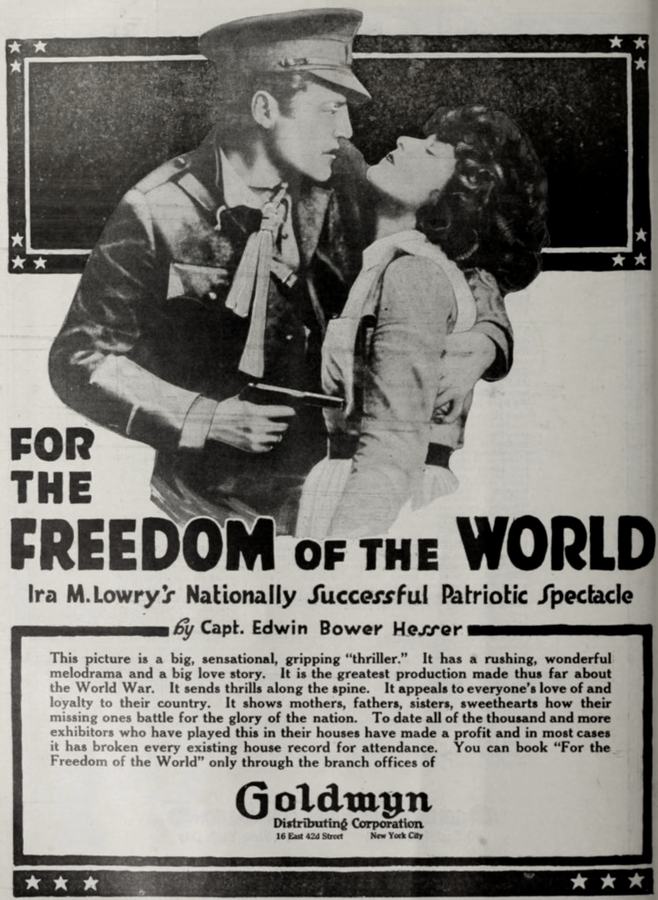
Edwin Bower Hesser, as the writer, demonstrates a keen understanding of dramatic structure, even if some of the plot contrivances lean heavily on coincidence. The pacing, crucial for a silent film, is generally effective, building tension and releasing it at opportune moments. The use of intertitles is artful, conveying dialogue and exposition without bogging down the visual storytelling. While modern audiences might find some of the acting styles overly theatrical, it's essential to view these performances within their historical context. Silent film actors relied heavily on exaggerated facial expressions and body language to convey emotion, a necessity in the absence of spoken words. Fielding and Castleton, in particular, excel at this, communicating volumes with a mere glance or gesture.
The film's exploration of patriotism is particularly fascinating. It’s a fervent, almost uncritical, brand of nationalism, reflecting the prevailing sentiment of the time. Gordon's immediate enlistment, his willingness to fight for ideals, speaks to a collective consciousness that valued duty and sacrifice above all else. This contrasts sharply with the more nuanced, often cynical, portrayals of war that would emerge in later decades. Yet, even within this patriotic framework, the film doesn't shy away from depicting the personal cost of war, the emotional devastation it wreaks on individuals and relationships. The horror of Gordon's choice, the near-fatal consequences of Betty's love, are stark reminders that even noble causes come with a terrible human price.
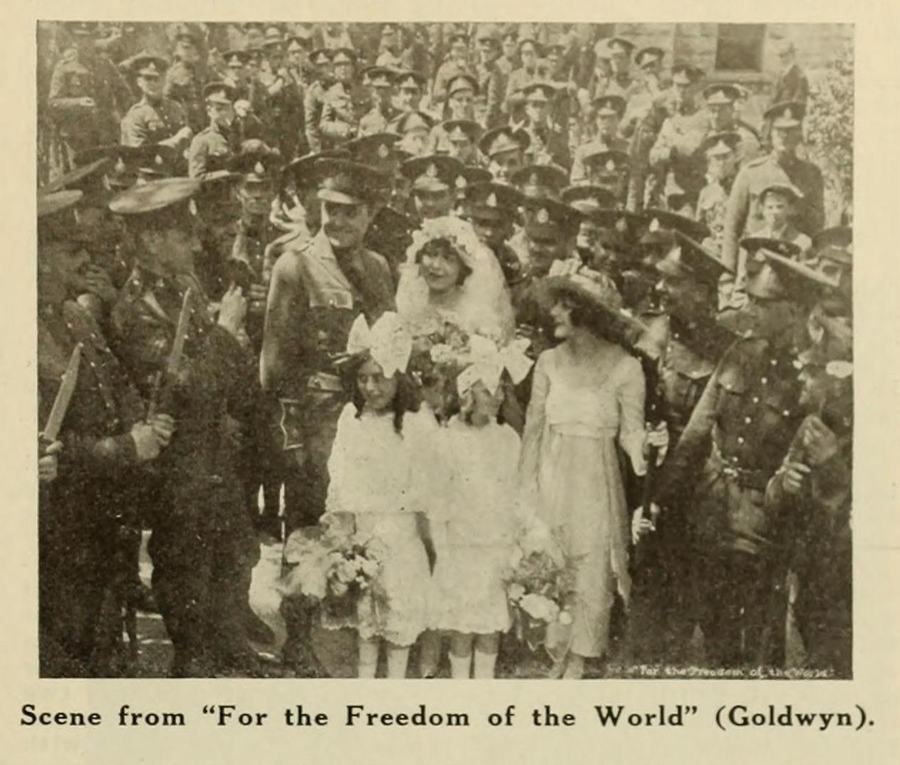
In terms of thematic resonance, For the Freedom of the World delves deeply into the nature of sacrifice. Gordon's ultimate act of shooting Betty is a perverse, yet profound, sacrifice of his own soul to save hers. It’s a moment that asks profound questions about the limits of love and the ethics of impossible choices. This theme of profound personal sacrifice for a loved one is a timeless one, explored in various forms across cinematic history, from the moral dilemmas of Sins of Her Parent to the epic struggles found in Spartacus, where individuals often face grim choices for the greater good or for the sake of those they cherish. Here, the sacrifice is intimate and agonizing, a stark contrast to the grand, public sacrifices typically celebrated in war narratives.
The film also touches upon the precarious position of women during wartime. Betty's disguise, while a romanticized plot device, underscores the limited roles available to women who wished to be close to the front. Her agency is expressed through deception, a testament to societal constraints. Yet, her courage and determination are undeniable, elevating her beyond a mere romantic interest to a figure of strength and defiance. This portrayal of female resilience, even within a patriarchal framework, is an interesting aspect of early cinema that often gets overlooked. It suggests a budding recognition of women's capabilities, even if those capabilities were often channeled through unconventional or even illicit means.
While the ending might strike some as overly convenient, it’s a product of its time, a period where audiences often sought escapism and reassurance from the harsh realities of a world embroiled in conflict. The desire for a happy resolution, a reaffirmation of love's power to overcome adversity, was strong. This doesn't detract from the powerful emotional journey that precedes it. The film, despite its melodramatic flourishes, manages to convey the brutal reality of war's impact on personal lives, even if it ultimately offers a glimmer of hope.
Technically, For the Freedom of the World showcases the evolving craft of filmmaking in the late 1910s. The cinematography, while not as sophisticated as later works, is effective in establishing mood and conveying action. The use of sets and locations, though constrained by the period's technology, manages to evoke both the domestic sphere and the starkness of the battlefield. The editing, crucial for maintaining narrative flow in silent cinema, is generally well-paced, ensuring that the audience remains engaged with the unfolding drama. The film's legacy lies not just in its dramatic narrative, but also in its contribution to the burgeoning art form, demonstrating how filmmakers were learning to manipulate visual language to tell complex stories. It’s a testament to the foundational work of writers like Edwin Bower Hesser, who were crafting narratives that captivated audiences and pushed the boundaries of what cinema could achieve.
Comparing it to other films of the era, one can see both its uniqueness and its adherence to popular trends. Like The Strange Case of Mary Page, it delves into personal crises and moral ambiguities, though For the Freedom of the World frames these within the larger tapestry of war. The dramatic intensity and moral quandaries might also draw comparisons to the powerful narratives found in The Manxman, which often explored deep emotional conflicts and societal pressures. While not an ethnographic film like In the Land of the Head Hunters, it does offer a snapshot of a specific cultural moment, capturing the zeitgeist of wartime America and Canada. It stands as a powerful example of how early cinema grappled with contemporary events, transforming real-world anxieties into compelling, often sensational, entertainment.
In conclusion, For the Freedom of the World is more than just a historical curiosity; it is a potent, if somewhat melodramatic, exploration of love, sacrifice, and betrayal set against the backdrop of one of humanity's most devastating conflicts. Its emotional core remains surprisingly resonant, even a century later. The performances, particularly by Romaine Fielding and Barbara Castleton, inject the narrative with a vital energy, ensuring that the audience is swept along by the sheer force of their characters' dilemmas. It's a reminder of the enduring power of storytelling, and how even in the nascent days of cinema, filmmakers were capable of crafting narratives that could move, thrill, and provoke thought. For anyone interested in the evolution of war films, the development of cinematic melodrama, or simply a compelling tale of human endurance, this silent epic remains a fascinating and worthwhile watch, a true gem from the formative years of the silver screen, proving that even without sound, a film can shout volumes about the human condition.
IMDb 5.9
1924
Community
Log in to comment.