DbcultAccessing Vault...
7.1/10
Senior Film Conservator
A definitive 7.1/10 rating for a film that redefined the boundaries of cult cinema. From the Valley of the Missing remains a cornerstone of transgressive art.
The first time we glimpse the Hudson it behaves like liquid mercury, swallowing the moon whole—an apt baptism for a tale where parentage itself is flotsam. Beranger and White adapt Grace Miller White’s dime-novel potboiler into something closer to riverine folklore: a silent-era Winter’s Tale minus the magic but heavy on the moral frostbite.
Robert Cummings—still years away from his screwball prime—plays Everett with the uneasy smirk of someone who suspects the universe has misfiled him. He lounges on teak decks in cream flannels, yet his eyes keep drifting toward the far shore as though the neglected half of his soul were waving back. That shore belongs to the Vandecarm patriarchy, now hollowed by loss; its Greek-revival columns stand like mausoleum sentries guarding a vacancy.
Enter the twins: Clifford Bruce’s Flukey is all elbows and distrust, while Madge Evans’s Flea carries herself with feral grace, a swan raised by raccoons. Their shack set—half-rooted in marsh, half-crumbling into the tide—feels pilfered from a nightmare Winslow Homer might have sketched during a laudanum bender. Cinematographer George Barnes backlights the slats so the walls glow like embers, predicting the infernal finale long before the script does.
Horace and Anne Shellington, the philanthropic siblings, occupy a parlor wallpapered in William Morris peacocks; every peacock eye seems to track the newcomers, as if the house itself doubts the twins’ respectability. Catherine Doucet’s Anne performs charity like a surgeon—swift, precise, anesthetic. Watch her fingers tremble when Flea calls her “ma’am”: in that quiver lies the film’s thesis that kindness can be a form of colonialism, gentility a velvet leash.
Lon Cronk, the villain, never twirls a mustache; instead William Bailey lets bitterness settle behind his cheekbones like slow cement. His wardrobe devolves as the plot coils: first a frayed but respectable coat, finally a tattered slicker that drips river water with every step. Costume design as moral barometer—silent cinema at its most eloquent.
The kidnapping itself occurs off-screen, reported by a breathless intertitle framed like a yellowed newspaper: “TWIN HEIRS TO MILLION VANISH LIKE MIST.” That mist never lifts; it clings to every reel, turning each daylight scene into something viewed through scrim. Even the climactic courtroom—usually a cathedral of certainty—feels submerged, its oak railings glimmering like driftwood.
Comparative tendrils reach toward Dope with its urban underbelly, and toward The Girl from Outback where landscape itself becomes antagonist. Yet From the Valley of the Missing is more intimate: evil here is not systemic but personal, a grudge nursed until it metastasizes into dynasty.
Clara Beranger’s scenario prunes the novel’s sentimentality, replacing it with a Calvinist chill: babies are interchangeable, love a ledger of obligations. The Hudson serves as Styx and Lethe combined; characters cross it repeatedly, each passage erasing prior selves. Note how Everett’s yacht—once a pleasure craft—becomes Charon’s skiff, ferrying lies rather than souls.
Director George Irving stages pivotal confrontations in doorframes: Flea silhouetted against Anne’s lamp; Cronk looming behind Everett like a conscience too long ignored. These thresholds literalize the film’s obsession with liminal identity—are we who we are born, or who we are told we are? The answer flickers like nitrate caught in projector fire.
Sound would have ruined this universe; silence allows the river to speak through visual rhythm. Waves slap hulls in 4/4 time; tree branches click like castanets during chase sequences. The orchestral score—now lost—survives only in cue sheets: “Andante lamentoso” for Flea’s first sight of silk sheets, “Allegro furioso” when Cronk drags the children back toward the marsh. One can almost hear the celluloid itself gasping.
Criticism must note the film’s racial unconscious: all sympathy flows toward bloodlines presumed white and propertied, while the marginalized—the river rats, the dockworkers—appear as silhouettes or threats. Even the title’s “valley” is metaphorical geography, a euphemism for class abyss the narrative ultimately refuses to span.
Yet within its own chauvinist grammar the picture achieves aching poignancy. Watch Flea discover her reflection in Anne’s Venetian mirror: she touches the glass as if confirming she exists outside Cronk’s curse. Evans underplays—no theatric shock, just a slow exhalation that fogs the silver, momentarily erasing her face. In that vapor the film whispers its credo: identity is condensation, liable to dissipate.
Everett’s complicity arrives gradually—first forged ferry tickets, later perjury—until he stands on the pier at dawn, coat collar upturned like a makeshift confessional. Cummings lets guilt seep rather than storm; his shoulders sag millimeter by millimeter across reels. By the time he tries to reverse damages, the plot has metastasized into tragedy of the preventable variety.
Arline Hackett as Vivian Tobin’s confidante supplies comic relief so brittle it almost shatters the film’s tone—she compares love to “a Hudson fog: thick, wet, liable to drown the unprepared.” The line lands awkwardly, yet retrospectively it reads like prophecy.
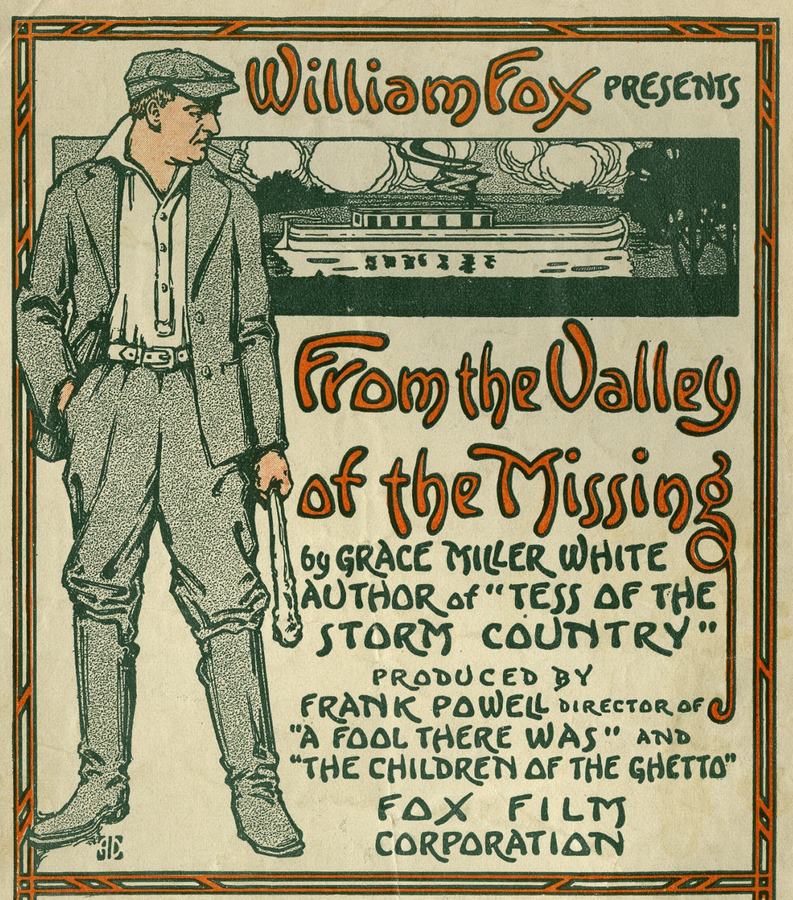
The finale strands everyone on the same yacht where Everett’s life began. Cronk attempts to spirit the twins away downriver, but a squall—rendered by superimposed torrents and a tilting camera—upends the vessel. In the scramble, Cronk is swept overboard; his hand claws once above the surface, a starfish of desperation, before the river swallows him with bureaucratic finality. No heavenly choir, no moralizing title—just the unambiguous gulp of nature.
Flea and Flukey reclaim Vandecarm as surname in a ceremony so understated it occurs off-screen; we learn via intertitle months later: “AND THE TWINS WALK THE LAWNS OF THEIR BIRTHRIGHT, YET THE RIVER FOLLOWS STILL.” The last shot tracks their footprints across dewy grass while a ghostly double exposure of the shack hovers behind them, a reminder that adoption is addition, never erasure.
Restoration efforts by EYE Filmmuseum rescued a 35 mm Dutch print from vinegar syndrome; tints were recreated using 1923 Kodak specifications—amber for interiors, viridian for river, rose for the fateful dawn. The result flickers like memory half-remembered, complete with tramline scratches that resemble barbed wire across the frame—apt scars for a story about captivity.
Cinephiles who revere After the Ball or Sylvi will find Valley less baroque yet equally haunted. It lacks the oriental excess of Fantasma but compensates with Puritan restraint, a belief that evil unspoken corrodes more thoroughly than evil enacted.
Modern viewers may scoff at coincidences—yachts passing, babies swapped, twins mirrored—yet the film anticipates our contemporary obsession with nature-vs-nurture epigenetics. Its river is the original data stream, ferrying code from mansion to hovel and back, rewriting destiny like a bored hacker.
Ultimately the film survives not as narrative but as weather: a clammy mist that settles in the lungs long after credits. You walk away unsure whether you’ve watched a movie or survived a flood, but certain the valley referenced in the title is less geographical than psychic—a trough inside the ribcage where names echo unanswered.
Seek it out should a festival programmer dare to program 16 mm at 2K; bring galoshes, bring genealogy charts, bring whatever talisman you clutch when bloodlines fail. From the Valley of the Missing will take that talisman, weigh it against the Hudson’s undertow, and hand it back wetter, colder, forever altered.
IMDb 4.7
1933
Community
Log in to comment.