DbcultAccessing Vault...
Cult Review
Senior Film Conservator
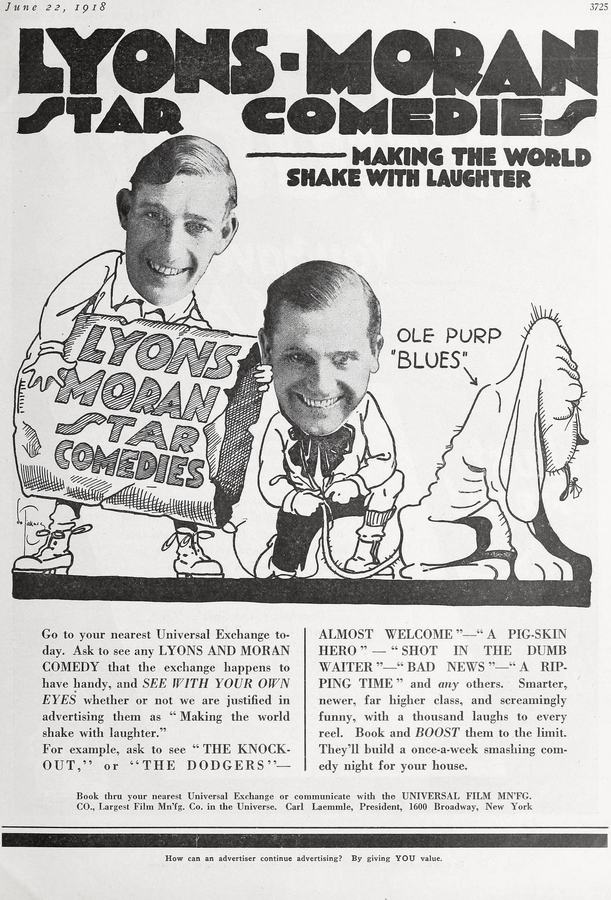
There's a particular charm to early cinema, a raw, unvarnished energy that often feels both quaint and astonishingly modern. 'Shot in the Dumbwaiter' is one such relic, a boisterous farce from an era when physical comedy reigned supreme and narrative complexity often took a backseat to sheer, unadulterated hilarity. Directed with a keen eye for slapstick by Leslie T. Peacocke, this film isn't just a period piece; it's a vibrant, kinetic snapshot of domestic chaos, a testament to the enduring appeal of mistaken identity and the universal humor found in utterly absurd situations.
The premise, on its surface, is deceptively simple, yet it becomes the scaffolding for an intricate dance of comedic misadventure. We are introduced to two distinct domestic spheres: Mr. Ups, a man clearly enamored with the 'gay life' – a euphemism, perhaps, for social excursions and nocturnal revelry – and Mr. Downs, his antithesis, a staunch 'stay-at-home' type. This initial contrast in lifestyles immediately sets up a fertile ground for conflict and misunderstanding. One fateful night, the threads of these disparate lives begin to intertwine with a delightful, almost surgical precision. Mr. Ups, returning from his evening's sporting, finds himself arriving at the very entrance of his apartment building simultaneously with Mrs. Downs. The implications are clear, even if unspoken: a delicate balance of social propriety teeters on the brink.
But the true brilliance of Peacocke's writing, and the film's escalating genius, lies in the introduction of a completely unrelated, yet perfectly timed, complication. Back in their respective apartments, Mrs. Ups, alone and perhaps a touch on edge, is startled by a commotion in her kitchen. The culprit? A common housecat, engaged in the rather mundane, if messy, act of ransacking milk cans. Yet, in the heightened anxiety of the nocturnal hours, Mrs. Ups's imagination takes flight, transforming the feline intruder into a far more sinister presence: a burglar. This misperception is the first domino, setting off a chain reaction that will engulf all four characters in a maelstrom of confusion and frantic activity. It’s a classic comedic device, leveraging audience knowledge against character ignorance, a technique that still elicits chuckles today. The genius here is how a simple, everyday occurrence (a cat) can trigger such disproportionate panic, a theme explored in various forms throughout cinematic history, though rarely with such direct, physical consequences.
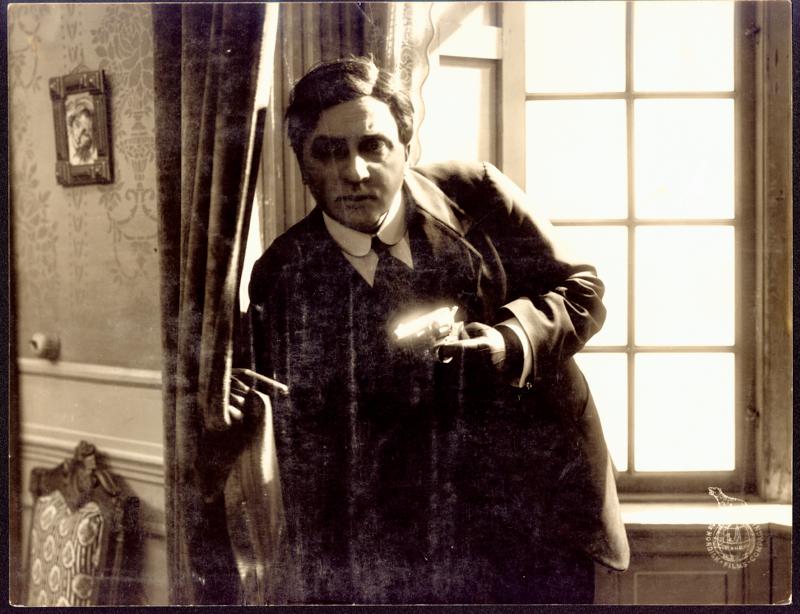
The stage is now set. Mr. Ups and Mrs. Downs make their entrance, unknowingly stepping into a domestic minefield already primed to explode. The chase, once it begins, is a masterclass in silent film physical comedy. Edith Roberts, as Mrs. Ups, and Harry Nolan, as Mr. Downs, embody the escalating panic with a wonderful blend of wide-eyed terror and frantic determination. Their attire—Mr. Downs in his disheveled bathrobe, Mrs. Ups in her pajamas—only amplifies the visual absurdity, stripping them of any pretense of dignity and plunging them into a realm of pure, unadulterated slapstick. The choice of the dumbwaiter as the central device for this chase is inspired. It's a vertical labyrinth, a confined space that forces proximity and creates endless possibilities for near-misses, mistaken sightings, and hilariously frustrating obstacles. The dumbwaiter becomes almost a character in itself, an unwitting accomplice to the chaos, ferrying its bewildered occupants up and down, never quite allowing them to connect with their supposed quarry, or indeed, with each other, in a coherent manner.
The genius of the dumbwaiter sequence lies in its relentless rhythm. Up and down they go, a frantic ballet of mistaken identity and uncoordinated pursuit. Each stop, each opening of the dumbwaiter door, promises a revelation that never quite materializes, or delivers a new layer of misunderstanding. It’s a physical manifestation of the characters' mental states: confused, disoriented, and utterly out of their depth. This kind of sustained, escalating physical humor is a hallmark of the era, reminiscent of the intricate comedic setups found in other contemporary farces, though Friend Husband might offer a more gentle, relationship-centric approach to domestic squabbles, 'Shot in the Dumbwaiter' leans heavily into the pure, unadulterated chaos of the chase itself. The performances here are crucial. Silent film acting demanded a heightened physicality, an expressiveness that could convey emotion and narrative without dialogue. Edith Roberts and Harry Nolan deliver this in spades, their exaggerated gestures and facial expressions painting vivid pictures of their characters' mounting exasperation and fear.
Lee Moran and Gertrude Astor, as Mr. Ups and Mrs. Downs, respectively, play their parts in this unfolding drama with equal panache. Their initial, somewhat illicit, arrival sets the entire chain of events in motion, and their subsequent, often bewildered, encounters with the frantic pursuers add further layers to the comedic tapestry. Eddie Lyons rounds out the core cast, contributing to the overall ensemble dynamic. The film, while primarily a vehicle for slapstick, also offers a subtle, perhaps unintentional, glimpse into the social dynamics and anxieties of its time. The 'gay life' of Mr. Ups hints at a certain societal permissiveness, or at least a curiosity, regarding activities outside the domestic sphere, while Mr. Downs's 'stay-at-home' nature represents a more traditional ideal. The breaking of these societal molds, even in a comedic context, is a fascinating element.
What truly elevates 'Shot in the Dumbwaiter' beyond a mere succession of gags is its surprising, almost counter-intuitive, resolution. After all the frantic searching, the near-misses, and the ultimate revelation of the harmless cat, one might expect recrimination, embarrassment, or even a marital spat. Instead, the film offers a wonderfully optimistic, if slightly implausible, outcome: the two couples become the best of friends. This unexpected camaraderie, born out of a shared, ludicrous experience, provides a heartwarming, almost philosophical, coda to the chaos. It suggests that sometimes, the most trying and absurd situations can, in fact, forge the strongest bonds. This resolution contrasts sharply with films that might hinge on the dramatic fallout of such misunderstandings, like the more intense relationship dynamics explored in Le torrent, where domestic discord leads to much graver consequences. Here, the shared vulnerability and the eventual understanding create a bond rather than a rift.
Leslie T. Peacocke's writing demonstrates a clear understanding of comedic timing and structure. He builds the tension gradually, introduces complications organically, and orchestrates the physical comedy with precision. The visual storytelling, characteristic of the silent era, is paramount, and Peacocke ensures that every gesture, every expression, every frantic movement contributes to the narrative and the humor. The film doesn't rely on complex dialogue or intricate psychological profiles; instead, it thrives on the universal language of physical comedy and relatable human foibles. The simple sight of a man in a bathrobe and a woman in pajamas frantically searching a dumbwaiter for a non-existent burglar is inherently funny, and the film milks this premise for all it's worth.
Comparing 'Shot in the Dumbwaiter' to other films of its era, one can appreciate its unique blend of domestic farce and energetic slapstick. While some films, such as The Antics of Ann, might focus on a singular character's comedic misadventures, 'Shot in the Dumbwaiter' cleverly juggles multiple perspectives and converging storylines, creating a richer, more interwoven tapestry of humor. It avoids the overt melodrama of Silver Threads Among the Gold, instead embracing lighthearted escapism. It's not concerned with grand narratives of fate or fortune, as seen in Fame and Fortune or The Money Master; its ambitions are purely to entertain through laughter, and in that, it succeeds admirably. The film understands the power of a good chase scene, a staple in many early comedies, but it elevates it by confining it to such an intimate, vertical space.
The cast, under Peacocke's direction, works in a cohesive unit, each performer contributing to the overall comedic effect. Edith Roberts, known for her expressive roles, brings a delightful blend of frazzled nerves and determined spirit to Mrs. Ups. Harry Nolan's Mr. Downs is the perfect picture of a man utterly bewildered by circumstances beyond his comprehension, his bathrobe-clad figure a symbol of his sudden, unwilling immersion into chaos. Lee Moran and Gertrude Astor, while perhaps instigators of the initial social faux pas, become endearing participants in the subsequent pandemonium, their reactions adding to the overall humor. The film doesn't delve deeply into their backstories or motivations, but it doesn't need to. Their actions speak volumes, and their comedic timing is impeccable.
In an age dominated by CGI and complex narratives, 'Shot in the Dumbwaiter' serves as a refreshing reminder of the fundamental elements of comedy: timing, character, and an ingenious premise. It's a film that doesn't take itself too seriously, inviting the audience to revel in the sheer silliness of it all. The enduring appeal of such a film lies in its ability to transcend its historical context and still elicit genuine laughter. The domestic setting, the relatable anxieties (even if exaggerated), and the universal desire for a happy resolution all contribute to its timeless quality. It's a testament to the power of simple, well-executed storytelling.
The film's impact, though perhaps not as widely celebrated as some of the era's more iconic works, is significant in its representation of a popular comedic subgenre. It's a precursor to countless domestic comedies that would follow, laying groundwork for tropes and situations that would be revisited time and again. The theme of accidental friendship forged through crisis, albeit a farcical one, resonates deeply. It's a gentle reminder that sometimes, the most unexpected encounters can lead to the most profound connections, even if those encounters involve a cat, a mistaken burglar, and a frantic trip up and down a dumbwaiter in one's nightwear. This film, with its vibrant energy and joyous resolution, stands as a delightful example of early silent comedy's capacity to amuse and enchant. It's a cinematic treasure that, despite its age, feels remarkably fresh and utterly charming, proving that a good laugh is truly timeless.
Moreover, the film's ability to maintain a lighthearted tone throughout, even amidst what could be perceived as a tense situation, is commendable. There's no malice, no genuine threat, only a series of misunderstandings that snowball into delightful pandemonium. This commitment to pure comedic intent is a hallmark of the best silent farces. Unlike the high stakes and dramatic tension of a film like The Purple Mask, 'Shot in the Dumbwaiter' revels in its low-stakes, high-energy silliness. It’s a film that understands its purpose: to provide an escape, a moment of unbridled mirth. The use of a dumbwaiter as the central stage for the comedic climax is particularly effective, emphasizing the claustrophobic panic and the repetitive, almost Sisyphean, nature of their search. The limited space forces exaggerated movements and expressions, amplifying the comedic effect. It's a brilliant example of how spatial constraints can be leveraged for maximum humor, a technique that would influence countless physical comedians for decades to come.
The film also subtly touches upon societal expectations of privacy and public appearance. Mr. Downs in his bathrobe and Mrs. Ups in her pajamas, thrust into a public (albeit apartment-confined) chase, represent a delightful breaking of decorum. This vulnerability, coupled with their frantic efforts, makes them all the more endearing and relatable. It's a commentary, perhaps, on how easily our carefully constructed social facades can crumble under pressure, particularly when a cat and a dumbwaiter are involved. The resolution, where friendship blossoms from this chaos, is a genuinely heartwarming touch, suggesting that shared laughter and mutual understanding can overcome any initial awkwardness or misunderstanding. It's a joyful affirmation of human connection, wrapped in a perfectly executed comedic package. This film, in its simplicity and its joyous execution, remains a compelling watch for anyone interested in the foundations of cinematic comedy or simply in need of a good, old-fashioned laugh. It’s a testament to the fact that even the most mundane settings, when infused with a touch of the absurd and a dash of brilliant comedic timing, can yield unforgettable cinematic moments. A true gem of its era, 'Shot in the Dumbwaiter' continues to deliver its delightful payload of laughter, one frantic dumbwaiter ride at a time.
IMDb —
1917
Community
Log in to comment.