DbcultAccessing Vault...
Cult Review
Senior Film Conservator
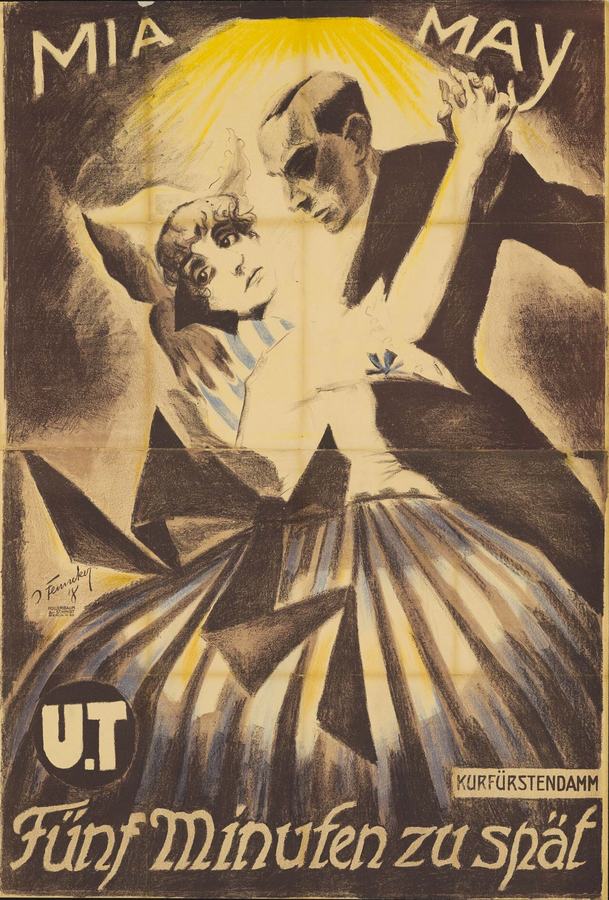
Stepping back into the flickering shadows of the silent era, one often encounters narratives steeped in melodrama, grand gestures, and the inexorable march of fate. Yet, even within this often-caricatured landscape, certain films emerge with a startling clarity, possessing an emotional resonance that transcends their technological limitations. Joe May’s Fünf Minuten zu spät (Five Minutes Too Late) is precisely such a work, a cinematic lament on the devastating power of circumstance, rendered with a delicate touch that belies its profound impact. It is a film that, even a century after its creation, still whispers to the anxieties of the human heart, reminding us of the slender threads upon which our destinies often hang.
The film unfolds against a backdrop of post-World War I Germany, a nation grappling with seismic shifts in its social fabric. The old aristocratic order, while weakened, still exerted a formidable influence, particularly over matters of marriage and inheritance. It is into this crucible of tradition versus nascent modernity that we are plunged, witnessing the tender, illicit romance between Helene, portrayed with exquisite fragility by Mia May, and Karl, the earnest, financially struggling architect brought to life by Bruno Kastner. May, a frequent collaborator with her husband Joe May and a luminary of early German cinema, imbues Helene with a quiet dignity, a woman caught between the suffocating expectations of her class and the fervent desires of her own heart. Her expressive eyes, a silent film actress’s most potent weapon, convey volumes of unspoken yearning and growing despair. Kastner, in turn, perfectly embodies the passionate, yet ultimately powerless, lover, his youthful idealism slowly eroded by the harsh realities of a society that prioritizes wealth over genuine affection. Their chemistry, though constrained by the era’s acting conventions, is palpable, painting a vivid picture of a love both pure and tragically doomed.
The narrative's central conflict is expertly woven around the machinations of Helene’s aunt, a character rendered with stern, unyielding conviction by Frau Pütz. Her portrayal is not merely that of a villain, but a woman trapped by the rigid dictates of her own fading world, convinced that a financially advantageous marriage for Helene is the only path to salvation for their family’s declining fortunes. This societal pressure is personified by Johannes Riemann’s Herr von Waldau, the wealthy industrialist. Riemann, often cast in roles of authority or sophistication, here delivers a performance of chilling detachment. Von Waldau is not overtly cruel, but his emotional barrenness and pragmatic approach to marriage make him a far more insidious threat to Helene’s happiness than any overt antagonist. His very presence on screen radiates a quiet, unassailable power, a stark contrast to Karl’s artistic vulnerability. In this sense, Fünf Minuten zu spät echoes the class anxieties explored in films like The Princess of Patches, where social standing often dictates personal destiny, or even Paid in Full, which similarly delves into the sacrifices made for financial security.
The film’s genius lies in its relentless, yet subtle, build-up to the titular moment. The 'five minutes too late' is not a sudden, arbitrary twist, but the culmination of a series of meticulously orchestrated misfortunes. Joe May, a director known for his grand spectacles and intricate plots, here demonstrates a mastery of psychological tension. The plot mechanism is simple, yet devastating: Karl's desperate message, entrusted to a seemingly reliable confidante (Grete Diercks, whose earnest portrayal adds to the tragic irony), is delayed by a succession of mundane, yet ultimately catastrophic, events. A misplaced telegram, a sudden downpour causing a streetcar delay, a momentary distraction—each element, seemingly innocuous in isolation, conspires to create an insurmountable barrier between the lovers. This narrative strategy elevates the film beyond mere melodrama, transforming it into a profound meditation on the fragility of human plans and the capricious nature of fate. It’s a thematic thread that resonates with the fatalism seen in works such as The Dawn of a Tomorrow, where destiny seems to be a relentless, unyielding force.
The cinematography, though adhering to the conventions of the era, is remarkably effective in conveying the mounting tension. May and his cinematographers (likely including Max Faßbender, who often worked with him) employ stark contrasts and carefully composed frames to emphasize the characters' emotional states. Close-ups on Helene’s anguished face or Karl’s desperate pleas create an intimate connection with the audience, while wider shots of the bustling train station underscore the individual’s helplessness against the indifferent machinery of modern life. The editing, while perhaps not as kinetic as later eras, builds a steady rhythm of anticipation and dread, each cut bringing us closer to the inevitable, heartbreaking climax. The use of parallel editing, juxtaposing Karl’s frantic journey to the station with Helene’s somber departure, is particularly effective in amplifying the sense of urgency and the impending tragedy. The film, in its quiet desperation, shares a spiritual kinship with the somber atmosphere of Prestuplenie i nakazanie, where the weight of circumstance and decision hangs heavy over every frame.
The film’s climax at the train station is a masterclass in silent film storytelling. It avoids sensationalism, opting instead for a quiet, crushing inevitability. As Helene, resigned to her fate, boards the train with von Waldau, a poignant sense of finality pervades the scene. The subtle gestures, the lingering glances, the heavy silence broken only by the imagined chugging of the locomotive—all contribute to an atmosphere of profound sorrow. Meanwhile, Karl's frantic dash, his arrival just as the train begins to pull away, is depicted with a raw, visceral desperation. The iconic image of him watching the last carriages recede into the distance, his outstretched hand grasping at empty air, is etched into the viewer's mind long after the credits roll. This moment is not merely a plot point; it is a universal symbol of missed opportunities, of the 'what ifs' that haunt human existence. It's a powerful echo of the emotional stakes found in films like Who Was the Other Man?, where crucial moments define and redefine lives, often with tragic consequences.
The performances in this sequence are particularly noteworthy. Mia May’s silent resignation as Helene, her face a mask of controlled grief, speaks volumes about the societal pressures she faces. Her internal struggle is palpable, even without a single spoken word. Bruno Kastner’s portrayal of Karl’s utter devastation is equally compelling, his body language conveying a complete collapse of hope. The supporting cast, including Hermann Picha in a role that perhaps offered a brief, light counterpoint or added to the bureaucratic hurdles, also contribute to the film’s rich texture. Picha, often known for his comedic turns, if present in a more serious capacity here, would have added another layer to the world May meticulously constructed. The film’s strength lies in its refusal to offer easy answers or a last-minute reprieve. It embraces the bittersweet reality of life, where sometimes, despite all efforts, love simply arrives five minutes too late.
Beyond the immediate tragedy of the missed connection, Fünf Minuten zu spät delves into deeper thematic waters. It is a powerful critique of a society where economic considerations often trump personal happiness, particularly for women. Helene’s agency is severely curtailed by her aunt’s financial anxieties and the prevailing social norms. Her choice, or rather, her lack thereof, resonates with the struggles depicted in films like For a Woman's Fair Name, which similarly explores the societal constraints placed upon women in matters of love and marriage. The film subtly argues that the 'five minutes too late' is not merely an accident of timing, but a symptom of a larger systemic issue, where individuals are often pawns in a grander, more unforgiving game.
The interplay between fate and free will is another compelling aspect. While a series of external events conspire against Karl and Helene, the film also hints at the inherent difficulties they faced from the outset due to their differing social strata. Could a more assertive stance, a more daring rebellion, have altered their course? Or was their love always destined to be a fleeting, beautiful impossibility in a world not yet ready for such romantic defiance? This existential questioning elevates the film from a mere melodramatic potboiler to a work of genuine artistic merit. It forces the audience to ponder the extent to which we are masters of our own destinies versus being swept along by currents beyond our control. This contemplation finds resonance in the nuanced character studies of films such as Naked Hearts, where societal expectations often clash with individual desires, leading to profound internal conflicts.
Joe May, a prolific director of the silent era, often explored themes of destiny, deception, and the human condition. While his grander, more ambitious projects like the Dr. Mabuse films (though Fritz Lang's are more famous, May had his own earlier crime serials) often receive more academic attention, Fünf Minuten zu spät stands as a testament to his ability to craft intimate, emotionally devastating dramas. Its relative simplicity in plot allows for a deeper exploration of character and theme, making it a powerful example of how silent cinema, through gesture, expression, and evocative imagery, could communicate complex human emotions with unparalleled intensity. The film’s enduring power lies in its universal theme: the agony of missed opportunities, the cruel irony of timing, and the profound impact a mere handful of minutes can have on the trajectory of a lifetime. It's a narrative that, in its essence, feels as timeless as the human heart itself, a sentiment that can also be found in the enduring appeal of stories like The Immortal Flame, which speaks to the eternal nature of certain human experiences.
In a world obsessed with speed and instant gratification, Fünf Minuten zu spät serves as a potent reminder of patience, or rather, the lack thereof, and its devastating consequences. It implores us to consider the delicate balance of events that shape our lives, and how easily that balance can be tipped by the smallest deviation. It’s a film that stays with you, not for its bombast or spectacle, but for its quiet, lingering heartbreak. For those seeking to understand the emotional depth and narrative sophistication possible within the silent film medium, this work by Rudolf Baron and Joe May is an absolute imperative. It is a cinematic experience that transcends its historical context, offering a timeless reflection on love, loss, and the relentless, unforgiving rhythm of time itself. Much like the profound moral dilemmas in The Devil's Prize, the film leaves one pondering the true cost of choices made and opportunities lost. The film's nuanced portrayal of human frailty and the weight of societal expectations makes it a compelling companion piece to the exploration of familial pressures found in The Family Cupboard, demonstrating how deeply personal narratives are often intertwined with broader social forces.
Ultimately, Fünf Minuten zu spät is more than just a historical artifact; it is a profound cinematic poem on the human condition. It reminds us that sometimes, the most crushing tragedies are not born of malice, but of a simple, agonizing misalignment of time, a mere five minutes that can forever alter the course of two lives. Its legacy is not in grand pronouncements, but in the quiet, insistent echo of what might have been, a poignant whisper across the decades that continues to resonate with anyone who has ever known the sting of a missed chance.
IMDb —
1918
Community
Log in to comment.