Summary
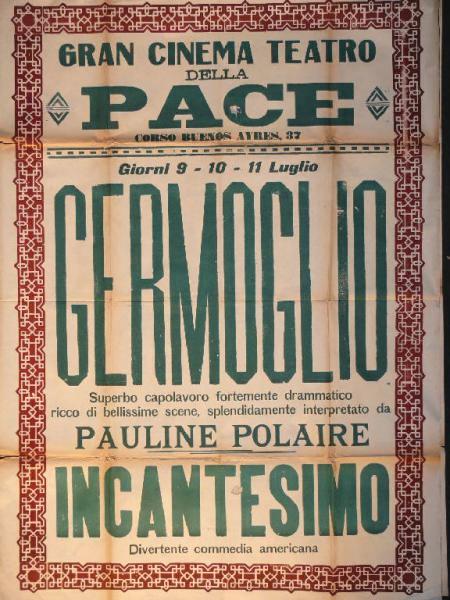
A tremulous shard of early Italian cinema, Germoglio unfurls like a half-remembered fever dream inside a sun-bleached Roman courtyard where cracked stucco breathes and geraniums bleed. Franco Gennaro’s printer, whose ink-stained hands smell of sour wine and lead type, stumbles upon a mildewed manuscript that claims the city itself is a hothouse: every citizen an unopened seed, every breath a sip of corrosive water. Maria Galli’s mysterious seamstress—eyes the color of wet ash—appears at dusk, sewing veils for widows who may never have existed. Together they descend into candlelit catacombs beneath Trastevere, chasing rumors of a pre-Christian sect that worshipped germination as a form of slow-motion crucifixion. Vittorio Rothermel’s aristocratic agronomist arrives with a greenhouse wagon of carnivorous seedlings, promising rebirth but delivering a pollen that induces synesthetic hallucinations: sounds taste of iron, colors scream. Claudio Nicola’s one-eyed postman pedals through labyrinthine alleys delivering letters addressed to the unborn. Camillo Talamo’s consumptive poet coughs sanguine syllables onto rice paper that sprout vines overnight, entwining balconies like lovers who refuse to let go. Ida Carloni Talli’s governess, face hidden beneath a lace mantilla, teaches orphaned twins to read by decoding mold patterns on walls. Adolfo Giovannini’s watchmaker plants tiny gears in terracotta pots, cultivating mechanical flowers whose petals click open at midnight, revealing clockfaces that count backward. Pauline Polaire’s chanteuse performs a single chanson about a seed that swallows the moon, her voice so fragile it seems woven from moth wings. Odoardo Bruno’s photographer burns magnesium flashes that scar the air, leaving white silhouettes of absences. E. Gualdi’s street urchin trades marbles for secrets, pocketing whispers that later sprout as white lies in the mouths of politicians. The narrative coil tightens when the manuscript reveals that every character is merely a tendril of one omnipresent root system; their individuated desires—love, absolution, immortality—are simply nutrients for an unseen bloom destined to crack the city’s travertine skin. In the final reel, dawn seeps through shattered stained glass, illuminating a single geranium whose petals bear microscopic scripts of every future grief. The frame freezes on Gennaro’s ink-black fingertip touching the stigma; contact releases a silent detonation of spores that drift outward, rewriting the frescoed sky into a living manuscript still being composed by the next century’s dreams.
Review Excerpt
"
A seed, they say, carries the memory of every future wound.
Germoglio is that mnemonic capsule, cracked open a century too early. Shot on perishable nitratfilm stock that now survives only in a tinted Portuguese print riddled with emulsion rot, the 1915 one-reeler feels less like entertainment than like archaeological evidence—an exhumed reliquary of pre-war Rome’s subconscious. Director-writer (the credit simply reads "Un Seme") refuses exposition; instead, we get a choreography of glances, ..."