DbcultAccessing Vault...
5.8/10
Senior Film Conservator
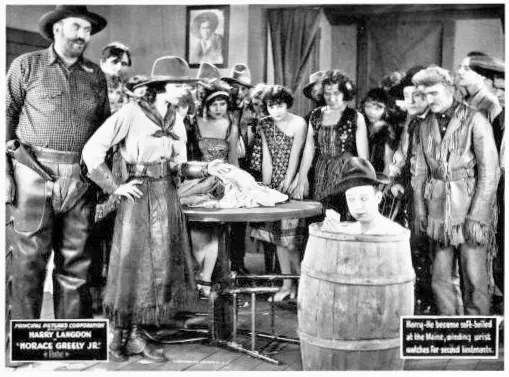
A definitive 5.8/10 rating for a film that redefined the boundaries of cult cinema. Horace Greeley, Jr. remains a cornerstone of transgressive art.
Is 'Horace Greeley, Jr.' worth watching today? Short answer: yes, but with significant caveats. This early silent film is an essential historical document for understanding the foundations of action-comedy, particularly for cinephiles and students of early Hollywood. However, it is decidedly not for those seeking modern pacing, deep character development, or a film that transcends its period limitations without a generous dose of historical context and an appreciation for nascent cinematic forms.
While its plot is deceptively simple, the film offers a fascinating glimpse into the nascent career of Harry Langdon and the dynamic storytelling techniques of the silent era. It works. But it’s flawed. This short, often overlooked piece provides more than just a fleeting chuckle; it's a foundational text for understanding how physical comedy and rudimentary action sequences were integrated to create compelling, if brief, narratives.
The plot of 'Horace Greeley, Jr.' is, by modern standards, a mere sketch. Yet, within its brevity, it constructs a surprisingly effective arc of accidental heroism. Horace's initial foray into the caravan is less an act of courage and more one of pure, unadulterated happenstance. He doesn't seek out the conflict; he stumbles headfirst into it. This accidental hero trope, while common, is handled with a certain raw energy that immediately draws the viewer into the chaos.
The film pivots sharply from a confined, almost claustrophobic brawl within the caravan to an open, expansive chase sequence. This shift in setting is critical, allowing the narrative to breathe and providing the canvas for Horace's improvised escape and eventual, performative act of valor. The stolen kimono, a seemingly minor detail, acts as a curious narrative pivot, lending a touch of the absurd to his flight and a tangible trophy from his unexpected victory.
The introduction of the young woman on horseback is the true catalyst for Horace's transformation from a fleeing victim to a proactive hero. Her presence isn't just a plot device; it's an external validation, a mirror reflecting the potential for greatness within him. This narrative beat, while simple, is profoundly human: the desire to impress, to rise to an occasion when observed by someone significant. It’s a testament to the power of observation in shaping human action, even in a silent film.
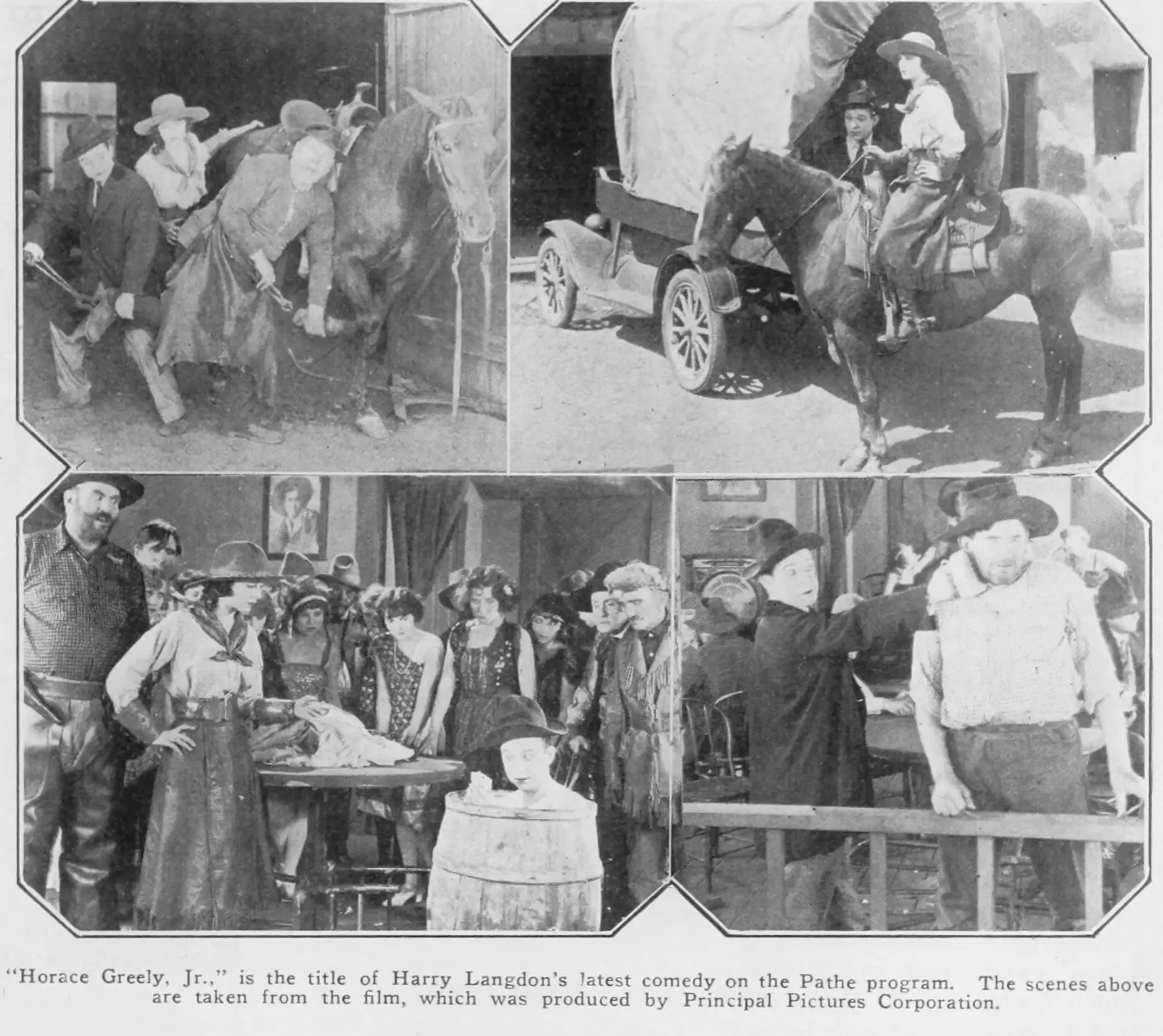
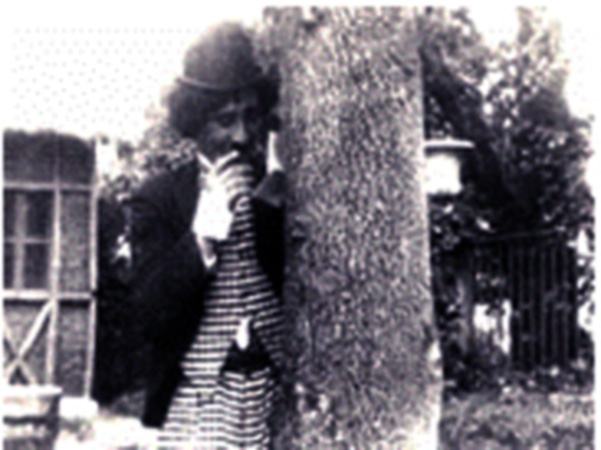
Harry Langdon, a name often overshadowed by the likes of Chaplin and Keaton, begins to etch out his distinct comedic identity in 'Horace Greeley, Jr.' His performance here is less the fully-formed 'man-child' persona he would perfect later in features like Paddy O'Hara, and more a raw, unpolished gem. Langdon's physical comedy is immediately apparent, particularly in the initial fight scene. He doesn't engage in graceful acrobatics; instead, his movements are clumsy, desperate, and utterly relatable.
Consider the moments where he's grappling with the gang leader. His wide-eyed confusion, the flailing limbs, and the sheer look of bewildered terror on his face are all masterfully conveyed without a single word. This isn't just slapstick; it's a character study in panic and accidental triumph. He leverages his expressive face and gangly physique to communicate fear, surprise, and a burgeoning, if temporary, confidence.
The shift in his demeanor after spotting June Marlowe's character is particularly telling. The slump in his shoulders gives way to a straightened posture, his panicked glances replaced by a determined focus. It's a subtle, yet powerful, demonstration of acting prowess, showing how external motivation can completely alter a character's physical and emotional landscape. Langdon's ability to convey this internal shift visually is the film's strongest asset, hinting at the depth he could achieve even within the constraints of silent cinema.
Alfred J. Goulding, a prolific director of silent shorts, demonstrates a keen understanding of kinetic storytelling in 'Horace Greeley, Jr.' His direction is pragmatic, prioritizing clear action and dynamic movement over elaborate set pieces or complex camera work. The opening scene, confined within the tarp-covered caravan, is a masterclass in creating tension and chaos in a limited space. Goulding uses tight framing to emphasize the close-quarters combat, making every punch and struggle feel immediate and impactful.
The subsequent chase sequence is where Goulding truly shines. The contrast between Horace on his mule and the gang in their car provides a visually engaging disparity. Goulding employs clever cross-cutting, alternating between the determined pursuit and Horace's frantic escape, effectively building suspense. While not as visually groundbreaking as some contemporaries, the sequence is efficient and propulsive, driving the narrative forward with relentless energy. It's a testament to how much excitement could be generated with relatively simple techniques.
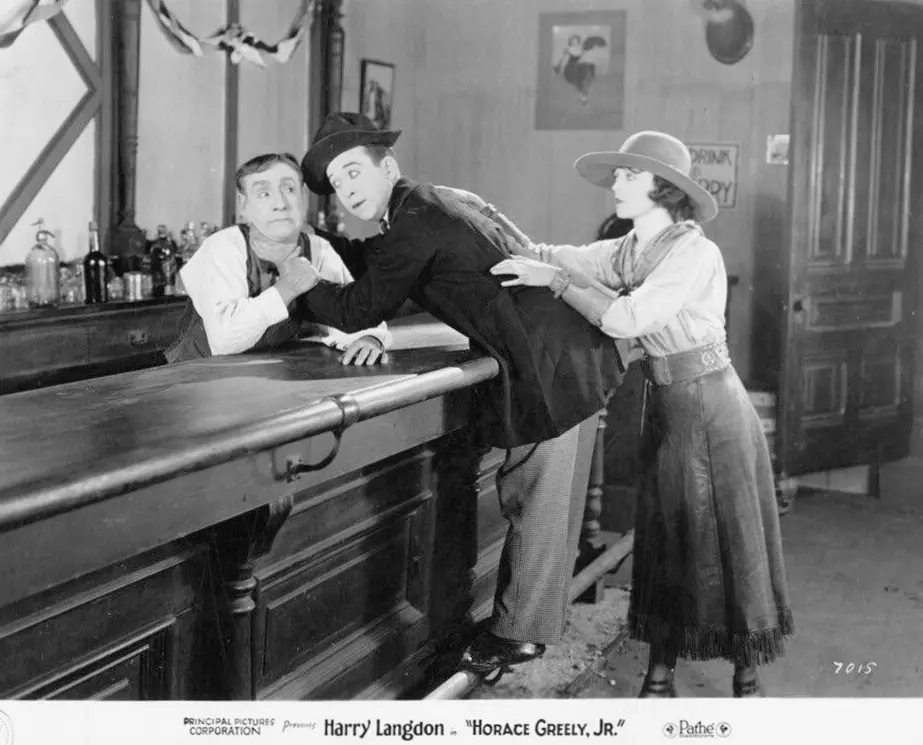
However, the film's pacing isn't always perfect. The initial fight, while energetic, feels slightly protracted, perhaps a consequence of needing to fill a certain runtime. Yet, the quick resolution of the capture and the immediate focus on the romantic payoff demonstrate Goulding's understanding of the short-form narrative; he knows when to cut the action and move to the emotional core. The cinematography, while functional, adheres to the standards of the era, focusing on clear sightlines and well-lit scenes. There are no grand sweeping shots or experimental angles, but rather a focus on clarity and character visibility, ensuring the audience never loses track of the action or Langdon's expressive performance.
At its heart, 'Horace Greeley, Jr.' is a romantic comedy, albeit one filtered through the lens of a rudimentary action plot. The entire third act, from Horace's renewed courage to his ingenious capture of the gang, is explicitly performed for the benefit of June Marlowe's character. She is not a damsel in distress in the traditional sense; she is an observer, a judge, and ultimately, the prize. Her presence elevates Horace's actions from mere self-preservation to a quest for admiration.
The film's tone balances the frantic energy of the chase with the understated romantic tension. There's a charming simplicity to the romantic payoff – a shared gaze, a mutual understanding born of a public display of heroism. While the narrative doesn't delve into deep emotional complexities, it effectively establishes a connection based on valor and observation. It’s a classic setup that resonates even today, proving that some narrative tropes are timeless.
One could argue that the film's reliance on the 'heroic deed to win the girl' trope, even if she's capable and armed, feels somewhat dated. It puts the burden of proof entirely on Horace, and her role is largely reactive, despite her rifle. This is perhaps its biggest flaw from a modern perspective, lacking the more nuanced female characters seen in some other silent films like The Amazons. Yet, within its historical context, it delivers a satisfying, if conventional, conclusion to its romantic subplot, leaving the audience to ponder if his single heroic act is truly 'enough' for a lasting impression.
Yes, 'Horace Greeley, Jr.' is worth watching for specific audiences. It's a valuable historical artifact. It showcases early silent film techniques. It highlights Harry Langdon's formative comedic talent. It is short and engaging. It provides insight into the evolution of action-comedy. However, it requires an appreciation for the limitations of its era. It will not appeal to those seeking complex narratives or modern production values. It's a journey into the past, not a contemporary blockbuster experience.
'Horace Greeley, Jr.' is more than just a historical curiosity; it’s a vibrant, if slight, piece of early silent cinema that showcases the nascent talents of Harry Langdon and the kinetic directorial style of Alfred J. Goulding. It’s a film that demands a certain generosity from its audience, an willingness to look beyond modern expectations and appreciate the foundational elements of cinematic storytelling. While its plot is undeniably simple and its romantic resolution a product of its time, the sheer energy of its action sequences and Langdon's endearing performance make it a worthwhile watch for those interested in the evolution of film. It’s not a masterpiece, nor does it aim to be, but it is an honest, entertaining snapshot of a bygone era, proving that even in simplicity, there can be significant charm and historical value. For the dedicated cinephile, this brief encounter with Horace Greeley, Jr. is a necessary step in understanding the comedic landscape that would soon explode onto the screen. It works, imperfectly, but with a palpable sense of fun and foundational importance.
IMDb 4.3
1933
Community
Log in to comment.