DbcultAccessing Vault...
Cult Review
Senior Film Conservator
Paris, 1913. Gaslight coughs through the fog while a ducal carriage rattles past urchins who could be its own illegitimate progeny. Inside that carriage sits the titular gosse—a boy whose only wound thus far is a creased silk sleeve—yet within the film’s first three minutes the directors fling him into an urban labyrinth that swallows heirs and beggars with egalitarian appetite.
Silent-era audiences had seen waifs fall from grace before, but few filmmakers rendered the plunge with such surgical glamour. Compare it to Jim Grimsby's Boy where poverty is a soap-box shorthand; here destitution shimmers like absinthe, intoxicating and lethal. The camera—an unblinking flâneur—lingers on the sheen of rain-slick boulevards so that every puddle becomes a black mirror reflecting the boy’s former life.
Cinematographer Albert Sangrador (uncredited yet identifiable by his signature tungsten flare) treats the mansion’s interior like a cathedral of excess: chandeliers drip wax like slow confessionals, footmen glide on rails of perpetual bowing. When the child vanishes, these tableaux petrify into museum dioramas—wealth as mausoleum. Contrast that with the street sequences, shot in staggered handheld bursts; the negative space floods with charcoal smudges, faces half-illuminated by vendor’s braziers. The result is a chiaroscuro carousel: opulence and squalor waltz on the same strip of nitrate.
Color tinting intensifies the moral vertigo. Amber baths the ballroom scenes, the celluloid itself seeming dipped in cognac; indigo cloaks the riverside suicide, a cyan shroud that anticipates the cyanotic skin beneath. These hues are not mere ornament—they are narrative agents, chemicals that corrode the gilded myth of invulnerability.
Henry Roussel’s father combines paternal rigidity with the brittle panic of a stockbroker who senses the market of fate collapsing. Watch his hands: they flutter like wounded doves when the governess confesses the disappearance, then ossify into marble fists once denial calcifies. Roussel never tips into melodrama; instead he compresses anguish into micro-gestures—a tic beneath the left eye, a thumbnail scraping signet-ring gold.
Maurice Vauthier, barely twelve during production, carries the film on collarbones as slender as Balzac’s quills. His descent is charted through bodily linguistics: shoulders that begin squared inside tailored velvet end slouched under burlap; pupils that once mirrored chandeliers now absorb only bonfire sparks. In the pivotal river scene he does not cry—tears would be bourgeois privilege—but lets his lower jaw tremble like a loose shutter in a storm.
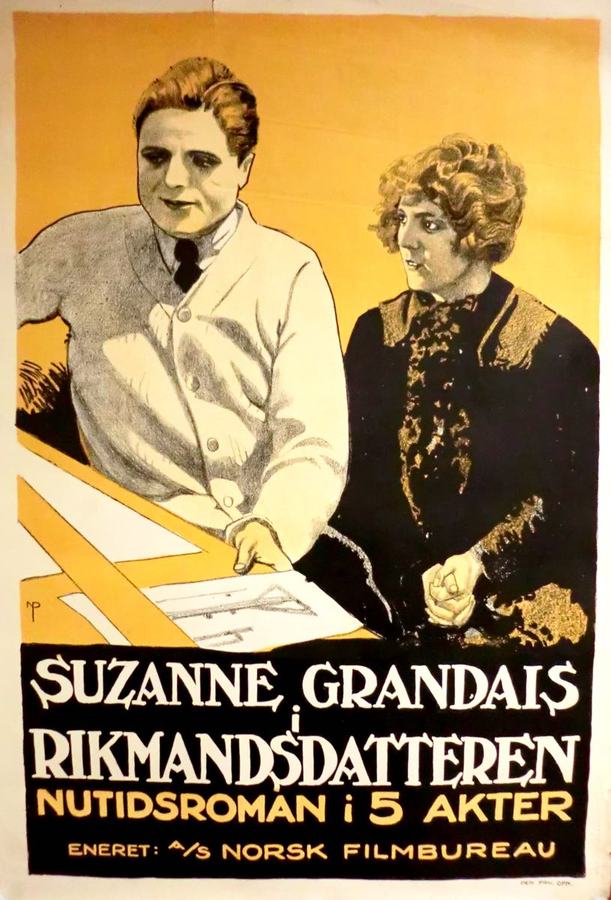
Suzanne Grandais, remembered today for The Girl in the Checkered Coat, here embodies the gutter muse. She teaches the hero how to steal a croissant by distracting a baker with a song half-remembered from the Opéra. Her eyes betray the sorrow of someone who once tasted chandeliers too, then shattered them for the crystal shards.
Charles Burguet’s intertitles read like haikus soaked in absinthe. Example: "Midnight kneels on the quai, praying with knives." Such economy weaponizes white space; the audience must suture meaning between silhouettes. Compare this verbosity-aversion to The Great Mexican War, where intertitles sermonize history; Gosse de riche trusts images to gnaw, words merely to salt the wound.
Contemporary exhibitors would have engaged a house pianist; the Cinémathèque’s 4K restoration commissioned a score for string quartet and barrel organ. Listen for the contrapuntal motif: a courtly minuet inverted into a minor key, its cadences truncated like truncated inheritances. The barrel organ’s metallic wheeze becomes the voice of poverty—an un-tunable ghost that haunts the aristocratic theme until both collapse into atonal exhaustion.
Passione tsigana also stages youth swallowed by adult cruelty, yet its gypsy camp romanticizes marginality. Gosse refuses violin-soaked nostalgia; its gutters stink of fish-rot. Meanwhile Autumn aestheticizes decline through pastoral decay—fallen leaves as death-metaphor. Here, the only foliage is a chestnut vendor’s burned-out brazier, its embers winking like predatory eyes.
The film’s DNA even anticipates the fatalistic noir of The Zone of Death (1917): both map existential traps disguised as cities. But while the later picture externalizes doom through gangsters, Gosse locates menace in social architecture itself—every lamppost a potential Judas, every lace curtain a bourgeois blinder.
Berthe Jalabert’s mother figure appears perhaps four minutes total, yet her absence skewers the film’s patriarchal core. She is wheeled in like an ornamental vase, collapses into fainting spells, then evaporates. The void she leaves is where the boy’s moral compass should rest; instead it becomes a crater filled by paternal decree and, later, by the urchin girl’s feral ethic. One could read the film as an Oedipal exorcism: kill the ethereal mother, embrace the concrete street-sister who teaches survival through petty larceny.
Costume designer Mme. Verdier (uncredited) weaponizes wardrobe. The boy’s Eton collar is starched so stiff it could slice proletarian throats; by reel three it droops like a wilted lily. Note the symmetry: the ragpicker who buys the diamond stickpin pins it to his burlap lapel, transforming the gem into a glowing eye that surveils its former owner. Objects metastasize meanings—wealth’s insignias become poverty’s talismans—anticipating the fetishistic prop-ontology of The Gamblers.
Watch the newsreel of any modern metropolis—tent cities shadowing glass penthouses—and you’ll see Gosse’s chiaroscuro reborn. The picture prefigures Piketty’s statistics with visceral punch. Its thesis: economic mobility is a pantomime doorway painted on brick. When the prodigal heir limps back to the mansion, the butler does not recognize him; class identity dissolves faster than a sugar cube in absinthe.
1913 critics praised the film’s "photographic verity," a coded phrase for its unglossy depiction of sewage. Yet provincial censors excised the suicide sequence, claiming it would "encourage aquatic apostasy among minors." Today festival audiences gasp at the restoration’s clarity: every nitrate scratch looks like a scar on the body politic. Twitter critics invoke it alongside You Never Saw Such a Girl for proto-feminist gestures, but that’s an anachronistic stretch; the film’s gender politics remain as knotty as burlap.
The last shot: dawn’s anemic light pools onto the mansion’s marble steps; the boy’s shadow bisects the family crest—half privilege, half perdition. Fade to black. No iris-out, no moral placard. Only the projector’s rattle, like coins in a tin cup, begging us to admit that the abyss between rich and poor is not an economic glitch but the original sin of civilization.
Viewers stagger out, tasting copper on their tongues, unsure whether the blood is theirs or the century’s. That metallic tang is the true intertitle—written not on screen, but on the spectator’s conscience. And there it flickers, inextinguishable, long after the footlights dim.
IMDb —
1919
Community
Log in to comment.