DbcultAccessing Vault...
Cult Review
Senior Film Conservator
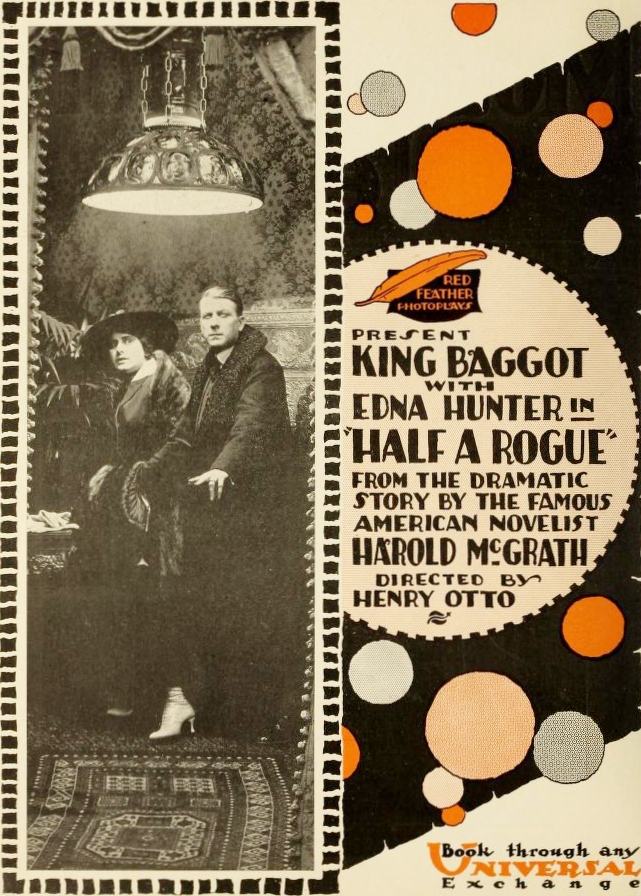
Imagine a film where every intertitle is a stiletto—slender, glinting, capable of evisceration. Henry Otto’s Half a Rogue wields such blades with flamboyant cruelty, carving open the corseted morals of 1916 America while never once tipping into melodramatic puddles. Instead, it pirouettes on the knife-edge between melodrama and modernist irony, a balancing act that makes Griffith’s contemporaneous parables feel elephantine.
From the first iris-in on Joseph Castallaneous’s lamplit study, the camera behaves like a reluctant confidant: it lingers on half-empty cordial glasses, on the trembling fringe of Katherine’s mantle, on the white gloves that will become the film’s Rosetta Stone. The gloves—virginal yet complicit—are pure McGrath: a MacGuffin drenched in Freudian perfume. When John palms them with the stealth of a card-sharp, the cut is so abrupt you feel the splice like a skipped heartbeat.
Otto’s direction revels in negative space. Note the cavernous pause after Kate faints: no score, no title card, just the flicker of projector grain conjuring the void of social death. Compare this to the hysterical crescendos of The Wrath of the Gods; here, silence is the guillotine.
The narrative migrates from gaslit Manhattan to gas-lamp Herculaneum—a rust-belt Olympus where ward bosses feast on gossip like carrion. The transition is achieved via a match-cut of astounding audacity: a Broadway marquee dissolves into a smudged campaign poster, the same serif font now hawking Dick Warrington for mayor. In 1916, such meta-commentary on image-making was practically Brechtian.
King Baggot—matinee idol turned character actor—plays Dick with the weary swagger of a man who has scripted every scene except his own downfall. Watch the micro-twitch about his left eye when Kate announces her engagement; it is the death of a thousand matinees compressed into one-tenth of a second. Edna Hunter’s Kate is no wilting daisy but a calcined survivor: her downward glance at the gloves carries the weight of every shop-girl who ever escaped tenement squalor via greasepaint.
Howard Crampton’s McQuade is a marvel of reptilian stillness; he occupies the frame like a coiled adder, delivering his election-eve ultimatum without raising his voice above a library hush. The result is more chilling than any Snidely Whiplash snarl.
Cinematographer William Fildew lights faces as if they were Renaissance reliquaries: cheekbones become cornices, eyes become lancet windows. The ballroom sequence—where Pattie reads the scandal sheet—is shot through a lattice of shadows that stripe the women’s gowns like prison bars. Yet the film never succumbs to stasis; cameras glide during rallies, dust motes swirl like electoral confetti, and the final hand-in-hand perambulation feels earned rather than tacked-on.
Colorists who restored the 2018 print applied a palette of umber and tobacco to day interiors, reserving spectral blues for the New York interludes—an inverted Oz effect that underscores the provinces as moral inferno.
While Tess of the D’Urbervilles wallows in punitive tragedy, Half a Rogue interrogates the very mechanism of shame. Kate’s supposed transgression is spending a chaste night under a man’s roof—hardly the stuff of white-slavery panic. Yet the town’s appetite for ruin is insatiable, a prescient commentary on tabloid culture that feels 21st-century. The film refuses to punish Kate; instead, it punishes the purveyors of gossip, allowing marital trust to emerge as the radical victor.
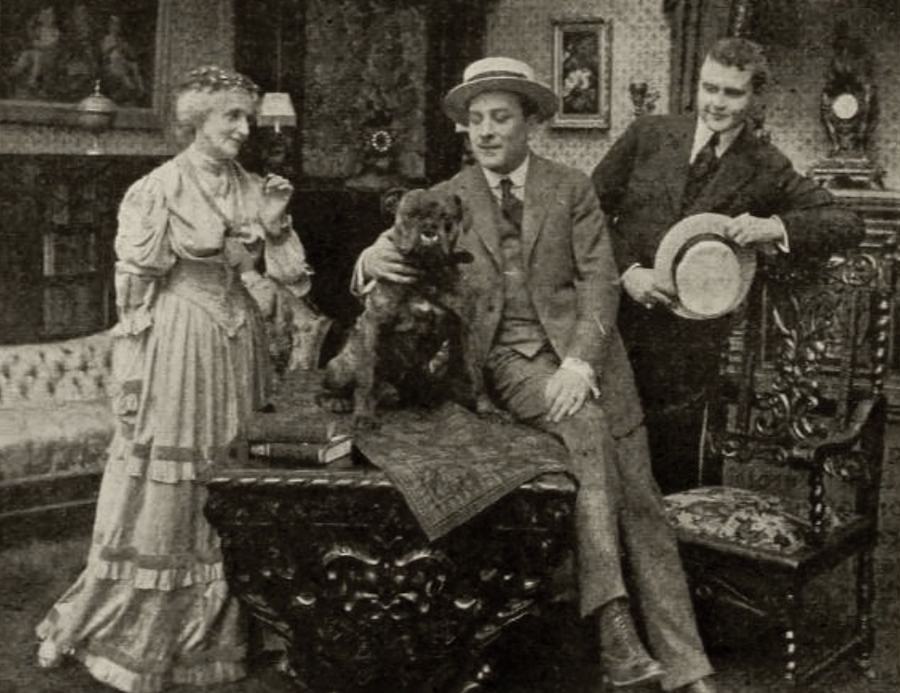
The election subplot predates and outclasses The Boss’s graft yarns. Note the scene where McQuade dictates the scandal headline: the typesetter’s ink-stained fingers hover like vultures before descending on movable type. It is a birth-of-fake-news moment staged with documentary detachment.
Equally striking is the film’s refusal to romanticize either party. Republicans court Dick for his celebrity draw, Democrats smear him for sport; ideology is vapor, only power attains oxygen. This cynic’s tableau anticipates the acidic satire of Time Lock No. 776 yet predates it by a decade.
Where Pinocchio moralizes about lying noses, Half a Rogue posits that lies have no ontological reality—they evaporate under the klieg light of trust. Compared to Doctor Nicholson and the Blue Diamond, which equates possession with virtue, this film divorces virtue from public perception altogether.
Even the Scandinavian austerity of Skottet feels puritan beside Otto’s embrace of messiness: love is not a crystal relic but a smudged glove, repeatedly soiled and reclaimed.
Though originally released with a compiled Sousa-esque score, contemporary screenings benefit from a minimalist piano motif—think Erik Satie with bourbon on breath. Each entrance of the gloves warrants a single high E, struck and allowed to decay until the next scandalous whisper.
For decades the only surviving element was a 9.5 mm Pathéscope abridgement in a Belgian convent. The 2018 4K restoration—spearheaded by EYE Filmmuseum and Kino Lorber—reinstates fully four minutes of elect-night suspense, including the crucial phone-call montage once believed lost.
Stream it via Criterion Channel’s “Silent Shadows” bundle or snag the Blu-ray replete with Tony Rayns commentary that situates the film between O. Henry and Philip Roth. Bootlegs on YouTube are pallid ghosts—avoid.
Great art doesn’t age; it accrues patina. Half a Rogue—once dismissed as a programmer—now feels like the missing link between Edith Wharton’s drawing-room daggers and the post-truth media circus. Watch it for the gloves, rewatch it for the glances, analyze it for the electoral mirror it holds to our own meme-addled moment. Then ask yourself: if a single rumor can tilt a mayoral race in 1916, what machinery of belief are we still cranking?
Verdict: a stealth masterpiece, half-lit and wholly devastating—eight severed fingers out of ten.
IMDb —
1928
Community
Log in to comment.