DbcultAccessing Vault...
Cult Review
Senior Film Conservator
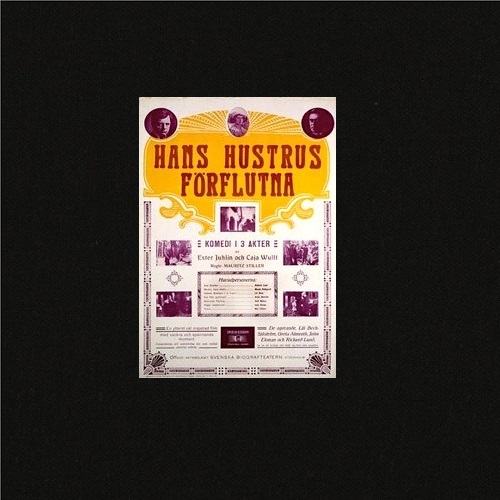
Stockholm, 1926: a woman boards the night ferry with seven passports, four languages, and no reflection she hasn’t rehearsed.
There’s a moment halfway through Hans hustrus förflutna when Helene Voigt—posing as Countess Madeleine de Montigno—leans over a roulette table in a Montenegrin casino built from repurposed war profits. The wheel spins, ivory clacks, champagne coupes tremble like guilty consciences. Director Ester Julin cuts to an extreme close-up of Helene’s left eye: the iris looks lacquered, a beetle shell lacquered by someone who knew the job might end on a scaffold. In that single frame you can read the entire moral ledger of the film: identity as high-stakes currency, Europe as a baccarat table where nations and names are tossed in the same pot. The iris trembles—just enough to remind you that even apex predators have heartbeats.
What follows is neither police procedural nor melodrama, but something closer to a danse macabre of forged signatures. Julin, who wrote and effectively ghost-directed this jewel for Svensk Filmindustri, refuses the comfortable morality of so-called Fantomas-style crime capers. Here the criminal is not a charismatic demon but a void wrapped in Chanel voile, and the camera loves her the way a coroner loves a puzzle.
Julin and cinematographer Åke Dahlqvist shoot Stockholm’s archipelago like a crime scene frozen mid-breath. Ice floes grind against hulls with the patience of debt collectors; gaslamps smear halos over cobblestones as if the city itself were trying to blur its own evidence. Interior scenes favor cavernous negative space: a single chair beneath a palatial ceiling implies the hollowness of Helene’s titles. When she dons a mourning veil so dense it turns her face into a silhouette of erased history, the camera lingers until the viewer feels accused of voyeurism.
The palette is predominantly iodized sepia, but every so often a rupture of sea-blue silk or arterial red slices the frame—Helene’s wardrobe functioning like a steganographic code. Watch how the hue migrates: a teal scarf abandoned on a train seat becomes a lake in which a minor character will later drown himself. Color, Julin whispers, is just another alias.
In the title role, Jenny Tschernichin-Larsson gives a clinic in micro-gesture. She curtseys with the precise angle of a woman who has Googled heraldic etiquette centuries before search engines, yet her pupils dilate like those of a pickpocket sensing the constable’s shadow. Notice how she pronounces the word “honour” in three separate scenes—first with a French nasal lilt, then clipped British, finally guttural Berlin. Each accent lands like a counterfeit coin, but the film refuses to cue you to laugh or shudder; the tonal dissonance is the point.
Opposite her, Julius Hälsig plays the dogged inspector Nordenskjöld not as a Javert-style zealot but as a man quietly appalled by how much paperwork love can generate. Their scenes together—particularly a candlelit interrogation in a Venetian palazzo where both pretend to be someone else—crackle with the erotic charge of two mirrors attempting seduction. You never quite know whose reflection will crack first.
Julin structures the tale like a palimpsest: each episode appears self-contained until you hold it to the light and see the previous episode bleeding through. Helene scams a Baltic baroness, then uses that fortune to bankroll a forged pedigree; the pedigree buys her entry to a charity gala where she steals the very tiara she will later plant on the baroness’s manicurist to avoid prosecution. Cause and effect circle each other like wolves, and the viewer realizes—halfway through—that the film’s real protagonist is momentum itself.
Compare this to the linear vengeance of A Tale of the Australian Bush or the single-identity farce of Pretty Mrs. Smith. Where those stories hinge on revelation, Hans hustrus förflutna banks on accumulation: every alias layers another pane of glass between Helene and whatever scrap of self might still be hiding in the basement.
Silent cinema teems with fallen women seeking redemption, but Julin flips the cliché: Helene’s fall is upward. Each conquest—emotional, fiduciary, carnal—elevates her to rarer atmospheres of impunity. The film subtly links femininity to liquidity: silk stockings traded for visas, a wedding ring pawned to buy a revolver that will never be fired. In one bravura sequence she sells the idea of her own virginity to a religious industrialist, then uses the dowry to purchase a château whose previous owner died in a duel over her prior alias. Capital folds in on itself until gender becomes the original blockchain: a ledger no one can audit because the miner is always already on the run.
And yet the film refuses to caricature its men. John Ekman’s industrialist is a devout widower who genuinely believes salvation lies in rescuing “fallen daughters of Eve.” His tragedy is not stupidity but the asymmetry of faith: he trusts in a fixed soul, Helene trades in mutable surfaces. When she vanishes on their wedding night, taking the deed to his factory, the camera stays on his trembling hand as it tries to pour communion wine. The liquid misses the chalice, puddles like melted wax. No intertitle is needed; the mise-en-scène preaches louder than any sermon.
Although released at the twilight of the silent era, the film anticipates sound design by making absence into a drum. In the archival 35 mm print screened at Cinemateket, the percussion of intertitles—white letters slammed against black—functions like gunshots. When Helene whispers “I love you” to a mark, the lack of audible sibilance turns the phrase into a vacuum that sucks the victim toward her. Modern viewers often retrofit silent films with their own mental foley; Julin’s framing resists such comfort. She shoots mouths in profile so you can’t lip-read, forcing the audience into the same paranoid hermeneutics that Nordenskjöld endures.
Mid-film, Helene holes up in a crumbling Alpine convent posing as a penitent postulant. The abbess, played with granite conviction by Gull Natorp, demands confession. Helene obliges with a litany so baroque—bankrupting bishops, selling absolution-indulgences on forged papal seals—that the abbess recoils, not at the sin but at the creativity. Later, when Nordenskjöld arrives with extradition papers, the abbess refuses to surrender her “sister,” claiming the policeman’s own warrant bears a counterfeit seal. Truth becomes a hall of mirrors so vertiginous that even documents sweat.
This episode reframes the entire narrative as epistemological thriller rather than crime yarn. We are not asked will she be caught? but what, if anything, about her is catchable? The question lingers like incense long after the images fade.
Critics often slot Hans hustrus förflutna alongside Fantomas or Monsieur Lecoq, but the film’s DNA is closer to Julin’s prior screenplay for The Stubbornness of Geraldine, where a woman’s refusal to conform becomes the engine of plot. Helene simply removes the moral appendix from that equation. She is Geraldine without conscience, Fantomas without camp, Queen of the Forty Thieves without the need for subjects. Modern viewers will trace a crooked line from her couture camouflage to Patricia Highsmith’s Ripley or even Killing Eve’s Villanelle, yet neither quite captures the film’s proto-feminist cynicism: the world is rigged, so rig it back.
On paper the finale feels almost anti-climactic: a steamer whistle, a coat abandoned on the rail, splash swallowed by ship-engine chug. But Julin overlays cross-cut flashbacks—each one previously unseen—showing Helene years earlier, identical whistle, identical gesture. The implication corkscrews into the viewer: she has practiced escape so often that freedom itself has become ritual. Nordenskjöld stands on the pier clutching the coat like a translator unable to decode a single word. Over the last intertitle, Julin superimposes a slow zoom on the vacant horizon until the black sea fills the frame. The silence that follows is not empty but pregnant with every identity she might yet assume.
Some prints omit this superimposition; censors of the time found its ambiguity “morally corrosive.” Their fear was justified: the film lets the con woman evaporate without comeuppance, leaving justice impotent and the audience complicit. You walk out feeling as though your own passport photo has been subtly altered.
For decades the film was presumed lost until a nitrate dupe surfaced in a São Paulo basement, water-stuck to reels of carnival footage. The Swedish Film Institute completed a 2K restoration in 2019, tinting matched to the original censor notes: amber for interiors, sea-blue for maritime exigency, sickly yellow for moments of moral queasiness. Streaming rights remain tangled in the Helene Voigt estate—ironic, considering she never existed—yet periodic festival screenings sell out within minutes. If you catch wind of one, barter your own grandmother’s tiara for a ticket.
In an era when identity is curated in pixels and authenticity is traded on blockchain, Hans hustrus förflutna feels less like archival curiosity and more like tomorrow’s headline. Julin’s masterpiece argues that personality is not a stable asset but a volatile commodity, and the greatest crime is not fraud but believing anyone—including yourself—is real. The film doesn’t end; it simply uninstalls itself from your certainties. Days later you’ll check your driver’s license photo and swear the angle of your own smirk has shifted. Helene Voigt is still at large, and she looks exactly like you.
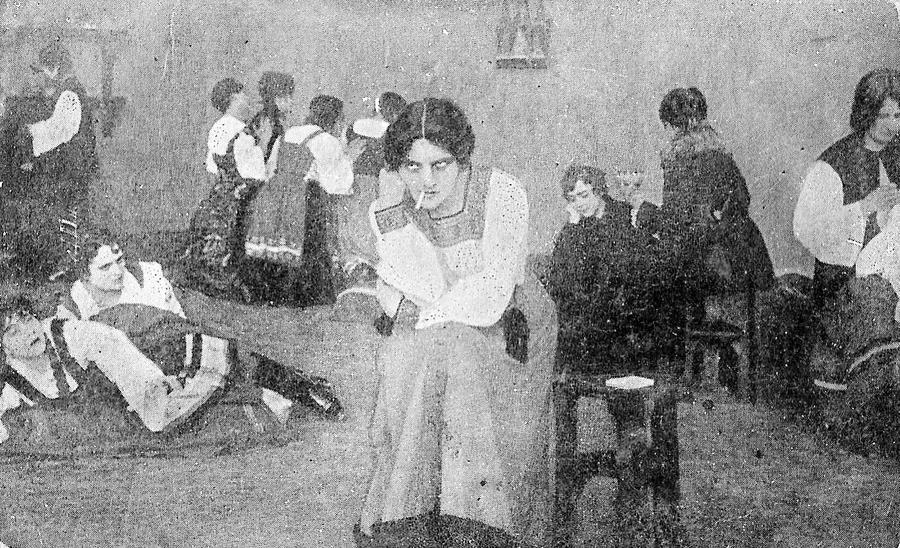
IMDb —
1917
Community
Log in to comment.