DbcultAccessing Vault...
Cult Review
Senior Film Conservator
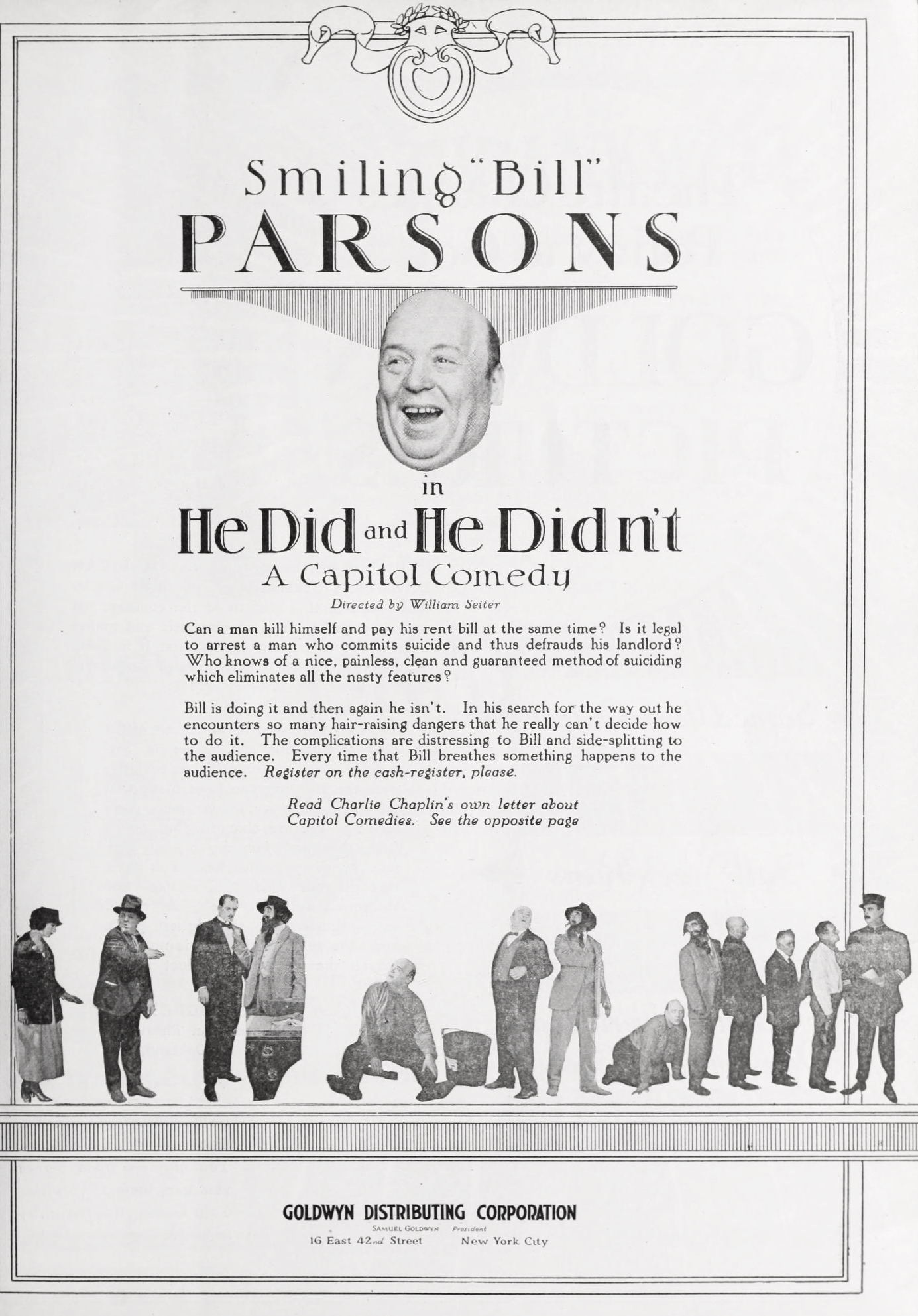
Picture 1916 audiences gasping not at trench warfare reels but at a man who cannot even die correctly. Tom Bret’s one-reel concoction distills the entire zeitgeist of pre-war American anxiety into a kinetic ballet of self-erasure gone berserk. Our unnamed hero—played by the rubber-faced William Parsons—staggers from a drawing-room rejection straight into a vaudeville of demise. The camera, static yet merciless, watches him knot a rope to a chandelier that promptly collapses into a heap of slapstick hubris. He sprints toward the river, only to bounce off a hidden sandbar like a skipped stone. Each thwarted exit becomes a metronome tick marking the absurdity of existence.
When the law finally scoops up this bedraggled Sisyphus, the cell is less punitive than curatorial—a liminal gallery where failure is reframed. Enter the philanthropist: silk-gloved, eyes glittering with the cold benevolence of a patron commissioning a living sculpture. She purchases his sentence, rebrands him “butler,” and ushers him into a domestic realm where every teacup trembles with comic potential. The class inversion is swift and ruthless; yesterday’s suicidal vagabond now polishes the silver of a woman who might have once signed his commitment papers.
Inside the mansion, Bret’s script unleashes a Rube-Goldberg of social embarrassment. The rival suitor—an upholstered dandy scented with carnations and entitlement—sneaks in for a midnight tryst. Our reformed suicide, now armed with tray and dignity, sabotages the assignation through a choreography of mistimed doors, toppled candelabra, and a soufflé that detonates like a cream-filled grenade. The sequence crackles with the anarchic spirit of Zigomar contre Nick Carter yet remains tethered to domestic slapstick, proving that the most explosive battlefields are drawing rooms.
Just when the butler’s newfound equilibrium teeters, a telegram arrives—equal parts angel and venture capitalist—announcing his uncle’s death and a million-dollar estate. The reversal is so abrupt it feels like a cinematographic splice, a jump-cut from poverty to plutocracy. Parsons’ face registers not elation but a stunned vertigo, as though he’s been handed the keys to a rollercoaster whose tracks vanish into fog. Marriage to the philanthropist follows with the inevitability of a final reel kiss, yet the power dynamic has pirouetted: she who once owned his debt now shares his surname and balance sheet.
Cinematographer Frank D. Williams frames each gag in depth: foreground clutter teems with trip hazards, while middle-ground doorways become proscenium arches for surprise entrances. Intertitles, scarce as champagne in a speakeasy, let physicality dominate. Compare this to the shadow-drenched fatalism of Der Fall Dombronowska or the expressionist doom of Il campo maledetto; here, light is diffuse, almost vaudevillian, banishing the possibility of genuine darkness. Even the noose scene is lit like a wedding veil—an ironic halo that sanctifies the gag.
William Parsons, often dismissed as a second-tier Chaplin, actually operates closer to the commedia lineage of Pantalone crossed with Buster Keaton’s stone-faced resilience. His body is a marionette whose strings are visible only when he freezes mid-gesture, allowing the audience to anticipate the impending calamity. Watch the micro-twitch of his left eyebrow when the million-dollar news arrives—an infinitesimal crack through which terror leaks. It’s a masterclass in subdued hysteria, the antithesis of the manic grins that plague lesser silent clowns.
The philanthropist, credited only as “Miss De Vere,” functions simultaneously as muse, warden, and speculative investor. She bankrolls redemption on installment, her charity a futures market on masculine reform. The film never interrogates whether love can root in such rocky soil; instead, it treats affection like a stock option that vests upon inheritance. Contemporary viewers may cringe, yet the narrative cynically foreshadows the marriage plots of 1950s screwball, where lucre lubricates romance. Contrast this with the proto-feminist agency seen in A Little Princess or the outlaw autonomy of Lightning Bryce; here, feminine power remains contingent on wealth-mediated consent.
At a brisk 12-minute runtime, the film compresses an entire three-act arc into the span of a coffee break. Each scene functions like a vaudeville blackout sketch, yet Bret’s editorial stitching is invisible. The pivot from suicide to servant to spouse occurs with the momentum of a Keystone chase, leaving the viewer breathless but weirdly elated. Modern screenwriting manuals would label such velocity “whiplash,” yet 1916 appetites craved precisely this hit of narrative cocaine.
Beneath the pratfalls lurks a bleak metaphysical joke: the universe refuses to let you exit, only to auction you off to the highest bidder. The film’s title, He Did and He Didn’t, operates like a quantum superposition—he did kill himself / he didn’t; he did win the girl / he didn’t earn her. That ambiguity lingers like a phantom frame, provoking uneasy chuckles. One exits the theater (or finishes the YouTube rip) laughing, then wonders why the laughter tastes metallic. In this, it shares DNA with the moral vertigo of Money Madness and the cosmic shrug in Bog pravdu vidit.
The single known 35mm print, rescued from a Maine barn in 1978, now dwells in the Library of Congress’ nitrate vault. A 2K transfer circulates among private collectors and occasionally surfaces on streaming silents channels, though the intertitles remain reconstructions based on censorship cards. The existing version runs marginally longer than trade-press synopses, suggesting some gags—perhaps a second suicide montage—are lost to decomposition. Even fragmentary, the film offers a Rosetta Stone for scholars tracing the evolution of dark comedy from Sennett’s slapstick to the sardonic bite of 1940s noir.
When scoring this anarchic mini-epic, avoid jaunty salon waltzes that sand off the existential edge. Instead, deploy prepared-piano clusters, muted brass glissandi, and the occasional detuned music-box motif to keep the abyss in view. During the inheritance telegram scene, let a single bass drum pulse like a cardiac murmur beneath celesta arpeggios—wealth as both lullaby and death knell. Such sonic counterpoint transforms nostalgia into nervous system voltage, the way the Alloy Orchestra reanimated The Maelstrom.
Though eclipsed by Chaplin’s 1916 output, Bret’s film anticipates the acerbic social climbing in The Way of the World and the macabre whimsy of 1920s English stage thrillers. Its DNA resurfaces in the 1934 Lubitsch romp The Merry Widow, where penniless suitors also discover that romance arrives gift-wrapped in fortune. Film historians tracing the pre-Code appetite for morbid levity must include this one-reeler alongside the courtroom grotesqueries of The Witching Hour.
He Did and He Didn’t is neither mere antique curiosity nor disposable trifle; it is a compact grenade of nihilistic glee. Its brevity is its brilliance—before you can parse the ethics, the lights come up and you’re chuckling at your own complicity. Seek it out, project it on a wall, let the piano strings rattle, and savor the chill that arrives when you realize the joke is on mortality itself.
“To fail at death yet succeed in life—this is the American dream in twelve minutes of nitrate.”
If the aftertaste of sudden wealth feels too cloying, rinse with the poisoned champagne of The Last of the Ingrams or the desert nihilism of The Bruiser. Conversely, for more gilded reversals, sample the inheritance lunacy in Peggy Leads the Way. Each provides a different shade of the same comic existentialism, proving that silence, when tinted just right, can echo louder than any scream.
IMDb —
1936
Community
Log in to comment.