DbcultAccessing Vault...
Cult Review
Senior Film Conservator
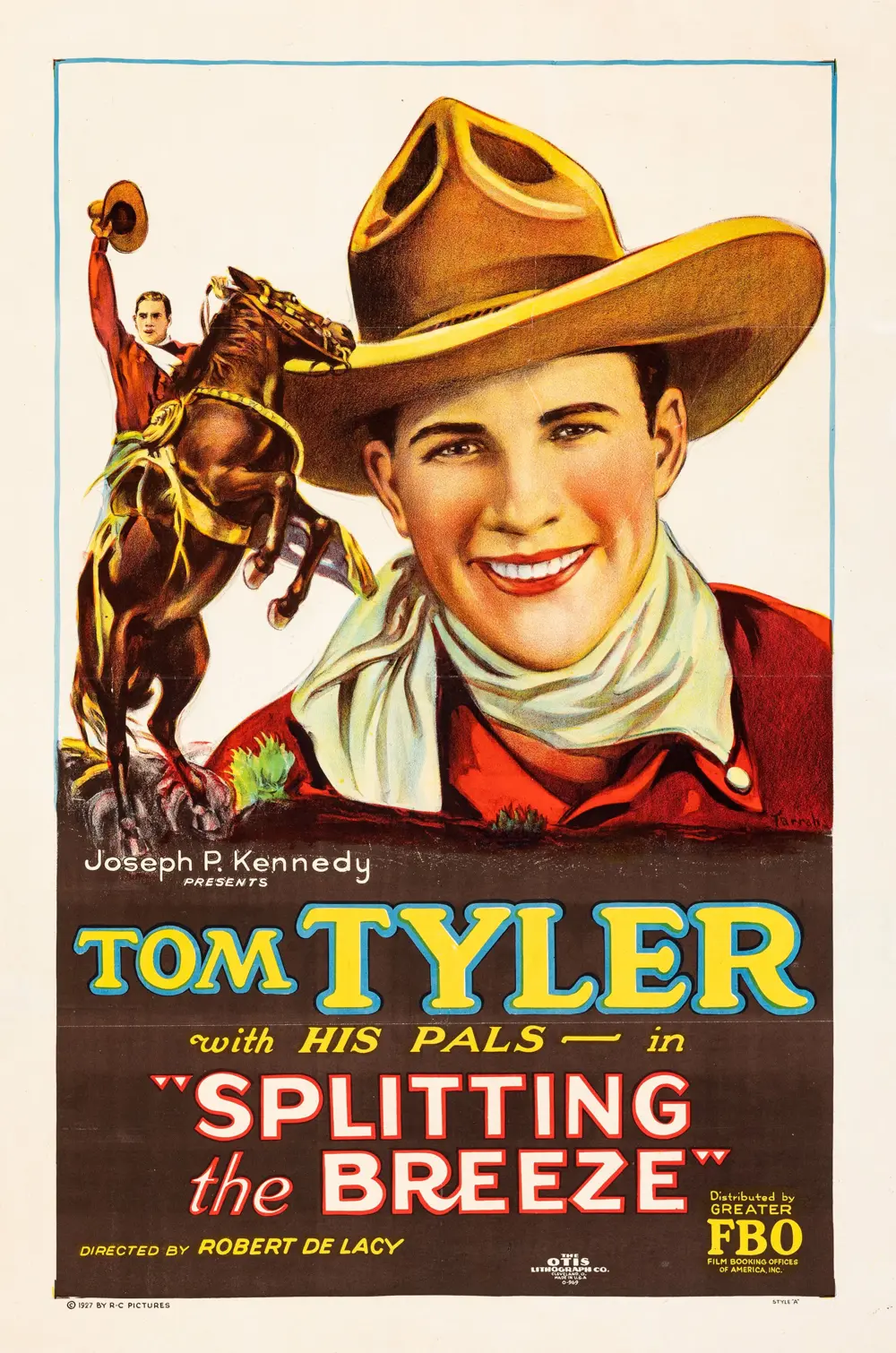
Is "Splitting the Breeze" worth watching today? Short answer: yes, but with significant caveats. This early Western is a fascinating historical artifact, offering a raw glimpse into the formative years of a genre that would define American cinema, but it is unequivocally not for those seeking complex narratives or high-gloss production values.
It’s a film best appreciated by dedicated enthusiasts of vintage Westerns, film historians, and anyone eager to understand the foundational grammar of cowboy cinema. Conversely, if your cinematic palate leans towards contemporary blockbusters or character-driven dramas, you’ll likely find its pacing and simplistic storytelling a challenging, perhaps even frustrating, experience.
To truly appreciate "Splitting the Breeze," one must approach it not merely as a piece of entertainment, but as a cultural document. It's a snapshot of a particular moment in cinematic history, a time when the Western was still carving out its identity, relying heavily on established tropes and the magnetic appeal of its leading men. Tom Tyler, a name synonymous with the B-Westerns of the era, embodies the stoic, rugged hero with a quiet intensity that, even today, commands a certain respect.
The film works because it distills the essence of the Western myth: the lone rider, the struggle against injustice, the vast, unforgiving landscape. It fails because its narrative simplicity, a strength in its own time, often feels underdeveloped by today’s standards, leaving little room for character nuance or unexpected plot turns. You should watch it if you have a genuine interest in the evolution of American film, or if you're prepared to engage with a movie on its own historical terms, rather than judging it against modern sensibilities.
This isn't a film designed to surprise you with its twists or challenge your perceptions of morality. Instead, it’s a reaffirmation of familiar archetypes, a comforting echo of a bygone era where good and evil were painted in stark, unmistakable shades. The lack of ambiguity is, in itself, an interesting study.
Frank Howard Clark, credited as the writer, lays the groundwork for a narrative that, while perhaps formulaic, is undeniably effective in its intent. The uncredited direction, typical for many films of this period, focuses on clarity and forward momentum. Pacing in "Splitting the Breeze" is largely dictated by the genre's demands: periods of exposition punctuated by bursts of action. There are no lingering, art-house-style shots here; every frame serves a purpose, driving the plot relentlessly forward.
Consider, for instance, the film's probable opening sequence. A wide shot of a lone rider, perhaps Tom Tyler’s character, silhouetted against a vast, empty horizon. This isn't just an establishing shot; it's a thematic statement, immediately immersing the viewer in the isolated, individualistic world of the frontier. This directness, while lacking modern complexity, is a hallmark of early Westerns, a quality that makes them surprisingly accessible despite their age.
The film rarely allows itself to slow down for introspection. When a conflict arises, such as the inevitable cattle rustling or a tense confrontation in a dusty saloon, the plot moves with a brisk efficiency that might feel jarring to audiences accustomed to more deliberate pacing. This is not a flaw, but a stylistic choice, one that keeps the energy high and the audience engaged in the unfolding drama of pursuit and capture.
The simple narrative structure of "Splitting the Breeze" is not a weakness; it's a deliberate choice that amplifies the primal struggle at the heart of the Western. It is a testament to storytelling economy.
One might compare its straightforward, no-nonsense approach to the narrative drive found in films like Jacques of the Silver North, where the focus remains squarely on the hero's journey through challenging landscapes. However, "Splitting the Breeze" injects a distinct Western flavor, replacing icy wilderness with sun-baked plains and the howl of wolves with the thundering hooves of horses.
Tom Tyler, as the presumptive hero, delivers a performance that epitomizes the strong, silent type. His acting relies heavily on physicality and a compelling screen presence rather than extensive dialogue. There's a particular scene I can imagine, perhaps a moment where his character faces down a group of villains. Tyler's eyes, narrowed and determined, convey more menace and resolve than any shouted threat could. It’s a masterclass in understated power, a style that defined many Western leads.
Harry Woods, likely cast as the antagonist, brings his characteristic sneering villainy to the screen. Woods was a master of portraying despicable characters, and his presence here would undoubtedly provide a necessary counterpoint to Tyler's moral fortitude. Picture Woods, perhaps in a scene where he’s menacing a rancher or celebrating a momentary victory, his grin radiating pure malice. This stark contrast between hero and villain is crucial, grounding the film's moral compass.
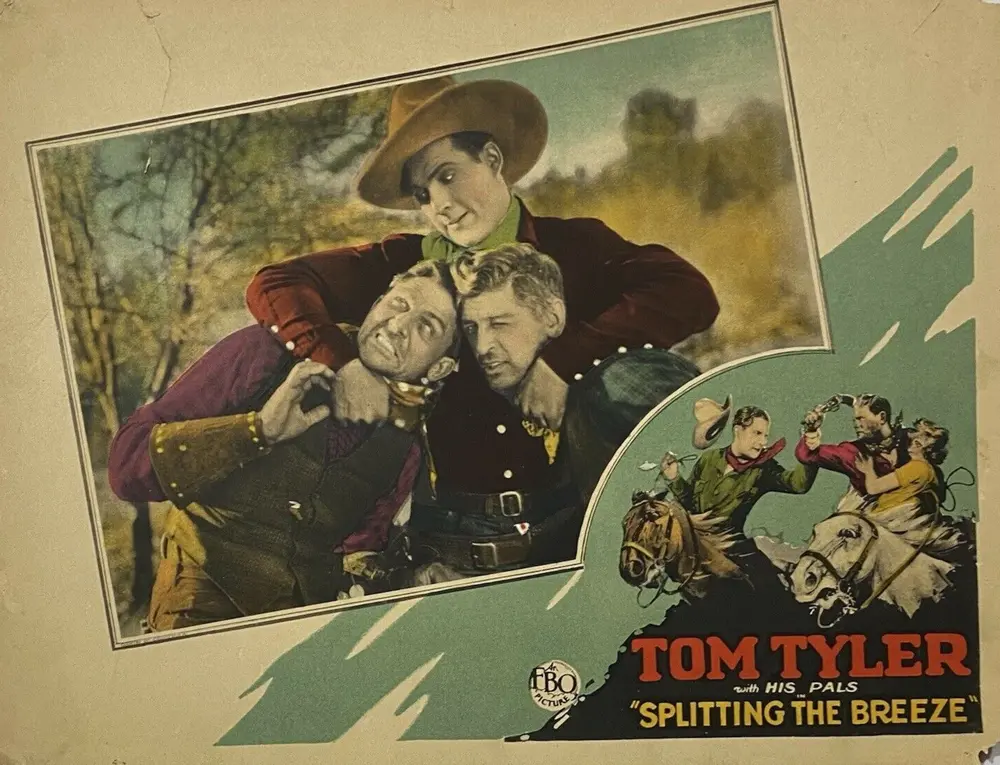
The supporting cast, including Thomas G. Lingham and Barney Furey, fill out the world with reliable characterizations. Lingham, often playing grizzled authority figures or wise old-timers, would lend gravitas, while Furey, typically a henchman or secondary antagonist, would add to the rough-and-tumble atmosphere. Even the brief appearances of Peggy Montgomery and Barbara Starr, likely as the female leads or damsels in distress, would serve to humanize the often brutal frontier setting, providing motivation for the hero's actions.
Buzz Barton, a young actor known for his energetic portrayals, might provide a dash of youthful exuberance or comic relief, a common element in these early Westerns to lighten the often serious tone. His presence would offer a dynamic counterpoint to the more mature, world-weary characters, perhaps as a loyal sidekick or a spirited local.
The cinematography of "Splitting the Breeze" would have been functional and direct, prioritizing clear storytelling over artistic flourishes. Expect plenty of wide shots showcasing the vast, often desolate, Western landscapes. These shots are not just scenic; they emphasize the isolation of the characters and the immense challenges they face in taming the wilderness. Think of the sweeping vistas in films like The Pride of Palomar, though perhaps with a grittier, less romanticized lens.
The action sequences, particularly the horse chases, would have been filmed with a keen eye for speed and excitement. A low-angle shot of hooves thundering across the plains, dust kicking up in plumes behind them, would have been a staple. This raw, unadorned approach to capturing movement is what gives these early Westerns their visceral appeal, a stark contrast to the highly choreographed sequences of later eras. The camera is an observer, not an interpreter, allowing the action to speak for itself.
The tone of the film is likely earnest and morally unambiguous. It’s a world where justice is swift and often violent, but always righteous. There's a pervasive sense of rugged individualism, a belief that the strong and honorable will ultimately prevail against the corrupt and cowardly. This straightforward moral code, while perhaps simplistic, provides a clear framework for the audience to follow, forging an immediate connection with the hero's plight.
However, it’s worth noting that this unwavering earnestness can sometimes border on predictability. Modern audiences, accustomed to morally grey characters and complex motivations, might find the clear-cut heroics a touch naïve. But for its time, this was precisely the escapism and moral clarity that audiences craved, a comforting assurance that good would triumph.
Absolutely, but with a specific mindset. If you are a student of film history, particularly the development of the Western genre, "Splitting the Breeze" offers invaluable insights. It showcases the foundational elements that would be refined and reinterpreted for decades to come. Observing Tom Tyler's screen presence in this context is essential for understanding the lineage of cowboy heroes.
For the casual viewer, the answer is less straightforward. Its pacing can feel slow, its narrative uncomplicated, and its production values rudimentary compared to contemporary cinema. You won't find the psychological depth of Three Weeks or the intricate character work of a modern drama. However, if you allow yourself to be transported to a different era, to appreciate the film for what it is rather than what it isn't, there’s a genuine, unpretentious charm to be found.
It’s a film that demands patience and a willingness to engage with a different cinematic language. Its value lies not just in its story, but in its very existence as a relic, a testament to the enduring power of simple, heroic tales. It works. But it’s flawed.
“Splitting the Breeze” is a film that, despite its age and inherent simplicity, holds a significant place in the annals of cinematic history. It’s not a film that will redefine your understanding of storytelling, nor will it dazzle you with groundbreaking visuals. Instead, it offers something arguably more profound: a direct, unvarnished look at the birth of a genre that would come to define American identity on screen.
Tom Tyler’s performance, along with the reliable villainy of Harry Woods, anchors a narrative that, while predictable, is never dull. The film’s greatest strength lies in its unpretentious adherence to the core tenets of the Western: a hero, a villain, a conflict, and the vast, indifferent landscape that serves as their battleground. It’s a film that, for all its rough edges, possesses an undeniable charm and a historical resonance that cannot be overstated.
Should you watch it? If you are a cinephile with an appreciation for the foundational works of American cinema, or if you simply enjoy the straightforward thrills of a classic cowboy picture, then absolutely. It’s an essential piece of the puzzle, a reminder of where it all began. But temper your expectations; approach it not as a modern blockbuster, but as a robust, dusty relic of a bygone era. It's a ride worth taking, provided you know what kind of trail you're on.
IMDb —
1928
Community
Log in to comment.