DbcultAccessing Vault...
6.1/10
Senior Film Conservator
A definitive 6.1/10 rating for a film that redefined the boundaries of cult cinema. Kiss of Death remains a cornerstone of transgressive art.
In the annals of early cinema, certain films emerge not merely as historical artifacts but as profound examinations of the human condition, their narratives transcending the limitations of their era to resonate with an enduring potency. Such is the case with Kiss of Death, a film that, despite its age, masterfully navigates the treacherous waters of psychological suspense and moral ambiguity. The very premise, deceptively simple yet pregnant with possibility, positions the audience as a silent jury, tasked with piecing together a fractured truth from the disparate accounts surrounding the untimely demise of Dr. Monro. His sudden death, discovered within the cloistered confines of his own residence, immediately casts a long shadow, inviting speculation and suspicion in equal measure. This isn't merely a whodunit; it's a profound exploration of perception, memory, and the insidious ways in which personal biases can warp reality, transforming objective facts into subjective narratives.
The ingenious narrative structure, credited to the collaborative vision of A.V. Samsjö and G. Sjöberg, hinges on the testimonies of three individuals, each offering their unique lens on the events that culminated in tragedy. This Rashomon-esque approach is particularly effective in a silent film context, where the absence of spoken dialogue amplifies the significance of visual cues, body language, and the subtle interplay of expressions. The viewer is compelled to scrutinize every gesture, every lingering gaze, every nervous twitch, searching for the tell-tale signs of deceit or genuine distress. It transforms the cinematic experience into an active intellectual exercise, a thrilling foray into the labyrinthine corridors of human psychology. What makes this particular framework so compelling is its inherent challenge to the notion of a singular, objective truth. Instead, we are presented with a kaleidoscope of realities, each reflecting a fragment of the larger, elusive picture.
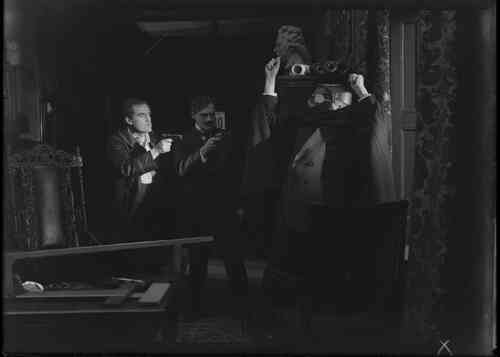
As each witness steps forward, a new layer of complexity is peeled back, revealing not just their version of events, but also their intricate relationship with the deceased and, crucially, with each other. The first testimony might paint Dr. Monro as a man of impeccable character, a pillar of the community, whose death is an inexplicable tragedy. However, the subsequent accounts begin to chip away at this facade, introducing elements of hidden desires, professional rivalries, or even a clandestine romantic entanglement that cast a very different light on his life and ultimate demise. Perhaps one witness, portrayed with compelling intensity by Wanda Rothgardt, offers a tale of unrequited love or a bitter betrayal, hinting at a motive rooted in passion or vengeance. Her expressions, conveyed through the dramatic conventions of the era, would be a masterclass in silent anguish or simmering resentment.
Another, perhaps a colleague or a rival, brought to life by the nuanced performance of Thure Holm, might present a more calculated narrative, one that deflects suspicion while subtly implicating others, or perhaps even himself. His testimony could revolve around professional ethics, a disputed discovery, or a financial disagreement, showcasing the darker undercurrents of ambition and greed. The final witness, potentially a close family member or a trusted confidante, perhaps embodied by the formidable Jenny Tschernichin-Larsson, could then deliver the most devastating blow, revealing a deeply personal secret that shatters all prior assumptions. Her portrayal would likely be imbued with a profound sense of loss and moral conflict, her every gesture speaking volumes about the burden of hidden knowledge. The interplay between these accounts creates a profound sense of dramatic tension, leaving the audience perpetually questioning the veracity of each statement and the true nature of the relationships at play.
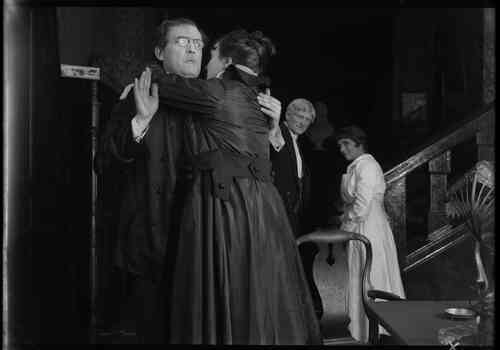
The brilliance of Kiss of Death lies in its refusal to provide easy answers. Instead, it revels in the ambiguity, forcing the viewer to confront the unsettling reality that truth is often a construct, filtered through individual experiences and motivations. The title itself, Kiss of Death, becomes a potent metaphor, suggesting not just a literal act of violence, but perhaps a fatal embrace of deceit, a poisoned legacy passed down through generations of secrets, or the seductive pull of a forbidden desire that ultimately leads to ruin. This thematic depth elevates the film beyond a simple crime procedural, transforming it into a poignant commentary on the human capacity for both profound love and devastating cruelty. It’s a film that resonates with the moral complexities found in narratives like Fior di male, where the 'flower of evil' blossoms from human frailties and societal pressures, or even the domestic tensions explored in The Opened Shutters, where secrets within a household slowly unravel.
The ensemble cast, featuring luminaries such as Victor Sjöström, Julius Hälsig, Bertil Junggren, and Mathias Taube, undoubtedly contributes significantly to the film's lasting impact. Sjöström, a titan of early Swedish cinema, whether in front of or behind the camera, brings a gravitas and an understated intensity to his role, likely as a detective or a central figure whose own moral compass is tested by the unfolding events. His command of subtle expressions and physical presence would have anchored the film’s emotional core, guiding the audience through the psychological maze. The silent era demanded a unique brand of acting, where emotions had to be externalized with clarity and precision, yet without tipping into melodrama. The performances in Kiss of Death would have been a testament to this delicate balance, each actor contributing to the rich tapestry of suspicion and revelation.
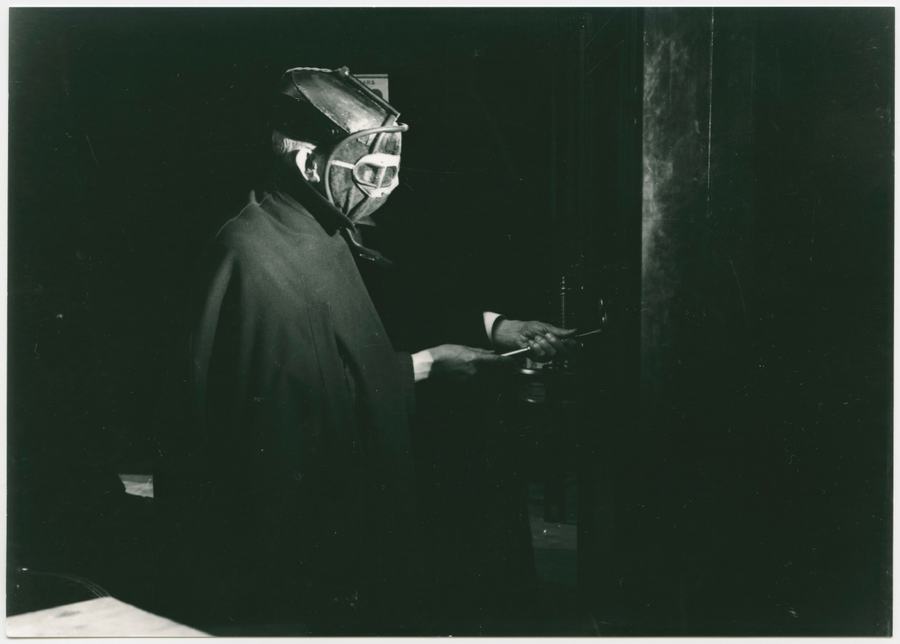
The meticulous direction, often characterized by its innovative use of close-ups and evocative set design, would have underscored the psychological intensity. Imagine the camera lingering on the anxious hands of a witness, the darting eyes of another, or the stark, unforgiving lines of the interrogation room. These visual metaphors would have been crucial in conveying the inner turmoil and hidden agendas of the characters. The creative choices made in framing and editing would have amplified the suspense, building tension through slow reveals and dramatic juxtapositions of the conflicting testimonies. The film's aesthetic would undoubtedly reflect the stark, almost expressionistic tendencies of Northern European silent cinema, using light and shadow not just for illumination but for psychological effect, mirroring the moral chiaroscuro of the narrative.
The work of actors like Alfred Lundberg, Emil Bergendorff, and Albin Lavén, though perhaps in supporting roles, would have been indispensable in building the believable world surrounding Dr. Monro. Each character, no matter how minor, serves a purpose in either corroborating or contradicting the evolving narrative, adding layers of texture to the central mystery. The strength of silent cinema often lay in its ability to tell grand stories with a profound economy of means, relying on the sheer expressive power of its performers and the visual artistry of its creators. Kiss of Death, with its compelling premise and skilled ensemble, exemplifies this artistic triumph, drawing the viewer into its web of intrigue with an almost hypnotic pull. The film’s ability to sustain suspense through multiple, often contradictory, viewpoints is a testament to the sophisticated storytelling techniques employed by its creators, making it a precursor to later cinematic explorations of subjective reality.
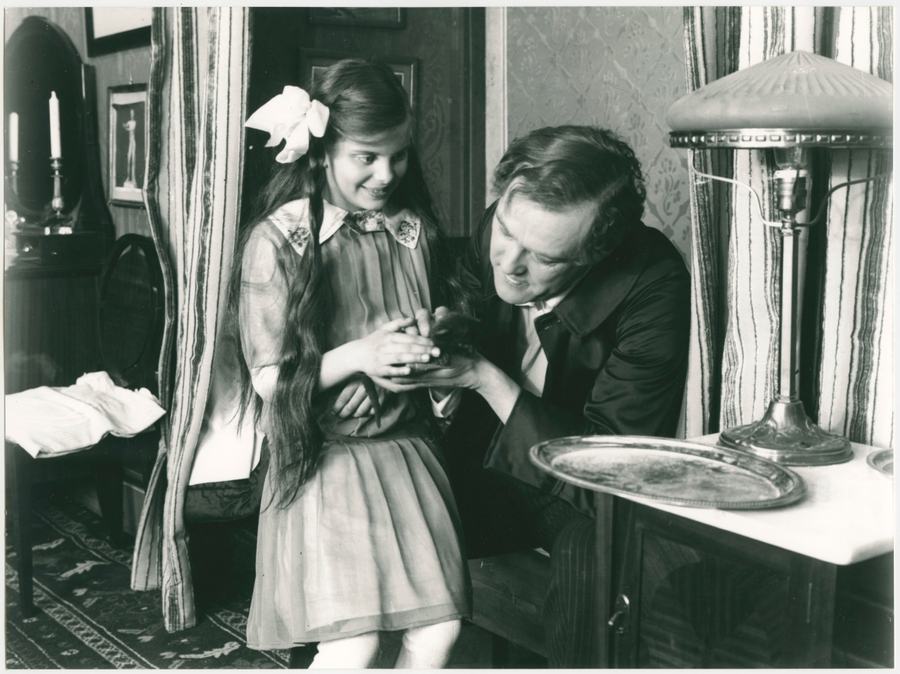
Beyond the immediate whodunit, Kiss of Death delves into universal themes that remain perennially relevant. It probes the nature of guilt, both individual and collective, and the often-destructive power of secrets. The film implicitly asks: how much of our reality is shaped by what we choose to believe, and how much by what we refuse to see? The moral quandaries presented are not easily resolved, leaving a lingering sense of unease that speaks to the complexities of human motivation. This thematic richness places Kiss of Death in conversation with other silent era dramas that grappled with societal hypocrisy and personal torment, such as The Folly of Sin, where moral transgressions lead to inevitable downfall, or even the more intimate dramas like The Only Son, which often explored the devastating consequences of hidden family secrets.
The film’s enduring appeal lies in its sophisticated understanding of human psychology. It’s not simply about identifying the killer, but about understanding the intricate web of relationships, desires, and resentments that led to the tragic outcome. Each testimony, while ostensibly a recounting of facts, is also a performance, a carefully constructed narrative designed to protect, accuse, or perhaps even confess in a roundabout way. The police, acting as proxies for the audience, must sift through these layers of deception and self-preservation, attempting to discern the truth from the elaborate fictions. This intellectual engagement is what makes Kiss of Death such a compelling watch, inviting repeated viewings to uncover new nuances and interpretations.
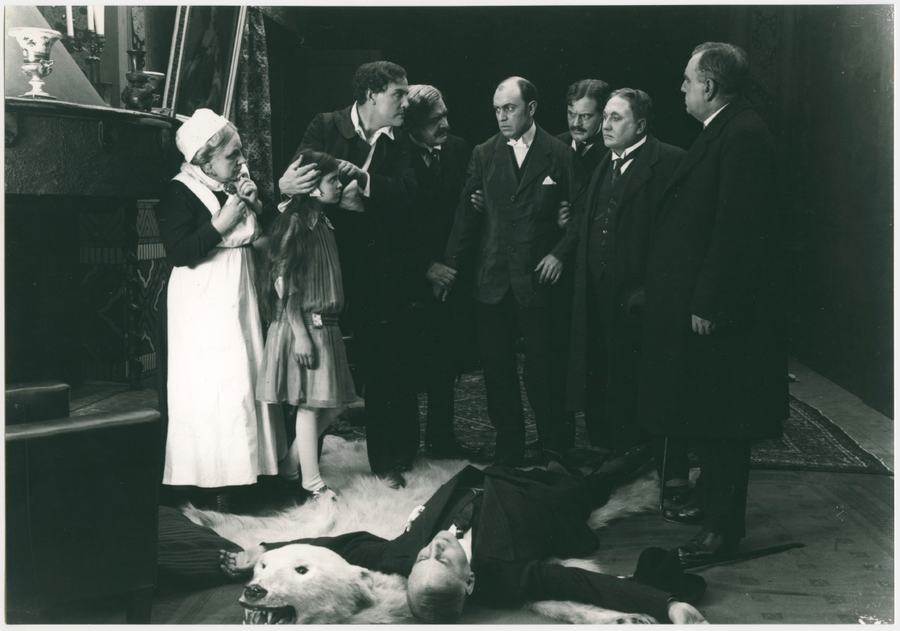
The collaborative efforts of writers A.V. Samsjö and G. Sjöberg shine through in the intricate plotting and character development. To craft a narrative of such complexity and psychological depth within the constraints of silent film required an exceptional understanding of visual storytelling and dramatic pacing. Their script, though communicated through intertitles and performance, would have been a blueprint for the emotional journey and intellectual puzzle presented to the audience. Their genius lay in creating a world where every glance, every prop, every shift in a character's posture carried immense narrative weight, propelling the story forward without the crutch of spoken dialogue. This kind of narrative precision is echoed in other character-driven dramas of the era, such as Marta of the Lowlands, which also relied on strong character arcs and visual storytelling to convey deep emotional turmoil.
Ultimately, Kiss of Death stands as a powerful testament to the artistry and intellectual ambition of early cinema. It’s a film that asks profound questions about justice, truth, and the subjective nature of human experience, questions that continue to resonate with audiences today. The absence of sound paradoxically enhances its impact, forcing the viewer to engage more deeply with the visual storytelling and the nuanced performances. It is a film that demands active participation, inviting us to become detectives in our own right, sifting through the evidence, weighing the conflicting accounts, and ultimately forming our own conclusions about who truly bears responsibility for Dr. Monro’s demise. The film is not just a historical curiosity; it is a vibrant, compelling piece of cinematic art that continues to challenge and provoke. Its exploration of crime and consequence, and the intricate dance between perception and reality, ensures its place as a significant contribution to the genre and a compelling watch for anyone interested in the foundational works of psychological drama. It showcases how silent cinema, far from being primitive, was a highly sophisticated art form capable of exploring the most complex facets of the human condition with profound elegance and dramatic force. The intricate plotting and character work here rival the best of the era, offering a rich tapestry of human fallibility and the elusive quest for truth in a world shrouded in secrets.
IMDb —
1917
Community
Log in to comment.