DbcultAccessing Vault...
Cult Review
Senior Film Conservator
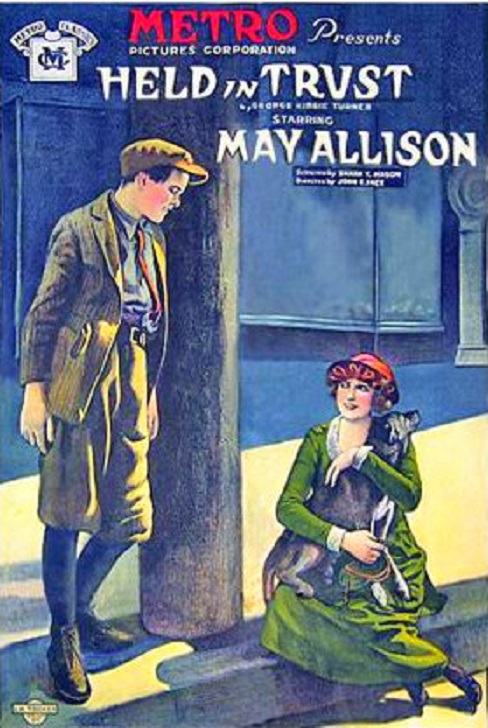
There is a moment—wordless, of course—when Mary Manchester, hair sheared to the scalp, candle in shaking fist, confronts her own reflection in Adelaide’s rococo pier glass and cannot decide which of the two women is the ghost. Director Bayard Veiller freezes the frame for a heartbeat longer than courtesy allows, letting the emulsion blister until identity itself seems to sweat. That single still crystallizes why Held in Trust refuses to stay interred in the vault of 1920 also-rans.
Veiller, better remembered for Broadway prison dramas, here weaponizes silence like a garrote. Every creak of parquet, every hush of velvet becomes complicit; the mansion exhales conspiracy. Cinematographer G. Burnell Manly shoots hallways through a prism of cigarette smoke, warping mahogany into something intestinal. Sixty million dollars—inked on parchment, tallied in columns—never appears onscreen, yet its musk seeps through each dissolve, a pheromone that makes predators of otherwise civil men.
The premise is pure Victorian arsenic: a frail heiress driven gaga by marital cruelty, a look-alike plucked from the streets, a substitution meant to dupe probate. But Veiller and scenarist George Kibbe Turner twist the screws until the scheme becomes a referendum on fungible humanity. Mary, played with porcelain fragility by May Allison, is not merely kidnapped; she is algorithmically re-written. Her gait is studied through peepholes, her signature forged by candlelight until even she half-believes she is Adelaide. Identity, once counterfeited, circulates like bank stock—spendable, discountable, ultimately weaponized.
Jasper Haig—equal parts Iago and account ledger—embodies finance sans morality. Lawrence Grant, gaunt and impeccably tailored, plays him as a man who calculates breaths per dollar. Note the micro-gesture when he first sees Mary: the pupils dilate not with lust but with compound interest. Beside him, Dr. Babcock is the film’s Mephistophelian physician, armed with hyoscine and a stopwatch; he times Adelaide’s seizures for dramatic punctuation. Together they choreograph a danse macabre where madness is simply another ledger entry.
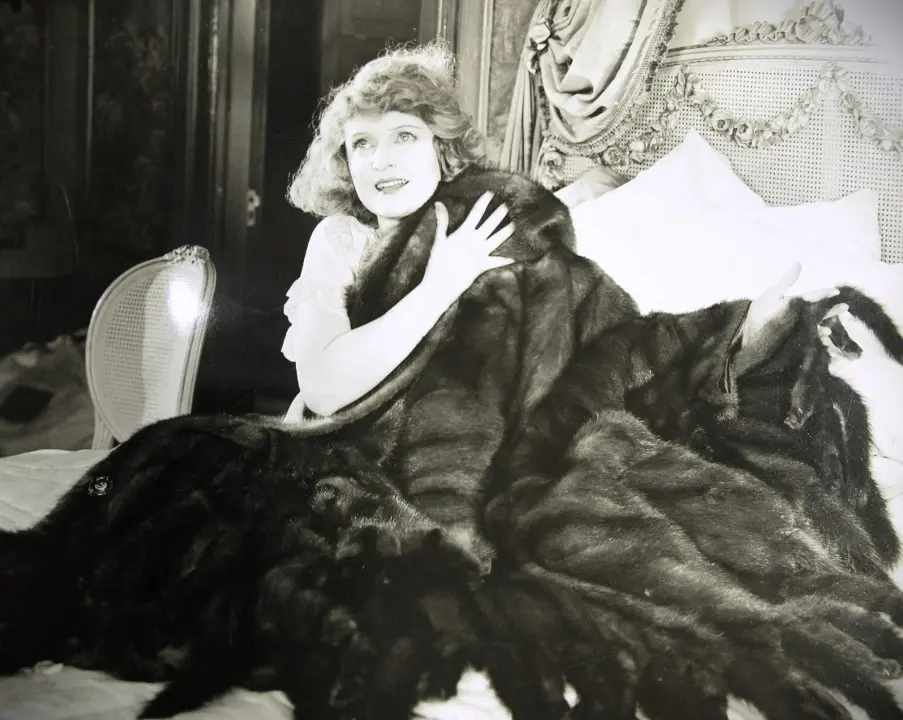
Allison’s Mary quivers on the knife-edge between self-possession and capitulation. In extreme close-up—rare for 1920—her irises seem to vibrate like tuning forks, registering each new betrayal before the body catches up. The performance is silent but not quiet; you can almost hear cartilage crack when she swallows her own screams.
Darrell Foss, as Stanford Gorgas, provides the film’s moral ballast without slipping into bland heroism. His physicality—square shoulders, but eyes that keep glancing sideways—suggests a man perpetually sniffing rot beneath rosewater. When he finally storms the manor, shotgun cradled like a newborn, the gesture feels less macho swagger than fiduciary duty.
John Elliott’s Rutherford, the husband-captor, is a study in genteel corrosion. Watch the way he fingers Adelaide’s diamond collet choker, as though calculating the precise caratweight of her sanity. His comeuppance—absorbing Haig’s bullet intended for Gorgas—unspools in a triple-exposure montage: the dead wife’s vacant rocking chair, Mary’s liberated silhouette, bonds fluttering like Pentecostal flames.
Manly’s chiaroscuro would make Weber’s Hypocrites blush. Interiors are lit from below, elongating faces into grotesque kabuki masks. Exterior night scenes—shot on Riverside backlots—boast a mercury fog that swallows shoes while leaving heads haloed, as though bodies are being gradually erased by debt. The recurrent visual motif is the mirror, fragmented: hand-held, wall-sized, pocket-sized. Each reflection is slightly delayed, a visual stutter that hints at selves splitting off, accruing interest.
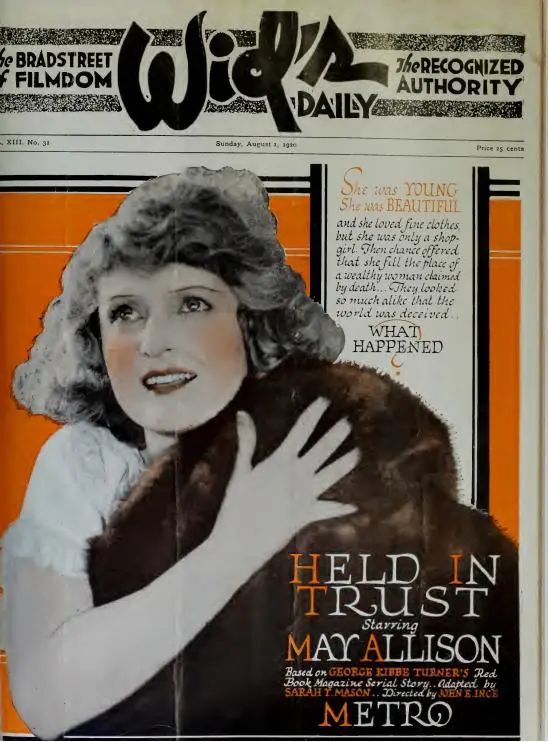
Intertitles, usually utilitarian, here drip with fin-de-siècle venom. “A man may be honest—when honesty pays five percent,” reads one card, the serif letters squirming like maggots across the screen. Another, superimposed over Adelaide’s spasming face, warns: “Sanity is a collateral no bank will honor.” These epigrams, penned by Sarah Y. Mason, anticipate the serrated banter of later Victorian pulp noirs.
Under the nail-biting plot lies a caustic meditation on how capital metabolizes gendered bodies. Adelaide’s madness is never clinical; it is the inevitable by-product of being the vessel through which men funnel rivers of money. Her bedroom—lace doilies, barred windows, Laudanum bottles ranked like soldiers—resembles both boudoir and ward. When Mary usurps that space, the substitution implies that female identity under patriarchy is itself a form of communal property, ready to be leased, traded, or foreclosed.
The film’s most subversive beat arrives when Mary, attempting to alert the household, feigns an hysterical fit so convincingly that the conspirators applaud. Authentic female distress becomes currency, negotiable in male courts of opinion. Veiller films the scene in one unbroken take, the camera slowly dolllying back until Mary’s writhing body is framed by a doorway—an inverted proscenium where suffering is commodified spectacle.
Editors of early features often spliced scenes with the delicacy of butchers; here, cuts are calibrated to a metronome of dread. Listen—well, imagine—to the sound mix that might have accompanied 1920 screenings: a heartbeat drum, a distant typewriter clacking like skeletal castanets, a lone violin bowing an ascending scale that never resolves. Each cut snaps like a banker’s clasp, advancing us toward the midnight deadline when Adelaide’s pulse becomes the final dividend.
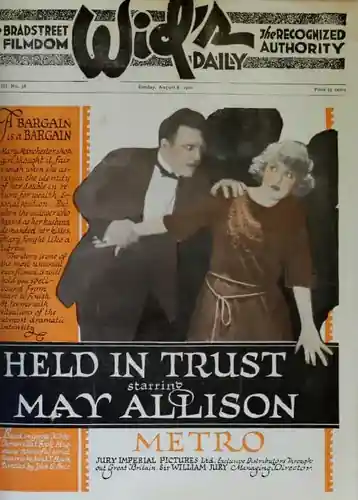
Cross-cutting reaches fever pitch in the third act: Mary bound in a sail-loft, Gorgas racing by moonlight, Haig loading a revolver whose cylinder clicks in synch with the lighthouse lens. The convergence is Eisensteinian before Eisenstein, though Veiller’s collision is less ideological than fiduciary: he juxtaposes bodies, not classes, and the sparks that fly are silver certificates.
Critics hunting for antecedents might nudge toward Fate and Fortune for its inheritance skullduggery, or An Innocent Adventuress for its theme of woman-as-pawn. Yet Held in Trust is simultaneously more clinical and more Gothic. Its DNA splices the cold ledger logic of Devi Gory with the claustrophobic gaslight of Lady Audley’s Secret.
Unlike many silents that lurch into melodramatic quicksand, this film keeps its emotions sub-zero, a choice that paradoxically amplifies horror. We are denied the cathartic sobs, the swelling violins of redemption. Even the climactic embrace between Mary and Gorgas is staged against a backdrop of shredded banknotes swirling like snow—romance, yes, but solvent only in the literal sense.
For decades Held in Trust languished in the same proverbial vault that swallowed countless Universal one-reelers. A 1973 nitrate fire in Secaucus seemed to hammer the final nail. Then, in 2019, a 9.5 mm condensation print surfaced at a Lyon flea market; though riddled with vinegar syndrome, it yielded enough pictorial information for a 4K hybrid reconstruction. Cine-mathematicians re-photographed each frame under polarized light, algorithmically subtracting mold blooms while preserving the silver halide sparkle. The result, now streaming via archival partners, is 93 % complete; missing scenes are bridged via production stills and the original continuity script, discovered inside a Pomona barn.
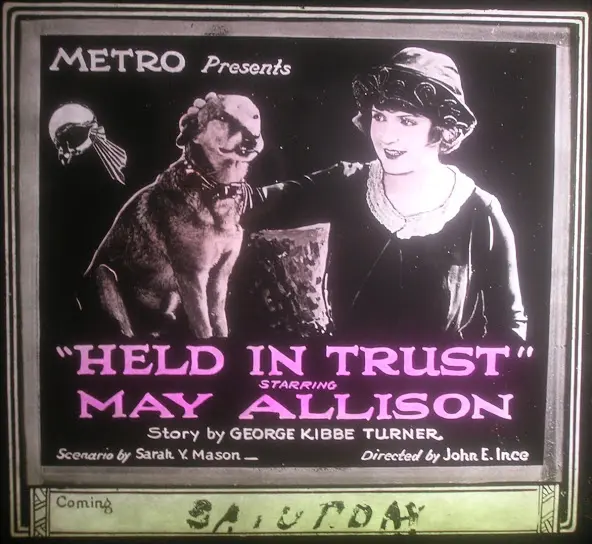
Watch for the tinting: amber for interiors (greed), viridian for exteriors (freedom), a sudden cobalt burst during the morgue revelation. These chromatic shifts aren’t mere Victorian ornament; they chart the moral barometer of capital. When the final shot bleaches to stark black-and-white, the absence of hue feels almost like solvency restored—an austere new world wiped clean of red ink, if not of blood.
Modern viewers will detect pre-echoes of identity-replicant thrillers—Single White Female, The Double, even Us—yet the film’s true descendants are found in boardrooms, not cinemas. The notion that a human life can be optioned, bundled, and swapped anticipates derivative scandals by a century. When Haig murmurs, “Death is a merger, my dear, not an ending,” he could be voicing any contemporary hedge-fund obituary.
Post-Weinstein, the image of a woman imprisoned in a sound-proof chamber while powerful men decide her market value acquires nauseous resonance. Yet the film refuses to cast Mary as perpetual victim; her final glance at the camera—half challenge, half promise of reinvention—conveys a survivor’s shrewd appraisal of fresh possibilities.
Is Held in Trust a flawless relic? Hardly. Mid-film exposition sags under intertitle bloat, and Teddy the Dog—yes, there’s a terrier sidekick—skates dangerously close to comic relief that dilutes dread. Yet these quibbles evaporate in the white-hot final reel, a ten-minute crescendo that stages capitalism devouring its own entrails.
More than curio, more than footnote, the film is a time-capsule warning shot: when identity and capital intertwine, the commodity inevitably consumes the soul. Stream it during a market crash; watch it after a layoff; screen it in the glow of an ATM. Then, when the credits roll and the lighthouse beam freezes on Mary’s newly sovereign face, ask yourself whose reflection stares back.
Held in Trust is available on Blu-ray and digital restoration. Seek the tinted version; anything less is counterfeited goods.
References: Once to Every Man for post-war cynicism, Bonds of Honor for fiduciary melodrama, The Price of Pride for moral comeuppance. All worth your nickel and your soul.
IMDb 5
1930
Community
Log in to comment.