DbcultAccessing Vault...
7.3/10
Senior Film Conservator
A definitive 7.3/10 rating for a film that redefined the boundaries of cult cinema. Hello Baby! remains a cornerstone of transgressive art.
Short answer: Yes, but only if you have the patience for the repetitive rhythm of silent-era slapstick. If you are looking for a complex narrative, look elsewhere; this is a film for those who appreciate the art of the slow-burn domestic meltdown.
Hello Baby! is specifically for fans of physical comedy who want to see the early DNA of the modern sitcom father. It is absolutely NOT for anyone who finds the sound of a crying baby (even an implied one) to be a sensory trigger or for those who demand high-stakes action over character-driven frustration.
Before we dissect the celluloid, let's get straight to the point of why this short film remains a curious artifact of the 1920s.
The short answer is that Hello Baby! serves as a fascinating bridge between the crude slapstick of the early 1910s and the more sophisticated situational comedies of the 1930s. It is worth watching for the performance of Charley Chase alone, who manages to make a mundane situation feel like a life-or-death struggle.
Unlike the high-concept adventures seen in The Adventures of Ruth, this film finds its tension in the four walls of a living room. It asks a simple question: how much can a man take before he breaks? For most of us, the answer is 'not much,' and Chase plays that vulnerability for every laugh it is worth.
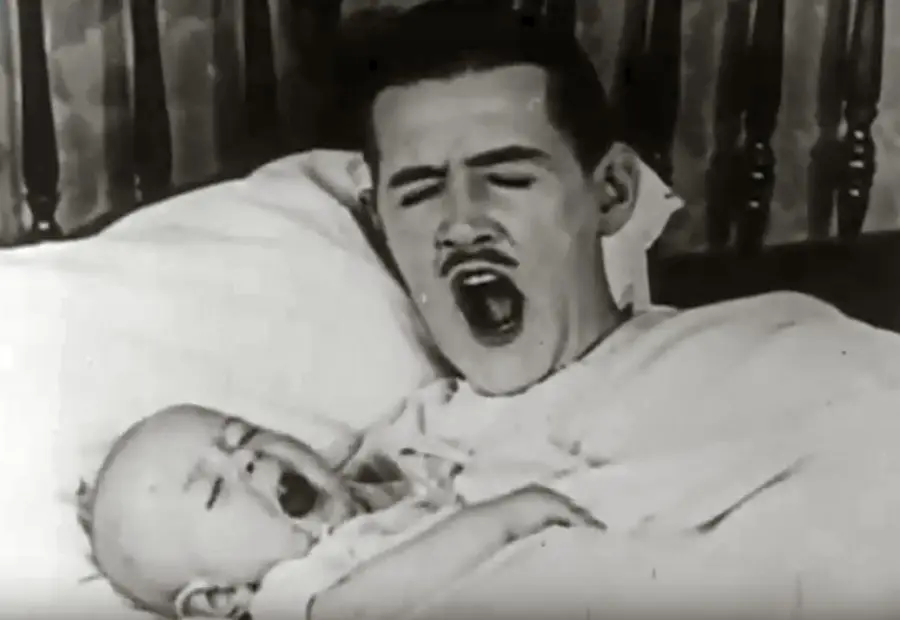
One of the most striking elements of Hello Baby! is how it handles the concept of noise. In a silent medium, communicating the piercing, soul-crushing sound of a crying infant requires more than just a title card. It requires a specific kind of kinetic energy from the actors.
Katherine Grant and Charley Chase don't just act; they vibrate. You can see the exhaustion in the way Grant’s shoulders sag and the way Chase’s eyes dart toward the ceiling. It is a masterclass in visual storytelling that makes the audience 'hear' the baby through the sheer distress on the screen.
Consider the scene where Charley first tries to soothe the child. He starts with a gentle, rhythmic rocking that quickly devolves into a frantic, desperate shaking of a rattle. The pacing of his movements tells you everything you need to know about his rising blood pressure. It is far more effective than the survivalist tension in Toilers of the Sea because it is so intimately familiar.
When Charley ventures out into the night to find a doctor, the film takes on a different tone. The domestic comedy expands into a minor urban odyssey. This is where the film shows its age, but also its charm. The 'mixed results' mentioned in the plot are an understatement.
The cinematography here is surprisingly effective at conveying the isolation of the late-night streets. While it lacks the high-stakes drama of The Leap of Despair, it captures a different kind of desperation. The desperation of the 'everyman' who just wants to go to sleep.
I would argue that the doctor character is almost a red herring. The real antagonist isn't the lack of medical help, but the uncaring world that continues to sleep while Charley suffers. This is a cynical take for a 1920s comedy, but it is one that resonates deeply with anyone who has ever been awake at 3 AM with a problem they can't solve.
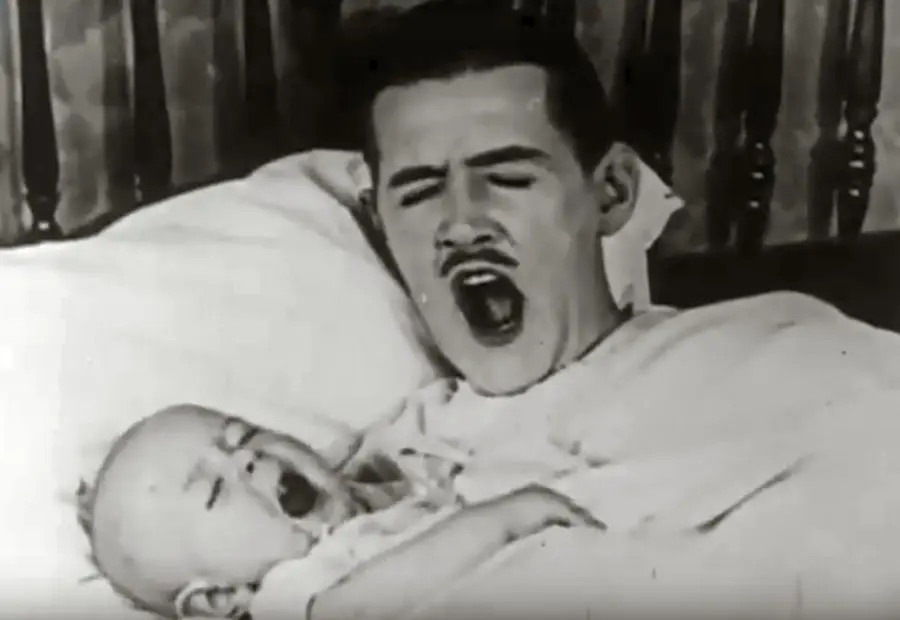
Charley Chase was often overshadowed by the 'Big Three' (Keaton, Chaplin, Lloyd), but Hello Baby! proves he had a niche they didn't quite touch: the suburban neurotic. While Our Alley deals with the communal chaos of the streets, Chase focuses on the internal collapse of the household.
His performance is less about acrobatic stunts and more about the micro-expressions of a man who is losing his grip on reality. It is a precursor to the 'harried husband' trope that would dominate television decades later. In many ways, Chase is the most modern of the silent comedians because his problems are so mundane.
The film doesn't need the overt villainy of The Pursuing Vengeance. The villain is a ten-pound human who doesn't even have teeth yet. That is a brilliant comedic pivot that holds up remarkably well under modern scrutiny.
It would be a mistake to overlook Katherine Grant's contribution. Often, wives in these shorts were relegated to the background, but Grant holds her own as the partner in this nocturnal crime. Her transition from 'happy mother' to 'hollow-eyed survivor' is performed with sharp timing.
There is a specific moment where she hands the baby to Charley and simply walks away to sit down. The look she gives him is one of pure, unadulterated 'your turn.' It is a moment of domestic realism that feels shockingly contemporary. It lacks the theatricality of The Woman from Nowhere, opting instead for a grounded, relatable fatigue.
From a technical standpoint, the film is standard for the Hal Roach studios. The lighting is functional, though the night scenes have a certain atmospheric gloom that adds to the mood of the search. The editing is snappy, keeping the 'crying' sequences from becoming too grating for the audience.
However, the pacing in the second half is a bit of a slog. The gag of Charley finding the 'wrong' people or missing the doctor by a hair's breadth is repeated one too many times. It starts to feel like the writers were padding the runtime to hit their reel length. It lacks the tight, consistent escalation found in Brass Buttons.
Despite this, the film manages to stick the landing. The resolution of the 'baby' problem is handled with a classic silent-era twist that is both satisfying and slightly dark. It reminds us that in the world of Charley Chase, no good deed goes unpunished.
Hello Baby! is a minor classic that deserves more credit for its psychological realism. It isn't as grand as Cupid the Cowpuncher, but it is much more human. It works. But it’s flawed.
The film succeeds because it leans into the universal truth that a baby’s cry is the most powerful force in the universe. It fails only when it leaves the house and enters the more generic world of 'man runs around town' comedy. If you want a masterclass in silent-era frustration, this is your film.
Final thought: Charley Chase is the patron saint of the overwhelmed, and Hello Baby! is his most relatable sermon. Watch it for the history, stay for the shared trauma of parenthood.
IMDb 6.2
1934
Community
Log in to comment.