DbcultAccessing Vault...
Cult Review
Senior Film Conservator

In the pantheon of silent cinema, few figures possess the specific, angular grace of Slim Summerville. In Her Ball and Chain, he crafts a performance that is as much an architectural feat as it is a comedic one. While his contemporaries often leaned into the acrobatic precision of Keaton or the frantic optimism of Lloyd, Summerville leaned into a sort of languid defeat. His performance here is a masterclass in the economy of movement, where a single drooping shoulder conveys a lifetime of domestic subservience. The film eschews the grandiosity often seen in period pieces like The Queen of Sheba, opting instead for a gritty, localized intimacy that resonates with the claustrophobia of the everyday.
Summerville's character is less a man and more a collection of hinges, constantly folding under the weight of his own existence. This film captures the exact moment when the Vaudevillian stage tradition fully integrated with the visual possibilities of the camera. The frame becomes a cage, and the titular 'ball and chain'—while metaphorical—is rendered through the physical limitations of the set. The way Summerville maneuvers through a kitchen or a parlor suggests a man navigating a minefield, a tension not unlike the high-stakes drama found in Under Suspicion.
The narrative structure of Her Ball and Chain operates on a principle of escalating absurdity. What begins as a series of minor household inconveniences soon spirals into a chaotic deconstruction of the American Dream. There is a palpable sense of exhaustion that permeates the film, a theme that mirrors the emotional weight seen in The Old Nest. However, where that film sought to evoke sentimentality, this work seeks to provoke a cynical chuckle. The domestic sphere is not a sanctuary; it is a factory of endless labor and emotional debt.
Visually, the film utilizes high-contrast lighting to emphasize Summerville's gaunt features, creating a silhouette that feels almost expressionistic. This visual grimness provides a sharp counterpoint to the slapstick gags, elevating the material beyond mere burlesque. The pacing is relentless, echoing the frantic energy of This Way Out, yet it maintains a grounded quality that makes the comedy feel earned. Each pratfall is a commentary on the character's lack of agency, a somatic manifestation of his social standing.
To understand the importance of Her Ball and Chain, one must look at the broader cinematic landscape of its era. While The Sea Wolf was exploring the brutality of the natural world and the primal nature of man, Summerville was exploring the brutality of the breakfast table and the civilizing (or perhaps lobotomizing) nature of marriage. The stakes are lower in a cosmic sense, but for the character, they are existential. The film shares a certain DNA with Mr. Opp in its depiction of the well-meaning but ultimately ineffective protagonist who finds himself at odds with a world that values efficiency over humanity.
Furthermore, the technical execution of the gags demonstrates a sophisticated understanding of the camera's 'eye.' Unlike the more static presentations found in Barnaby Rudge, this film uses the frame to hide and reveal information, creating a dynamic relationship with the audience. There is a sequence involving a malfunctioning stove that rivaled the best work of the period, utilizing timing that feels as precise as the clockwork mechanisms in De røvede Kanontegninger.
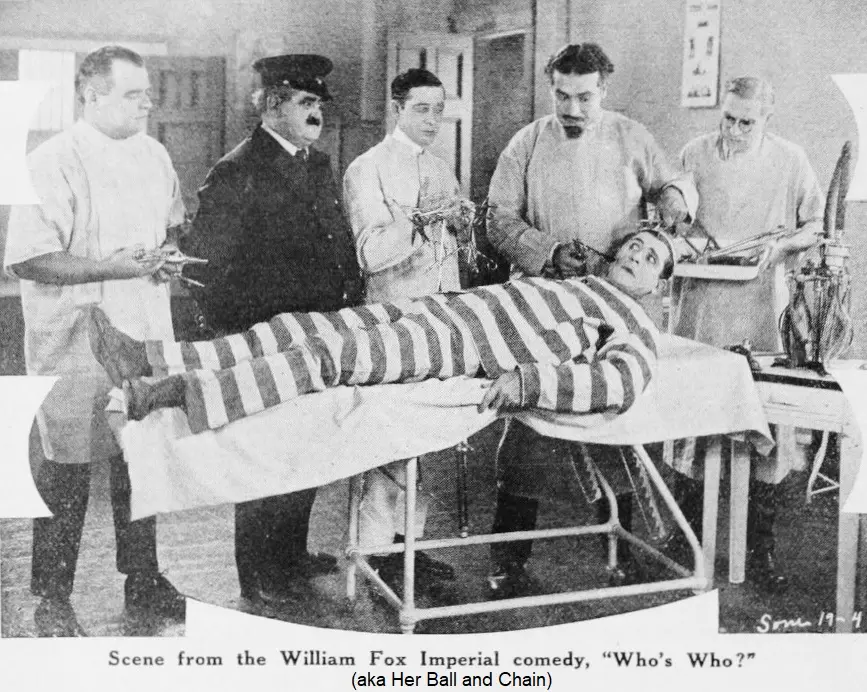
The 'Ball and Chain' of the title is a double-edged sword. It refers to the wife, yes, but more importantly, it refers to the entire socio-economic structure that requires a man to be tethered to a single location and a single role. This was a common theme in the 1920s, as seen in the more sophisticated but equally biting The Stimulating Mrs. Barton. Summerville’s character is a victim of his own desire for stability, finding that the 'freedom' of adult life is merely a different kind of cage. This existential dread is masked by flour-covered faces and tumbling furniture, but it remains the film's beating heart.
In many ways, the film acts as a precursor to the modern sitcom, but with a level of physical risk that has since been lost to the safety of CGI. The danger in Summerville’s movements—the very real possibility of injury during a fall—adds a layer of authenticity to his plight. It’s a struggle for survival that, while comedic, carries the same desperation found in The Dawn of Freedom. He is a man fighting for a liberty that is perpetually out of reach, hampered by his own inability to say 'no.'
The cinematography in Her Ball and Chain deserves a closer look. The use of deep focus in certain interior scenes allows for simultaneous actions to occur in the foreground and background, a technique that would later be perfected by Welles but was already being toyed with here. This creates a sense of a living, breathing world, much like the atmospheric settings of Centocelle. The intertitles are minimal, allowing the physical performance to carry the narrative weight, a testament to the director's confidence in Summerville's expressive range.
We also see a fascinating use of props as antagonists. In this film, a simple vacuum cleaner or a laundry basket becomes as threatening as the villains in The Skipper's Narrow Escape. The inanimate world is in revolt against our protagonist, a common trope in silent comedy that reflects the era's unease with rapid industrialization. The more technology enters the home, the more 'chained' the man becomes to its maintenance and the income required to afford it—a theme explored with more gravity in $5,000 Reward.
Ultimately, Her Ball and Chain stands as a vital piece of the silent era's comedic mosaic. It lacks the pastoral beauty of When Broadway Was a Trail, but it replaces it with a sharp, urban wit that feels surprisingly modern. It captures the frantic desire to 'keep up' that would eventually lead to the themes found in Dodging a Million. Summerville remains an underrated genius of the form, a man who could transform a simple walk across a room into a profound statement on the human condition. To watch him in this film is to watch the birth of the suburban neurosis, wrapped in the delightful packaging of a two-reel comedy.
While many silent films have faded into the obscurity of nitrate rot, the themes of Her Ball and Chain remain evergreen. We are all, in some sense, tethered to our own versions of the ball and chain—be it debt, duty, or the crushing weight of societal expectations. Summerville just happened to make that tethering look incredibly funny. It is a work of high lexical diversity in its movement, a poem written in the language of the pratfall, and a mandatory viewing for anyone seeking to understand the roots of the American comedic identity.

IMDb 6.9
1929
Community
Log in to comment.