DbcultAccessing Vault...
Cult Review
Senior Film Conservator
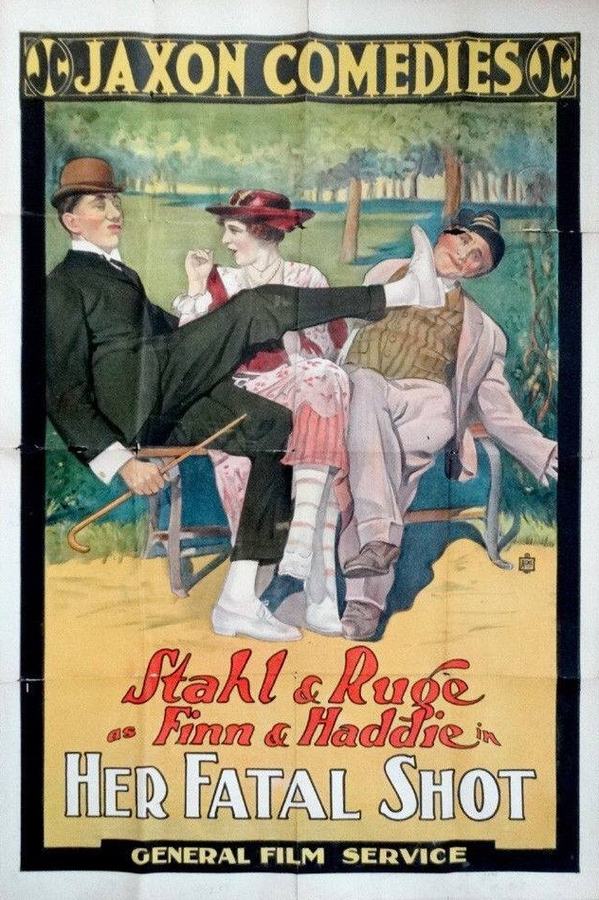
Stepping back into the cinematic echo chamber of the silent era, one occasionally stumbles upon a gem that, despite its age, resonates with an astonishingly contemporary emotional urgency. Such is the case with 'Her Fatal Shot,' a melodrama that, while perhaps less heralded than some of its contemporaries, delivers a gut-punch narrative with an unflinching gaze at human frailty and the corrosive nature of deceit. The film, a potent brew of desperation and societal indictment, carves out a space for itself not through grand spectacle, but through the visceral impact of its character-driven tragedy. It’s a testament to the power of early cinema to convey profound emotional truths without the crutch of spoken dialogue, relying instead on the nuanced performances and the evocative visual storytelling that defined the period.
At its core, 'Her Fatal Shot' is a searing exploration of a woman pushed beyond the brink. Elara Vance, portrayed with a poignant vulnerability that quickly hardens into resolute despair, embodies the archetypal wronged heroine, yet her journey transcends cliché through the sheer force of circumstance. Her initial optimism, a fragile bloom in a harsh world, is systematically crushed by the Machiavellian machinations of Arthur Sterling (Walter R. Hall). Hall, in a performance that perfectly calibrates charm with insidious malice, crafts a villain who is not merely evil, but subtly, chillingly manipulative. His Sterling is a predator in a tailored suit, an architect of ruin who operates with a detached cruelty that makes his eventual fate feel less like vengeance and more like an inevitable consequence. The film masterfully builds this tension, allowing the audience to witness Elara's gradual erosion, her hopes and security systematically dismantled by Sterling's avarice. This slow burn of psychological torment is far more effective than any immediate dramatic outburst, drawing the viewer deeper into Elara's escalating predicament.
The narrative unfolds with a relentless, almost suffocating inevitability. Elara's initial seduction by Sterling, couched in promises of a shared future, quickly devolves into financial exploitation. Her inheritance, a symbol of her independence and modest security, becomes a pawn in Sterling's reckless ventures, ultimately dissolving into nothingness. This financial ruin is compounded by a devastating social ostracization, a theme powerfully echoed in films like The Church and the Woman, where a woman's moral standing is ruthlessly judged by a hypocritical society. Elara’s plight is not merely one of lost money, but of lost dignity, a shattered reputation that leaves her isolated and vulnerable. It’s a stark reminder of the precarious position of women in that era, where a single misstep or a man’s deception could irrevocably seal a woman’s social and economic fate. Billy Ruge, as the earnest journalist Thomas Thorne, provides a much-needed counterpoint to Sterling’s villainy. Thorne’s quiet devotion and unwavering belief in Elara’s innocence offer a glimmer of humanity amidst the encroaching darkness. Ruge’s performance is understated yet impactful, conveying a deep sense of loyalty and a burgeoning commitment to justice that drives a significant portion of the film's later acts.
The film’s dramatic crescendo, the titular 'fatal shot,' is not a random act of violence but the tragic culmination of an unbearable pressure cooker of circumstances. When Elara confronts Sterling, not only is she destitute and disgraced, but he has also framed her for embezzlement, effectively severing her last ties to respectability and freedom. This moment, where a cornered woman, stripped of all agency, lashes out, is a powerful commentary on the limits of endurance. The gun, rather than being a symbol of premeditated malice, becomes an instrument of desperate self-preservation, a tragic consequence of systemic oppression and personal betrayal. This scene, devoid of dialogue, relies entirely on the actors’ expressions and gestures to convey the white-hot intensity of Elara’s despair and Sterling’s unrepentant cruelty. The sheer desperation is palpable, drawing the audience into Elara’s impossible choice. It's a moment that resonates with the moral ambiguities explored in films like The Devil Dodger, where characters are forced to navigate treacherous ethical landscapes to escape their predicaments.
Visually, 'Her Fatal Shot' employs a stark aesthetic that enhances its dramatic impact. The sets, while not overly elaborate, effectively convey the opulence of Sterling's world juxtaposed against the increasingly bleak environments Elara inhabits. The cinematography, particularly in the climactic confrontation, uses sharp contrasts and close-ups to heighten the emotional intensity. The director (whose identity, sadly, remains uncredited in many historical records, a common challenge with early cinema scholarship) demonstrates a keen understanding of how to build suspense and convey complex emotions through purely visual means. The lighting, often dramatic and chiaroscuro-like, casts long shadows that mirror the moral murkiness of the plot, creating an atmosphere that is both foreboding and deeply melancholic. This visual storytelling is crucial in a silent film, and 'Her Fatal Shot' leverages it with impressive skill, ensuring that every gesture, every flicker of an eye, carries significant weight.
The performances are undoubtedly the bedrock of the film’s success. Walter R. Hall’s portrayal of Sterling is a masterclass in controlled malevolence. He doesn’t resort to theatrical villainy but instead projects a cool, calculating demeanor that makes his actions all the more chilling. His capacity for deception and his casual disregard for human suffering are conveyed through subtle smirks and dismissive gestures, making him a truly loathsome antagonist. Billy Ruge, on the other hand, embodies the film’s moral compass. His Thorne is earnest, perhaps a little naive, but fiercely loyal. His journey to uncover Sterling’s misdeeds and clear Elara’s name provides a compelling counter-narrative of hope and perseverance. The chemistry between the actors, particularly in the scenes involving Elara and Thorne, adds a layer of tender humanity that prevents the film from descending into unremitting bleakness. Their silent interactions speak volumes about unspoken affection and mutual respect, highlighting the power of genuine connection in a world filled with deceit.
The film’s exploration of societal hypocrisy and the devastating consequences of unchecked greed places it firmly within a lineage of socially conscious melodramas. It examines how reputations, once tarnished, are almost impossible to reclaim, regardless of the truth. This theme resonates with the struggles depicted in Her Condoned Sin, where societal judgment often outweighs individual circumstances. The narrative is not content with a simple good-versus-evil dichotomy; instead, it delves into the shades of grey that define human actions, forcing the audience to grapple with questions of justice, culpability, and the systemic factors that drive individuals to desperate acts. The film posits that sometimes, the true villain is not just an individual, but the societal structure that enables and perpetuates such injustices. This nuanced approach elevates 'Her Fatal Shot' beyond mere sensationalism, imbuing it with a depth that encourages introspection long after the final frame.
One cannot discuss 'Her Fatal Shot' without acknowledging its commentary on the precariousness of truth. Thorne’s journalistic pursuit of evidence against Sterling is a race against time, a desperate attempt to bring clarity to a situation deliberately muddled by a powerful man. This battle against deception and the struggle to reveal hidden motives is a recurring motif in silent cinema, notably explored in The Silent Partner, where secrets fester and unravel lives. Here, the 'cloven tongue' of deceit, a concept explored in the film The Cloven Tongue, is wielded with devastating effect by Sterling, who manipulates perceptions and fabricates evidence to secure Elara's downfall. The film thus becomes a compelling argument for the relentless pursuit of truth, even when faced with overwhelming odds and powerful adversaries.
The dramatic tension is expertly maintained throughout, avoiding the episodic pitfalls that sometimes plague early features. Each scene propels the story forward, deepening the emotional stakes and tightening the narrative coil. The pacing, while deliberate, never feels sluggish, allowing the viewer to fully absorb the weight of Elara’s suffering and Thorne’s determined efforts. The film manages to weave a complex web of interactions, showcasing how individual choices, both virtuous and nefarious, ripple through the lives of others. The intricate dance of betrayal and loyalty, of ambition and despair, creates a tapestry that is both engaging and thought-provoking. It's a narrative structure that understands the power of escalating stakes, ensuring that by the time Elara takes her fateful shot, the audience understands the profound pressures that drove her to it.
Comparisons to other films of the era reveal both its unique strengths and its adherence to certain popular tropes. While it lacks the whimsical romanticism of The Caprices of Kitty or the adventurous spirit of Betty and the Buccaneers, 'Her Fatal Shot' shares a thematic kinship with more serious dramas that delve into the darker aspects of human nature and societal pressures. The themes of fate and inescapable destiny, for instance, are powerfully evoked, reminiscent of films like På livets ödesvägar ('On Life's Fateful Paths'), where characters often find themselves caught in currents beyond their control. The film's exploration of a woman's desperate struggle against a corrupt system also aligns it with works like The Land of Promise, which often depicted the harsh realities faced by those striving for a better life. The tragic cost of love and betrayal, a central pillar of 'Her Fatal Shot,' is a universal theme, exquisitely rendered and explored with a depth that rivals even Love's Toll.
Ultimately, 'Her Fatal Shot' is more than just a period piece; it's a timeless examination of justice, consequence, and the profound impact of betrayal. The film challenges viewers to consider the fine line between victim and perpetrator, asking whether an act of violence, born of ultimate desperation, can ever be truly condemned without first understanding the forces that compelled it. The powerful performances, particularly from Hall and Ruge, anchor the emotional weight of the narrative, ensuring that Elara’s plight feels acutely real. It leaves an indelible impression, prompting reflection on the societal structures that can break individuals and the enduring human struggle for dignity and truth. For aficionados of silent cinema, or indeed, anyone with an appreciation for powerful, character-driven drama, 'Her Fatal Shot' offers a compelling and emotionally resonant experience that transcends its historical context, proving that some stories, told with enough conviction, remain potent across the decades. The film serves as a stark reminder that the 'misleading lady' is often a product of misleading circumstances, a theme subtly explored in The Misleading Lady, but here, with far more tragic consequences. The film's legacy lies not just in its dramatic narrative, but in its ability to provoke empathy and spark a dialogue about the complexities of morality and justice, proving that even without dialogue, a film can speak volumes about the human condition. It’s a powerful, often unsettling, but ultimately deeply rewarding cinematic journey into the heart of silent melodrama.
The final act, often a crucial determinant of a melodrama's lasting impact, handles the aftermath of the shooting with a gravitas that avoids easy answers. It's not a simplistic tale of good triumphs over evil, but rather a nuanced exploration of the ripple effects of one desperate act. Thorne's relentless pursuit of justice, uncovering the layers of Sterling's deceit, becomes a metaphorical battle against the 'idols' of wealth and power that had protected Sterling for so long, a theme that resonates with the critiques of false societal veneration seen in Idols. The courtroom drama, or whatever form the resolution takes, forces a confrontation with the societal norms and legal frameworks of the time, questioning their fairness when applied to an individual driven to an extreme. The film avoids a saccharine ending, instead opting for a resolution that, while perhaps offering a degree of closure, leaves the audience with a lingering sense of the profound cost of the events that transpired. This commitment to a more complex, less tidy conclusion is a hallmark of truly impactful cinema, distinguishing 'Her Fatal Shot' as a work that prioritizes emotional authenticity over simplistic narrative gratification. It’s a powerful testament to the enduring power of silent film to tackle weighty themes with profound artistry.
IMDb 5.2
1928
Community
Log in to comment.