DbcultAccessing Vault...
Cult Review
Senior Film Conservator
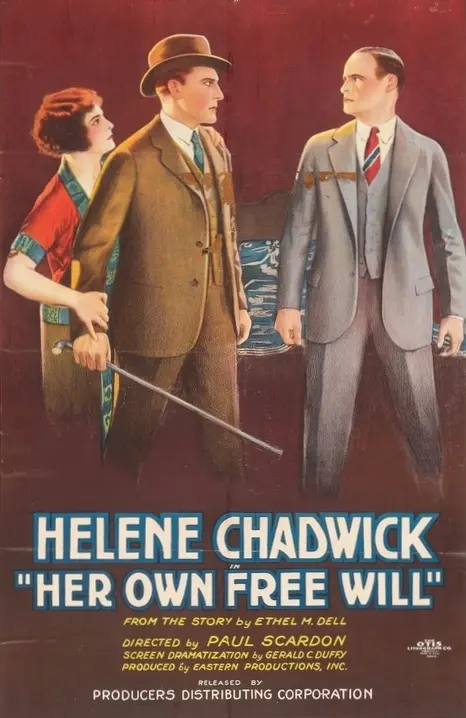
Stepping back into the cinematic landscape of the early 1920s, one often encounters narratives that, while seemingly simplistic on the surface, unravel layers of profound societal commentary. Such is the case with Her Own Free Will, a silent film that, despite its age, speaks with remarkable clarity about the constraints placed upon women in an era where personal aspirations frequently collided with rigid expectations and economic imperatives. This is not merely a period piece; it is a looking glass into the soul of a woman caught between duty and desire, a struggle as ancient as storytelling itself, yet rendered with particular poignancy through the expressive artistry of silent cinema.
The film, penned by Ethel M. Dell and Gerald C. Duffy, invites us into the world of Nan Everard, portrayed with a compelling blend of vulnerability and nascent defiance by Violet Mersereau. Nan's predicament is instantly relatable to anyone familiar with the melodramas of the time: her father faces financial ruin, a catastrophe that threatens to engulf their entire world. In a decision that feels both inevitable and heartbreaking, Nan agrees to a marriage of convenience, not for love, but for the cold, hard currency that will save her family from destitution. Her chosen, or rather, assigned, partner is the wealthy Peter Craddock, a man whose formidable presence is captured by Holmes Herbert, embodying an archetype of the era’s patriarchal authority.
The narrative thrust of Her Own Free Will begins with this fateful decision, propelling Nan and Craddock towards South America. The journey itself is fraught with symbolic weight. It is not a honeymoon voyage of discovery and romance, but a reluctant exile for Nan, a physical manifestation of her emotional transplantation. The film masterfully uses visual storytelling, a hallmark of the silent era, to convey Nan's internal turmoil. Mersereau's nuanced expressions, the subtle shifts in her posture, all communicate a deep-seated unease, a quiet protest against the path laid out before her. This silent eloquence is a stark reminder of the power of non-verbal communication in early film, often surpassing dialogue in its raw emotional impact.
A pivotal moment, both narratively and thematically, arrives with an automobile accident. This incident is more than a plot device; it is a visceral representation of Nan's broken spirit, her physical injury mirroring the emotional trauma of her forced marriage. What truly elevates this scene beyond mere melodrama is Craddock's reaction: he continues his journey, leaving Nan to recover. This act, seemingly callous, is open to interpretation. Is it sheer indifference, a testament to his single-minded pursuit of business, or does it speak to a deeper, perhaps unacknowledged, emotional detachment that characterizes their union? This ambiguity is where the film truly begins to challenge its audience, refusing easy answers and instead inviting contemplation on the nature of duty, ambition, and human connection.
Upon Craddock's eventual return, he finds Nan rekindling an old friendship. This rekindled bond represents a flicker of hope for Nan, a potential escape from the gilded cage of her marriage. It is a lifeline to a past where love, or at least affection, might have been a choice rather than a luxury. The tension builds as Nan contemplates divorce, a radical notion for many women of that era, and a testament to her burgeoning desire for agency. Films like The Garden of Weeds often explored similar themes of women entangled in difficult situations, seeking an escape, but Her Own Free Will distinguishes itself by placing the locus of conflict firmly within the confines of a marriage initiated under duress, rather than external temptations.
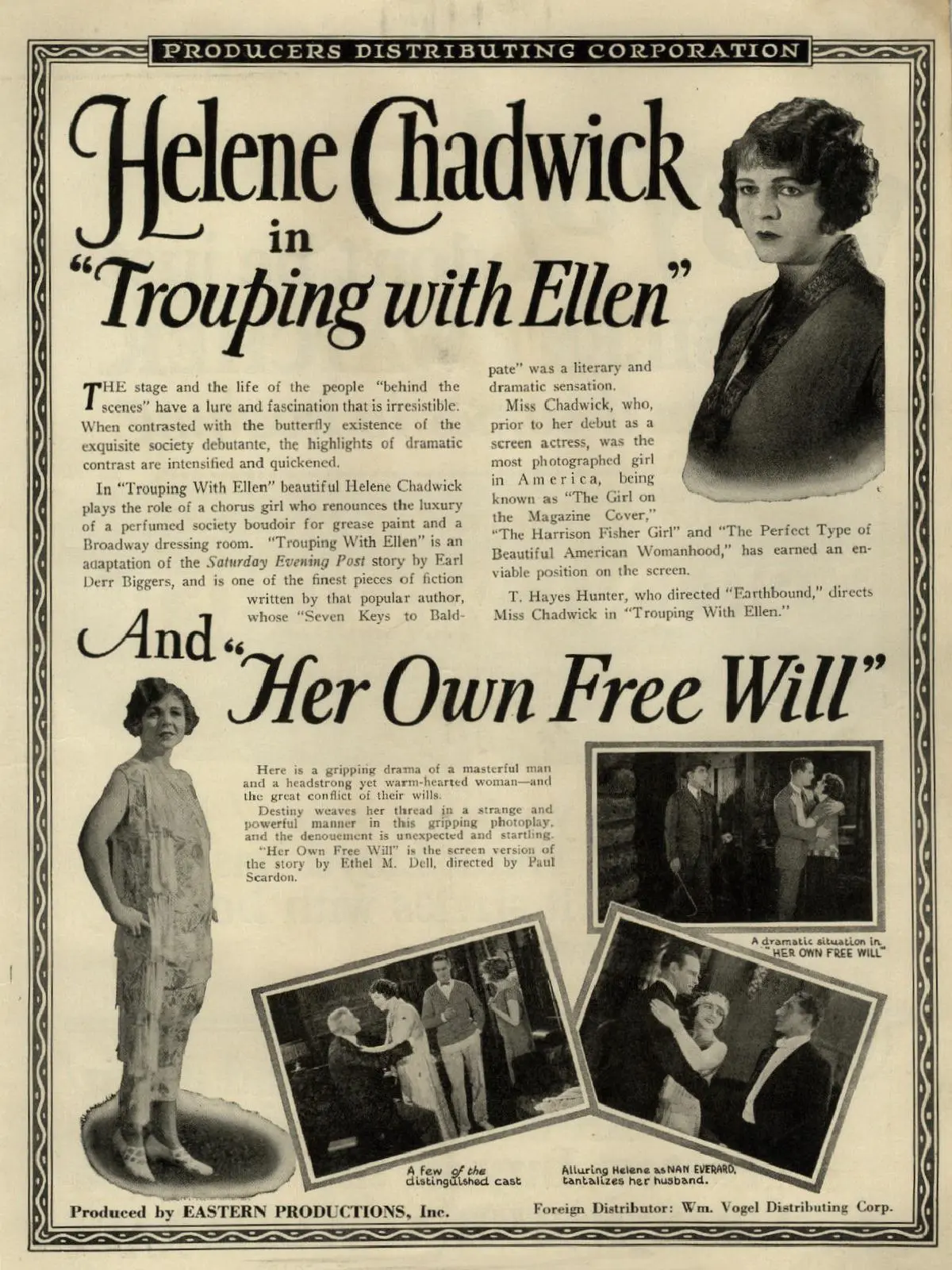
The performances in Her Own Free Will are a masterclass in silent film acting. Violet Mersereau, as Nan, carries the emotional weight of the film with remarkable grace. Her large, expressive eyes and subtle gestures convey a world of unspoken pain, hope, and eventual resignation. She navigates the emotional landscape of a woman torn between filial duty, personal desire, and societal expectations with compelling authenticity. Holmes Herbert, as Peter Craddock, provides a formidable counterpoint. His stoicism, often bordering on coldness, effectively portrays a man of immense power and unwavering will, yet one whose inner thoughts remain largely opaque, forcing the audience to project their own interpretations onto his actions. This dynamic creates a captivating tension that propels the narrative forward.
The title itself, Her Own Free Will, is steeped in a profound irony. Nan's journey is a constant negotiation against external forces that dictate her choices. Her initial decision to marry is born not of free will, but of economic coercion. Her subsequent desire for divorce is an attempt to reclaim that will, only to be met by the immovable force of Craddock's resolve. The film asks: what constitutes 'free will' when one's circumstances are so heavily weighted by societal norms, gender roles, and financial duress? This question resonates even today, highlighting the timeless struggle for individual autonomy against systemic pressures. Other films of the era, such as The Captive, similarly explored the feeling of being trapped, but Her Own Free Will places this captivity within the very institution meant to provide security – marriage.
The writing by Ethel M. Dell, known for her romantic novels, and Gerald C. Duffy, brings a nuanced understanding of human relationships to the screen. While the plot follows a familiar melodramatic arc, the psychological depth afforded to Nan's character elevates it beyond mere pulp. The film doesn't shy away from depicting the harsh realities faced by women who lacked independent financial means, making their choices inherently constrained. This socio-economic lens adds a layer of realism to what could otherwise be a straightforward romance or tragedy.
The visual language of Her Own Free Will is a testament to the sophistication of silent cinema. The use of intertitles is judicious, serving to advance the plot or reveal crucial dialogue, but never overshadowing the visual narrative. The cinematography, while perhaps not groundbreaking for its time, effectively frames the emotional landscapes of the characters. Close-ups on Nan's face are particularly effective, allowing the audience to intimately connect with her internal world. The settings, from the opulence of Craddock's world to the more exotic backdrop of South America, are used to underscore the vastness of Nan's journey, both geographically and emotionally.
The climax, wherein Nan ultimately surrenders to Craddock's 'stronger will,' is the film's most provocative moment. It’s a conclusion that might leave contemporary audiences feeling frustrated, perhaps even betrayed by the narrative. Yet, within the context of its time, it speaks volumes about the prevailing power dynamics in marriage and society. Is it a triumph of love, a pragmatic acceptance, or a tragic resignation? The film leaves this open to interpretation, a deliberate ambiguity that grants it a lingering power. This ending invites comparison to films like Beloved Jim, where romantic entanglements often led to complex resolutions that weren't always purely 'happy' in the modern sense, but rather an acceptance of one's lot.
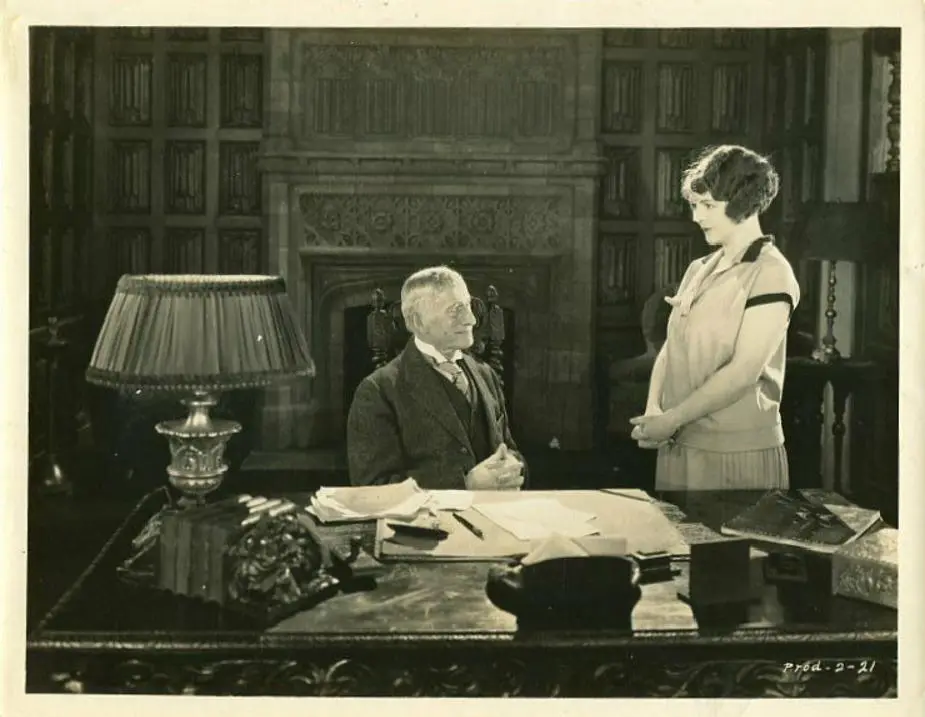
To fully appreciate Her Own Free Will, one must consider the broader cultural and historical tapestry of the early 20th century. Women's suffrage was a relatively recent victory in many parts of the world, but social and economic independence remained elusive for many. Marriage was often seen as the primary, if not sole, path to security and social standing. Films like Snobs and The High Horse often satirized or critiqued the class-conscious society, but Her Own Free Will grounds its critique in the very real, often painful, choices faced by individuals. Nan's story is a microcosm of the larger struggle for women to assert their identities and desires within a system that often sought to define and confine them.
The interplay between Nan's personal tragedy and the societal forces at play is expertly handled. The film doesn't preach, but rather presents a situation with a stark realism that compels empathy. One can imagine audiences of the era debating Nan's choices, perhaps even seeing reflections of their own lives or the lives of women they knew. The silent film medium, with its reliance on universal gestures and expressions, transcended linguistic barriers, allowing these stories of human struggle to resonate widely.
In a cinematic landscape increasingly dominated by sound and spectacle, revisiting silent films like Her Own Free Will is a vital exercise. It reminds us of the foundational principles of visual storytelling, the power of expression without dialogue, and the enduring relevance of human drama. While the narrative structure might feel familiar to those accustomed to classic Hollywood, the execution, particularly Mersereau's performance, imbues it with a singular quality. The film's examination of a woman's battle for self-determination against overwhelming odds, even if it ends in a form of surrender, remains profoundly affecting.
The film’s ultimate resolution, where Nan yields to Craddock’s stronger will, can be viewed not as a failure of her spirit, but as a complex commentary on the societal realities of the time. Was it a pragmatic acceptance of her circumstances, or a genuine shift in her affections, or simply exhaustion from a protracted emotional battle? The ambiguity is its strength, inviting viewers to ponder the nuances of human relationships and the limits of individual agency. This open-endedness is a hallmark of truly thought-provoking cinema, irrespective of its era. It encourages a dialogue with the past, prompting us to reflect on how far society has come, and how far we still have to go, in ensuring that 'free will' is truly a universal right, unburdened by economic necessity or societal pressure.
Ultimately, Her Own Free Will is more than just a forgotten relic; it is a powerful piece of cinematic history that continues to provoke thought and emotion. It stands as a testament to the compelling narratives that emerged from the silent era, proving that even without a spoken word, a film can speak volumes about the human condition. Its exploration of duty, sacrifice, and the elusive nature of personal freedom ensures its place as a significant entry in the annals of early 20th-century drama, offering a window into the struggles that continue to echo through time. For those interested in the evolution of character-driven drama and the profound impact of silent performances, this film is an essential watch, a poignant reminder of the enduring power of classic storytelling.
IMDb —
1920
Community
Log in to comment.