DbcultAccessing Vault...
Cult Review
Senior Film Conservator
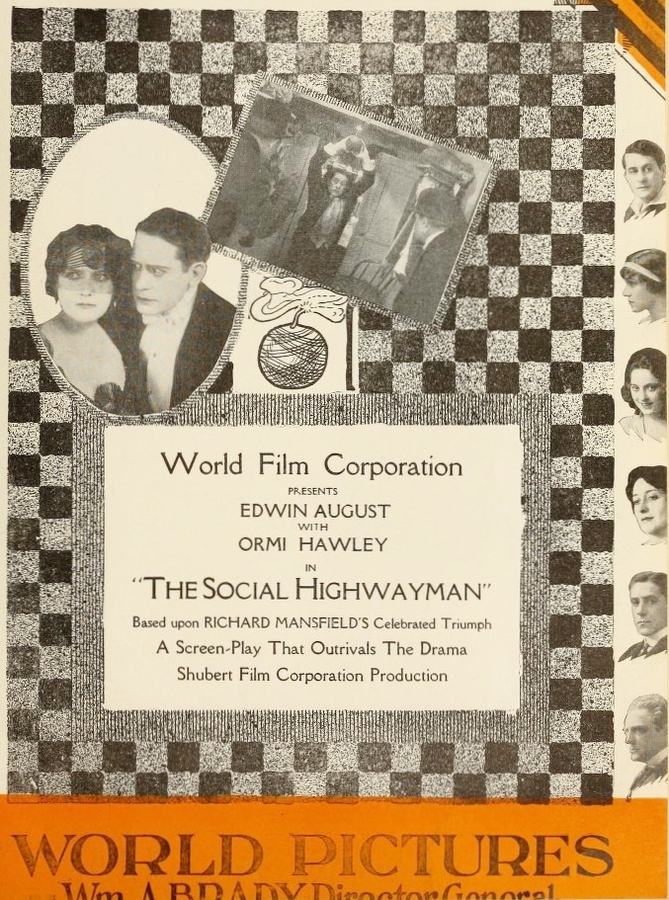
A bullet, a silk cravat, and a gold coin melted by furnace heat—three objects that open The Social Highwayman and close its coffin lid on the myth of American meritocracy. When the lights came up at my midnight basement screening, the single 35 mm print seemed to radiate its own phosphor afterglow, as if the reel itself were reluctant to let go of the specter it had conjured.
Stone and Marion’s script refuses to moralize; instead, it anatomizes. Curtis’s mother, played by Alice Claire Elliott with the weathered grace of a Caravaggio martyr, steals less from hunger than from an ancestral memory that property itself is theft. In one chiaroscuro-lit flashback she peels a stale loaf from a church altar, her fingers trembling not with guilt but with reverence—as though reclaiming consecrated matter from a usurper god. The image burns itself onto Curtis’s infant neurons; later, when he lifts a platinum cigarette case from a Wall-Street panjandrum, the gesture is identical, merely transposed into tuxedoed key.
Director Edwin August orchestrates a vertical crime epic: the camera tilts up from steerage rats to first-class chandeliers in a single unbroken shot achieved by strapping the cameraman to a freight elevator—an early proto-Steadicam miracle. The effect is vertiginous; class mobility becomes literal plummet or ascent. When Curtis, now girded in white-tie armor, descends the grand staircase of a Fifth-Avenue palace, the staircase morphs into a marble guillotine. Every socialite who greets him is both accomplice and eventual executioner.
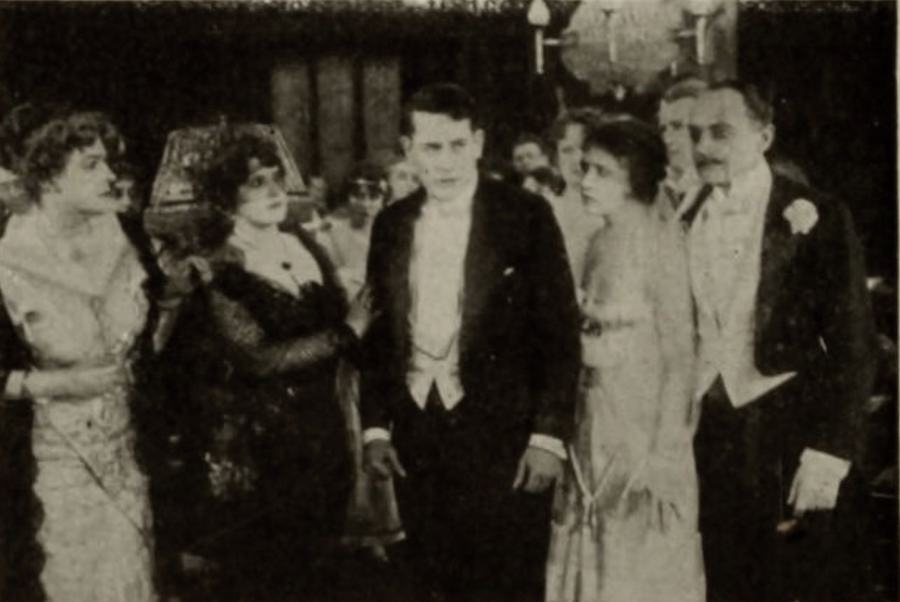
Ormi Hawley, as Curtis’s fiancée-turned-informant, has the translucent pallor of a Dresden doll cracked by frost. In the climactic ballroom scene she spots Curtis slipping a duchess’s sapphire bracelet into his waistcoat. August holds on her face for twelve seconds—an eternity in 1923 grammar—while a waltz lilts off-screen. Her pupils dilate from love to terror to complicity; without an intertitle she writes the whole moral arc of the film. It’s a moment that rivals Renée Falconetti’s trial in Il sogno di Don Chisciotte for pure ocular confession.
Each theft is choreographed like a Mass. Curtis enters the ballroom in a crimson-lined cape (a visual nod to Les misérables’s Bishop of Digne), confesses his intent to no one, then performs the elevation of the Host—only the Host is a diamond necklace. The camera, mounted on a revolving platform, spirals outward from his gloved hands to the crowd’s aghast faces, creating a kinetic mandala of sin and grace. When he later dumps the loot into a tenement wash-boiler, the recipients—Irish widows, Sicilian dockers, Black jazz pianists—form a ragged choir whose silent gratitude feels more sacred than any cathedral chant.
Cinematographer John St. Polis (also acting as the venal police commissioner) hand-tinted certain frames with a crimson varnish so toxic it reportedly blistered his lungs. The result: whenever blood is spilled—whether a razor-thin paper cut on a banker’s thumb or the final fusillade—it blossoms across the sepia like poppies on a battlefield. The tint is not symbolic; it’s alchemical, transmuting celluloid into living tissue.
No surviving cue sheets exist; the archive print screened with naught but the metronomic clatter of the projector. Paradoxically, the absence amplifies the film’s sonic ghosts. When Curtis cracks a safe in a Park-Avenue vault, you swear you hear the tumblers fall; when a tenement mother unwraps a stolen loaf, the crust fractures like distant artillery. The brain, starved of data, hallucinates its own score—an auditory phantom limb that makes the experience more visceral than many talkies.
Frances Marion, writing under the gender-neutral byline M. Stone, smuggles in a manifesto. Every male robber in the film meets humiliation: a pickpocket is tarred and feathered on Coney Island; a burglar is sodomized by a nightstick. The women, by contrast, escape unscathed—Elliott’s peasant mother dies off-screen of old age, her crimes transfigured into ancestral wisdom. The moral ledger implies that matrilineal theft is restitution, patrilineal theft merely pathology. In 1923, such coding was clandestine revolution.
Released in October 1923, the film played Manhattan’s Rialto for nine weeks—strong, yet dwarfed by the 40-week run of One Wonderful Night. By spring ’24, the negative was auctioned for silver-recovery; rumors claim the melted celluloid became dental fillings for the very plutocrats it mocked. Only one dupe survived, hoarded by a projectionist who used it to teach Sunday-school morality—ironic, given its anarchic heart.
Unlike The Spender’s shallow comeuppance or The Arab’s orientalist swagger, The Social Highwayman offers no redemption arc—only a Möbius strip of guilt and generosity. Its DNA reappears in A Sister to Carmen’s erotic larceny and The Shadows of a Great City’s urban fatalism, yet neither matches the political bite. Even Les misérables sentimentalizes its outlaw; Curtis dies unforgiven, unrepentant, and—most subversively—unmourned.
Rewatching in 2024, the film feels prophetic: cryptocurrency heists, NFT rug-pulls, and vigilante philanthropy populate our timelines. Curtis’s maskless face—no Zorro cowl, no Vendetta grin—anticipates our era of influencer transparency. He live-streams his crimes by merely existing in the ballroom, counting on gossip to do the rest. Replace his getaway horses with an e-bike and the story could trend on TikTok tomorrow.
Acting while directing, August never indulges self-myth. His Curtis is all sinew and nerve, a man who smiles like he’s already dead. Watch the micro-gesture when he pockets a senator’s watch: index finger strokes the enamel like a lover, then flicks it shut with the finality of a guillotine. The duality is Balzacian—both creator and creature of the film’s moral void.
Chicago’s censors excised a montage depicting Curtis teaching immigrant children to forge streetcar tokens. The footage is lost, but production stills show him kneeling, sleeves rolled, guiding a tiny girl’s chalk across slate. The excision amputates the film’s pedagogical heart, leaving the hero’s motives more opaque. Restorationists have bridged the gap with slow fades and intertitles reconstructed from Marion’s original continuity, yet the scar throbs.
The last image—Curtis slumped against a pylon while copper-tinged coins spill from his cape into harbor sludge—ranks among silent cinema’s sublime death tableaux. The fog swallows the body before the police can brandish it as trophy. Wealth reverts to brine, myth to vapor. No iris-out, no heavenward superimposition—only the mechanical clack of the projector reminding us that film, too, is a form of larceny: it steals time, then returns it altered.
Verdict: Seek the highwayman while you can. The celluloid is brittle, the sprockets warble, but the tremor it leaves in your chest is mint-fresh. In the currency of forgotten art, this outlaw is still spending blood-warm coins.
IMDb 6.2
1930
Community
Log in to comment.