DbcultAccessing Vault...
Cult Review
Senior Film Conservator
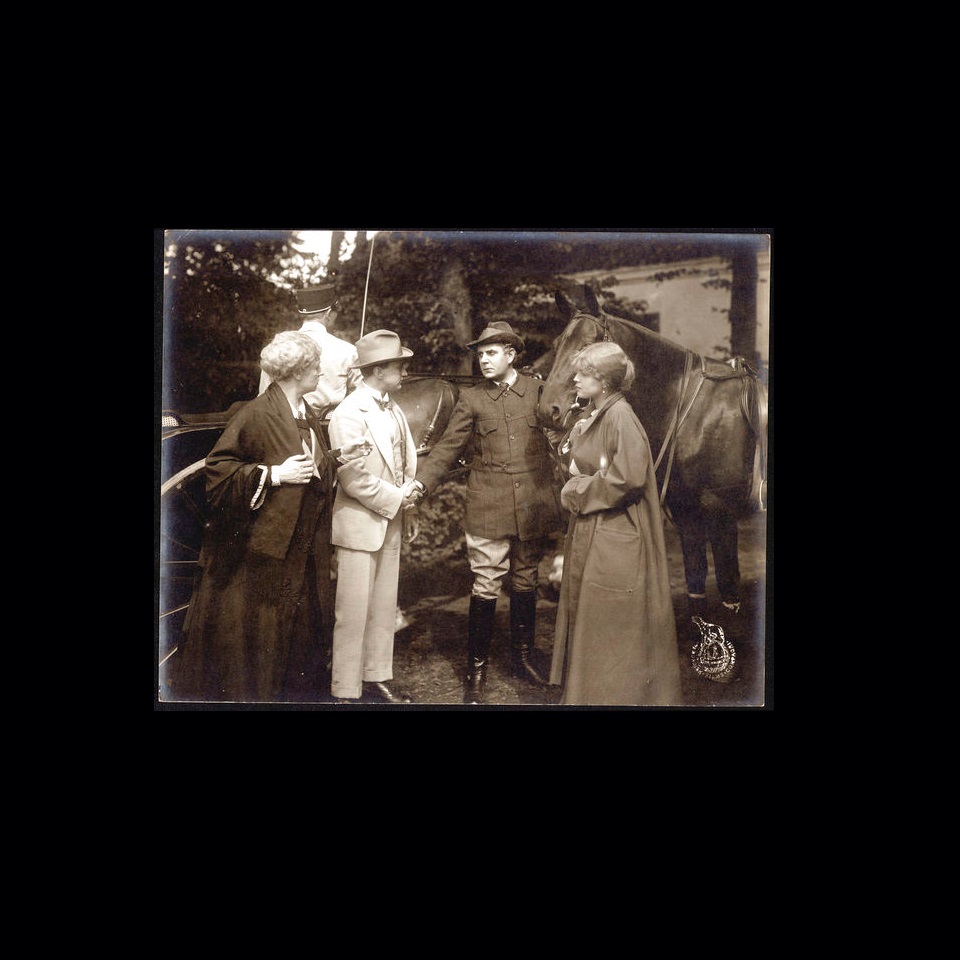
A manor exhales its last breath of candle-smoke; the butler’s gloves still drip seawater from the moat; somewhere a will is being rewritten by candlelight—welcome to Herregaards-Mysteriet, the 1918 Danish whodunit that history forgot.
The celluloid itself feels salt-stained, as though the reels were fished from the Kattegat at dusk. Carl Muusmann and a very young Carl Theodor Dreyer—yes, the future saint of Passion of Joan of Arc—co-wrote this chamber piece for director Holger-Madsen, trading expressionist gloom for something more Danish: Lutheran guilt in mahogany-paneled drawing rooms. You can almost smell the tallow and the damp wool of inherited wealth.
Baron Julius von Rydtener is discovered stone-cold beneath the family crest, a dagger shaped suspiciously like a fjord through his starched dickey. The will, freshly inked, bequeaths the estate to his estranged nephew Aage (Arne Weel), disinheriting the widow Elvire (Helen Gammeltoft) and her consumptive daughter Karen (Henny Lauritzen). Enter Detective Severinsen (Philip Bech), whose Inverness cape flutters like a verdict. Over three storm-bound nights he interrogates a gauntlet of suspects: the baron’s secretive secretary Alfred Osmund, a valet with gambling markers, a kitchen maid whose eyes betray an affair, and the local doctor who signs death certificates the way accountants sign ledgers.
Dreyer’s fingerprints are on every dialogue card: “Inheritance is merely guilt in Sunday clothes,” Severinsen mutters while studying a smudged fingerprint on a silver teacup. The camera, unusually mobile for 1918, glides past suits of armor whose visors slam shut of their own accord, suggesting ancestral memory itself is eavesdropping. A single match-cut links the dead man’s unblinking eye to the moon reflected in a soup terrine—an image so audacious it anticipates Hitchcock’s egg-timer suspense by a decade.
Helen Gammeltoft plays bereavement like a violin with loosened strings: her shoulders sag, yet her gaze stays razor-sharp, as though mourning were a chess gambit. Henny Lauritzen’s Karen drifts through hallways in ghost-white nightgowns, coughing blood onto lace handkerchiefs—consumption as moral weather vane. Franz Skondrup, as the valet, has a twitch that starts in his left eyelid and migrates to the pocket where the missing codicil is folded. The entire cast appears to age a decade under the weight of kerosene lamplight; you can practically chart the circles deepening beneath their eyes from reel to reel.
Cinematographer Frederik Fuglsang shoots interiors through layers of veiling: lace curtains, pipe smoke, breath on cold glass. Candle flames become interrogation lamps, elongating shadows until wallpaper roses resemble blood splatter. Exteriors were filmed at Gjorslev Castle on the Stevns Peninsula—its limestone walls absorb the Nordic twilight so completely that daytime scenes feel like dusk, dusk like the inside of a tomb. Compare this chiaroscuro with The Old Homestead’s pastoral Americana or the operatic glare of Caste; here, light itself seems on trial.
Silent, yes, but the film is loud with textures: the grind of a brass key inside a lock, the hush of velvet sliding across a mahogany table, the iodine whiff of seaweed carried through stone corridors. Danish intertitles—laconic, ironic—land like hammer taps on ice: “A confession is merely grief that has run out of disguises.” Contemporary audiences reportedly gasped so hard that the theater’s gas lamps flickered, as though collective breath could snuff flame.
Scholars still debate how much of the final script is Dreyer versus Muusmann, but the thematic marrow—faith, female suffering, the tyranny of patriarchal ink—prefigures every film he would later make. Karen’s bedside crucifix glints just long enough to throw a cross-shaped shadow across her consumptive cheeks, a visual rhyme with Joan’s arrow of light. The climactic confession occurs not in a courthouse but before the manor’s family chapel, camera fixed on the stained-glass face of a martyr whose eyes seem to weep candle-wax. Swap the Lutheran altar for an inquisitorial court and you have the DNA of Joan.
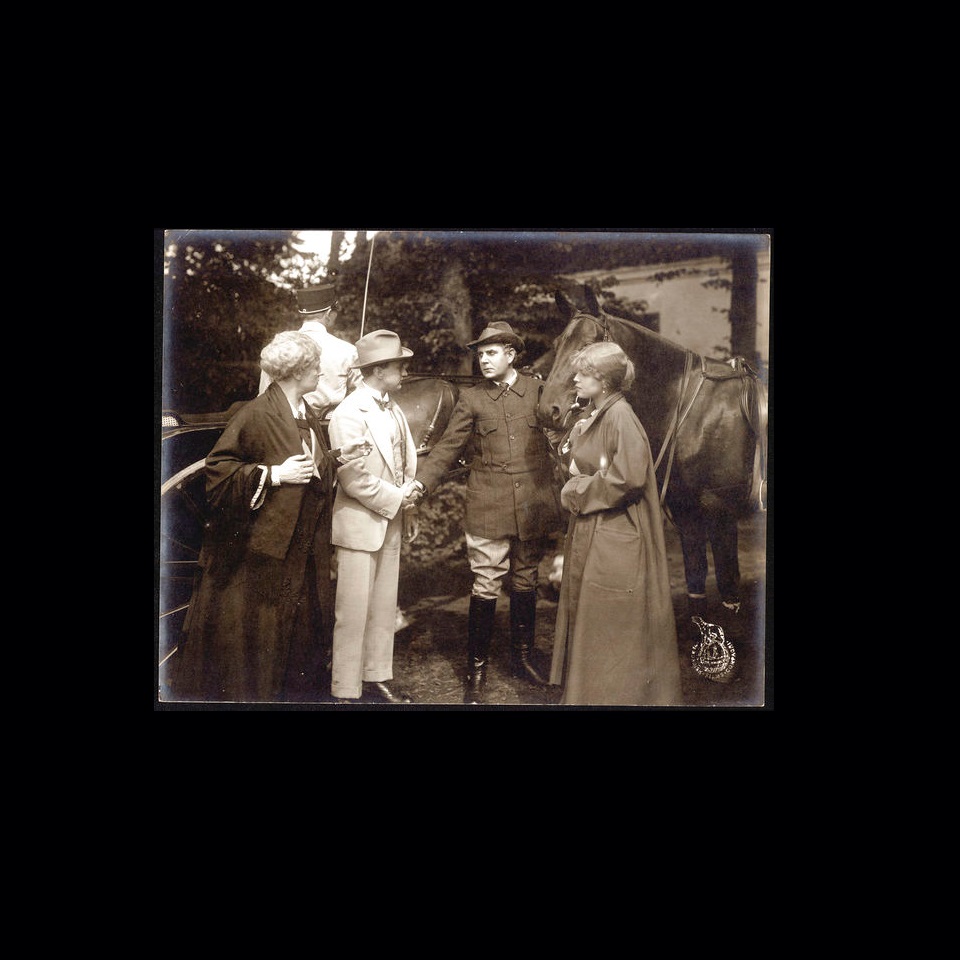
While Hollywood busied itself with flappers and custard-pie anarchy, Danish cinema excavated the rot beneath ancestral portraits. Herregaards-Mysteriet shares kinship with Her Strange Wedding’s marital claustrophobia and the continental masquerades of Die Prinzessin von Neutralien, yet its moral winter is distinctly Scandinavian. Where The Millionaire Vagrant flirts with redemption through wealth, this film suggests that inheritance itself is the original sin.
Oddly, the picture also rhymes with Alexandra’s court intrigues and the spy-shadows of Der Geheimsekretär, though those narratives roam empires and embassies. Here, the entire world shrinks to a dining hall where soup goes cold because no one dares swallow near a corpse.
For decades only the first and fifth reels survived, stored in a herring barrel inside a Helsingør lighthouse—apocrypha or not, the story flavors the myth. A 2018 restoration stitched 35 mm fragments from Copenhagen’s Cinematheque with Swedish censorship cards discovered in a Malmo basement, yielding 62 of the presumed 78 minutes. The gaps are bridged by stills overlaid with Erik Satie–esque piano, courtesy of composer Agnes Obel, whose minimalist arpeggios turn every intertitle into a funeral bell.
At its frost-bitten heart, the film asks: can property ever be clean if it passes through blood? Each character clutches an object that corrodes in real time: the baroness fondles a cameo locket whose gilt peels under scrutiny; the lawyer’s fountain pen leaks, blotting the will with Rorschach guilt. Even the manor’s ancestral portraits seem to blister, paint cracking like guilty consciences. Inheritance is not a gift but a transference of culpability, a relay baton of sin.
Gender politics simmer beneath the whale-bone corsets. Elvire’s widowhood is a performance staged for solicitors; Karen’s illness is the only socially sanctioned escape from marriage to her cousin. The camera lingers on female hands—wringing linen, clutching rosaries, smoothing death certificates—suggesting women’s labor holds the estate together while men’s signatures tear it apart. Dreyer would amplify this chorus of suffering in Day of Wrath; here it is a whisper, but no less chilling.
Though eclipsed by German expressionism and Swedish mysticism, Herregaards-Mysteriet carved a narrow fjord that Nordic noir still sails. The recent Department Q novels inhale its damp religiosity; Lars von Trier borrowed its candlelit gloom for Riget. Critics who dismiss silent Scandinavian cinema as village cosplay need only study the final shot: Karen’s coffin lowered into frozen ground while the survivors watch from leaded windows, their breath fogging the glass like souls trying to escape their own bodies.
Streaming on niche platforms in 4K, the film now reaches dorm rooms in São Paulo and cine-clubs in Seoul, proving guilt travels well across latitudes. Fan forums dissect the color grading of the candle flames (some insist on teal, others on tangerine) the way Talmudic scholars parse scripture. Meanwhile, the manor itself—Gjorslev Castle—runs midnight screenings in its granary; bats flutter overhead, echoing the on-screen ravens cawing at each revelation.
Like a Lutheran ghost story whispered after communion, Herregaards-Mysteriet seeps under the skin and stays there. It is neither the grand guignol of continental horror nor the pastoral balm of American melodrama, but something colder, older, closer to bone. Every frame feels carved from driftwood by seawater and confessions. If you emerge trusting the concept of lineage, you were not watching closely enough.
Watch it on a night when the wind rearranges tree branches into skeletal knuckles on your window. Pour something amber, let the wax drip, and remember: the real inheritance is the crime you haven’t committed—yet.
IMDb —
1918
Community
Log in to comment.