DbcultAccessing Vault...
Cult Review
Senior Film Conservator
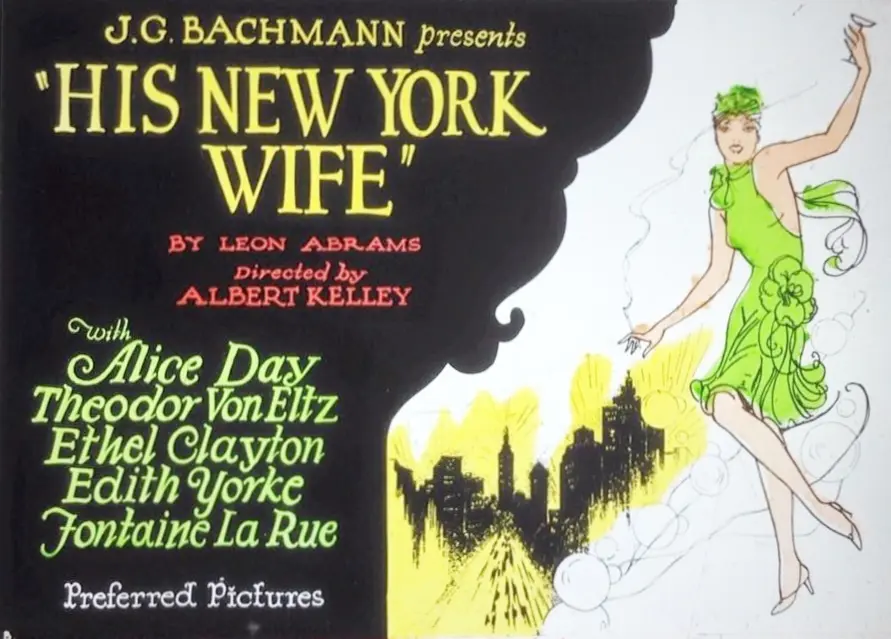
Is the 1926 silent drama His New York Wife actually worth watching today? Short answer: Yes, but primarily as a historical curiosity for those who appreciate the nuanced transition of Ethel Clayton from a major star to a character-driven performer.
This film is specifically for enthusiasts of 1920s high-society melodramas and those who enjoy the 'working girl in the big city' trope. It is absolutely not for viewers who require fast-paced action or a narrative that avoids the convenient coincidences common in silent-era screenwriting.
Before diving into the technical merits of this Robert Lord-penned script, we must address the fundamental efficacy of the film's structure. It is a movie that lives and dies by its lead performance, and luckily, Clayton is up to the task, even when the plot isn't.
1) This film works because Ethel Clayton manages to ground a ridiculous premise with genuine pathos, making Lila Lake’s desperation feel tangible rather than theatrical.
2) This film fails because the third-act resolution relies on a series of legal misunderstandings that feel more like a writer’s convenience than a natural progression of the characters' choices.
3) You should watch it if you are interested in how the 1920s cinema handled themes of female autonomy and the predatory nature of the New York entertainment industry.
The opening act of His New York Wife is surprisingly cynical for its time. We see Lila Lake lured to the city under the guise of artistic merit, only to find herself a glorified clerk. This 'bait and switch' mirrors the experience of many young women of the era, and the film doesn't shy away from the bitterness Lila feels. It is a theme often explored in similar films of the period, such as The Ragamuffin, though here it is dressed in the silk and velvet of the upper class.
The plot thickens when Lila enters the orbit of Julia Hewitt. The dynamic between the two women is fascinating. Julia is a 'dashing young widow,' but her status is a performance. She is secretly married to Jimmy Duval, played with a certain boyish charm by Theodore von Eltz. The central conflict arises from the shadow of Alice Duval, the matriarch who represents the old-world rigidity of New York society. This clash between 'new money' secrets and 'old money' expectations is a recurring motif in films like The Firing Line, and it serves as the engine for the film's second half.
The impersonation plot—where Lila agrees to play the role of Julia—is where the film takes a turn toward the absurd. While common in silent comedies, its application here in a drama creates a strange tonal friction. One moment we are dealing with the heavy consequences of social ostracization, and the next, we are watching a comedy of errors involving detectives and mistaken identities. It’s clunky. But it works if you don't overthink it.
Ethel Clayton was a veteran by 1926, and it shows. In His New York Wife, she avoids the wide-eyed histrionics that plagued many of her contemporaries. There is a scene midway through the film where she first puts on Julia's clothes. She looks at herself in the mirror, and for a brief second, you see the flicker of the actress she wanted to be, playing a role she never asked for. It is a subtle, haunting moment of meta-commentary on the nature of performance itself.
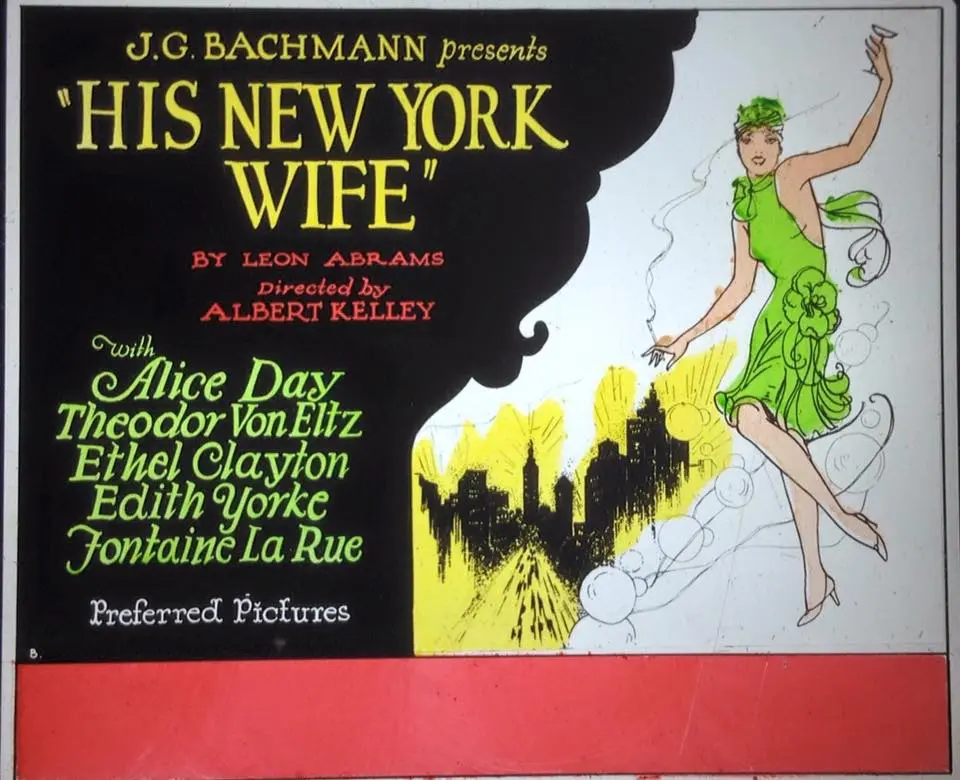
Theodore von Eltz as Jimmy Duval provides a competent, if slightly forgettable, foil. His chemistry with Clayton is serviceable, but the real spark comes from his interactions with Edith Yorke, who plays Alice Duval. Yorke brings a chilling stillness to the role of the society leader. She doesn't need to shout; her disapproval is written in the rigid line of her shoulders. This performance reminded me of the domestic tensions found in Josselyn's Wife, where the weight of family expectation becomes its own character.
Directorially, the film is standard for the mid-20s. The framing is mostly static, though there are some interesting uses of deep focus during the detective tailing sequences. The pacing, however, is a bit of a slog in the middle. The transition from the secretarial work to the impersonation takes too long to establish, and the detective subplot feels like it belongs in a different movie entirely, perhaps something more akin to An Affair of Three Nations.
Is His New York Wife a good movie by modern standards? No, it isn't a masterpiece of narrative cohesion. However, it is a fascinating look at the social anxieties of the 1920s. If you are a fan of Ethel Clayton or silent-era melodramas that focus on class mobility and deception, it provides a solid 70 minutes of entertainment. For the casual viewer, the plot may feel too contrived to be truly engaging.
The cinematography in His New York Wife is at its best when capturing the claustrophobia of the New York interiors. The Duval mansion is shot with high-contrast lighting that emphasizes the coldness of the environment. In contrast, the scenes in the secretarial office are flat and utilitarian, reflecting Lila’s initial boredom and disillusionment. This visual storytelling is a highlight, even if the script occasionally falters.
The tone is where the film struggles most. It wants to be a serious drama about social standing, but it frequently dips its toes into the waters of a farce. The arrest scene with Philip Thorne is a prime example. Thorne, played by the capable but somewhat bland Charles Cruz, rescues Lila from detectives only for both of them to be arrested. The irony is heavy-handed. It’s meant to be a moment of shared disillusionment, but it plays out with the logic of a cartoon. It’s flawed. But it’s certainly not boring.
Comparatively, a film like Tiger Rose handles its melodrama with much more consistent energy. His New York Wife feels like it’s trying to be three different movies at once: a career drama, a society romance, and a legal thriller. By trying to please everyone, it occasionally loses its own voice.
Pros:
Cons:
One of the most surprising aspects of His New York Wife is its treatment of the 'other woman.' Usually, in films of this era, the woman being impersonated would be a villain or a foil. Here, Julia Hewitt is actually quite sympathetic. She isn't a villain; she's just a woman trapped by the same social expectations as Lila. This subtle bit of female solidarity—where Lila helps Julia escape her mother-in-law's scrutiny—is much more progressive than the film's overall structure suggests. It’s a small detail, but it’s the most 'human' part of the movie.
His New York Wife is a middle-of-the-road silent drama that is saved from obscurity by the sheer talent of its lead actress. While it lacks the raw power of something like The Ragamuffin or the stylistic flair of Tiger Rose, it remains a fascinating artifact. It captures a specific moment in American cinema where the 'working girl' narrative was beginning to merge with the high-society melodrama. It is a messy, flawed, and occasionally brilliant piece of filmmaking. It doesn't need to be a masterpiece to be worth your time; it just needs to be honest, and in its best moments, it is.
"A convoluted but charming relic that proves Ethel Clayton could make even the most improbable plot feel like a matter of life and death."
IMDb 5.3
1929
Community
Log in to comment.