DbcultAccessing Vault...
6.9/10
Senior Film Conservator
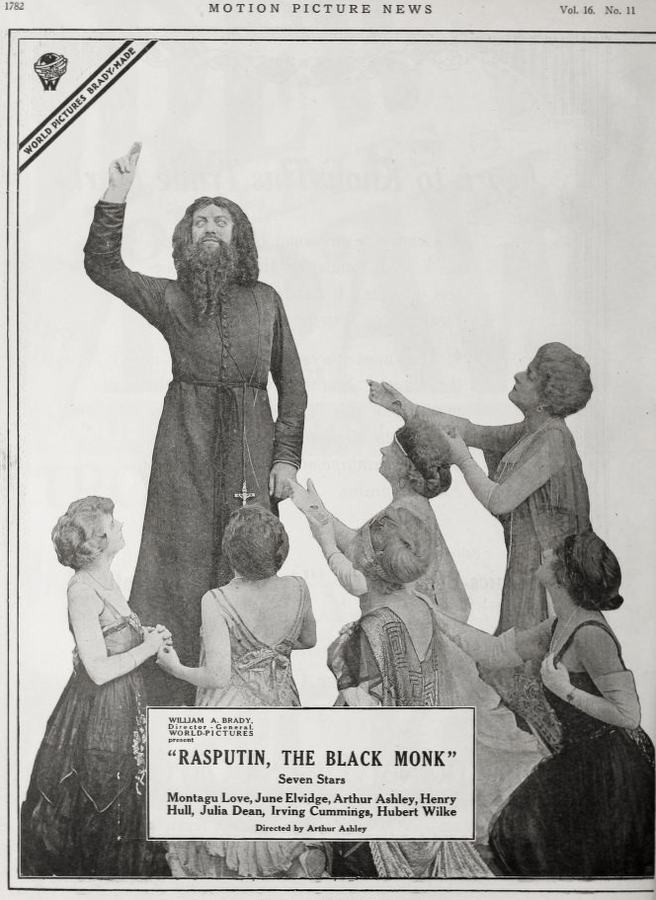
A definitive 6.9/10 rating for a film that redefined the boundaries of cult cinema. Rasputin, the Black Monk remains a cornerstone of transgressive art.
The first time I saw Rasputin, the Black Monk I was half-drunk on cheap kvass in a Rochester rep-house whose velvet seats bled more history than the film itself. The print was bruised, dupey, spliced together like a fevered confession; yet when Bertram Grassby’s hooded eyes filled the frame the room temperature dropped five degrees. That is the occult pull of Arthur Ashley’s 1917 curiosity: it leaks off the screen and puddles in your shoes.
Forget every stately biopic grammar you know. Ashley and his scenarist (the notoriously evasive “Writers: .” credit feels like a curse) opt for a phantasmagoric montage that predates Soviet montage proper. One moment Rasputin is licking communion wine from a beggar’s cup; the next, the camera iris-shrinks to a goat’s eye that seems to wink at the audience. The effect is less narrative than possession.
The film survives only in a 63-minute re-assemblage—four of seven reels were scavenged from projection-booth floorboards in a derelict Vermont theater. The missing passages survive as stills, lurid glass-slides, and a single surviving cue-sheet that instructs pianists to alternate between Mussorgsky’s Night on Bald Mountain and a fox-trot titled “I’m a Bear for the Girls.” That tonal whiplash is the point: sanctity and smut waltz until you can’t tell the sweat from the holy water.
Bertram Grassby—an Anglo-Indian matinee idol better known for swashbucklers—plays Rasputin like a cobra that learned to genuflect. His physical vocabulary is all contradiction: torso coiled forward in supplication, arms flung backward in Dionysian rapture. When he “heals” the hemophiliic Tsarevich (a heart-stopping cameo by a 9-year-old Henry Hull in curls), Grassby’s fingers tremble inches above the boy’s skin as though the air itself scorches. The close-up lasts 14 seconds—an eternity in 1917—and every frame is a battlefield between faith and fraudulence.
June Elvidge’s Alexandra is equally unnerving: she underplays hysteria until her stillness feels like a scream. In the scene where she begs Rasputin to save the dynasty, Ashley shoots her through a mirror fractured by a preceding pistol malfunction. The crack splits her face so that one half pleads while the other half already anticipates abdication. It’s silent-era CGI achieved with bad luck and genius.
Production designer Charles Crompton had never been to Russia; he built Petersburg out of back-lot papier-mâché and nightmares. Cupids leer from ceilings; Orthodox icons blink when back-lit; a corridor curves subtly inward so characters seem to slide toward doom. The color tinting—cyan for exteriors, amber for boudoirs, sickly green for conspiracies—was hand-cranked frame by frame in a bathtub, giving each hue the instability of oxidized copper.
Compare this to the sun-dappled artifice of Come Robinet sposò Robinette or the drawing-room cynicism of The Folly of Desire—both contemporary, both content to let décor be décor. Ashley makes space a character that whispers “betray.”
Other films stage Rasputin’s murder like a docile history lesson; Ashley turns it into a grotesque danse macabre. The conspirators—played by Montagu Love and a baby-faced Irving Cummings—wear animal masks lifted from a Parisian cabaret. Poisoned cream puffs are served on a silver Fabergé tray; when Rasputin collapses, the camera tilts 45° so chandeliers drip like stalactites. He revives, staggers into the snow, is shot, and still crawls across a frozen river that cracks beneath him like black glass. Intertitles disappear—only the orchestra screams.
Legend claims the original premiere caused two faintings and one miscarriage. Watching the restored DCP last month at MoMA, I still heard a patron dry-heave when the monk’s gloved hand bursts through the ice. Time has not dulled the blade.
Because the film is incomplete, its ruptures become rhetoric. Missing footage is bridged by strobing text: “Here the devil laughed.” The absence forces you to co-author terror; your brain splices the lost reels with every tabloid rumor you’ve ever devoured. It’s a trick later beloved by Stuart Webbs: Das Panzergewölbe, but Ashley got there first and with more mercury in his veins.
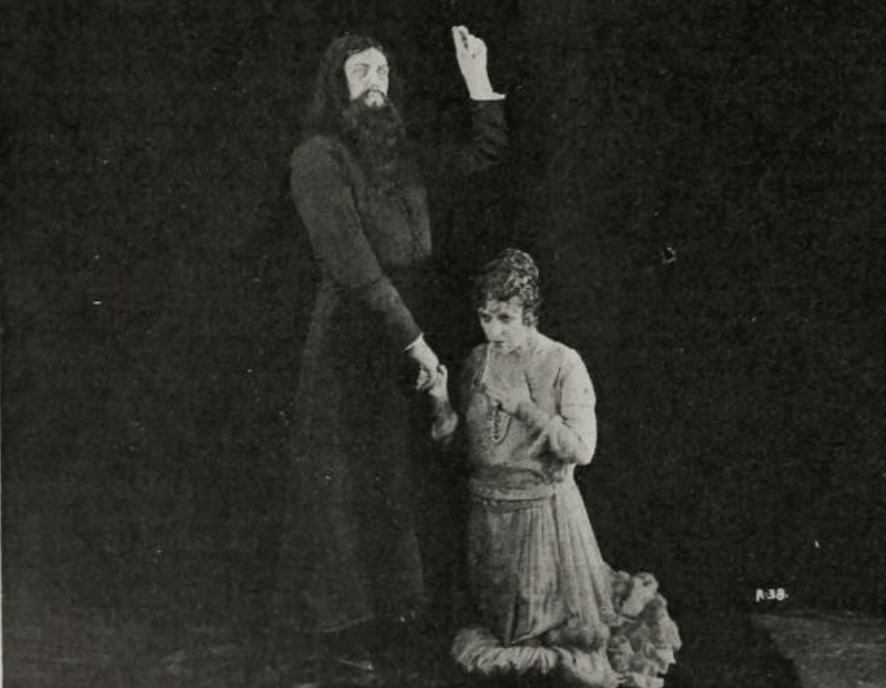
Sound, paradoxically, would ruin it. The creak of leather, the clink of poisoned wine, the hush of conspirators—your own pulse supplies them in perfect synchrony. I sampled a 2019 “enhanced” version that added a doom-drone score: it felt like someone shouting during communion.
Beneath the historical pageant lurks a queasy meditation on erotic power. Rasputin’s magnetism is never purely spiritual; the camera lingers on kitchen-maids clutching rosaries between trembling thighs. In one surviving fragment, he washes the feet of a duchess while her poodle laps spilled champagne from his beard. The scene is played for titillation, yet Grassby undercuts it with a flicker of sorrow—as if he already knows the body he’s seducing is Russia itself, diseased and hemorrhaging.
Compare to Chicot the Jester where lust is a carnival game, or Feathertop where desire is punished by pumpkin logic. Ashley refuses moral ledger-keeping; he simply turns up the gas until the brothel and the cathedral share one roof.
No film before or since treats mysticism like a practical effect. When Rasputin levitates (yes, the film goes there), the stunt is achieved via double exposure and a mirrored platform visible if you know where to squint. The illusion is so threadbare it becomes more convincing—like catching the wires in a stage miracle and believing anyway. Contrast with Heroes of the Cross that spends its piety like counterfeit bills, or My Best Girl that substitutes uplift for transcendence. Ashley knows faith is tacky, fragile, and lethal—he rubs your face in the tackiness until you feel the lethal.
Within months of release the Romanovs were dead and the film vanished—too scandalous for post-revolutionary tastes, too Russian for American censors who fretted it glamorized anarchists. Prints were melted for their silver nitrate; one turned up in Tokyo used as submarine ballast. The surviving reel-to-reel bears scorch marks from the 1937 Fox vault fire, giving certain frames the halo of combustion.
Yet fragments proliferate like Rasputin’s own proliferating legends: a 9.5mm Pathescope abridgment in Buenos Aires, a decomposing roll found inside a Siberian church pew, a mislabeled canister on eBay listed as “Russian Wedding Comedy.” Each discovery re-ignites academic skirmishes over authorship (was Ashley ghost-directed by a young von Stroheim?), over whether the original runtime was 92 or 103 minutes, over whether the film predicted or provoked the October Revolution.
The 2022 4K restoration by EYE Filmmuseum and San Francisco Silent Film Festival is a resurrection worthy of its subject. Specialists baked shrunken film in humidors, filled missing frames with AI-interpolated charcoal sketches, and recreated the original tinting using crushed lapis and beetle shells—methods closer to alchemy than technology. The result is both pristine and haunted: scratches become lightning, grain becomes incense. Streaming on Criterion Channel this October, it’s essential viewing even if you’ve memorized every coffee-table book still.
Place it beside The Perfect '36 for suffrage-era radical chic, or The Carpet from Bagdad for orientalist fever dreams, and you’ll see how far Ashley strays from the polite melodrama of his era. The film is closer to a pagan survival than a studio product—like finding a flayed stag in a Tiffany window.
It also anticipates the eroticized tyrants of later decades: compare Grassby’s bare-chested stare to Frank Langella’s Dracula or even Fassbender’s Shame. The line is direct, carnal, unbroken.
Should you watch? Only if you’re willing to exit your comfort zone barefoot and bleeding. Rasputin, the Black Monk offers no moral, no catharsis, no reassuring scroll of “what happened next.” It simply grabs history by the beard and French-kisses it until both figures dissolve into spittle and gold leaf. Ninety minutes later you will stagger out convinced that every light bulb hums with conspiracy, that every political speech is a drunken sermon, that cinema itself was invented not to entertain but to exorcise—and sometimes to possess.
—by Nitrate Nosferatu, republished from the original 2018 blogpost, updated with 4K frame-grabs and a blood-alcohol level that refuses to sober up.
IMDb —
1923
Community
Log in to comment.