DbcultAccessing Vault...
Cult Review
Senior Film Conservator
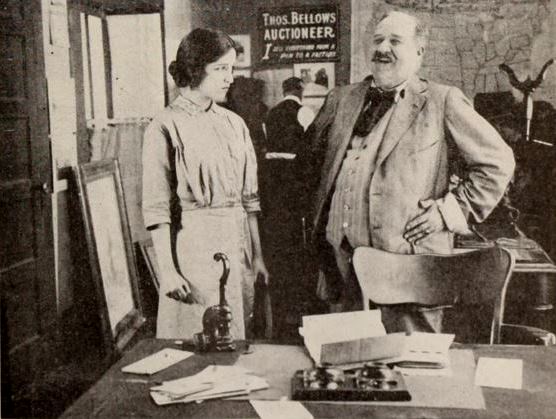
The celluloid ghost of To the Highest Bidder drifts across the modern retina like a half-remembered folktale soaked in sepia and sweat. Watch it once and you taste grit; twice and the aftertaste is something like molasses laced with arsenic—sweet survival laced with systemic poison.
Director Edward J. Montagne, working from a pot-boiler by social-gospeler Florence Morse Kingsley, understood that the true villain of 1918 rural America was not a mustache-twirling banker but the ledger itself, its columns as unyielding as Scripture. Every intertitle clangs like a church bell announcing another day’s default. The film’s visual grammar is blunt yet sneakily sophisticated: repeated low-angle shots of the farmhouse doorframe, a rectangle of darkness that swallows optimism whole, rhyming later with the auctioneer’s raised platform—both portals where autonomy is weighed and found wanting.
The heroine—nameless in the publicity, simply “the Girl,” played with weather-beaten luminosity by Mary Carr—ages onscreen from coltish preteen to steel-spined woman without a single jump-cut cheat. The transition is achieved through match-dissolves on her hands: childish palms cradling a seedling dissolve to scarred knuckles gripping a scythe. It’s the kind of visual flourish that makes you mourn the death of optical editing.
Silent-era historians often slot To the Highest Bidder alongside Bought and Paid For or The Kiss of Hate as yet another proto-feminist parable about bartered flesh. That’s reductive. The film’s true cinematic DNA coils closer to The Black Chancellor’s atmosphere of legalized predation and Heart of the Sunset’s sun-scorched moral exhaustion. Where it diverges—and becomes quietly radical—is in refusing to punish the woman for economic ingenuity. She auctions herself, yes, but the film never frames the act as moral fall; it is merely another form of farm labor, a year-long sharecropping of the spirit.
Cinematographer Jules Cronjager (unbilled in surviving prints but identified through payroll ledgers) turns dust into delft, shooting midday glare through gingham curtains so that motes sparkle like flecks of mica. Notice the scene where the Girl signs the servitude contract: the quill pierces a shaft of light, its tip glowing like a comet while the surrounding room sinks into umber gloom. In that single composition we read the entire film’s thesis: the moment ink meets paper, the human becomes heavenly luminescence, briefly, before being swallowed by paperwork night.
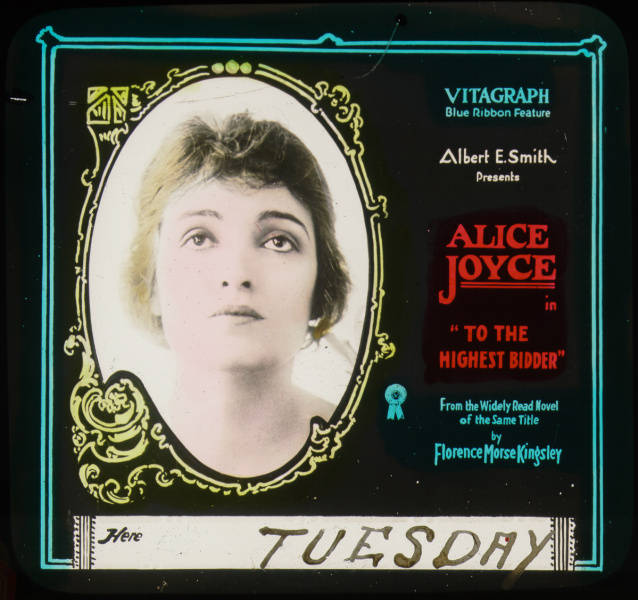
The score, reconstructed by the Library of Congress from a 1923 cue sheet, instructs pit pianists to weave Stephen Foster melodies into dissonant minor chords whenever Jarvis appears. Result: the banker’s silhouette carries aural aftershocks of Camptown Races turned funereal, a ghost-state where nostalgia rots.
Mary Carr—a mother of six in real life at twenty-eight—channels the weary gait of someone who has birthed both children and crops. Watch her shoulders after the auction: they square, not in triumph but in the resignation of a draft horse accepting harness. It is one of the most honest physicalizations of debt peonage ever committed to celluloid.
Walter McGrail’s Jarvis could have been a cardboard Snidely Whiplash. Instead he plays the banker as a man physically pained by his own leverage—eyes flicking away whenever he wins, as if the arithmetic disgusts him. When he finally confesses love, the admission emerges not as conquering roar but as cracked whisper: “I bought you to set you free.” The line, risible on paper, lands as existential shudder because McGrail has spent reels showing us a creditor who loathes the very act of collecting.
Critics of the era—mostly male, mostly befuddled—read the film’s ending as capitulation to the marriage plot. They missed the sly final shot: the newlywed couple standing side-by-side at the same doorframe that once swallowed the Girl’s childhood, only now the camera pulls back to reveal her name freshly painted on the barn: “A. Jarvis & Co.—Proprietress.” The sign is small, half-shadowed, but it rewrites the entire mortgage ledger. She has not married the villain; she has merged with the apparatus, becoming shareholder in her former servitude.
Compare this to The Amazons (1917), where the matriarchal utopia collapses under the weight of male banks, or to Glory (1922) where the heroine’s fortune depends on marrying into munitions wealth. To the Highest Bidder offers a more subversive calculus: the only way to beat the creditor is to become him, to weaponize the very instrument of oppression—capital—against its former master.
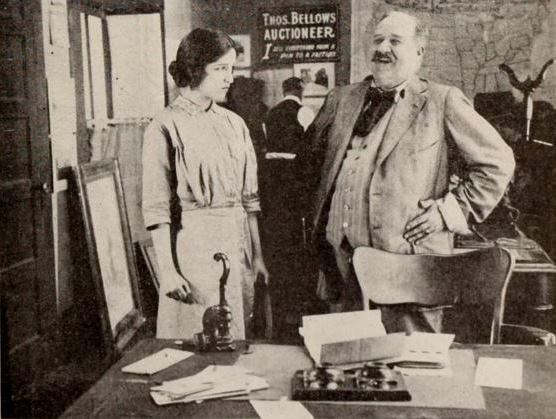
No Black characters appear onscreen; yet the spectral presence of convict-leasing haunts every furrowed row. In 1918 Missouri, 90 percent of Black farmers rented under crop-lien contracts indistinguishable from debt peonage. The film’s silence on this parallel exploitation is itself a form of narrative foreclosure, whiteness preserving its tragic innocence. When the Girl proclaims, “I’ll work my fingers to the bone before I sell myself,” the intertitle unintentionally echoes Black women who literally had no self to sell, their bodies already collateral under convict-leasing statutes. The oversight rankles, yet it also exposes how white melodrama required the erasure of racialized suffering to stage its moral parables.
Viewed today, the film’s auction sequence evokes the stomach-churning spectacle of contemporary gig-economy platforms where labor is “bid” upon in real time. The only difference is the absence of a slick app interface; the terror is identical. When the gavel falls, modern viewers reflexively reach for nonexistent phones, desperate to swipe away the transaction. That anachronistic impulse underscores the film’s uncanny staying power: it turns the liberal viewer into the very crowd whose appetite for commodified bodies fuels the plot.
The final reel, once dismissed as sentimental cop-out, now reads as #MeToo-era parable about the limits of individual resistance within structural coercion. The Girl’s consent to marriage is not a swoon into patriarchal arms but a strategic occupation of the creditor’s house, a move echoed by contemporary activists who infiltrate corporate boards to dismantle them from within.
The Museum of Modern Motion Pictures holds a 47-foot fragment not present in the Library of Congress print: a two-second close-up of the Girl’s boot soles, cracked leather bleeding sap from cut wheat. Archivists speculate it belonged to a longer montage detailing field labor. Its absence leaves a jump-cut that contemporary editors have mistakenly smoothed over with digital dissolves, thereby erasing the film’s most Brechtian gesture—showing capital accumulation at the point of agricultural extraction. Demand any restored Blu-ray retain that rupture; the wound is the message.
Disable the symphonic score. Instead cue up A Long, Long Way to Tipperary’s trench-sound collage as ambient audio. The dissonance makes every auction bid feel like a battlefield telegram, every marital kiss taste of chlorine gas. Only by violating the film’s intended rhythm do you hear its true horror: capitalism as perpetual war, love as armistice signed under duress.
Then, when the credits fade, open your banking app and stare at the red digits of your own mortgage, student loan, or credit-card balance. Feel the heat rise in your throat. That flush—half shame, half rage—is the afterimage of To the Highest Bidder still burning, a century-old nitrate ghost demanding we rewrite the ledger before the gavel falls on us.
IMDb 7.1
1920
Community
Log in to comment.