DbcultAccessing Vault...
Cult Review
Senior Film Conservator
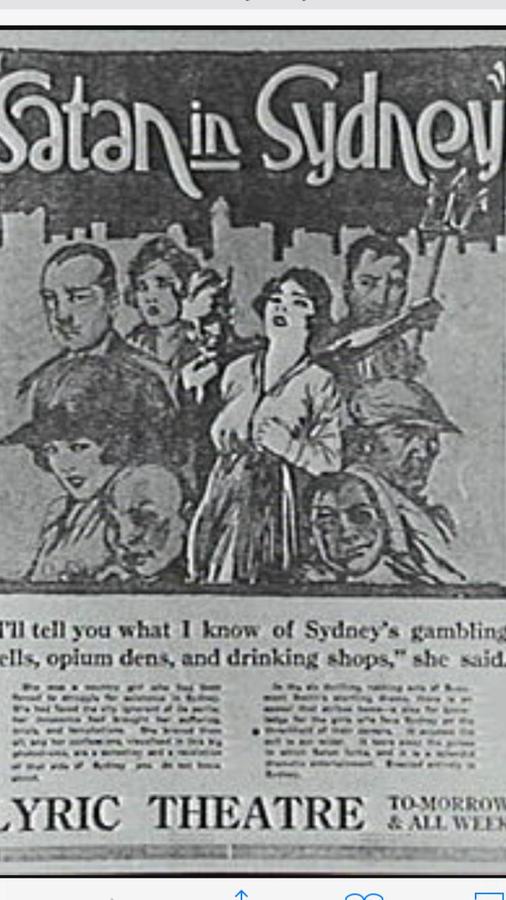
In the annals of Australian cinema, particularly within the early 20th century, certain films emerge not just as entertainment, but as vital cultural artifacts, reflecting the anxieties and moral compass of their era. Beaumont Smith's 'Satan in Sydney' stands as a compelling, albeit perhaps understated, example of this phenomenon. It's a film that, despite its seemingly straightforward premise, unfurls a complex tapestry of innocence, manipulation, and the insidious creep of wartime ideology into the most unsuspecting corners of society. To revisit this work today is to embark on an archaeological dig into the cinematic psyche of a nation grappling with its identity amidst global conflict, long before the digital age made such historical reflections instantly accessible.
The narrative pivot of 'Satan in Sydney' centers on Anne Maxwell, a young woman from the tranquil Australian countryside, whose arrival in the bustling metropolis of Sydney is marked by an earnest desire to refine her vocal talents. She falls under the tutelage of Karl Krona, a choir master whose reputation for musical prowess is matched only by his enigmatic aura. However, beneath the veneer of artistic mentorship lies a far more sinister truth: Krona is a German sympathiser, his artistic endeavors merely a sophisticated camouflage for deeper, more treacherous allegiances. This revelation immediately elevates the film beyond a simple coming-of-age story or a musical drama, plunging it headlong into the fraught territory of espionage and moral compromise. The very act of singing, typically an expression of harmony and communal spirit, is here subtly corrupted, becoming a potential instrument of a foreign power.
The genius of Smith's premise, even in its succinct form, lies in its psychological depth. Anne, with her inherent innocence and perhaps a touch of naiveté typical of a country girl in the big city, represents a vulnerable target. Krona, by contrast, is the embodiment of calculated charm, his intellectual and artistic credibility lending him an air of unimpeachable authority. The power dynamic is immediately skewed, placing Anne in a precarious position where her artistic aspirations could inadvertently serve a cause antithetical to her nation's interests. This subtle subversion of trust, where a mentor becomes a potential manipulator, offers a chilling commentary on the pervasive nature of wartime propaganda and the ease with which individuals can be unwitting pawns in grand geopolitical games. It's a narrative thread that resonates with the quiet dread found in films like The Rack, which explores personal loyalty tested against larger, systemic pressures, or even the psychological tension present in De lefvande dödas klubb, where hidden agendas unravel societal fabrics.
While specific character roles beyond Anne and Krona are not explicitly detailed, the ensemble cast assembled by Beaumont Smith – Gerald Harcourt, Edward Jenner, Gladys Leigh, Charles Villiers, Ruth Wainwright, Eileen Dawn, D.L. Dalziel, Percy Walshe, Elsie Prince, Zoe Angas, Mick Tracey, and George Edwards – undoubtedly contributes to the film's atmospheric texture and narrative propulsion. In films of this era, particularly those with a melodramatic or suspenseful bent, each player, no matter how minor, often served a vital function in either bolstering the protagonist's plight or complicating the antagonist's schemes.
One can imagine Gerald Harcourt, a seasoned performer, perhaps embodying a stalwart figure of Australian patriotism or a concerned family friend, whose growing suspicions about Krona drive much of the secondary plot. Edward Jenner might have brought a nuanced performance to a character torn between professional admiration for Krona and patriotic duty, or perhaps even a fellow sympathiser operating within Krona's circle, adding layers of internal conflict to the narrative. Gladys Leigh, often lauded for her dramatic presence, could have portrayed a skeptical housekeeper or a sharp-eyed socialite, observing Krona's activities with a keen, discerning eye, providing crucial exposition or warnings to Anne. Charles Villiers and Ruth Wainwright, with their theatrical backgrounds, would have likely filled roles that either supported Anne's journey or were unknowingly manipulated by Krona, enriching the tapestry of characters caught in the web of espionage.
The effectiveness of such an ensemble in a film like 'Satan in Sydney' hinges on their ability to collectively build a believable world where treachery can hide in plain sight. Their performances, whether through subtle glances, hushed conversations, or moments of overt confrontation, would have been crucial in conveying the escalating tension and the moral stakes involved. Each actor, in their own way, contributes to the overall sense of unease and the gradual revelation of Krona's true colors, making the threat feel palpable and immediate to the audience of the time. This collective effort to establish a palpable sense of danger and moral ambiguity is reminiscent of the intricate character work found in early thrillers, where every face tells a part of the larger story, much like the communal anxiety portrayed in The Life of Our Saviour; or, The Passion Play, albeit in a vastly different thematic context, where a community reacts to a central figure.
Beaumont Smith, often a writer-director, possessed a distinct knack for crafting narratives that, while sometimes leaning into melodrama, never shied away from exploring topical issues with a populist appeal. His writing for 'Satan in Sydney' is particularly noteworthy for its ability to infuse a seemingly innocuous setting – a choir practice – with profound geopolitical tension. This was a period when national identity and loyalty were paramount, and films often served as potent vehicles for both patriotic sentiment and cautionary tales. Smith’s script, therefore, likely leveraged the prevailing wartime anxieties to create a sense of immediate relevance and urgency for its audience.
The narrative structure, focused on the gradual unveiling of Krona's true nature, suggests a meticulous build-up of suspense. Smith understood that the most effective threats are often those that lurk beneath the surface, slowly eroding trust rather than announcing themselves with overt aggression. The choice of a 'German sympathiser' as the antagonist is also significant, reflecting the specific historical context of the time, where allegiances were sharply divided and suspicion of 'the other' was often rampant. This allowed Smith to tap into a collective fear, transforming a personal drama into a microcosm of national security concerns. One can draw parallels to the way The Lone Wolf often played on themes of hidden identities and moral ambiguity, or how By Right of Possession explored the insidious nature of power and control within a domestic setting.
At its heart, 'Satan in Sydney' is a poignant exploration of innocence under siege. Anne Maxwell embodies the vulnerability of a society grappling with external threats that manifest internally. Her journey from rural simplicity to urban complexity, coupled with the revelation of Krona's duplicity, serves as a powerful allegory for a nation's awakening to the harsh realities of global conflict. The betrayal isn't just personal; it's a symbolic betrayal of Australian values and security. This thematic richness elevates the film beyond a mere genre piece, positioning it as a significant cultural commentary.
The concept of the 'home front' during wartime is subtly yet powerfully depicted. While the battles rage overseas, the psychological warfare unfolds in the seemingly mundane spaces of civilian life – a choir room, a city street, a private lesson. Krona's activities highlight the fact that the war was not confined to distant battlefields but permeated everyday existence, demanding vigilance and testing loyalties even among neighbors. This internal conflict, where the enemy is not a soldier in uniform but a trusted figure, creates a unique brand of tension that is arguably more insidious and psychologically impactful than overt combat scenes. The film, therefore, contributes to a broader cinematic tradition of portraying the unseen battles of wartime, much like the emotional toll depicted in The Way Back, or the societal pressures illustrated in Heart Strings.
While 'Satan in Sydney' may not be as widely celebrated or readily accessible as some international classics of its time, its significance within Australian film history cannot be overstated. It represents a bold attempt to engage with complex geopolitical themes through a localized, character-driven narrative. The film, like many from its period, grapples with questions of national identity, loyalty, and the corrupting influence of power – themes that remain perennially relevant. Its very existence reminds us of the rich, often overlooked, cinematic heritage that predates the more commonly referenced 'golden ages' of film.
One might ponder how audiences of the time reacted to such a narrative. Did they see Krona as a straightforward villain, or was there an underlying recognition of the complexities of wartime allegiances, even if condemned? How did Anne Maxwell's journey resonate with young women navigating a rapidly changing world? These are the fascinating questions that films like 'Satan in Sydney' provoke, inviting us to not just watch a story, but to engage with a historical moment through its artistic lens. It’s a work that, through its modest yet potent narrative, offers a window into the anxieties and moral dilemmas that shaped a generation, much like how Creation sought to explore foundational questions of existence, or Daughter of Destiny delved into societal roles and expectations.
The film's exploration of German sympathy during a period of intense anti-German sentiment in Australia is particularly striking. It dares to portray a 'shadow enemy' within, challenging the simplistic binary of 'us vs. them' that often dominates wartime narratives. This nuanced approach, even if ultimately condemning Krona, suggests a willingness to explore the uncomfortable realities of internal dissent and ideological divides. This willingness to confront complex social dynamics aligns it with films that dared to look beneath the surface of societal norms, like The Angel Factory, which explored hidden motives and moral ambiguities within a seemingly respectable setting.
Ultimately, 'Satan in Sydney' endures as a cautionary tale, a stark reminder that vigilance is not merely a military imperative but a civic responsibility. It underscores the fragility of trust and the ease with which malevolent intentions can masquerade under the guise of benevolence or cultural enrichment. For contemporary audiences, it offers a fascinating glimpse into the nascent stages of Australian filmmaking and its engagement with global events. It’s a testament to Beaumont Smith’s understanding of popular appeal, crafting a narrative that was both entertaining and subtly instructive, weaving a tale of personal peril against a backdrop of national concern. The film's ability to imbue a choir master with such a potent, almost Faustian, allure speaks volumes about the power of its central conceit. The 'Satan' in Sydney is not a supernatural entity, but rather the very human capacity for deception and ideological subversion, lurking in plain sight, ready to corrupt the innocent and undermine the collective spirit. It is a cinematic echo of the timeless struggle between good and evil, played out in the intimate spaces of mentorship and the grand theater of wartime Sydney. Its psychological underpinnings and exploration of moral quandaries make it a compelling subject for study, inviting us to appreciate the sophistication of early cinema in tackling themes that remain acutely relevant in our own complex world.
The enduring power of films like 'Satan in Sydney' lies in their ability to transcend their historical context and speak to universal human experiences: the allure of power, the vulnerability of the innocent, and the constant battle against hidden forces that seek to sow discord. It’s a film that, while perhaps requiring a historical lens to fully appreciate its nuances, nonetheless offers a timeless narrative of vigilance and the profound impact of individual choices in times of collective crisis. Its quiet intensity and the psychological depth of its central conflict firmly establish its place as a noteworthy piece of Australian cinematic heritage, a dark jewel among the early works that helped shape a national film identity. Much like the profound moral investigations found in Julius Caesar or The Betrothed, this film asks us to consider the price of loyalty and the insidious nature of betrayal, but within a uniquely Australian setting.
IMDb —
1918
IMDb 5.8
1910
Community
Log in to comment.