DbcultAccessing Vault...
Cult Review
Senior Film Conservator
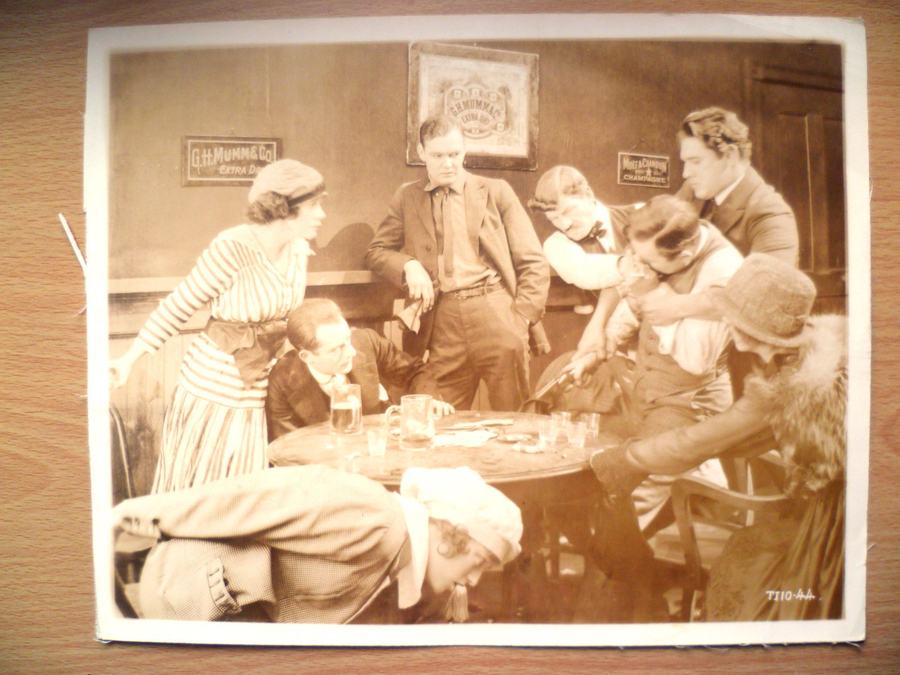
The projector crackles; nitrate ghosts jitter across the screen, and suddenly the twentieth century feels like yesterday. His Own Home Town is less a quaint curio from 1922 than a scalpel still warm from flesh. Larry Evans’ screenplay—tight as a noose—delivers a parable about American self-mythology: the newspaperman who can shame the devil until he discovers the devil’s cufflinks match his own DNA.
Andrew Arbuckle plays Jimmy Duncan with the restless energy of a man who mistakes moral clarity for immortality. Watch the way he yanks the composing stick from the old typesetter, letters flying like sparks—every clack of metal against metal a verdict. Arbuckle’s jawline, forever half-lit, belongs on a propaganda poster, yet his eyes carry the glint of someone who’s read the last page of the book and prays the ink might smudge a different ending.
Across the newsroom stands Katherine MacDonald as Mary Alden, society editor turned confidante, her soft-focus close-ups glowing like hand-tinted postcards. MacDonald could have sashayed through a brainless rom-com; instead she weaponizes empathy, feeding Jimmy leads while measuring the ethical hairline fracture widening beneath his swagger. Their chemistry—chaste by censorship standards—still radiates enough heat to scorch the edges of every intertitle.
But the film’s gravitational center is J.P. Lockney’s Reverend Duncan, a baritone in a silk collar who can quote Proverbs while signing off on a protection racket. Lockney never twirls a mustache; he doesn’t need to. His villainy hides in plain view, pulpit-back straight, voice a lullaby that anesthetizes the pews. When father and son trade scripture verses across a mahogany desk, the air thickens until even the kerosene lamp seems to hold its breath.
Director Charles Ray—moonlighting in the chair after a string of aw-shucks country-boy roles—opts for chiaroscuro interiors that prefigure noir by two decades. Note the sequence where Jimmy uncovers the ledger: the camera dollies past rows of half-empty pews, moonlight slicing through stained glass to paint prison-bar shadows across his face. It’s a visual sermon on the captivity of conviction, delivered without a single subtitle.
Evans’ script layers ironies like sedimentary rock. The newspaper’s motto, "Truth Crushed to Earth Shall Rise Again," becomes a taunt once Jimmy realizes the family crest might as well be a branding iron. In one gut-punch scene, the reverend calmly folds tomorrow’s front page into a paper boat and floats it in the baptismal font, ink bleeding into holy water—a sacrament of collusion.
Comparative cinephiles will spot DNA strands linking this morality play to The Moral Fabric (1923), where another patriarch sells paradise for a monopoly, and to The Call of the Child (1919), which likewise weaponizes small-town iconography. Yet His Own Home Town refuses the Victorian cop-out of last-act redemption. Resolution arrives not via grace but via gunpowder and a lead slug—an American substitution theology if ever there was.
The film’s technical swagger deserves a trumpet. Cinematographer Gus Peterson shoots on orthochromatic stock that turns human skin lunar and ink darker than sin, so headlines flare like scarlet graffiti against the pallid faces of town officials. When the press finally rolls for the exposé edition, the close-up of spinning cylinders achieves an almost erotic frenzy—Jacques Lumière’s train reimagined as Gutenberg’s revenge.
Meanwhile, the orchestra score survives only in fragmentary cue sheets, yet modern restorations (shout-out to the Pordenone Silent Cinema ensemble) synchronize a rattling snare with the rhythmic thump of the printing press, turning every scene into a heartbeat. In the climactic confrontation, violins ascend into a shrill kettle-whistle that mirrors Jimmy’s spiraling disillusion; the effect feels like Bernard Herrmann avant la lettre.
Social resonance? Consider that 1922 saw the first stirrings of Prohibition profiteering, the Ku Klux Klan’s political respectability, and the rise of the tabloid as secular scripture. By staging a literal turf war between pulpit and press, Evans predicted the coming decade’s culture skirmishes—how moral authority would migrate from sanctuary to byline, only to discover the same venial temptations waiting inside the newsroom’s linoleum corridors.
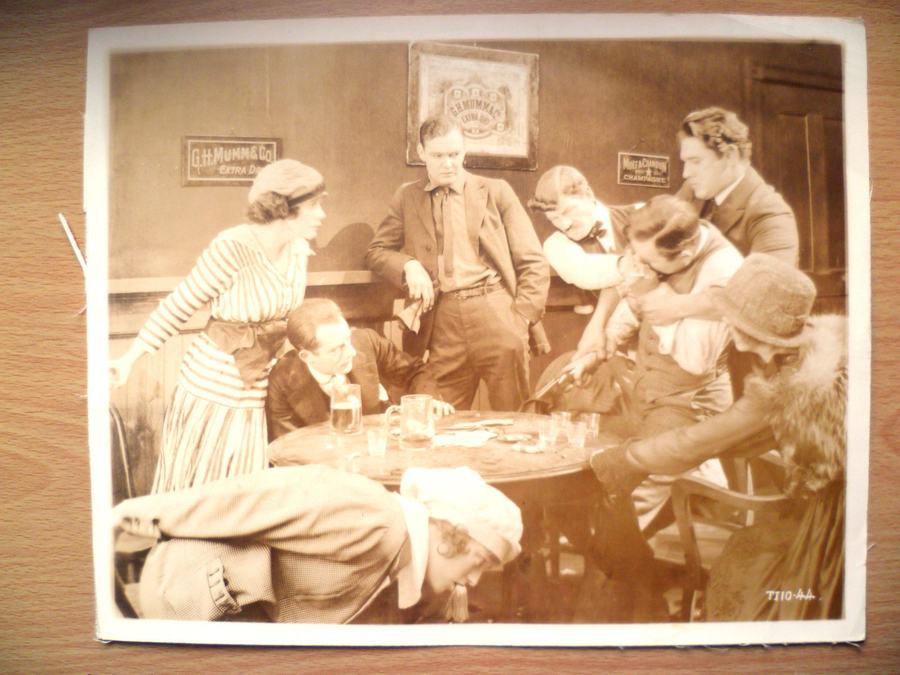
Yet the picture’s enduring sting lies in its refusal to cast Jimmy as stainless crusader. His zeal carries the sour whiff of patricidal ambition; he wields truth like a switchblade, delighting in the carve. Watch the micro-smirk that flickers when he types the reverend’s name into the scandal sheet—righteousness fused with revenge. Arbuckle lets that ambiguity linger, never begging the audience’s absolution.
Production trivia hounds, rejoice: the town set occupied a back-lot street originally built for All for the Movies: Universal City, California, the Wonder City of the World (1921). Art director Vin Whitman simply swapped storefront signage, painted the church façade a righteous white, and—voilà—Californian sunshine passed for Middle-American verité. It’s a sleight of hand that mirrors the film’s thematic obsession: surfaces swapped, sins intact.
Gender politics? MacDonald’s Mary Alden engineers the third-act twist—smuggling the incriminating ledger past a cordon of crooked deputies hidden beneath her gingham shawl. The moment brims with proto-feminist swagger, yet Evans undercuts triumph by having her faint from nervous exhaustion once the presses roll. A cop-out, perhaps, but historical context matters; 1922 audiences would sooner accept a woman smuggling state’s evidence than out-dueling a man in rhetorical combat.
The film’s title, by the way, is a sly pun: "home" as both native soil and penitentiary slang. Everyone here is doing time—Jimmy in the jailhouse of idealism, the reverend in the velvet-lined cell of respectability, townsfolk shackled to the fairy tale that evil arrives from outside the city limits. When the smoke clears, the only liberation comes via the graveyard plot on the hill, headstones aligned like lead type in a stick.
Contemporary resonance? Swap newsprint for social media, bootleggers for data brokers, and pulpit for political podcast; the parable hums along on algorithmic life-support. We still cheer whistleblowers until the whistle lands on our own doorstep. Evans understood that the most corrosive secrets are those we pay tithes to protect.
Restoration geeks should note the 4K scan from a 35 mm Dutch print discovered in a Haarlem attic—nitrate decay arrested just shy of oblivion. Grading favors slate blues for night interiors, letting candlelight pool in eye-sockets like guilt. The sea-blue (#0E7490) tinting of the baptism scene—originally achieved via chemical bath—now appears via digital overlay, yet the symbolic chill translates intact: salvation as hypothermia.
Performances orbit around micro-gestures: Arbuckle’s tremor when he sets the final period after his father’s name; Lockney’s thumb rubbing the gold cross on his watch chain—metallic prayer beads counting unrepented sins; MacDonald exhaling once the press rolls, her breath fogging the lens like a silent confession. These granular flourishes accumulate into emotional tectonics.
And that ending—lawmen storm the newsroom, the reverend collapses, Jimmy cradles the corpse while headlines flutter to the floor like wounded birds. No epilogue, no moral placard, just a fade to black that implicates the viewer: we came for spectacle, stayed for absolution, leave with ink-stained complicity.
Verdict? A century on, His Own Home Town remains scalpel-sharp, a morality tale that refuses to comfort. Seek it out in any revival house brave enough to screen 16 mm, or stream the MoMA restoration—turn off the lights, silence the phone, and let the flickering ghosts remind you that the news we print today is merely tomorrow’s bird-cage liner unless we confront the reverend whispering scripture in our own ear.
Rating: 9.3/10 — Essential viewing for anyone who’s ever wondered why every crusade smells faintly of gunpowder and hymnals.
IMDb —
1925
Community
Log in to comment.