DbcultAccessing Vault...
5.7/10
Senior Film Conservator
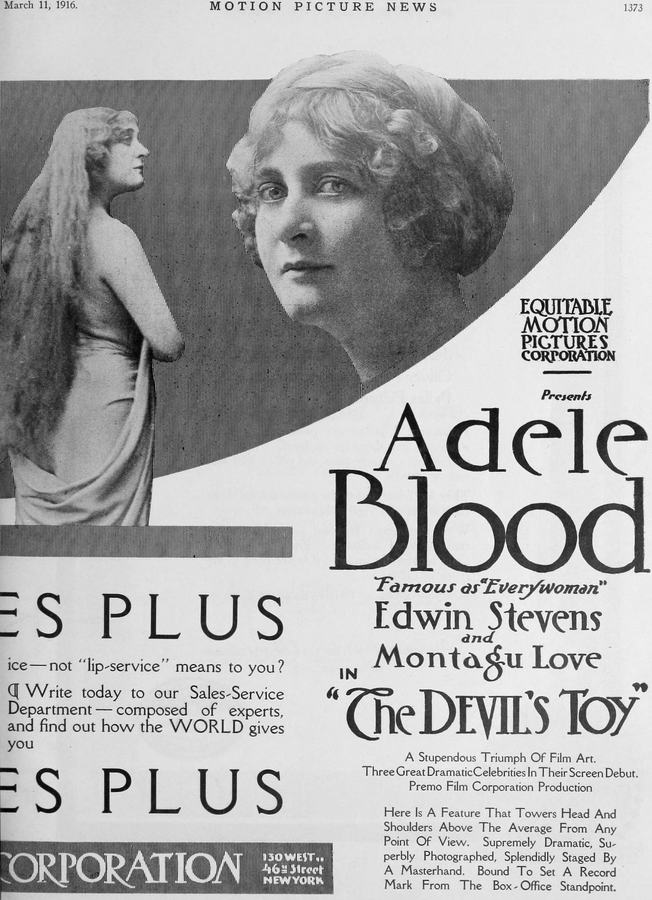
A definitive 5.7/10 rating for a film that redefined the boundaries of cult cinema. The Devil's Toy remains a cornerstone of transgressive art.
Cinema has long been obsessed with the price of greatness, but few early silent works capture the sheer, acidic bitterness of artistic envy quite like The Devil's Toy. This 1916 relic, penned by the collaborative minds of Edward Madden and Maurice E. Marks, serves as a searing indictment of the meritocracy. At its core, the film explores the terrifying vacuum of the soul that exists when ambition outstrips ability. Unlike the more cosmic struggle seen in God, Man and the Devil, this narrative is grounded in the visceral grime of social climbing and the psychological horror of identity theft.
Wilfred Barsley, portrayed with a twitchy, desperate energy, is not your typical cinematic villain. He is a man hollowed out by his own lack of genius. When he strikes his deal with the devil (the imposing Edwin Stevens), it isn't just for money or power; it is for the perception of talent. The devil here acts as a dark agent of PR, orchestrating a series of events that allow Wilfred to inhabit a life he never earned. The initial act of violence—the murder of his uncle—is merely the entry fee into a theater of deception that becomes increasingly complex and morally bankrupt.
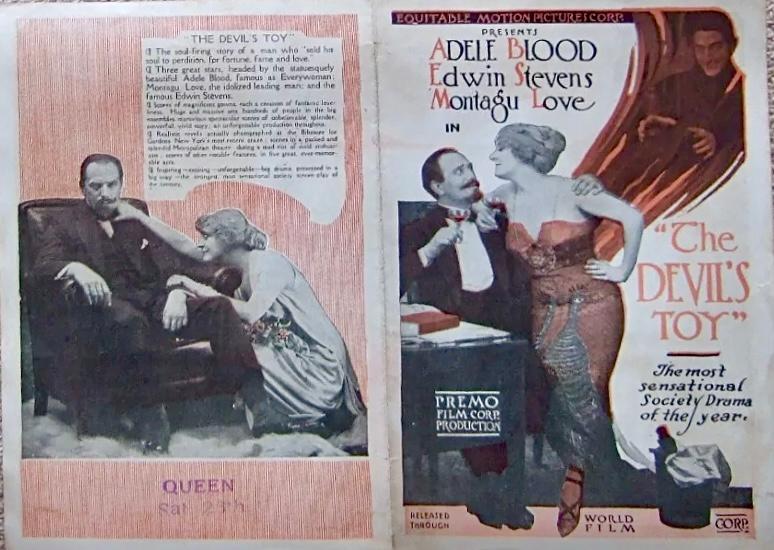
The dynamic between Wilfred and Paul La France is a fascinating study in aesthetic parasitism. Paul represents the archetypal 'suffering artist,' a man whose physical vitality is consumed by his creative fire. By contrast, Wilfred is a vampire. The sequence where Wilfred commits the amnesiac Paul to a sanitarium is filmed with a chilling clinical detachment. It highlights a recurring theme in early 20th-century drama: the ease with which the 'unfit' or the 'broken' can be erased from society. This erasure is what allows Wilfred to thrive, presenting Paul’s vibrant, soul-infused canvases as his own products of 'modern mastery.'
While films like Temptation often focus on the immediate moral fall, The Devil's Toy lingers on the prolonged anxiety of the fraud. We see Wilfred basking in the adulation of the art world, yet he is constantly haunted by the source of his success. Every brushstroke on the stolen canvases is a testament to a genius he cannot replicate and a man he has buried alive in a state-run institution. The film brilliantly captures the imposter syndrome of a man who actually is an imposter.
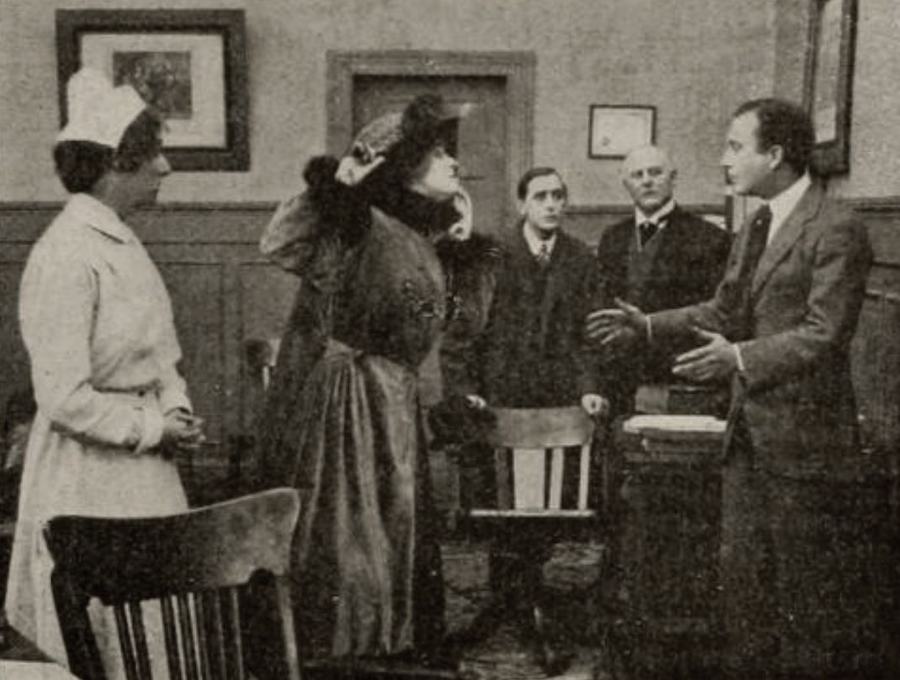
Madge Evans, as Helen Danver, provides the film’s moral compass and its most compelling narrative engine. In an era where female characters were often relegated to the role of the helpless victim, Helen is strikingly proactive. Her recognition of Paul's artistic 'fingerprint' on Wilfred’s canvases is the catalyst for the film's second half. She doesn't just weep for her lost lover; she becomes an investigator. Her decision to 'bluff' an interest in Wilfred is a high-stakes psychological gambit that reveals the fragility of the male ego. She plays on Wilfred’s vanity—the very thing the devil gave him—to dismantle his empire of lies.
This structural choice elevates the film above the standard melodramas of the time, such as Her Wayward Sister. Here, the romance is secondary to the restoration of truth and memory. The scene in which Helen finally locates Paul and triggers his recollection through her mere presence is a masterclass in silent era emotive acting. It stands in stark contrast to the cold, calculated maneuvers of the devil and his 'toy.'
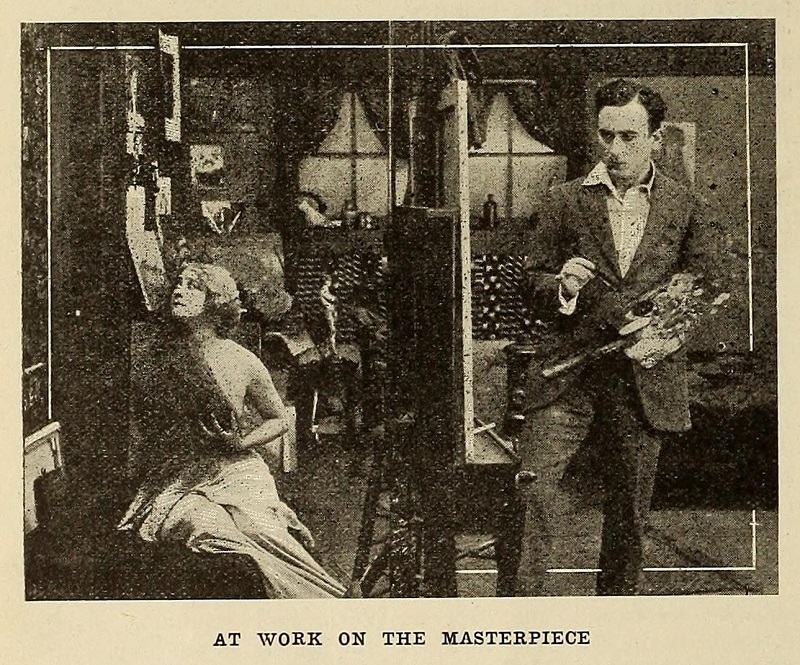
Visually, The Devil's Toy utilizes the chiaroscuro lighting common in early horror-dramas to signify moral decay. The devil is often framed in shadows that seem to bleed into the characters' surroundings, suggesting that his influence is an atmospheric toxin rather than just a physical presence. The set design, particularly the sanitarium and the final vault, creates a sense of claustrophobia that mirrors Wilfred’s tightening psychological noose.
The conclusion of the film is a masterstroke of poetic justice that predates the EC Comics style of 'ironic death.' Wilfred’s return to the vault—the site of his original sin—is a pilgrimage of guilt. The slamming of the vault door is not just a plot device; it is the final punctuation mark on a life lived in a self-imposed prison of deceit. He dies alongside the corpse of the man he killed to start his journey, trapped by the very wealth he sought. It is a grim, heavy-handed, but utterly satisfying resolution that echoes the gothic sensibilities of Poe.
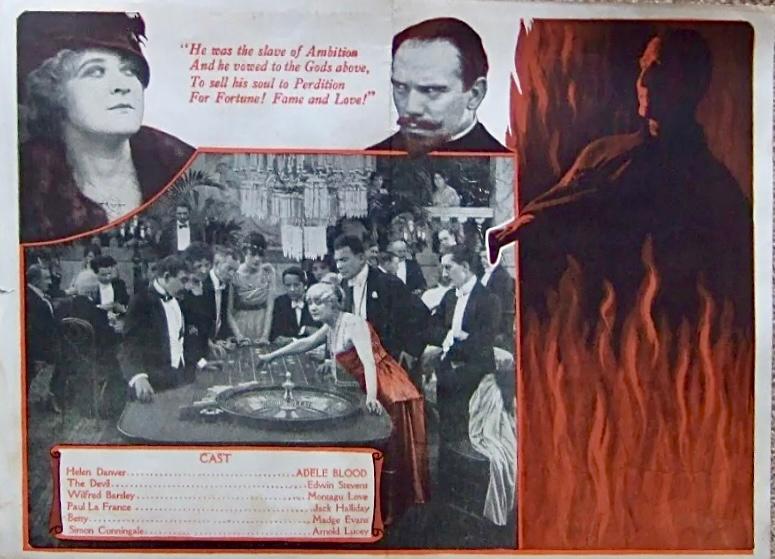
When comparing this work to contemporary pieces like The Spoilers or The Dollar and the Law, The Devil's Toy distinguishes itself through its focus on the internal rather than the external. While other films dealt with corporate greed or frontier justice, Madden and Marks were interested in the corruption of the creative spirit. They ask a fundamental question: What is the value of a legacy if it is built on the bones of another man’s talent? Even the sprawling historical epics like War Brides lack the intimate, suffocating dread found in Wilfred's studio.
Furthermore, the film’s treatment of amnesia and recovery is surprisingly sophisticated for 1916. It avoids the slapstick 'bump on the head' tropes, instead treating Paul’s condition as a spiritual malaise brought on by the trauma of his betrayal. This aligns the film more closely with the psychological depth of Othello, where the villain’s primary weapon is the manipulation of perception and the destruction of the victim's sense of self.
The Devil's Toy remains a potent reminder of the era's ability to tackle complex themes of authenticity. In our modern age of digital replication and AI-generated 'art,' the story of Wilfred Barsley feels strangely prescient. We are still grappling with the definition of a 'master,' and we are still fascinated by those who attempt to bypass the arduous labor of creation through shortcut and subterfuge. The film’s cynical view of the art market—where a 'name' is more valuable than the work itself—is as relevant today as it was over a century ago.
The performances, particularly by Montagu Love and John Halliday, anchor the film in a reality that transcends its supernatural trappings. They bring a weight to the roles that prevents the devil’s involvement from feeling like a mere gimmick. Instead, the devil is a manifestation of Wilfred's own worst impulses, a personification of the voice that tells every mediocre man that he deserves the world, regardless of the cost. For those seeking a silent film that offers more than just historical curiosity, The Devil's Toy is a dark, rewarding journey into the heart of human vanity.
For more explorations of silent era morality plays, consider our analysis of I my kak liudi or the tragic arcs in The Clemenceau Case.
IMDb 5
1920
Community
Log in to comment.