DbcultAccessing Vault...
Cult Review
Senior Film Conservator
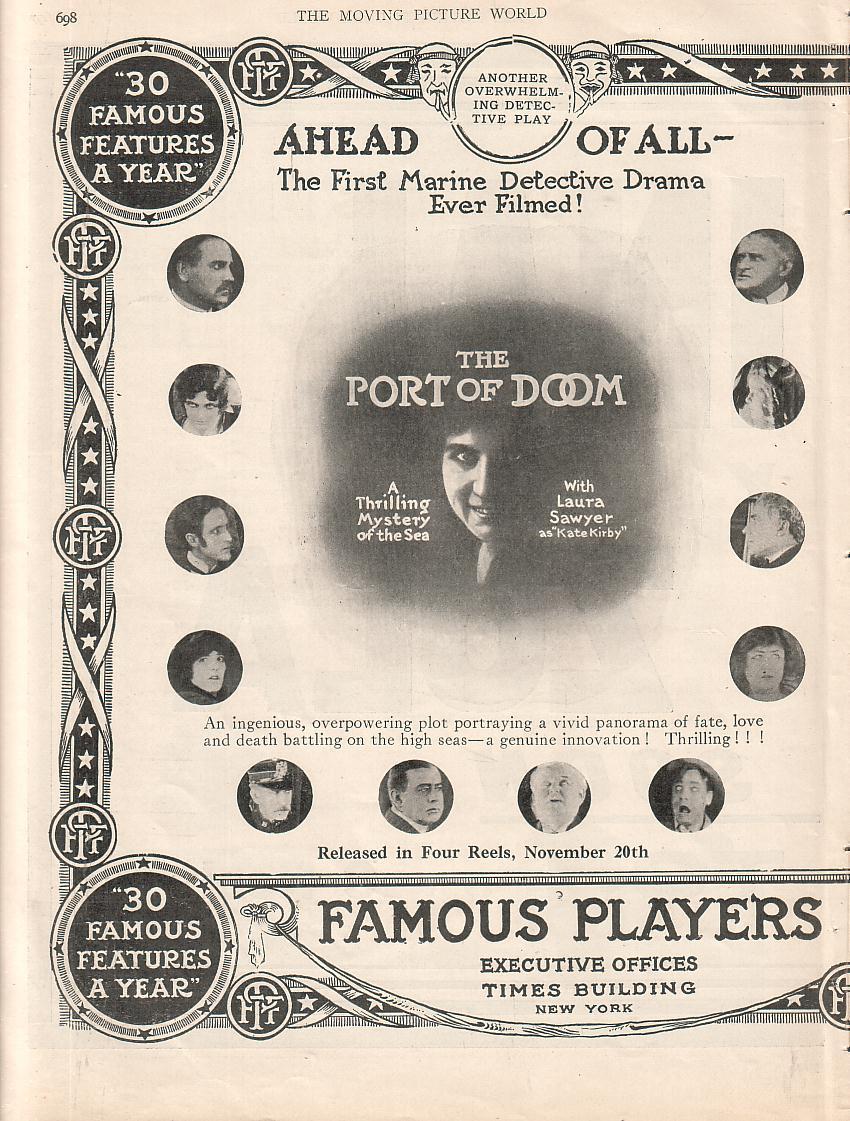
The Port of Doom arrives like a coal-smudged love letter from 1913, smelling of tar, turpentine, and bruised hearts. Director J. Searle Dawley, a name too often buried beneath Griffith’s colossal shadow, orchestrates a maritime fable where the deck becomes a chessboard and every wave a conspirator.
Visually the film is a soot-smeared chiaroscuro: nitrate grain twinkles like mica on a moonlit tide, while lantern light carves faces into living mahogany. Laura Sawyer’s Detective Kate Kirby prowls the frame with feline resolve, her cloche hat a black semaphore against the sodium fog. Watch how Dawley positions her against diagonal rigging—those oblique lines foreshadow moral tilts long before the plot confesses them.
Compare this to Glacier National Park, where nature itself is a cathedral, or From the Manger to the Cross, where sand and scripture share equal billing. Here the docklands are both purgatory and playground; every winch creaks like a seraph with rusted wings.
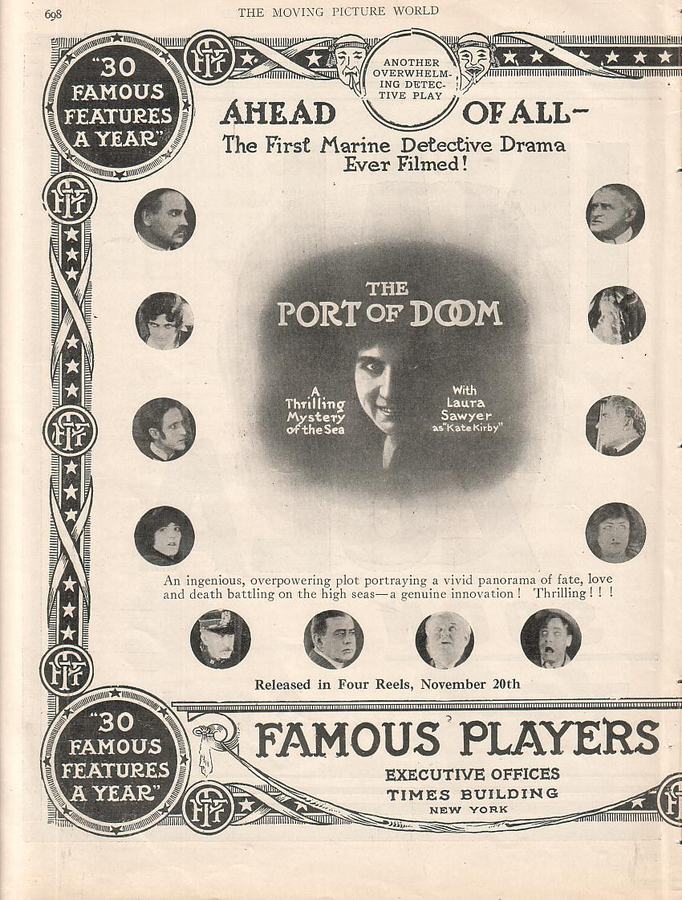
The narrative engine is deceptively simple: a rivalry over a woman becomes an excuse to explore class, trust, and the thin hull separating civilization from abyss. House Peters plays the Captain with a stoic tenderness—note how his shoulders sag upon discovering the forged map, as though atlas shrugged and left him holding the planet’s wet anchor. Meanwhile Peter Lang’s rival is all teeth and cufflinks, a silk-gloved serpent who smokes Egyptian cigarettes whose scent lingers like a bad alibi.
Hattie Forsythe, as the shipowner’s daughter, is no decorative ingénue. In close-up her pupils flare with the self-knowledge of someone who has priced escape routes since adolescence. She is the film’s moral gyroscope, even if the men insist on treating her as the prize.
Dawley’s mise-en-scène revels in tactile details: hemp ropes feathering into filaments, brass telegraph wheels that spin like dervishes, a bosun’s whistle that cuts the soundtrack with the cold efficiency of a scalpel. These are not mere curios; they are the texture of livelihoods, the smell of capitalism’s armpit. The camera, often stationary by contemporary standards, sneaks in subtle pans—watch how it drifts starboard when doom is mentioned, as though the lens itself seeks solace in maritime superstition.
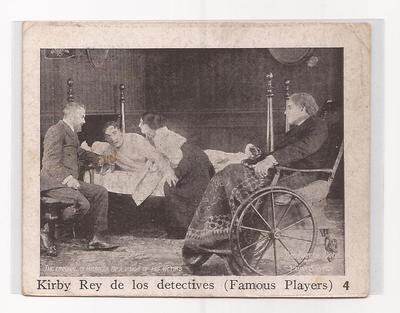
Intertitles, customarily functional, here flirt with poetry: "The tide remembers every footprint, then swallows them." Such lines linger longer than explosions, proving silence can detonate inside the skull.
Where does the film sit inside 1913’s mosaic? It lacks the biblical sprawl of Life and Passion of Christ or the proto-sports adrenaline of The Corbett-Fitzsimmons Fight, yet it anticipates noir decades early. Kirby’s trench-coat, the moral ambiguity, the chiaroscuro lighting—one could splice shards of this print into a 1940s double-feature and fool a midnight audience.
Still, blemishes surface. A subplot involving Henrietta Goodman’s dockside medium feels grafted from a different reel; her crystal ball glows like a jellyfish yet resolves nothing. And the final confession arrives via convenient telegram rather than earned revelation—an expedient device even Edison would raise an eyebrow at.
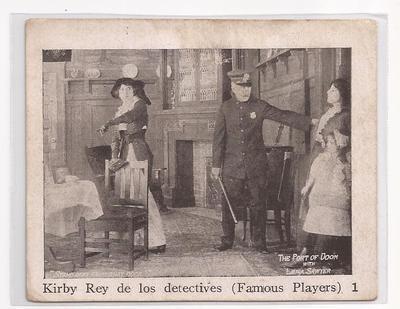
Yet these scars humanize the artifact. Early cinema was an orphanage of experiments; some toddlers walk, others sprawl spectacularly. What matters is momentum, and The Port of Doom pulses forward like a tramp-steamer with boiler pressure to spare.
Hal Clarendon’s score—often lost in contemporary screenings—was originally a live quartet: bowed saws mimicked gull cries, a double bass throbbed like a wounded leviathan. If you ever program a retrospective, resurrect this sonic brine; it converts nostalgia into gooseflesh.
Compare also to The Love Tyrant where obsession is a gilded cage, or Oliver Twist where orphan misery drips candle-wax ethics. Here obsession is a nautical knot—pull one thread and riggings collapse upon skulls.
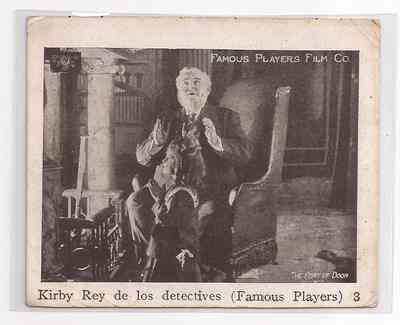
"A dock is a stage where every crate hides a secret and every gull is a paid witness."
Cinematographer David Wall (uncredited in some territories) squeezes maximum luminescence from orthochromatic stock—faces bloom under kerosene while skies pool into alabaster voids. Observe the climactic reef sequence: waves claw the hull like white wolves, spray hitting the lens, creating a proto-3D effect that anticipates A Trip to the Wonderland of America’s travelogue thrills.
Modern viewers may scoff at melodrama, but melodrama is merely life with the volume turned up. Remove the orchestral swell and every office cubicle hosts similar passions—just swap shipowner’s daughter for promotion, swap reef for mortgage crisis.
Gender politics? Kirby’s authority feels radical for 1913. She is neither spinster detective nor femme fatale but a professional with agency, presaging the suffragette energy found in What 80 Million Women Want. Yet the film refuses to sermonize; her competence is a given, not a thesis.
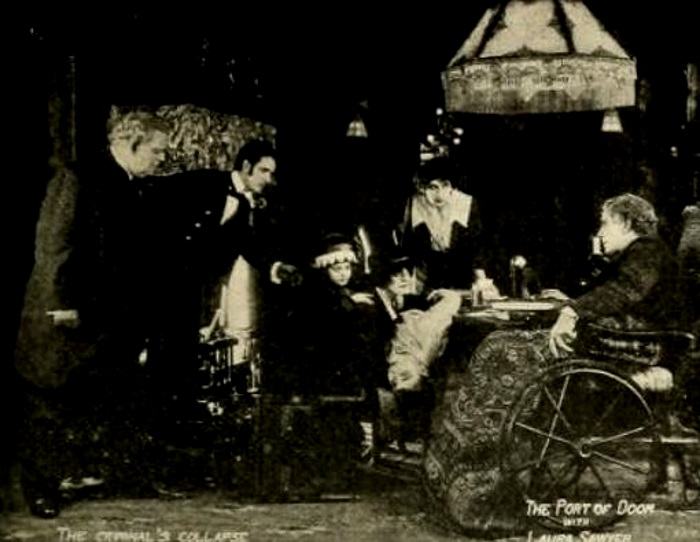
The restoration currently streaming on select platforms stems from a 4K scan of a 35mm Dutch print, water-damaged but rescued via digital ivy: algorithms fill emulsion gaps, though I confess I miss the bruises—each scratch was a scar earned in a projector’s gut. Purists can still hunt the unrestored 16mm educator’s copy floating among collectors like contraband rum.
Should you watch it? If you crave CGI krakens, scroll elsewhere. If you savor salt on your lips, if you believe shadows can conspire, then yes—let Kate Kirby escort you through fog thick enough to chew. The Port of Doom is not merely a title; it is a state of mind where every harbor light hides a possible blade.
Verdict: a battered gem worth polishing, a pre-noir psalm that whispers how love can scuttle even ironclads. Anchors aweigh, but bring your own life-jacket.
Rating: 8.2/10—dock a point for telegraphed confession, add a halo for tactile ambience.

IMDb —
1918
Community
Log in to comment.