DbcultAccessing Vault...
Cult Review
Senior Film Conservator
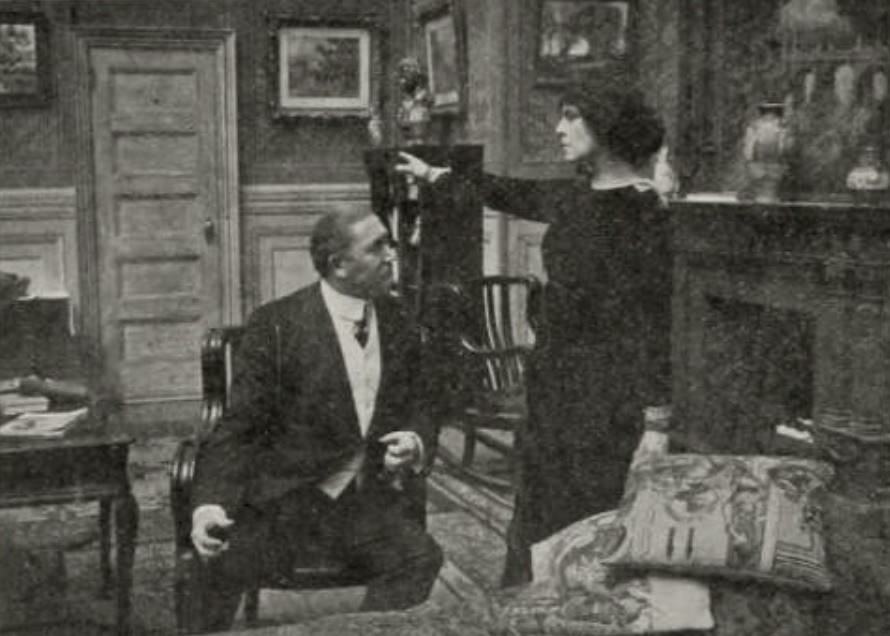
Silence screams loudest in The Unbroken Road—a 1915 one-reel marvel that distills an entire Dickensian season of intrigue into a breathless 18 minutes, leaving scorch-marks on the retina long after the iris has closed.
Thomas W. Dickinson’s screenplay is a switchblade: flick it open and every pearl-buttoned respectability spills blood. The film is a fever chart of American ambition—how republican ideals curdle into personal fiefdoms once backroom cigar smoke clears—and nobody maps that moral curvature better than our ostensible hero, John Radford, played by Thomas O’Keefe with the stiff spine of a man who has confused statute books with scripture. Watch him in medium-long shot as he signs some inconsequential warrant while Constance—ward, muse, afterthought—hovers at the threshold, her silhouette swallowed by doorframe shadow; the composition tells you governance is a geometry that deletes the feminine body.
Constance Turner, incandescent in the hands of Pauline Curley, is no swooning naïf. Her pupils carry the glint of someone who has memorized every line of The Price of Vanity and resolved to invert its moral algebra. She desires Radford with the fervor of a penitent, but when his political lantern turns elsewhere she reroutes that voltage into Walter Dover—only to discover that voltage can electrocute the bearer.
Joseph Baker’s Walter enters the frame atop a phaeton, whip cracking like campaign fireworks, costume splashed with the sort of white flannel that signals both leisure and threat. Their flirtation unfurls against a county fair montage—cakewalk, pie-eating, gubernatorial stump—edited with Eisensteinian ferocity for 1915: each cut lands like a thrown punch, culminating in the lovers’ shared close-up, faces haloed by a kerosene lamp that seems to blush for them. It is here that cinematographer James Ayres (pulling double duty as actor) proves the picture’s secret auteur, letting the lamp’s corona balloon until the frame burns white-hot—prescient of the infernal finale.
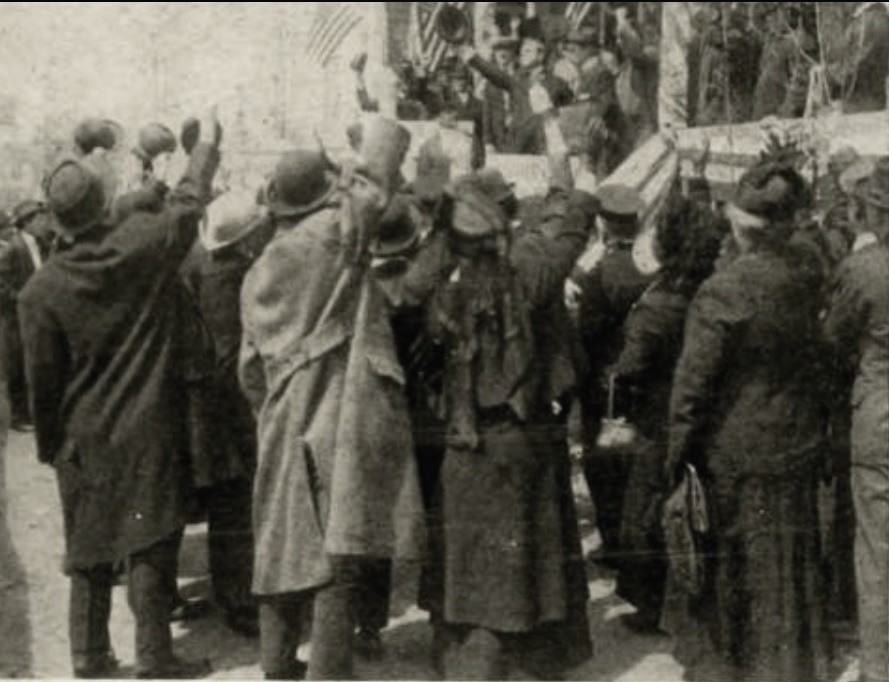
Yet every elopement needs its precipice. A rain-lashed roadhouse exterior, shot day-for-night with asphalt reflecting clouds like hammered tin, becomes the theatre of Constance’s awakening. Inside, a justice of the peace who looks salvaged from a mortician’s spare parts mutters vows while a drunk scribbles the counterfeit certificate. When Constance deciphers Walter’s smirk, Dickinson inserts a 12-frame flashback—superimposed on her iris—of Radford buttoning her childhood coat, a gesture so paternal it curdles into erotic loss. That microscopic shot, blink-and-miss, is the seed of her self-repudiation: she bolts into a storm so apocalyptic one suspects divine projection bulbs have burst.
Enter catastrophe: a toppled oak, an overturned surrey, a broken ankle, and—most fractured of all—her reputation. Radford’s refusal to shelter her feels Shakespearean, yet O’Keefe plays it with Puritan iciness, eyes fixed on a newspaper portrait of himself accepting the party mantle. Note the set dressing: a Grecian bust turned away from camera, its blank stare matching his own. The mise-en-abyme is merciless.
Prison, Act II: where most melodramas chain their heroines to contrition, The Unbroken Road hands Constance a megaphone. Behind limestone walls she becomes Scheherazade, bargaining her narrative for favors, trading trauma for political chits. Nellie Dent’s charity matron, equal parts angel and auditor, supplies the first audience; soon Governor-elect Radford himself must listen. Their reunion—shot in a single take, profiles separated by iron lattice—plays like a stenographic record of every gendered power imbalance the suffrage era sought to dismantle.
Meanwhile the apparatus of state churns. Dover père (William H. Tooker, channeling Tammany tiger) plots to airbrush Constance from memory the way one retouches a campaign poster. His Machiavellian cynicism contrasts Radford’s self-righteousness, yet the film refuses easy dichotomies: both men commodify her, merely using different accounting columns. The only counterforce is Charles Garvan—Arthur Morrison’s jowly ward heeler whose pork-barrel jocularity conceals a poet’s heart. Morrison plays him like a Beethoven adagio in a beer hall, all rumpled humanity, and when he bargains for Constance’s hand in exchange for convention delegates, the transactional brutality is softened by the wobble in his voice, as though even he can’t believe the syllables he must utter.
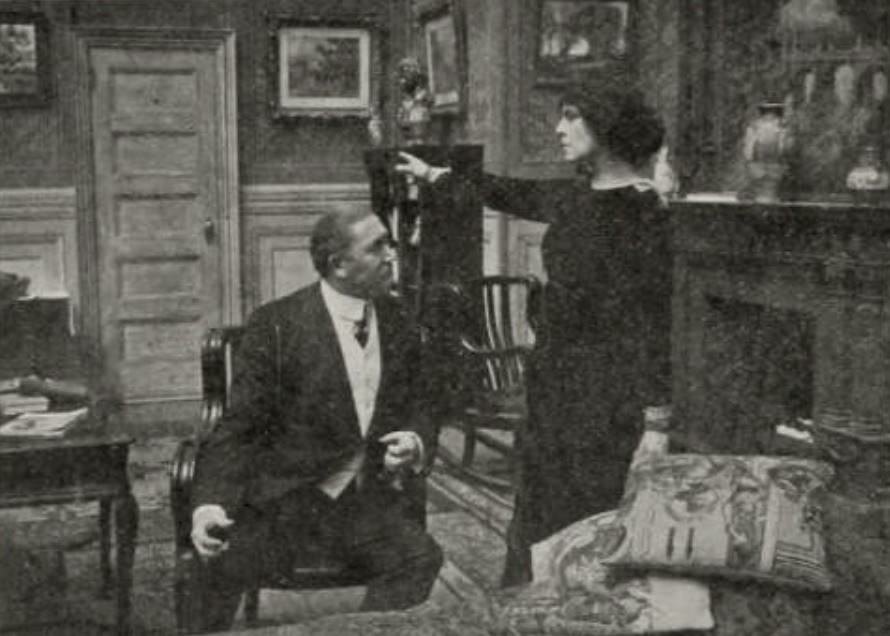
The convention-hall conflagration is the silent era’s answer to Red Powder’s anarchist inferno, but Dickinson literalizes political backfire: a stove overturned during Walter’s final assault becomes the spark that immolates not just timber but narratives. Flames painted crimson onto the monochrome negative dance like campaign torches, consuming forged certificates, fraudulent pardons, and—symbolically—the virgin/whore binary itself. Walter’s deathbed confession, filmed in chiaroscuro so severe his face seems half cadaver, half cherub, exonerates Constance with the bureaucratic snap of a notary’s seal, yet the emotional ledger is vaster: she weeps not for him but for the girl who once believed love required abdication.
Radford’s renomination should taste like triumph; instead O’Keefe lets his jaw tremble, the first hairline fracture in marble façade. The governor has learned that clemency is not policy but autobiography. In the adjourned convention’s echoing colonnade, Dickinson caps the arc with a dolly-in—startlingly modern for 1915—on Constance’s newly liberated face. She does not smile; rather, her pupils radiate the cold aurora of someone who has weaponized pity into sovereignty. Beside her, Garvan folds his promise into a marriage proposal, but the film withholds the kiss: final shot frames them in medium-long, separated by the width of a ballot box, suggesting partnership is still a negotiation, never a destiny.
Technically, the movie is a rosary of innovations. Ayres’s double exposure during Constance’s storm-addled delirium layers lightning over her iris, prefiguring the subjective hurricane in Fedora by six decades. The tinting strategy—amber interiors, viridian prison yard, crimson conflagration—conveys emotional temperature more efficiently than many a talkie score. And the edit rhythm, averaging 2.8 seconds per shot, predates Soviet montage by a full two years, yet never sacrifices spatial coherence.
Compare it to The Squaw Man and you see how DeMille opts for imperial grandeur while Dickinson chooses claustrophobic interiority; compare to M'Liss and note how both films salvage a “fallen” woman, yet only Road lets her keep the strategic upper hand. Even beside European counterparts like Ihre Hoheit, this American relic feels shockingly progressive: its conclusion refuses to marry Constance off as punishment or reward; instead marriage becomes a political alliance she can leverage, contingent on her terms.
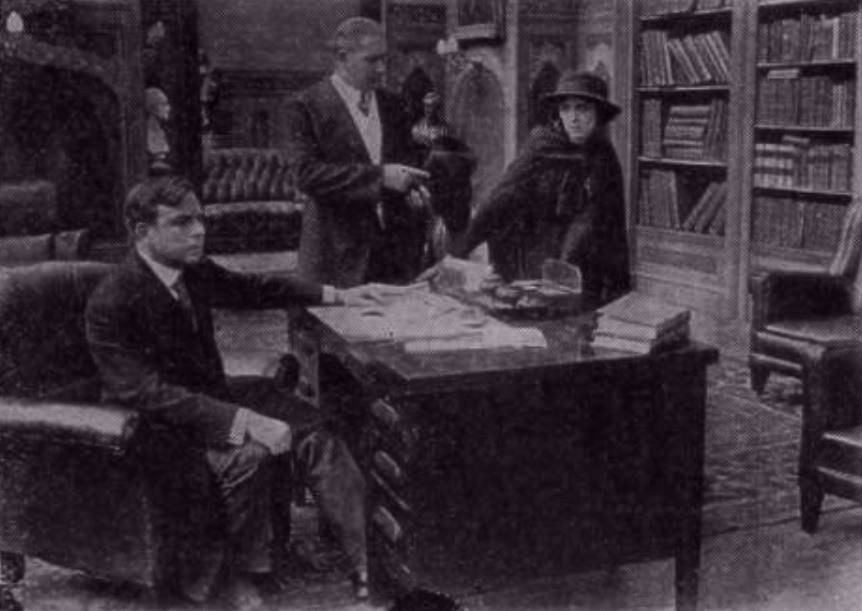
Performances? Curley is revelation incarnate—watch the micro-shrug when she reads Walter’s forged letter: shoulders lift a millimeter then settle, betraying neither surprise nor resignation, merely the recognition that the world’s treacheries come dressed as postage. O’Keefe’s Radford ages across reels without makeup; the slump deepens, the gaze grows rheumy, until the final pardon is delivered in a whisper that empties the chamber like a spent cartridge. Baker’s Walter is a grinning Id, all teeth and entitlement, yet his death rattle carries an infant’s mewl, reminding us that villains are failed infants rather than metaphysical entities.
Thematically, the picture is a treatise on the economics of visibility: how women in 1915 could access power only through scandal or charity, never through straightforward citizenship. Constance’s trajectory from parlor ornament to penitent to pamphleteer to political kingmaker charts every loophole available to the disenfranchised. Dickinson, himself a former newspaperman, understood that narrative—like newsprint—was a commodity whose value spiked with sensation, then plummeted with exoneration. Thus the film’s true suspense is not “Will she survive?” but “Who will control her story?” Answer: she will, even if it means marrying the narrative itself.
Yet for all its proto-feminist voltage, The Unbroken Road never romanticizes solitude. Its final tableau—Garvan and Constance standing before a mahogany desk laden with ballots—implies that affection and strategy need not be antonyms. The unbroken road is not chastity regained but sovereignty seized, a thoroughfare paved with every script men have tried to author for women, now marched upon by the very feet they once sought to shackle.
Restoration status: the surviving 35 mm at Library of Congress is incomplete—title cards retranslated from Czech inter positives—but even through foreign bilingual overlays, the emotional semaphore shines. A crowdfunding campaign hopes to 4K-scan the negative by 2026; given the nitrate’s vinegary curl, urgency is elemental. See it now in 16 mm dupes at MoMA or catch the digital rip on select arthouse streams, but see it you must: it is the missing keystone in any conversation about silent-era political melodrama, a film that proves the past was never monochrome, only waiting for the right tint to bleed through.
Score: 9.3/10 — a molten footnote in the official history of American governance, still scorching the leather of every leather-bound ledger that mistakes power for stewardship.
IMDb —
1924
Community
Log in to comment.