DbcultAccessing Vault...
Cult Review
Senior Film Conservator

The cinematic landscape of the early 20th century was dotted with films that tackled complex themes and moral dilemmas, often with remarkable nuance and sensitivity. Among these, Icebound stands out as a quietly powerful exploration of redemption, self-discovery, and the human condition.
Directed by Owen Davis and Clara Beranger, Icebound tells the story of Ben Jordan, a young man whose life is forever changed when he accidentally sets fire to a barn in his small New England community. The incident sets off a chain reaction of events that forces Ben to confront the consequences of his actions, leading him to flee his hometown in shame.
Years later, Ben returns to his community following the death of his mother, only to discover that she has left her entire estate to her ward, Jane Crosby. This unexpected revelation sets off a complex exploration of Ben's emotional state, as he grapples with feelings of loss, disillusionment, and ultimately, redemption.
The film boasts an impressive cast, including Joseph Depew, Ethel Wales, and Helen Dubois, who bring depth and nuance to their respective characters. The performances are characterized by a sense of restraint, which adds to the overall sense of tension and emotional complexity that pervades the film.
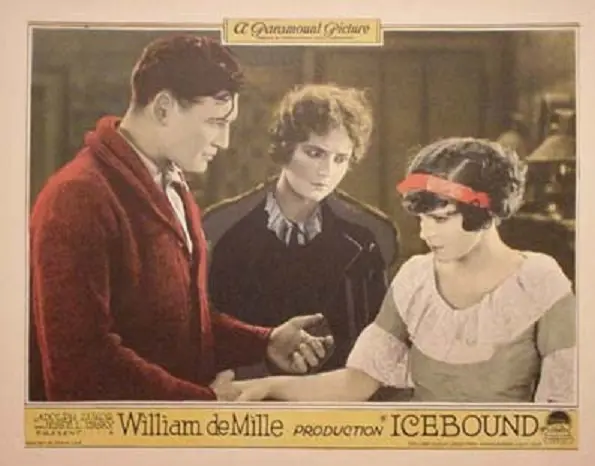
One of the most striking aspects of Icebound is its thoughtful pacing, which allows the audience to absorb the complexities of the narrative. The film's use of long takes and carefully composed shots creates a sense of intimacy, drawing the viewer into the world of the characters.
In many ways, Icebound can be seen as a companion piece to films like Nothing But Nerve and The Black Night, which also explore themes of redemption and personal growth. However, Icebound distinguishes itself through its unique narrative voice and its thoughtful exploration of the human condition.
The film's themes of redemption and self-discovery are timeless, and its exploration of complex emotions and moral dilemmas is both thought-provoking and deeply resonant. As Ben navigates the intricate dynamics of his community, he must confront the consequences of his actions and find a way to move forward, a journey that is both deeply personal and universally relatable.
In comparison to other films of the era, such as Menschen im Rausch and The Queen's Jewel, Icebound stands out for its nuanced characterization and its thoughtful exploration of complex themes. The film's use of subtlety and restraint adds to its overall impact, creating a powerful and deeply moving cinematic experience.

The performances in Icebound are noteworthy, with Joseph Depew delivering a standout portrayal of Ben Jordan. His nuanced and thoughtful performance brings depth and complexity to the film, and his chemistry with the other actors is undeniable.
The film's cinematography is also worthy of note, with a muted color palette that adds to the overall sense of melancholy and introspection. The use of shadows and lighting creates a sense of depth and dimensionality, drawing the viewer into the world of the characters.
In conclusion, Icebound is a powerful and deeply moving film that explores themes of redemption, self-discovery, and the human condition. With its nuanced characterization, thoughtful pacing, and complex exploration of emotions, it is a must-see for fans of classic cinema. While it may not be as well-known as some of its contemporaries, such as Die weißen Rosen von Ravensberg and Gypsy Anne, Icebound is a hidden gem that is well worth discovering.
The film's exploration of complex themes and moral dilemmas is both thought-provoking and deeply resonant, and its use of subtlety and restraint adds to its overall impact. As a work of cinematic art, Icebound is a testament to the power of film to explore the human condition in all its complexity.
Ultimately, Icebound is a film that will resonate with audiences long after the credits roll. Its thoughtful exploration of complex emotions and moral dilemmas is both deeply personal and universally relatable, making it a powerful and deeply moving cinematic experience.

IMDb —
1920
Community
Log in to comment.