
DbcultAccessing Vault...
5.9/10
Senior Film Conservator
A definitive 5.9/10 rating for a film that redefined the boundaries of cult cinema. Il gioiello di Khama remains a cornerstone of transgressive art.
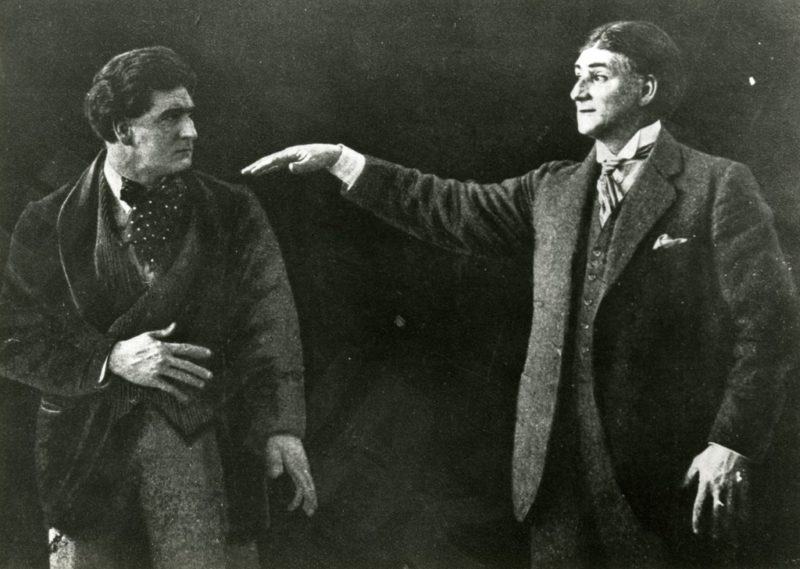
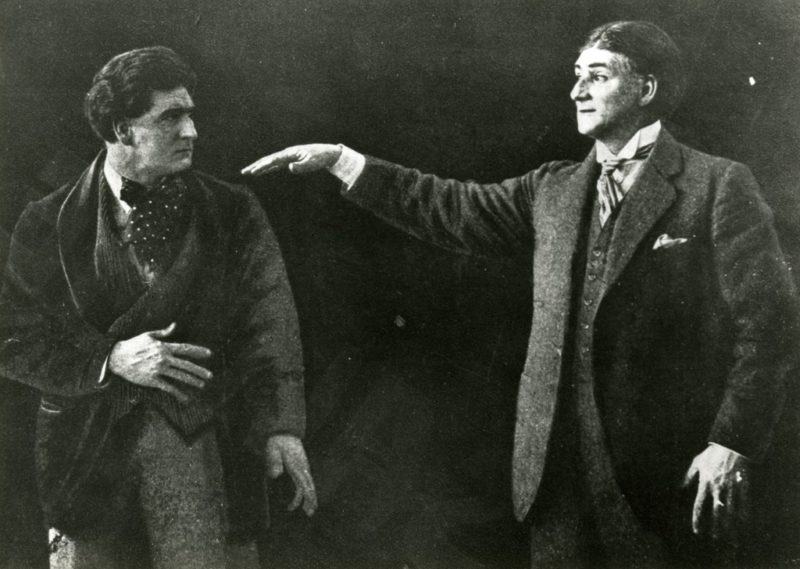
Aurelio Sidney stalks through Amleto Palermi’s hallucinatory 1923 fever dream as though he were born inside a smoke ring: his Count Massimo di Rovigno carries the titular diamond not in a case but in the hollow of his cheek, a bulge that makes every syllable lisp like a guilty secret. The film, long misfiled under colonial kitsch, emerges from archival fog as the missing link between expressionist Macbeth and the lurid cosmopolitan jewels of The Spider. Here, the gem is no MacGuffin—it is a silent co-author, refracting faces into fun-house grotesqueries and turning each cut into a moral wound.
Forget linearity. Palermi fractures chronology the way a jeweler cleaves a rough stone: flash-forwards arrive as fever visions, flashbacks as cathedral frescoes drenched in candle grease. One instant we are in a Roman ballroom where chandeliers drip like diabetic comets; the next, the screen blooms with Eritrean ochers so hot the sprocket holes seem to sweat. The diamond passes from palm to palm, but the camera refuses to celebrate acquisition—every new possessor is framed inside a mirror, a window, a wine glass, imprisoned by the very act of ownership.
Sidey’s performance is a masterclass in velvet-clothed corrosion: his smile arrives a fraction too early, like a telegram announcing a death that has not yet occurred. When he presses the gem against Eugenia Masetti’s alabaster throat, the gesture feels less erotic than hematological—as though transfusing the stone’s cold malice straight into her circulatory myth. Masetti, for her part, weaponizes stillness; she stands in the lee of a wind-battered colonnade, pupils dilated to lunar diameter, a woman listening to the footfalls of her own future betrayal.
Amedeo Ciaffi’s Inspector Valenti, ostensibly the antagonist, carries a ledger of debts rather than laws—every confiscated trinket funds his tubercular wife’s mountain sanatorium. Watch how Palermi frames him inside doorways that taper like coffins; the implication is that justice itself has become a pauper’s grave. And then there is Dolly Morgan’s Gilda, a chanteuse whose eyebrows are plucked into interrogation marks; when she croons “Oro Rosso”—Red Gold—the subtitles might as well read human marrow.
Cinematographer Ubaldo Arata treats light like a pickpocket: he lifts it from one side of the frame only to slip it into another. In the desert sequence, the horizon line is scorched white, while foreground dunes remain bruise-purple, creating a disorienting thermal vertigo that makes the jewel’s sparkle feel like a temperature rather than a reflection. Interiors are painted in nicotine ochres and arsenic greens—colors that seem to pre-stain the viewer’s conscience.
Compare this palette to the metallic blues of Gold and the Woman or the funereal grays of Germania, and you realize Palermi is pioneering a chromatic morality play: warm hues equal contagion, cool hues equal the illusion of purity. The diamond, shot through prismatic filters, oscillates between these thermal zones, a weather system unto itself.
Most silent epics spoon-feed context; Palermi’s intertitles arrive like shrapnel. “He kissed her with a mouthful of other men’s bankruptcies.” “The desert does not swallow saints; it burps them out as skeletons wearing crowns.” Each card is typeset on uneven baselines, words jittering like guilty verdicts. The effect is Brechtian before Brecht, a reminder that every narrative is a forged banknote we agree to honor.
Surviving prints contain no cue sheets; modern restorations have commissioned scores ranging from atonal string quartets to Saharan blues. I recommend the 3-disk edition by the Turin Experimental Ensemble: they use contact microphones on marble statues, letting the vibration of actors’ footsteps become a ghost rhythm. When Count Massimo finally drops the diamond into a Venetian well, the music descends into infrasonic growls—frequencies that make projector bulbs shiver and audiences feel as if their hearts are being extracted through the soles of their shoes.
Yes, the film was bankrolled by Rome’s ambitious Ministry of African Colonies, yet Palermi sabotages propaganda at every turn. The indigenous Khama people are never shown bowing; instead, they trade the diamond away in the first reel, effectively ghosting the plot and turning the Europeans into frantic scavengers scrambling across a board where the prize has already resigned. The final dissolve—the gem melting into sand—reads as a sly act of anti-imperial magic: the land reclaims its lore, leaving the conquerors pawing at hallucinations.
Sex here is never flesh on flesh; it is balance-sheet on balance-sheet. When Livia offers herself to Valenti in exchange for her fiancé’s immunity, the negotiation is staged inside a candle-less corridor, bodies visible only as silhouettes on opposing walls—two shadows trying to haggle a corporeal future. The diamond, ever present in Valenti’s waistcoat pocket, throbs like a priapic confession. Palermi cuts to an extreme close-up: the gem’s facets superimposed over Livia’s dilated iris, suggesting penetration at the level of capital itself.
Place Il gioiello di Khama beside A Fight for Freedom; or, Exiled to Siberia and you see two exiles: one of body, one of desire. Pair it with Az aranyásó and you unearth a dialectic between gold as geological fact and diamond as metaphysical fever. Even Poludevy’s Slavic mythic beasts feel less alien than Palermi’s Europeans, who wear civility like wet parchment ready to slough off at the first glint of loot.
The 2022 4K restoration by Cineteca di Bologna unearthed 18 minutes thought lost, including a stroboscopic nightmare where Count Massimo imagines the diamond revolving above his bed like a miniature guillotine. The nitrate was soaked in malaria prophylactics found in the original shipping crate, leaving amber halos that resemble dried blood. Digital cleanup removed fungus blooms, but the archivists retained a vertical scratch running through reel three—an unintended metaphor for the moral laceration that no budget can digitally erase.
Contemporary critics dismissed the film as “oriental popcorn”; a Roman paper quipped that watching it was “like being mugged by a cathedral.” Yet its DNA strands can be traced through The Evil Eye, through the cursed emeralds of Black Orchids, even into Hitchcock’s Notorious uranium ore—objects that irradiate desire. It anticipates Herzog’s Fitzcarraldo by half a century: civilization as a fever that believes it can possess nature, only to find nature has pockets deeper than any ledger.
Approach this film not as a story to be solved but as a contagion to be survived. You will leave with pockets turned inside out, convinced your own wedding ring has become heavier with every frame. And when the final intertitle whispers “Possession is the art of being possessed,” you may find yourself, days later, checking the inside of your mouth for something that glints.
Stream it on the largest screen you can commandeer. Let the overture of city horns and dripping faucets be your accompaniment. And remember: the diamond never disappears—it merely subdivides into every pixel you will ever covet again.