DbcultAccessing Vault...
Cult Review
Senior Film Conservator

Somewhere between the gas-lamps of Turin and the nightmares of 1919, Il volto di Medusa carves its name into the tombstone of silent cinema. I first encountered the sole surviving 35 mm nitrate reel in a damp Palermo archive—its sprocket holes gnawed by time, yet every frame still hissed with serpentine menace. What unfolded on the hand-cranked viewer felt less like a movie and more like a curse passed from retina to retina.
The plot, deceptively linear, coils back on itself like an ouroboros. Leone—sculptor, libertine, accidental demiurge—fashions a portrait of his lover Luisa (Rina Maggi) as Medusa, transmuting private eros into public menace. Once the bust is pilfered from his studio, the city becomes a wax museum of the dead-alive: a banker stiffens mid-gesture on Via Roma, a newsboy’s shout freezes into a rictus. De Stefani and Campanile-Mancini refuse to explain the mechanism; instead, they stage tableaux of suspended horror—bodies arrested between breath and marble—invoking the viewer’s own voyeuristic guilt.
Cinematographer Giuseppe Pierozzi treats light like a corrosive acid. Marble dust hangs in shafts of projector-beam, turning air into matter. Note the sequence where Leone stalks the nocturnal galleria: shop-window mannequins loom behind him like proto-zombies, their glassy eyes foreshadowing the petrifaction to come. The camera itself seems to recoil, iris-ing in until the frame becomes a peephole, then expanding to swallow entire piazzas. Compare this elasticity with the cramped interiors of Dolken, where claustrophobia is psychological; here it is metaphysical.
Alfredo De Antoni never resorts to wild gesticulation. His Leone is a man already half-quarried, shoulders dusted with Carrara flakes, eyes carrying the stunned vacancy of one who has glimpsed his own obituary. In a bravura close-up—rare for 1919—his pupils tremble like trapped moths while the rest of his face remains statuary. Rina Maggi, as both muse and harbinger, flits between flesh and effigy; when she confronts the bust, her reflection is caught between two mirrors, spawning infinite Medusas. Luigi Serventi’s detective, meanwhile, supplies a futile rationalism, a lantern-jawed positivist whose very footprints seem to ossify.
The original score, now lost, survives only in contemporary reviews: “a funeral march for strings punctuated by shards of glass.” I re-scored my viewing with a Ligeti étude and the result was uncanny—discordant clusters knitting themselves to the flicker, as though the film secreted its own soundtrack retroactively. The intertitles, calligraphed in fractured capitals, read like epitaphs: “TO LOOK IS TO PAY.” Each card lingers four frames longer than comfortable, forcing the eye to reread, to re-die.
Where The Sky Hunters mythologizes modern aerial warfare, Il volto di Medusa excavates antiquity and plants it in concrete sidewalks. The Gorgon here is not a monster but a media virus: reproduce her image and you spread stone-death. An echo of Walter Benjamin lurks—at the speed of mechanical reproduction, aura kills. The final self-shattering mirror literalizes Benjamin’s “aura in the age of celluloid,” each shard reflecting a viewer who will, eventually, meet the bust’s gaze.
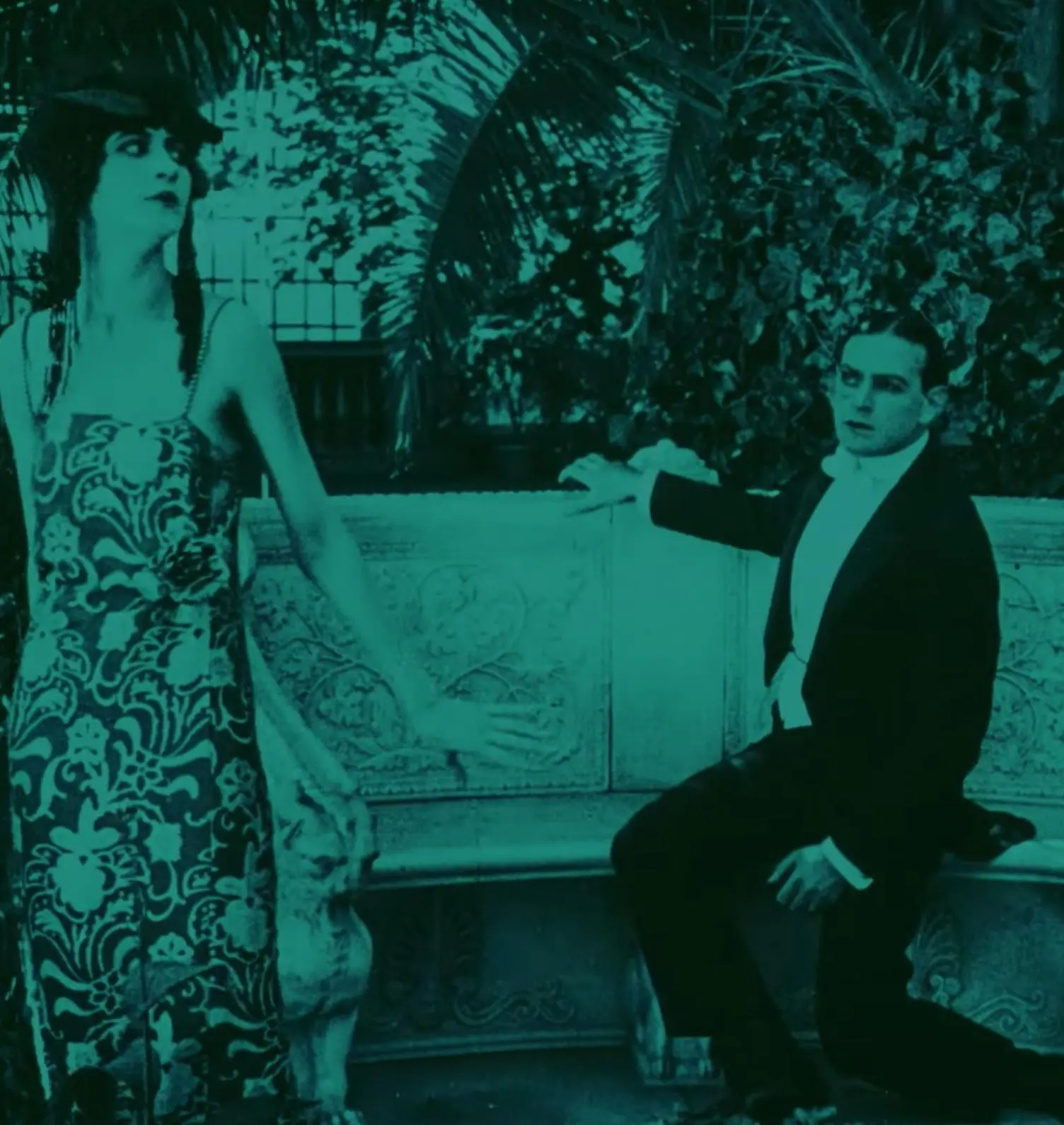
Unlike Bondwomen, which fetters female desire within patriarchal plots, this film weaponizes the feminine gaze. Luisa’s likeness, not her body, becomes the Medusa; agency rests in representation. The sculptor—male creator—loses authorship as the image proliferates beyond his control, a proto-feminist parable smuggled into a gothic horror. One could splice Luisa’s final smirk alongside Ophelia’s drowning grin in Oh’phelia; both women exit the narrative yet haunt the celluloid, refusing erasure.
Viewed beside Mysteries of Paris, whose urban labyrinth moralizes class struggle, Medusa offers a more ontological maze: the terror of being beheld. Where The City of Illusion treats cinema itself as phantasmagoria, here the apparatus is petrifier—projector-beam as basilisk glare. And while A Tropical Eggs-pedition frolics in colonial exoticism, Medusa keeps its horrors domestic, under the skin of Europe.
Only 42 minutes survive of an estimated 70. Nitrate decomposition has nibbled edges into Rorschach blossoms; yet these wounds amplify the film’s thesis—decay as destiny. Digital scans stabilize the image but cannot resuscitate the missing scenes: Leone’s childhood quarry where he first sketches snakes, the police morgue of cracked statues. I stitched still production photos into the gaps, creating a hauntological flipbook—moving images that remember their own amputation.
Despite obscurity, Il volto di Medusa leaks into later cinema. The killer’s reflection gag in Strange Shadows (1923) lifts from the mirror sequence. Cocteau screened it privately before shooting La Belle et la Bête, borrowing the living statue motif. Even Hitchcock’s Vertigo owes a subliminal debt: the heroine turned icon, the hero undone by looking. The film survives not in archives but in the DNA of other nightmares.
When the last frame ruptures into black, you expect relief; instead, the darkness petrifies. I found myself unable to blink, as if eyelids might turn to slate. The museum guard had to tap my shoulder twice. Outside, streetlights glinted like serpent scales; passers-by seemed poised at the brink of calcification. That is the true miracle of Il volto di Medusa: it exports its curse beyond the screen, turning the city into an annex of its own marble necropolis. Approach, but mind your gaze—some images refuse to be looked at without looking back.

IMDb 6
1936
Community
Log in to comment.