DbcultAccessing Vault...
5.3/10
Senior Film Conservator
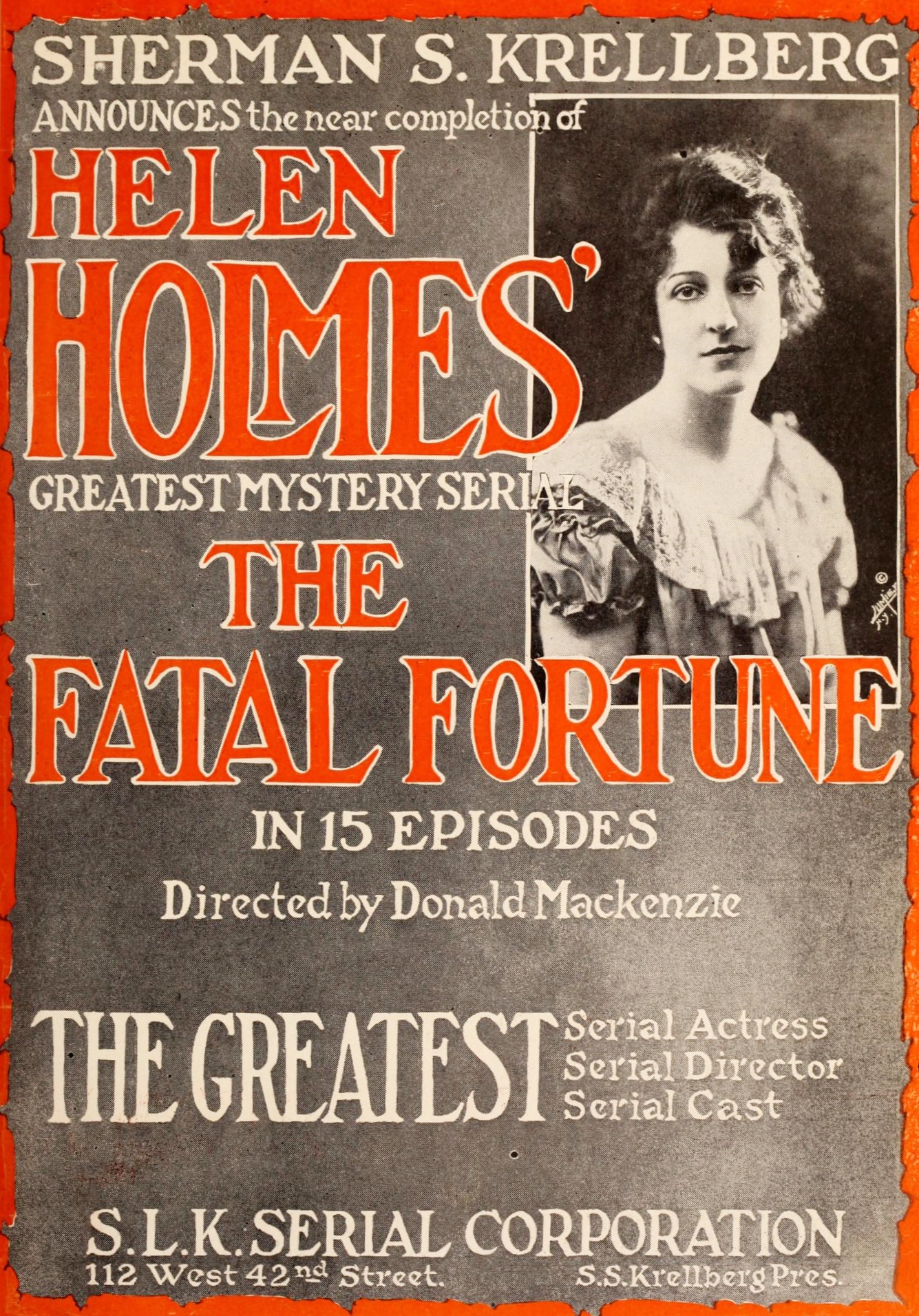
A definitive 5.3/10 rating for a film that redefined the boundaries of cult cinema. The Fatal Fortune remains a cornerstone of transgressive art.
The year 1919 stood at a precipice, a moment where the world was reeling from the Great War and cinema was rapidly evolving from a nickelodeon novelty into a sophisticated vessel for global escapism. Amidst this transition, The Fatal Fortune emerged not merely as a serial adventure but as a bold assertion of feminine agency. While many contemporary films of the era, such as The Heart of a Child, focused on the sentimental tribulations of domestic life, this film flung its audience across the globe, trading drawing rooms for the jagged coastlines of the South Seas.
At the center of this whirlwind is the newspaperwoman, a character type that was becoming increasingly popular as the 'New Woman' movement gained social traction. Unlike the tragic figures found in The Woman in the Case, our protagonist in The Fatal Fortune operates with a professional mandate. She is not driven by romance or a desire for social climbing, but by the hunger for a 'scoop' and the siren call of an ancient mystery. This professionalization of the female lead was a hallmark of Helen Holmes’s career, though here the stakes feel more terrestrial and gritty than her previous locomotive-based stunts.
The casting of Helen Holmes and Lillian Worth provides a fascinating study in silent-era screen presence. Holmes, already a legend for her death-defying feats, brings a kinetic energy to the screen that few of her peers could replicate. In The Fatal Fortune, her athleticism is channeled into the navigation of treacherous island terrain. When compared to the more sedentary dramatic tension of The Death Dance, the sheer physicality of this film is a breath of salty air. The camera, though often static by modern standards, captures a sense of genuine environmental hazard that studio-bound productions of the time simply could not simulate.
The South Seas setting serves as more than just a backdrop; it is a character in its own right, exerting a gravitational pull on the narrative’s moral compass. In 1919, the 'Orient' and the 'Pacific' were often depicted through a lens of exoticism that bordered on the surreal. However, The Fatal Fortune manages to imbue its locations with a palpable sense of danger. The cinematography utilizes the harsh sunlight and deep shadows of the tropics to create a proto-noir atmosphere. It lacks the expressionistic shadows of Carnevalesca, yet it finds beauty in the raw, unadorned textures of the natural world.
The treasure at the heart of the plot is a MacGuffin in the purest sense, yet its pursuit allows writer Walter R. Hall to explore themes of greed that resonate across the decades. Much like the desperate characters in The Plunderer, the antagonists in this film are consumed by a singular, corrosive desire.
The supporting cast, featuring stalwarts like Floyd Buckley and Leslie King, populates the island with a rogues' gallery of opportunists. Buckley, in particular, delivers a performance that balances on the edge of menace and melodrama. The interactions between the newspaperwoman and these disparate figures create a friction that drives the episodic nature of the story. While some silent films, like The Politicians, relied on broad caricature for conflict, The Fatal Fortune opts for a more direct, confrontational style of storytelling.
The inclusion of Sam Kim and William Black adds layers to the social hierarchy depicted on the island. While the film cannot entirely escape the colonial biases of its era, there is an attempt to show the island as a melting pot of desperation. This complexity is often missing from more straightforward morality plays like The World Against Him. Here, the 'fortune' is fatal because it attracts the worst elements of every social strata, forcing the heroine to rely on her wits rather than her social standing.
As a serial-style adventure, the pacing is breathless. Each sequence is designed to leave the viewer in a state of heightened anticipation. This rhythmic storytelling is quite different from the deliberate, almost theatrical pacing of A Message from Mars. In The Fatal Fortune, the narrative is a series of escalating crises—shipwrecks, captures, escapes, and discoveries. It shares a certain DNA with The Ticket of Leave Man in its focus on the mechanics of crime and the inevitability of justice, though the tropical setting adds a layer of unpredictable chaos.
The writing by Walter R. Hall is lean. Every scene serves the dual purpose of character development and plot advancement. We see this efficiency in the way the newspaperwoman’s background is established; she isn't just a reporter by title, but by temperament. Her skepticism is her shield. This cynical edge makes her a much more modern protagonist than the ones found in The Fire Flingers, where identity and morality are often treated with a more heavy-handed touch.
Technically, the film is a testament to the ingenuity of early independent production. Capturing the vastness of the ocean and the density of the jungle with the bulky equipment of the time was no small feat. There is a sequence involving a small boat caught in a swell that rivals the maritime tension of Le ravin sans fond. The use of natural light, while sometimes inconsistent, provides a raw authenticity that studio lighting of the time often lacked. The film doesn't try to hide its seams; instead, it invites the audience into the grit and sweat of the journey.
In the broader context of 1919 cinema, The Fatal Fortune sits comfortably alongside films like Power or The Streets of Illusion, contributing to a burgeoning genre that prioritized spectacle and location-based storytelling. It moved the needle away from the stage-bound 'photoplay' and toward a more cinematic, expansive language. The film also reflects the post-war anxiety of the era—a sense that the world was both shrinking and becoming more dangerous, a theme also explored in the Russian contemporary work I my kak liudi.
The film’s title is a double entendre that works on multiple levels. The 'fortune' is the treasure, yes, but it is also the 'fate' of those who seek it. The newspaperwoman’s journey is one of disillusionment as much as it is one of discovery. By the time the final reel spins, the audience is left to ponder the nature of ambition. Is the pursuit of the unknown a noble endeavor, or is it merely a more sophisticated form of the 'dagger' mentality seen in The Dagger Woman?
While many silent films have faded into the mists of archival obscurity, The Fatal Fortune remains a fascinating artifact for its portrayal of a woman who refuses to be a bystander in her own life. It is a loud, vibrant, and occasionally violent piece of entertainment that captured the imagination of a generation looking for heroes who didn't just survive the world, but conquered it. The interplay between Nellie Lindrith and Jack Levering adds a touch of human warmth to the otherwise cold calculations of the treasure hunt, ensuring that the film never loses its emotional anchor amidst the high-seas high-jinks.
Ultimately, The Fatal Fortune is a masterclass in silent adventure. It understands that the greatest treasure is not the gold at the end of the map, but the transformation of the person holding it. For fans of early cinema, it is a vital link in the evolution of the action heroine, a precursor to the investigative thrillers of the 1930s, and a sterling example of why the silent era continues to haunt and inspire the modern imagination. It stands tall, a beacon of adventurous spirit in an era that was just beginning to realize the limitless potential of the silver screen.

IMDb —
1920
Community
Log in to comment.