DbcultAccessing Vault...
6.7/10
Senior Film Conservator
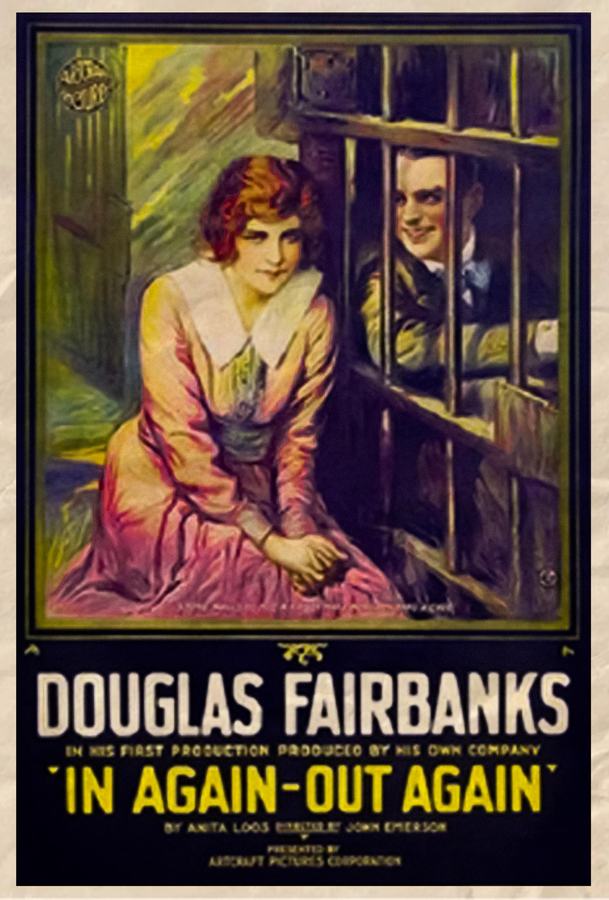
A definitive 6.7/10 rating for a film that redefined the boundaries of cult cinema. In Again, Out Again remains a cornerstone of transgressive art.
The year 1917 marked a seismic shift in the American consciousness, and few cinematic artifacts capture the jittery, pre-war anxiety with as much athletic whimsy as In Again, Out Again. Directed by John Emerson but unmistakably sculpted by the razor-sharp wit of scenarist Anita Loos, the film serves as a kinetic vessel for Douglas Fairbanks’ burgeoning screen persona—a mixture of boundless optimism, gymnastic prowess, and a peculiarly American brand of manic restlessness.
To understand the structural integrity of this film, one must acknowledge the collaborative genius of Loos and Fairbanks. While Fairbanks provided the physical vocabulary, Loos provided the syntax. In In Again, Out Again, the narrative doesn't merely move; it ricochets. We see Teddy Rutherford not just as a character, but as a personification of the 'strenuous life' advocated by Theodore Roosevelt. This film, much like The Lamb, explores the juxtaposition of perceived fragility and latent heroism, though here it is filtered through a thick layer of political satire.
The film’s central conceit—a man trying desperately to get into jail—is a masterstroke of situational irony. It flips the traditional fugitive narrative on its head. Where most protagonists are fleeing the law, Teddy is wooing it. This reversal allows Loos to poke fun at the judicial system, the temperance movement, and the escalating militarism of the era without ever descending into heavy-handed polemics. It is a light-footed dance over a cultural minefield.
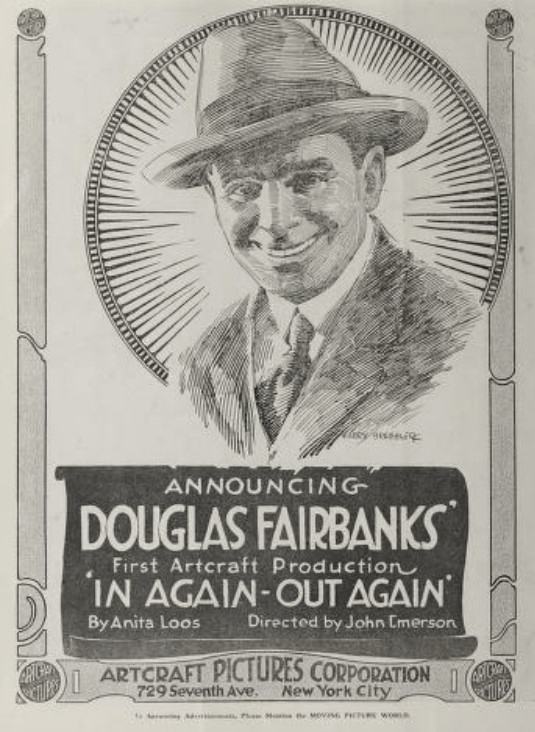
The New Jersey setting is far from incidental. By transforming a sleepy town into a 'hive of munition manufacturers,' the film reflects the rapid industrialization of the United States as it prepared for the Great War. Teddy’s obsession with 'preparedness' is played for laughs, yet it carries the weight of contemporary reality. When he falls for Pacific Ford, the clash of ideologies—the hawk versus the dove—becomes a romantic battlefield. The casting of Arline Pretty as Janie Smith provides the necessary emotional anchor, her presence in the jail acting as the 'nectareal' prize that motivates Teddy’s descent into faux-criminality.
The visual storytelling is punctuated by the presence of Bull Montana and an uncredited Erich von Stroheim, adding a layer of textured character acting that elevates the slapstick elements. The cinematography captures Fairbanks in his element—leaping over fences, scaling walls, and exhibiting a physical grace that makes the most absurd plot points feel grounded in a specific, heightened reality. It lacks the fairytale artifice of The Goose Girl, opting instead for a gritty, albeit comedic, urbanity.
The second act of the film is a tour de force of comedic frustration. Teddy’s inability to get arrested becomes a scathing commentary on the arbitrary nature of law enforcement. His attempt at speeding leads him to the 'wrong jail,' a gag that highlights the bureaucratic absurdity of municipal lines. This sequence mirrors the thematic disillusionment found in Money Madness, where the pursuit of a singular goal is thwarted by the very systems designed to facilitate or prevent it.
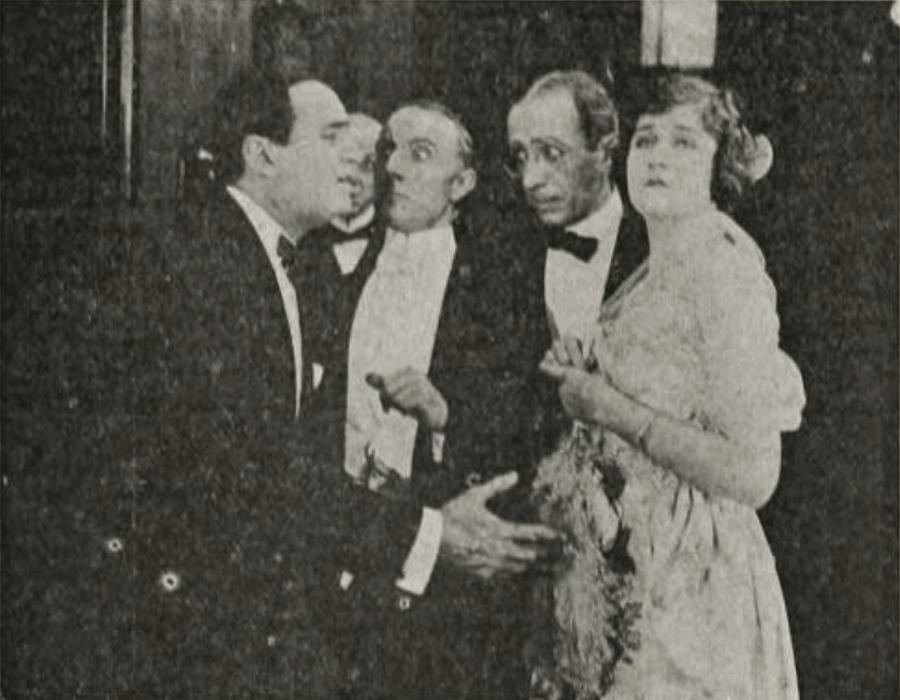
When Teddy disrupts the pacifist meeting, the film reaches its satirical zenith. He isn't just fighting for a girl; he is fighting against the inertia of a society that refuses to engage with his brand of 'vigorous' citizenship. The irony is palpable: the 'good citizen' must become a 'bad citizen' to find happiness. This paradox is handled with a deftness that modern comedies often lack, relying on the audience's understanding of social mores rather than cheap punchlines.
The subplot of the mysterious bomber adds a genuine sense of peril to the final act. It shifts the film from a romantic farce into a proto-thriller. The tension between Teddy’s impersonation of the criminal and the reality of the threat creates a narrative friction that propels the story toward its climax. Here, the film touches upon the xenophobia and paranoia that were rampant during the period, echoing the darker undertones of Silence of the Dead.
The near-lynching of Teddy is a stark, jarring moment. It serves as a reminder that the 'vigorous' populace Teddy so admired can easily turn into a mindless, destructive force. The intervention of fate—and Fairbanks’ inevitable heroic turn—saves the day, but the underlying critique of mob mentality remains. By catching the real criminal, Teddy validates his martial philosophy, but he does so through a series of accidents and misidentifications that suggest the universe is far more chaotic than his 'preparedness' charts would indicate.
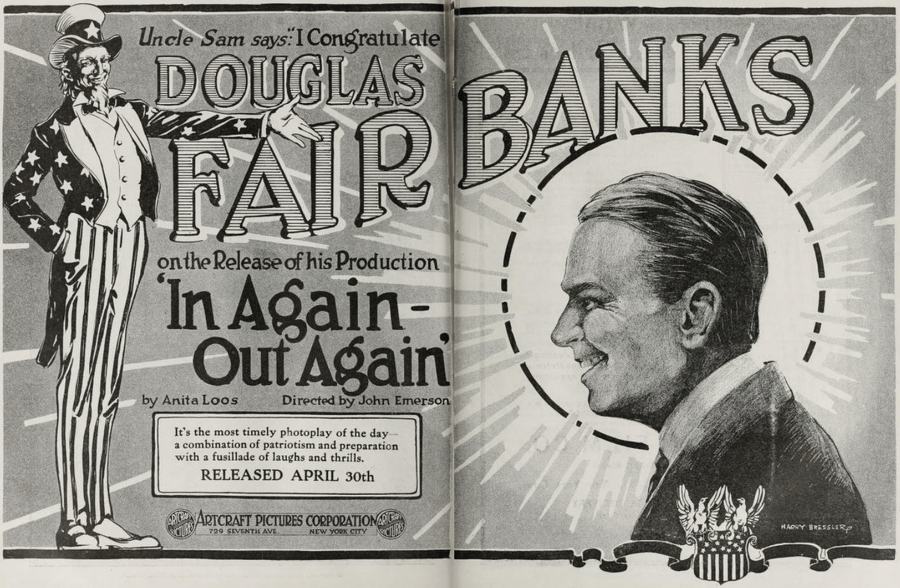
Technically, In Again, Out Again showcases the evolving language of the silent screen. The editing is brisk, and the intertitles—undoubtedly polished by Loos—are sharp and economical. The film doesn't languish in sentimentality like Maria Rosa or get bogged down in the heavy moralizing of The Market of Vain Desire. Instead, it maintains a feverish pace that mirrors the heartbeat of a nation on the brink of global conflict.
In the broader context of Fairbanks' filmography, this work stands as a bridge between his early satirical comedies and his later swashbuckling epics. You can see the DNA of his later roles in the way he navigates the physical space of the prison and the munitions plant. It possesses a certain raw energy that is sometimes smoothed over in his more polished productions like Nearly a King.
Ultimately, In Again, Out Again is more than a relic of the silent era; it is a sophisticated interrogation of American identity during a period of transition. It asks whether one can be a patriot and a lover, a law-abider and a rebel, all while maintaining a perfect pompadour and a winning smile. The film’s resolution, while satisfyingly conventional, doesn't entirely erase the subversive questions posed during Teddy’s journey. It remains a testament to the power of cinema to reflect and refract the anxieties of its time through the lens of entertainment. For those accustomed to the slower pacing of Parsifal or the gothic drama of Rebecca the Jewess, this Fairbanks vehicle will feel like a shot of pure adrenaline. It is essential viewing for anyone seeking to understand the origins of the American action-comedy and the enduring charm of one of cinema’s first true icons.
IMDb 6.6
1929
Community
Log in to comment.