DbcultAccessing Vault...
6.7/10
Senior Film Conservator
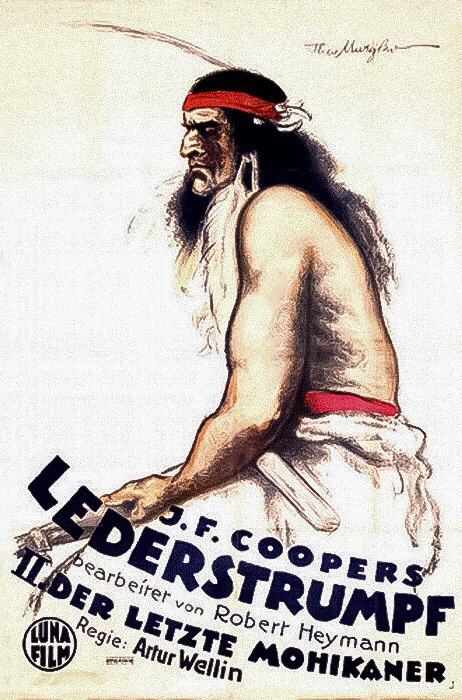
A definitive 6.7/10 rating for a film that redefined the boundaries of cult cinema. Leather Stocking: The Last of the Mohicans remains a cornerstone of transgressive art.
In the annals of silent cinema, few adaptations possess the sheer atmospheric gravity of the 1920 German production Leather Stocking: The Last of the Mohicans. Directed by Arthur Wellin and featuring a young, pre-Dracula Bela Lugosi as the menacing Magua, this film serves as a fascinating bridge between the burgeoning German Expressionist movement and the rugged, foundational myths of the American frontier. Unlike later Hollywood iterations that often sanitized the grim realities of James Fenimore Cooper’s prose, this version leans into the claustrophobic dread of the wilderness, presenting the forest not as a pastoral playground, but as a labyrinthine theater of war.
The aesthetic choices made by Wellin and his cinematographer are nothing short of revolutionary for the era. While contemporary films like The Frozen Warning utilized the landscape as a stark, external antagonist, Leather Stocking internalizes the environment. The forest is a character in itself—a sprawling, indifferent entity that swallows redcoats and indigenous warriors alike. The lighting, often harsh and high-contrast, mirrors the moral ambiguities of the characters. We see this specifically in the portrayal of Magua. Bela Lugosi’s performance is a masterclass in silent menace; his physicality is feline, his gaze predatory. He does not merely play a villain; he embodies the vengeance of a man disenfranchised by the very colonial powers he now manipulates.
The narrative structure adheres closely to the source material, yet it breathes with a distinctly European sensibility. There is a palpable sense of doom that pervades the early scenes as Major Duncan Heyward leads the Munro sisters into the depths of the forest. The arrival of Hawk-eye (Natty Bumppo) and his Mohican companions, Chingachgook and Uncas, provides the necessary pivot from impending tragedy to heroic survivalism. However, even these moments of reprieve are shadowed by the knowledge that they are fighting a losing battle against time and the inexorable march of history.
One of the most striking sequences in the film is the siege and subsequent massacre at Fort William Henry. The scale of the production is impressive for 1920, capturing the chaos of the Huron attack with a frenetic energy that rivals the intensity of The Mints of Hell. The betrayal of the British by the French General Montcalm’s inability to control his allies is depicted with a cynical eye toward the fragility of European 'gentlemanly' warfare. The massacre is not merely a plot point; it is a visceral interrogation of the savagery that lies beneath the veneer of civilization.
Amidst this carnage, the personal stakes for the Munro sisters become agonizingly clear. Cora, played with a stoic grace by Margot Sokolowska, represents the moral center of the film. Her refusal to submit to Magua’s demands—even when faced with death—elevates the conflict from a simple chase to a battle for the soul of the frontier. Unlike the more whimsical heroines found in Rowdy Ann or Lena Rivers, Cora and Alice are thrust into a world that offers no easy exits, where their survival is tethered to the skills of men who are themselves relics of a dying age.
It is impossible to discuss this film without centering on Bela Lugosi. Long before he donned the cape in 1931, Lugosi was honing a specific type of screen presence—one that combined aristocratic poise with an atavistic threat. As Magua, he uses his eyes to convey a depth of hatred that intertitles could never fully capture. His Magua is not a 'savage' in the derogatory sense of early 20th-century cinema; he is a political actor, a strategist who understands the shifting alliances of the French and British better than the colonizers themselves. His obsession with Cora is depicted not merely as lust, but as a desire to strike at the heart of Colonel Munro’s legacy.
This performance stands in sharp contrast to the more traditional romantic leads of the era, such as those in Paradise Garden. Lugosi brings a gravity that anchors the film, making the eventual tragedy at the cliffs feel earned rather than melodramatic. His interactions with the Delaware tribe and the sage Tamenund highlight the complex internal politics of indigenous nations, a nuance often lost in contemporary American Westerns of the time.
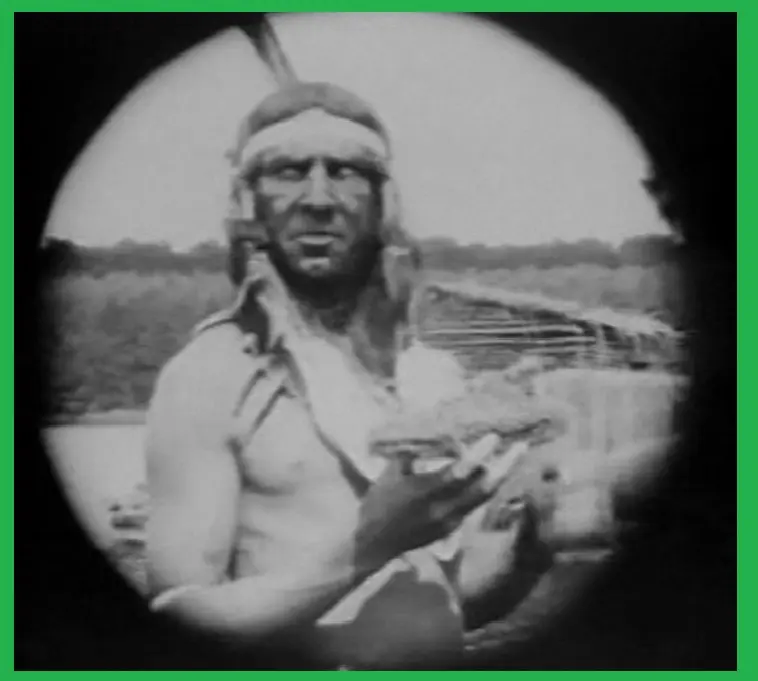
The second half of the film is a masterclass in escalating tension. The sequence involving the canoe chase across the lake is a standout, utilizing practical locations and clever editing to create a sense of genuine peril. The film avoids the static, stagey feel of many early silents like The Rescuing Angel. Instead, Wellin employs a dynamic camera that follows the rescuers as they navigate the Huron village in disguise. The use of the bear costume by Hawkeye is a moment of levity that serves to sharpen the tension rather than diffuse it, a technique often seen in more sophisticated dramas like Beauty in Chains.
The rescue of Uncas and the subsequent flight to the Delaware village are paced with a rhythmic precision. We see the influence of German 'Kammerspielfilm' in the intimate moments—the shared glances between Uncas and Cora, the weary resignation of Colonel Munro, and the stoic wisdom of Chingachgook. These characters are not merely archetypes; they are weary souls caught in the gears of a historical machine they cannot stop.
The climax at the edge of the cliff is one of the most iconic images in early cinema. The choreography of the fight—Uncas’s desperate attempt to save Cora, Magua’s final, ruthless strike, and the eventual fall of all three—is staged with a sense of operatic inevitability. There is no last-minute rescue, no Hollywood happy ending. The film respects the tragic core of Cooper’s novel, emphasizing that the 'Last of the Mohicans' is not just a title, but a literal, devastating fact.
The funeral rites that follow are handled with a solemnity that is rare for the genre. The film allows the audience to sit with the grief of Chingachgook and Munro, two fathers united by the loss of their children and the end of their respective eras. The closing prophecy of Tamenund—that the 'pale-faces are masters of the earth'—is delivered not as a triumph, but as a somber acknowledgment of a world that has lost its balance. This thematic depth is what separates Leather Stocking from more superficial adventure films like The Matrimaniac or Susan Rocks the Boat.
From a technical standpoint, the film is a triumph of location scouting and set design. The reproduction of Fort William Henry and the various indigenous villages feels authentic and lived-in. The costumes, while occasionally reflecting the stylistic flourishes of 1920s Germany, largely succeed in grounding the film in its 18th-century setting. The intertitles are poetic and sparse, allowing the visual storytelling to carry the emotional weight. In this regard, it shares a certain artistic DNA with Le torrent, where the environment dictates the psychological state of the protagonists.
As a piece of film history, this version of The Last of the Mohicans is invaluable. It provides a rare look at how European filmmakers interpreted the American experience, stripping away the burgeoning 'Wild West' mythos in favor of a more classical, tragic approach. It lacks the sentimentality of Little Orphant Annie, replacing it with a hard-edged realism that feels surprisingly modern.
Leather Stocking: The Last of the Mohicans is an essential watch for any serious cinephile. It is a film that demands to be seen not just for Lugosi’s formative performance, but for its uncompromising vision of the frontier. It captures the intersection of beauty and brutality with a clarity that few silent films achieved. While it may lack the technological polish of modern adaptations, it possesses a raw, emotional honesty that remains untarnished by time. It is a haunting elegy for a lost world, a cinematic poem that still resonates with the echoes of the 'red-men' and the 'pale-faces' who once fought for the heart of a continent.
Review by the Art Critic Collective. For more deep dives into the golden age of silent cinema, visit our archive of historical retrospectives.
Community
Log in to comment.