DbcultAccessing Vault...
Cult Review
Senior Film Conservator
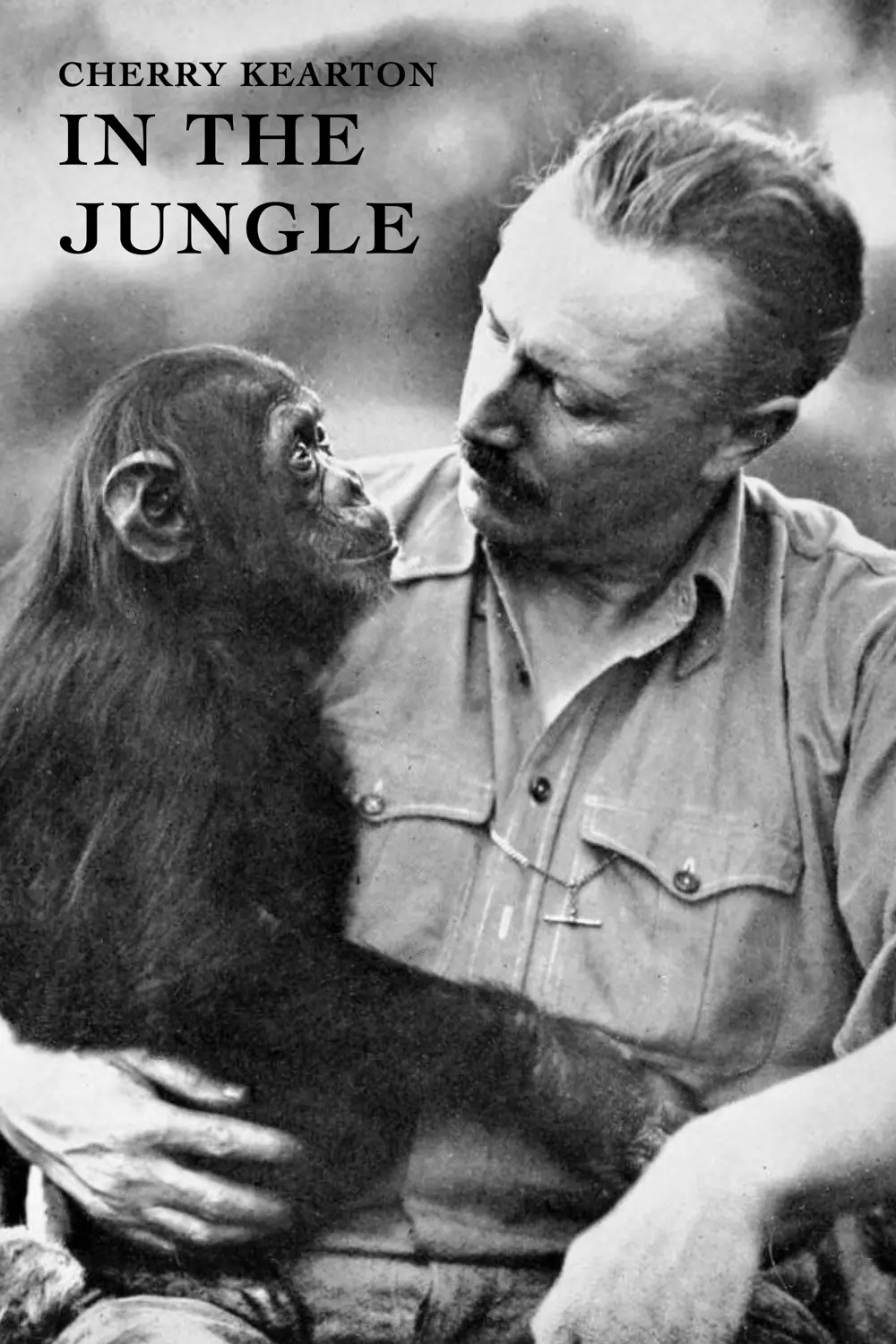
Short answer: Is With Cherry Kearton in the Jungle worth watching today? Yes, but only if you view it as a historical artifact rather than a Sunday night entertainment piece.
This film is strictly for cinema historians, students of early 20th-century naturalism, and those interested in the evolution of the documentary form. It is decidedly not for casual viewers who expect the high-definition polish of modern BBC Earth productions or the narrative pacing of contemporary cinema.
1) This film works because it captures the genuine danger and technical ingenuity required to film wild animals before the invention of the zoom lens.
2) This film fails because its colonial perspective is often uncomfortable and its pacing is dictated by the limitations of 1926 technology.
3) You should watch it if you want to understand the DNA of every nature documentary made in the last hundred years.
Cherry Kearton was not a director in the sense of the studio-bound creators of The Bachelor Daddy. He was a man who lugged a heavy wooden box into the mud. In 1926, the jungle was not a set; it was a logistical nightmare that fought back against every frame of film.
The cinematography in With Cherry Kearton in the Jungle is characterized by a flickering, hand-cranked urgency. You can feel the sweat in the frame. There is a specific sequence involving a rhinoceros where the camera's slight tremble betrays Kearton's own proximity to the beast. This isn't the calculated tension of a modern thriller; it is the accidental tension of a man who might actually get trampled.
Unlike the staged melodramas of the era, such as Camille (1921), Kearton deals in the unpredictable. When a lion moves across the tall grass, the camera struggles to keep up. This lack of fluid movement creates a sense of realism that survived the century. It feels honest in its clumsiness.
The film lacks the artifice of its contemporaries. While films like The Lone Wolf relied on intricate lighting and blocking, Kearton relied on the sun. This creates a high-contrast, often overexposed aesthetic that perfectly mirrors the harshness of the African landscape. It is brutal filmmaking.
We cannot discuss this film without addressing the elephant in the room: the 1926 social lens. Kearton’s interaction with the indigenous people he encounters is framed through a patronizing, imperialist perspective. It is a difficult element to digest for a modern audience, yet it is essential for understanding the history of anthropology in film.
The indigenous tribes are often treated as part of the 'wildlife' rather than as human subjects with agency. This stands in stark contrast to the character-driven narratives found in fiction films of the same year, such as The Show-Off. In those films, humanity is the focus; here, humanity is a footnote to the expedition's 'discovery'.
However, one must acknowledge that Kearton was a pioneer of the 'camera over the gun' philosophy. In an era when most explorers went to Africa to kill, Kearton went to record. This was a radical shift in perspective that eventually led to the conservationist movements we see today. It is a flawed step, but a step nonetheless.
The film’s structure is episodic, almost like a series of postcards sent from the edge of the world. There is no overarching plot, which can make the 1500-word equivalent of its runtime feel longer than it is. It demands a different kind of attention—a patient, observant eye that looks past the surface.
The 16-frames-per-second rhythm of the film gives the animals a jittery, nervous energy. This actually works in the film's favor. The lions seem more predatory, the birds more erratic. It removes the 'grace' we are used to seeing in slow-motion 4K footage and replaces it with a frantic reality.
The lack of synchronized sound is the film's biggest hurdle. In modern nature docs, the roar of a lion is half the experience. Here, we are left with a silent void, usually filled by a live pianist or a later-added score. This forces the viewer to focus entirely on the visual composition, which is surprisingly sophisticated given the gear.
Kearton’s use of framing is notable. He often positions himself at low angles, making the African megafauna appear even more imposing. This was a technique rarely seen in the static, eye-level documentaries of the early 1920s. He was learning the language of cinema while simultaneously inventing a genre.
Consider the editing. It is primitive but effective. The jump cuts between the expedition party and the animals create a sense of a hunt, even when no hunting is taking place. This editorial choice creates a narrative tension that wasn't present in earlier 'travelogue' films like Sold at Auction.
Does With Cherry Kearton in the Jungle hold up for a modern audience? No, not as a standard movie. It functions better as a museum piece. If you are fascinated by the history of photography or the origins of the environmental movement, it is an essential watch. If you want to be entertained, you will likely find it tedious and repetitive.
The film is a reminder of how much we have gained in technology and how much we have (thankfully) changed in our cultural perspectives. It is a window into a world that no longer exists, filmed by a man who was obsessed with capturing it before it vanished. That obsession is palpable in every frame.
Comparing it to other films of the era like Molly Make-Believe, you see the divide between the dream world of Hollywood and the harsh reality of the field. Kearton’s work is the antidote to the escapism of the 1920s. It is grounded, dusty, and occasionally boring. But it is real.
Pros:
- Unmatched historical value as a pioneer of the genre.
- Authentic, unstaged footage of African wildlife from a century ago.
- Demonstration of extreme technical skill under pressure.
Cons:
- Extremely dated social and racial perspectives.
- Repetitive pacing that can feel monotonous.
- Poor film quality due to the age and conditions of the original negative.
With Cherry Kearton in the Jungle is a difficult film to 'rate' in the modern sense. It isn't 'good' by the standards of 2024, but it is 'important.' It represents the moment humanity decided to look at the natural world through a lens rather than a crosshair. It is flawed. It is dusty. It is a relic. But for the right viewer, that relic is gold.
If you can look past the flickering grain and the colonial baggage, you will find a man who was truly in love with the wild. That passion is the only thing in the film that hasn't aged a day. It works. But it’s a challenge.
IMDb 5.9
1935
Community
Log in to comment.