DbcultAccessing Vault...
5.4/10
Senior Film Conservator
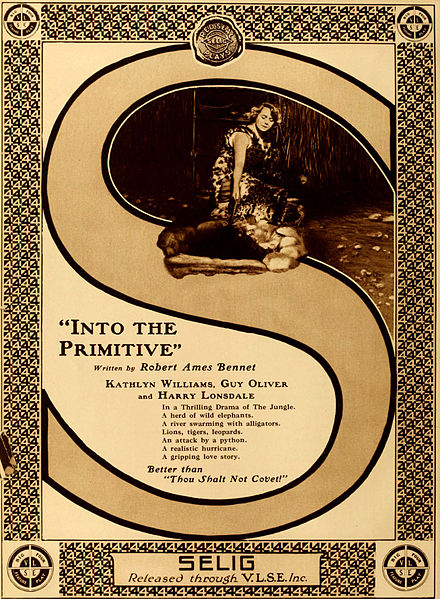
A definitive 5.4/10 rating for a film that redefined the boundaries of cult cinema. Into the Primitive remains a cornerstone of transgressive art.
The silent era, often dismissed by modern audiences as quaint or overly theatrical, was in fact a fertile ground for exploring profound human dramas with an intensity that often transcends dialogue. Kathlyn Williams, a luminary of the period, brought a captivating presence to many such narratives, and her work in films like The Mating of Marcella showcased her nuanced ability to portray women navigating complex societal expectations. In the case of "Into the Primitive," the societal expectations themselves are ruthlessly stripped away, leaving an enthralling, if stark, examination of human nature under duress. This film, penned by Robert Ames Bennet, dives headfirst into an allegorical landscape where the trappings of class and convention are rendered utterly meaningless by the raw imperatives of survival. It's a testament to the era's storytelling prowess that such a potent narrative could be conveyed with such visceral impact, relying on visual storytelling and the expressive power of its cast to communicate its weighty themes.
The premise is elegantly simple yet infinitely rich with potential: an American heiress, Jennie Leslie (portrayed with compelling grace by Kathlyn Williams), finds herself marooned alongside two vastly different men after a calamitous shipwreck. The Honorable Cecil Winthrope (Guy Oliver), a man ostensibly of high birth, and the rugged, unpolished Thomas Blake (Harry Lonsdale), an alcoholic whose rough edges belie a deeper resilience. Their initial predicament sets the stage for a classic survival narrative, but what unfolds is far more intricate than a mere struggle against the elements. It becomes a psychological drama, a trenchant critique of class, and ultimately, a journey into the very heart of what it means to be human when all external markers of identity are obliterated. The island itself, an isolated and indifferent entity, acts as a crucible, burning away superficialities and forcing its involuntary inhabitants to confront their true selves.
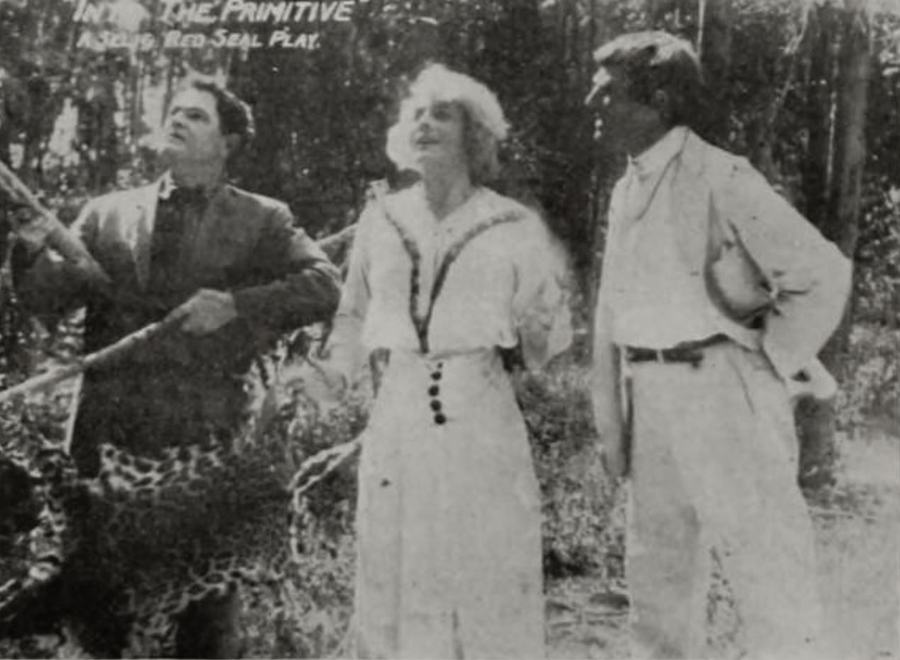
Jennie Leslie, a product of a society that valued breeding and social standing above all else, initially gravitates towards Cecil Winthrope. His polished manners, his assumed air of authority, and his familiar upper-class British accent provide a comforting, albeit illusory, link to the world they’ve lost. In her eyes, and perhaps in the eyes of the audience of the time, Cecil represents order and competence. However, the harsh realities of a deserted island quickly expose the hollowness of his aristocratic façade. Guy Oliver, likely through subtle body language and increasingly frantic expressions, would have conveyed Cecil’s escalating panic and utter uselessness. He cannot hunt, cannot build shelter, cannot protect. His "breeding" proves to be a liability, a set of social graces entirely unsuited for the brutal demands of the wild. This narrative arc cleverly mirrors films like Raffles, the Amateur Cracksman, where identity is a fluid concept, a performance. But unlike Raffles, Cecil's performance crumbles under the weight of true adversity, revealing a man utterly dependent and, disturbingly, dangerous.
In stark contrast to Cecil, Thomas Blake, initially dismissed by Jennie due to his working-class background and his struggles with alcohol, emerges as the indispensable pillar of their survival. Harry Lonsdale's portrayal would have had to convey a transformation from initial disrepute to quiet competence. It is Thomas who possesses the practical skills, the innate resourcefulness, and the sheer grit necessary to procure food, fashion tools, and provide rudimentary shelter. He is the archetypal "man of the people," whose value is recognized not by his lineage or wealth, but by his ability to *do*. This dynamic is a powerful subversion of contemporary class structures, arguing forcefully that true worth lies not in inherited status but in tangible capabilities and character. The film thus becomes a potent social commentary, subtly dismantling the hierarchies that governed early 20th-century society and celebrating the often-overlooked strength of the common person.
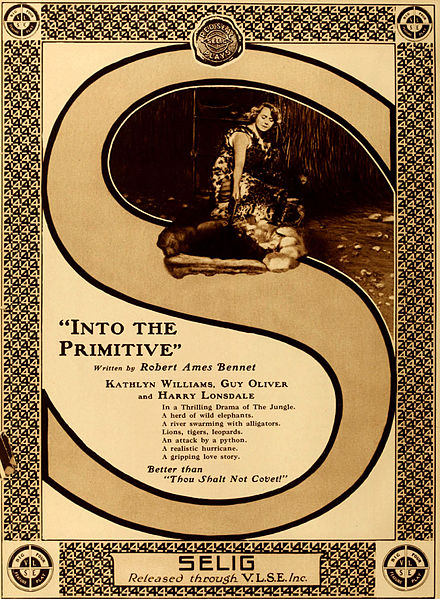
The narrative takes a truly chilling turn as Cecil's frustration and desperation morph into something far more sinister. The island, which had earlier stripped him of his social standing, now seems to strip him of his humanity. In a harrowing sequence, during the tempestuous chaos of a storm, Cecil succumbs to a brutal, primal urge, attempting to rape Jennie. This moment is not merely a plot device; it's a profound statement on the fragility of civilization and the ease with which some individuals revert to savagery when external constraints are removed. It underscores the film's title, "Into the Primitive," not just as a geographical relocation, but as a psychological regression. This dark episode would have been a shocking and potent scene for audiences of the era, highlighting the real dangers lurking beneath a veneer of civility, particularly concerning gender dynamics and the vulnerability of women.
In a moment of dramatic irony and poetic justice, Cecil's violent assault is abruptly curtailed by a falling tree, a literal act of nature intervening in the unfolding human drama. As he lies dying, his last breaths are spent not on remorse, but on a confession that shatters Jennie's remaining illusions: he was never the Honorable Cecil Winthrope, but merely a valet, a servant who had adopted the persona of an aristocrat. This revelation is a masterstroke by writer Robert Ames Bennet. It retroactively recontextualizes Cecil's entire character, explaining his incompetence and his eventual collapse into depravity. His "breeding" was a costume, a performance, and without the stage of society, the actor was exposed as utterly fraudulent. This twist elevates the film beyond a simple survival story, transforming it into a sharp commentary on identity, deception, and the artificiality of class distinctions, much like the societal deceptions explored in Social Quicksands or the intricate plots of The Celebrated Stielow Case, which often hinged on mistaken identities or hidden truths.
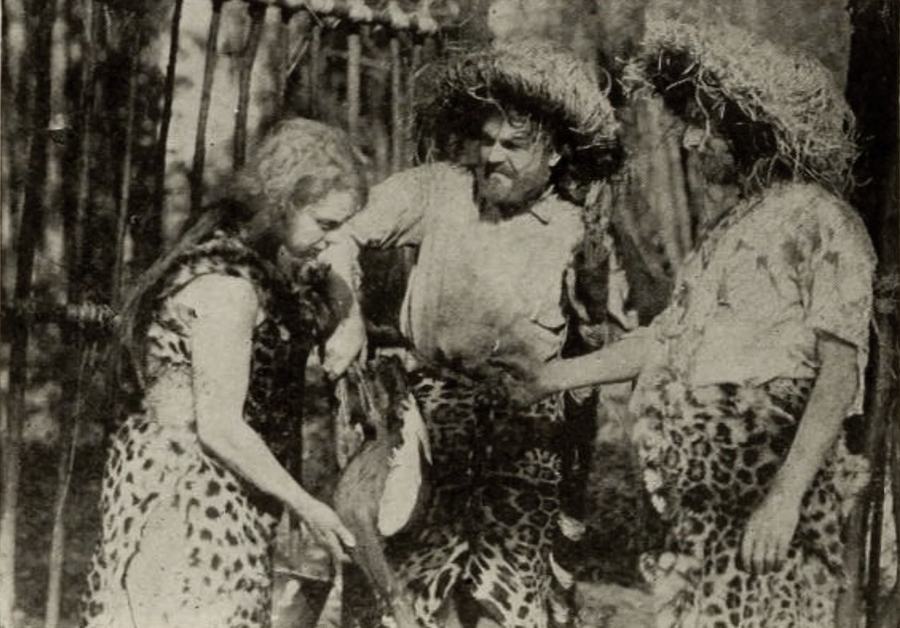
With Cecil's duplicity exposed and his malevolent presence removed, the dynamic between Jennie and Thomas undergoes a profound shift. The barriers of class, once insurmountable, have crumbled. Jennie, having witnessed Thomas's unwavering strength, loyalty, and genuine care, now sees beyond his rough exterior. She recognizes the true nobility of his character, a nobility forged in action rather than lineage. And Thomas, who has protected and provided for her without expectation, sees Jennie not as an heiress, but as a resilient woman who has faced unimaginable hardship. Their realization of love is not a sudden, saccharine development, but the natural culmination of shared trauma, mutual dependence, and a deep, unvarnished appreciation for each other's true selves. It's a romance born of necessity and tested by fire, far more authentic than any match society might have dictated for Jennie previously, a theme explored in other romantic dramas of the era like The Primrose Ring, which often examined unconventional unions.
The eventual rescue of Jennie and Thomas is not merely a happy ending; it's a symbolic re-entry into a world they have fundamentally outgrown in spirit. They return not as the individuals who embarked on that fateful voyage, but as transformed beings, chastened by experience and enlightened by adversity. Their plans for marriage speak volumes. It signifies a union based on genuine understanding and affection, untainted by the superficial class distinctions that once governed Jennie's life. The film suggests that while society may impose its structures, true human connection can transcend them, especially when tested by the crucible of nature. It's a powerful statement about the enduring strength of love and the possibility of finding true partnership in the most unexpected circumstances, a universal theme that resonates even in contemporary storytelling, much as it did in silent films such as The Girl, Glory, which often focused on personal growth leading to a fulfilling life.
While the silent film era necessarily relied on exaggerated facial expressions and grand gestures, the truly great actors of the period, like Kathlyn Williams, were capable of conveying immense emotional depth with subtlety. Williams, as Jennie Leslie, would have been tasked with portraying a formidable transformation: from a sheltered heiress to a hardened survivor, from someone initially blind to true character to someone who sees with profound clarity. Her performance would have been central to the film's success, anchoring the audience's emotional journey. Guy Oliver, as Cecil, would have had the difficult task of portraying a character who is initially charming but gradually reveals his cowardly, then predatory, nature. His performance would have required a careful calibration to make the eventual reveal impactful. Harry Lonsdale, as Thomas, would have needed to project an innate honesty and strength, a quiet heroism that slowly wins over both Jennie and the audience. The chemistry, or lack thereof, between these three performers, communicated primarily through their physical interactions and expressions, would have been paramount in conveying the shifting power dynamics and emotional currents of Robert Ames Bennet's compelling script. Their collective artistry would have brought the stark realities of survival, social critique, and burgeoning romance to vivid life without a single spoken word, proving that the silent screen was anything but quiet in its emotional resonance. This kind of character-driven narrative, where actors convey complex arcs through non-verbal means, is a hallmark of the era, seen in other dramatic works of the period such as Koroleva ekrana or Saints and Sinners.
"Into the Primitive" stands as a powerful example of silent cinema's capacity for sophisticated storytelling and social commentary. It's more than just an adventure tale; it's a philosophical inquiry into the nature of humanity, the arbitrary constructs of society, and the raw, often brutal, truth that emerges when those constructs are removed. Robert Ames Bennet's script skillfully navigates these complex themes, presenting a narrative that is both thrilling and thought-provoking. The film's enduring relevance lies in its timeless exploration of identity, class, and survival. While the specific social mores it critiques might have evolved, the fundamental questions it poses about who we are when stripped of our societal roles, and what truly constitutes nobility of character, remain pertinent. It reminds us that appearances can be deceiving, and that true strength and virtue often reside in the most unexpected places. This narrative resonates with a fundamental human curiosity about our origins and our potential for both good and evil, making "Into the Primitive" a compelling, if often overlooked, gem from the golden age of silent film. The film's examination of societal roles and their breakdown finds echoes in various international productions of the time, from the German Höhenluft to the Mexican Madero al sur del país, all of which, in their own cultural contexts, grappled with the pressures and transformations of human character within or against established social orders.
IMDb 5.8
1935
Community
Log in to comment.