DbcultAccessing Vault...
Cult Review
Senior Film Conservator
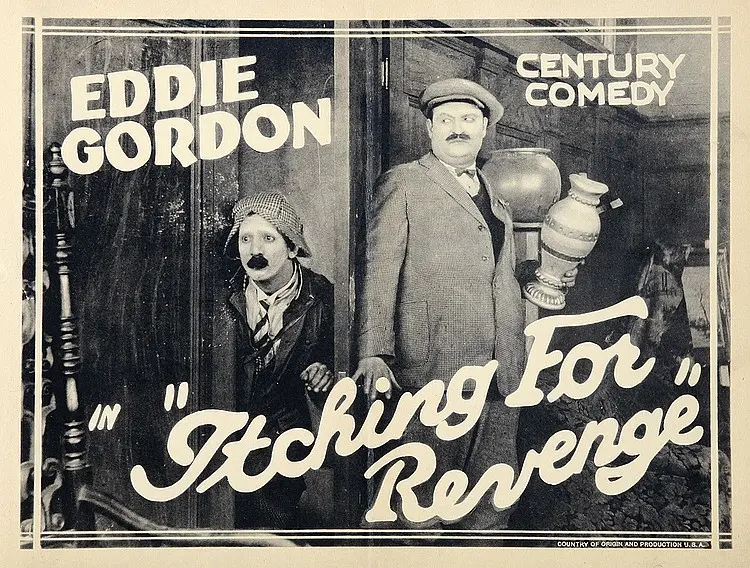
There are films that merely tell a story, and then there are those that etch themselves into the very fabric of cinematic memory, not just through their narrative, but through the sheer force of their emotional candor and the relentless pursuit of their thematic core. 'Itching for Revenge', a silent-era marvel penned by the astute Noel M. Smith, stands as a testament to the latter. It’s a film that, despite the passage of decades, continues to resonate with a raw, visceral power, demonstrating that the human spirit, when pushed to its breaking point, can forge an unyielding path toward retribution, even if that path promises its own kind of desolation. This is not a tale for the faint of heart; it is a meticulous deconstruction of grief transmuted into a burning, almost pathological obsession.
From its very inception, the film plunges us into the seemingly idyllic world of Elara Vance, brought to life with an almost heartbreaking luminosity by the incomparable Fay Holderness. Her portrayal of Elara is a masterclass in silent acting, conveying entire volumes through a glance, a trembling hand, or the subtle shift in her posture. Elara's early scenes paint a portrait of contentment, a woman deeply enmeshed in a love story that feels both authentic and aspirational. Her fiancé, a man of intellect and kindness, embodies the promise of a bright future, a vision that makes the ensuing tragedy all the more devastating. It is this profound sense of loss that anchors the entire narrative, serving as the crucible from which Elara's formidable resolve is forged. Her initial joy, exquisitely rendered, amplifies the subsequent brutal shattering of her world, making her eventual metamorphosis all the more compelling and, indeed, chilling.
The architect of Elara's undoing is none other than Silas Thorne, brought to chilling life by Larry Rich. Rich imbues Thorne with a cold, calculating menace that feels utterly devoid of compunction. He is the quintessential industrialist villain of the era, driven by an insatiable hunger for power and wealth, willing to crush anyone who stands in his path. His machinations to steal a groundbreaking patent are not merely opportunistic; they are a deliberate, ruthless act of destruction, designed to eliminate a rival and secure his own dominance. Thorne's conniving associate, Marcus, played with a suitably sinister subservience by Pete Gordon, serves as the perfect foil, a man whose loyalty is bought, not earned, and whose moral compass is entirely dictated by his master's whims. The synergy between Rich and Gordon creates a formidable antagonist duo, their combined presence casting a long, dark shadow over Elara's initial happiness.
The film's plot, a carefully constructed edifice of betrayal and burgeoning retribution, unfurls with a methodical precision that speaks volumes about Noel M. Smith's narrative prowess. The framing of Elara's fiancé, his unjust imprisonment, and his subsequent tragic death are depicted with a stark, almost unblinking realism that avoids overt melodrama, instead leaning into the psychological trauma of the events. It is this understated approach to the initial tragedy that makes Elara's subsequent transformation so potent. Her grief is not a fleeting emotion; it is a foundational shift, a calcification of her spirit that hardens her resolve and sharpens her intellect. One cannot help but draw parallels to the grim determination seen in characters from films like John Heriot's Wife, where women, often marginalized, are forced to navigate treacherous emotional landscapes, though Elara's journey takes a distinctly more active, almost predatory, turn.
Elara's decision to shed her former identity and assume the guise of a sophisticated socialite is a pivotal moment, a symbolic rebirth into a world of calculated artifice. Fay Holderness excels in portraying this dual nature, moving with an elegant, almost predatory grace through the opulent settings of Thorne's world. Her eyes, once brimming with innocence, now hold a flicker of steel, a barely contained fire that threatens to consume everything in its path. This transformation is not merely cosmetic; it is a profound psychological shift, a deliberate hardening of her soul to withstand the emotional toll of her mission. The film masterfully explores the moral ambiguities inherent in such a quest, asking whether the pursuit of justice, however righteous its origins, can ever truly be untainted by the methods employed.
The introduction of Bartine Burkett as Thorne's disillusioned sister adds another compelling layer to this intricate tapestry. Burkett's performance is nuanced, presenting a character caught between familial loyalty and a burgeoning awareness of her brother's malevolence. Her initial distrust of Elara slowly gives way to a complex dynamic, a dance of suspicion and eventual, perhaps reluctant, alliance. This relationship is crucial, as it allows for moments of human fragility and moral questioning amidst Elara's relentless drive. It echoes the kind of complicated familial relationships seen in dramas like Bella Donna, where alliances shift and the lines between friend and foe become blurred, often with devastating consequences. Burkett's character provides a much-needed counterpoint to the monochromatic villainy of Thorne and the singular focus of Elara, injecting a degree of moral complexity that elevates the narrative beyond a simple revenge tale.
What truly sets 'Itching for Revenge' apart is its unflinching exploration of the psychological cost of vengeance. Elara's journey is not presented as a triumphant march towards righteous vindication; rather, it is a descent into a moral grey area, where the very act of seeking retribution begins to corrode the soul. The film subtly hints at the toll this takes on her, the moments of solitude where the mask slips, revealing the profound weariness and lingering sorrow beneath. This introspective quality is a hallmark of superior silent cinema, relying on visual storytelling and the actors' emotive capacities to convey internal states. One might even draw a comparison to the existential weight explored in films like Everyman's Price, where characters grapple with the profound consequences of their choices, often finding that victory comes with an unexpected, heavy cost.
The direction, though uncredited as a separate role from the writer, bears the indelible stamp of Noel M. Smith's vision. The pacing is deliberate, allowing the tension to build organically, each revelation and strategic move by Elara contributing to a mounting sense of inevitability. The cinematography, while constrained by the technology of the era, is remarkably effective, utilizing stark contrasts of light and shadow to underscore the moral dichotomy of the characters. The opulent settings of Thorne's world are often bathed in a deceptive glow, while Elara's moments of solitary planning are frequently shrouded in a more somber, reflective light. This visual language is particularly adept at conveying the psychological landscape of the film, a testament to the sophistication of silent film artistry. The use of intertitles is also noteworthy; they are sparse but impactful, delivering crucial plot points and emotional beats without ever feeling intrusive, allowing the performances to truly shine.
The film's climax is a masterclass in dramatic tension. The carefully orchestrated confrontation between Elara and Thorne is not one of physical violence, but of psychological warfare. Elara's meticulous unraveling of Thorne's empire, culminating in his forced confession, is deeply satisfying from a narrative standpoint, yet it is presented with a lingering sense of melancholy. The victory feels hollowed, tinged with the immense personal sacrifice Elara has endured. The final frames of the film are particularly poignant, refusing to offer a simplistic 'happily ever after.' Instead, Elara is left to confront the aftermath of her quest, the quiet emptiness that often follows the cessation of a consuming obsession. Has the 'itching' truly been satisfied, or has it merely been replaced by a different kind of ache? This ambiguity is where the film truly transcends its genre, inviting viewers to ponder the profound philosophical questions surrounding justice, forgiveness, and the enduring scars of trauma. In this regard, it shares a certain thematic depth with films like Minaret Smerti, which often delve into the darker, more fatalistic aspects of human existence and the inescapable consequences of one's actions.
The performances across the board are exemplary. Fay Holderness, as previously mentioned, carries the film with an extraordinary range, transitioning from radiant innocence to hardened resolve with seamless grace. Her ability to convey complex emotions without dialogue is truly remarkable. Larry Rich embodies the villain with a chilling conviction, making Thorne a character viewers love to despise. Bartine Burkett provides a compelling counterpoint, her internal struggle adding texture and ethical weight to the narrative. Even Pete Gordon, in his supporting role, contributes significantly to the film's atmosphere of moral decay, his smirking complicity underscoring Thorne's depravity. The ensemble works in perfect harmony, each actor contributing to the film's rich emotional tapestry.
In an era often dismissed for its perceived narrative simplicity, 'Itching for Revenge' stands as a powerful rebuttal. It is a sophisticated, psychologically astute drama that explores universal themes with a depth and nuance that belies its silent origins. The film's enduring relevance lies in its timeless examination of human nature, the corrosive power of greed, and the complex, often self-destructive, nature of vengeance. It reminds us that even in the absence of spoken words, cinema possesses an unparalleled capacity to convey the most profound human experiences. For those who appreciate the artistry of early filmmaking and narratives that delve into the darker corners of the human psyche, this film is an essential viewing, a forgotten masterpiece that deserves renewed recognition. Its impact lingers long after the final frame, prompting reflection on the true cost of settling old scores, and whether the 'itching' ever truly ceases.
The film's narrative structure, though linear, employs a series of escalating stakes that keep the audience thoroughly engaged. Each step Elara takes feels earned, each calculated risk fraught with peril. This careful construction of suspense is a hallmark of effective storytelling, allowing the emotional impact to build gradually rather than relying on cheap thrills. Comparisons could be drawn to the methodical unraveling of a mystery in a film like Der verlorene Schuh, where objects or clues become imbued with significant emotional or narrative weight, pushing the protagonist towards their ultimate goal. Here, it’s not just clues, but Elara’s strategic maneuvers that serve as the narrative anchors.
Moreover, Noel M. Smith's script avoids the pitfalls of an overly simplistic moralizing tone. While Thorne is undeniably villainous, Elara's journey is not without its own shadows. The film subtly suggests that the single-minded pursuit of revenge, no matter how justified, can be a dehumanizing force, stripping away parts of the avenger's soul. This nuanced perspective elevates 'Itching for Revenge' beyond a mere genre piece, positioning it as a work of psychological drama that anticipates many of the complex character studies seen in later cinematic eras. It’s a film that asks profound questions without offering easy answers, a characteristic often found in more contemplative works like Wild, which explores the raw, untamed aspects of human endurance and motivation.
The cultural context of its release also adds another layer of appreciation. Silent films, particularly those from the early 20th century, often reflected societal anxieties and moral quandaries. The theme of corporate corruption and the struggle of the individual against powerful, amoral entities would have resonated deeply with audiences grappling with the rapid industrialization and shifting social landscapes of the time. 'Itching for Revenge', in this sense, is not just a personal drama, but a societal commentary, albeit one filtered through the lens of individual suffering and retribution. It speaks to the universal yearning for justice when institutional systems fail, a theme that remains as relevant today as it was a century ago. Its exploration of a strong, determined female protagonist, even in the face of immense adversity, also makes it a noteworthy entry when considering the evolving roles of women in cinema during this period, standing alongside other works that showcased female resilience, perhaps even echoing the spirit of defiance found in characters from Eine weisse unter Kannibalen (if we consider the 'survival against overwhelming odds' aspect, albeit in vastly different contexts).
The lasting impression of 'Itching for Revenge' is its ability to evoke profound empathy for Elara, even as her actions become increasingly calculated and ruthless. Fay Holderness ensures that Elara remains a human being, not just an archetype of vengeance. We understand her motivations, we feel her pain, and we are compelled to witness the conclusion of her arduous quest, even if that conclusion promises a bittersweet victory. This emotional connection is critical, transforming the film from a mere spectacle into a deeply moving and thought-provoking experience. It is a testament to the power of pure cinematic storytelling, where the absence of dialogue only amplifies the potency of visual expression and the raw talent of its performers. It’s a film that, like a deeply resonant piece of music, stays with you, its themes and images echoing in the mind long after the screen fades to black.
IMDb —
1921
Community
Log in to comment.