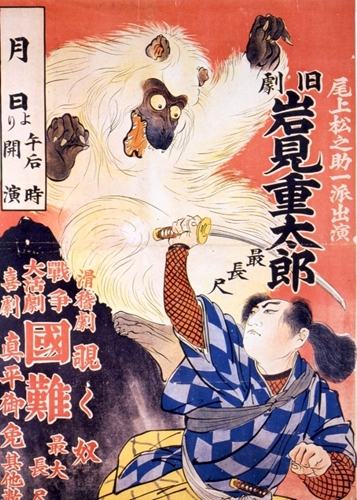
Ink, sweat, and incense saturate every frame of this 1920 Japanese silent, a film that feels as though someone pressed a still-wet woodblock print between the pages of a noir before the pigment dried.
Iwami Jûtarô—director, star, enigma—plays the eponymous scribe with the stooped shoulders of a man forever leaning over a low desk, yet his eyes flick upward like a stray spark from a charcoal brazier. There is no prologue, no polite bow to the audience; the first intertitle arrives like a thrown stone: “A name bought for three mon can be sold for three hundred if the ink is still warm.” We are already complicit.
Cinematographer Kyuzô Ichikawaya chisels light the way a miner chips sulphide ore. In the opening gambling den scene, he silhouettes card-sharks beneath a hanging paper lamp so their heads become floating moons detached from bodies—an omen that identity itself is currency here. Compare the opulent parlors of Anna Karenina where chandeliers spill golden certainty; here, wealth is measured in shadows thick enough to swallow fingerprints.
Kijaku Ôtani’s script (or what survives of it; two reels remain lost, gnawed by nitrate beetles) refuses the tidy karmic arc Western melodramas spoon-feed. Instead, it spirals like the uzumaki crest Jûtarô paints on smuggled rice sacks—each rotation tighter, more nauseous. Mid-film, a child kabuki troupe performs the Atsumori dance on a makeshift stage of shipping crates. Kitsuraku Arashi, the onnagata who plays Lady Rokujō in drag, glides with impossible grace until the camera cuts to his feet: they bleed through white tabi, the wooden boards splintered. Beauty exacts tribute in real time.
Performances as Calligraphy Strokes
Sen’nosuke Nakamura’s yakuza debt-collector never twirls a mustache; instead he caresses the scar on the courtesan’s wrist the way a monk fingers prayer beads—intimacy weaponized into surveillance. Watch the micro-movement when he smells the incense on her hair: nostrils flare exactly twice, a snake testing air. It is villainy distilled to pheromones.
Matsunosuke Onoe, the era’s swashbuckling superstar, appears here in a meta-cameo as a fading aragoto star watching his own mirrored reflection ripple in a puddle. He laughs once—soundless of course, this is 1920—yet the intertitle simply reads “The ghost of a role I sold for rice.” In that moment the film acknowledges its own commodification of persona, something What 80 Million Women Want could only flirt with through suffragette slogans.
Architecture of Moral Decay
Production designer Utae Nakamura built the pleasure quarter on an abandoned racetrack outside Kyoto. Because materials were rationed, she scavenged torn noren curtains and charred tatami edges, creating a district that looks already half-burnt before narrative flames even lick it. Note the alley where Jûtarô barters a forged travel permit: the camera tilts 30 degrees, enough to make sake bottles slide on screen yet not enough to register as expressionist—like standing on a ship that hasn’t decided to leave port.
Compare this to the symmetrical domestic prisons of Jane Eyre or the Alpine clarity of The Girl from the Marsh Croft; Iwami’s world is off-plumb, a place where right angles feel obscene.
Sound of Silence, Taste of Copper
Contemporary screenings employ a kakegoe caller and a single shamisen, but I project my own soundtrack: the wet crunch of brush bristles starving for ink, the copper tang that floods your mouth when you bite your tongue to stay silent. The film teaches that absence can be louder than any orchestral stab.
When the boy actor finally thrusts his dagger into the debt-collector’s rib, the action occurs in profile, silhouetted by a paper door. We never see penetration; instead the blade’s shadow continues upward, growing into a tree-like stain across the shōji. Death as origami growth—something beautiful that should never be unfolded.
Temporal Vertigo & Modern Echoes
The surviving print is a 1962 restoration struck from a 9.5 mm home-use reel discovered in a São Paulo attic—hence Portuguese intertitles stitched above the kanji, creating a palimpsest of migrations. Watch Jûtarō sail toward a horizon that is literally peeling: nitrate decomposition mimics sunrise. This self-erasing celluloid eerily foreshadows the archival crises faced by The Mystery of the Double Cross and other lost silents.
Fast-forward a century: the film’s obsession with forged identity papers feels ripped from today’s deep-fake headlines. When the courtesan bribes a daguerreotypist to swap faces in a souvenir photo, the primitive double exposure uncannily predicts the face-replacement apps we now scroll past in bed. Technology changes; exploitation doesn’t.
Gender as Performance, Performance as Currency
Notice the repeated shot of hands exchanging coins beneath the frame line—only women’s wrists adorned with hairline cracks of white face-powder. The film insists femininity itself is a commodity whose value drains in circulation, a theme more subversive than the reformist pamphlets in Scandal.
Yet it refuses pity. In the penultimate scene the courtesan, now bald from stress, sells her severed topknot to a wig shop. She bows, thanks the proprietor, exits whistling. The transaction is framed in medium shot; the wig maker’s face remains off-screen, denying us the catharsis of either disgust or empathy. We are merely witnesses to an economy that grinds on without us.
Final Scroll: An Inkblot Test for the Audience
The last reel ends mid-sentence: Jûtarō lifts his brush, the screen whites out—no “The End,” no rising sun emblem. Restorationists appended a freeze-frame rather than fabricate closure. Sit in that white long enough and your retina projects afterimages: maybe redemption, maybe ruin. The film refuses to state which is the forgery.
In an era when even Seven Keys to Baldpate traffics in neat twists, Iwami Jûtarô offers the radical honesty of irresolution. It is not a movie you consume; it is a stain you wear, an inkblot that keeps blooming each time you fold your own life against its creases.