DbcultAccessing Vault...
Cult Review
Senior Film Conservator
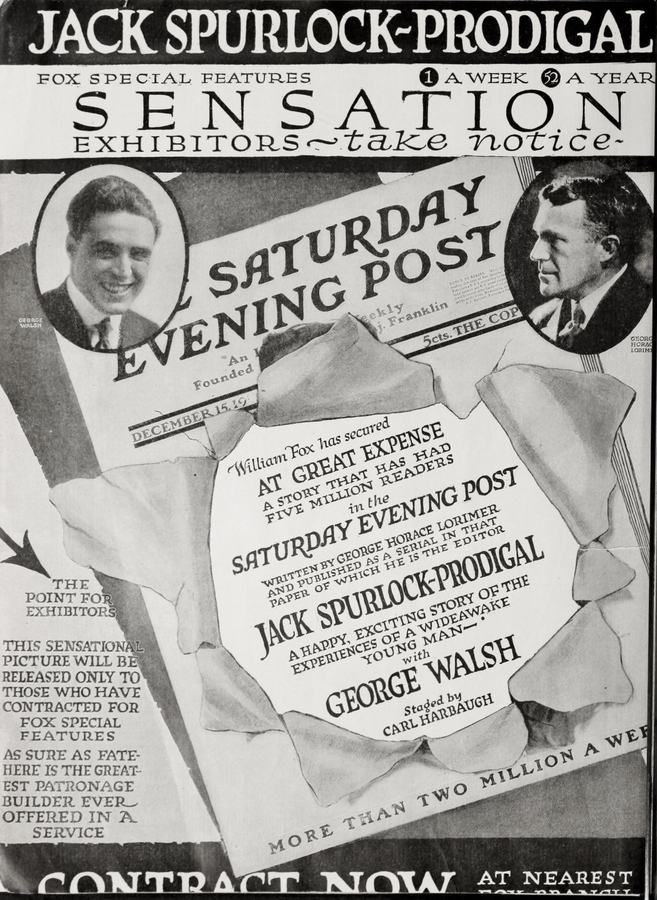
Jack Spurlock, Prodigal, a cinematic artifact from 1917, often finds itself nestled within the annals of early American filmmaking, a period brimming with experimentation and the nascent articulation of a new art form. Directed with a keen eye for both comedic potential and dramatic arcs, this film transcends its seemingly simple premise to offer a surprisingly nuanced exploration of familial duty, the burgeoning labor movement, and the unpredictable path to personal redemption. In an era where the silver screen was still finding its voice, this particular feature stands out not merely as a historical curiosity but as a compelling narrative that, through its silent gestures and intertitles, speaks volumes about the societal shifts and individual struggles of its time. It invites us to peer back into a moment when cinematic language was being forged, and in doing so, reveals a timeless tale of a son's turbulent journey from collegiate miscreant to an unlikely business savant.
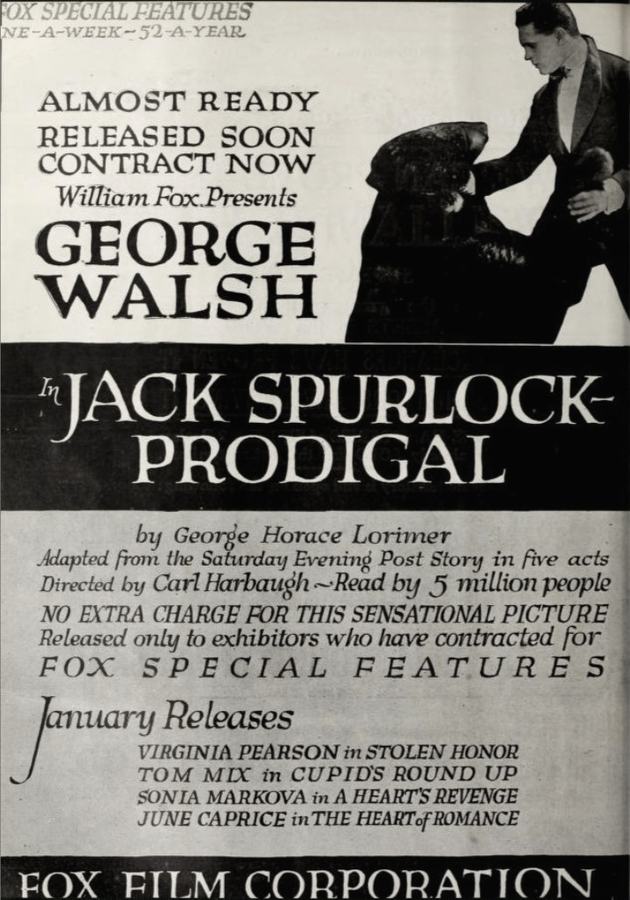
At the heart of Jack Spurlock, Prodigal is the titular character, portrayed with an engaging blend of youthful exuberance and underlying earnestness by George Walsh. Jack is introduced as the archetypal ne'er-do-well, a college student whose penchant for boisterous escapades — notably a particularly memorable incident involving a bear that precipitates his expulsion — paints him as a charming rogue rather than a malicious delinquent. Walsh imbues Jack with a certain irrepressible spirit, suggesting that his rebellious streak is less an act of defiance and more a consequence of an intelligence and energy that have yet to find their proper channel. This initial portrayal is crucial, as it lays the groundwork for his subsequent transformation.
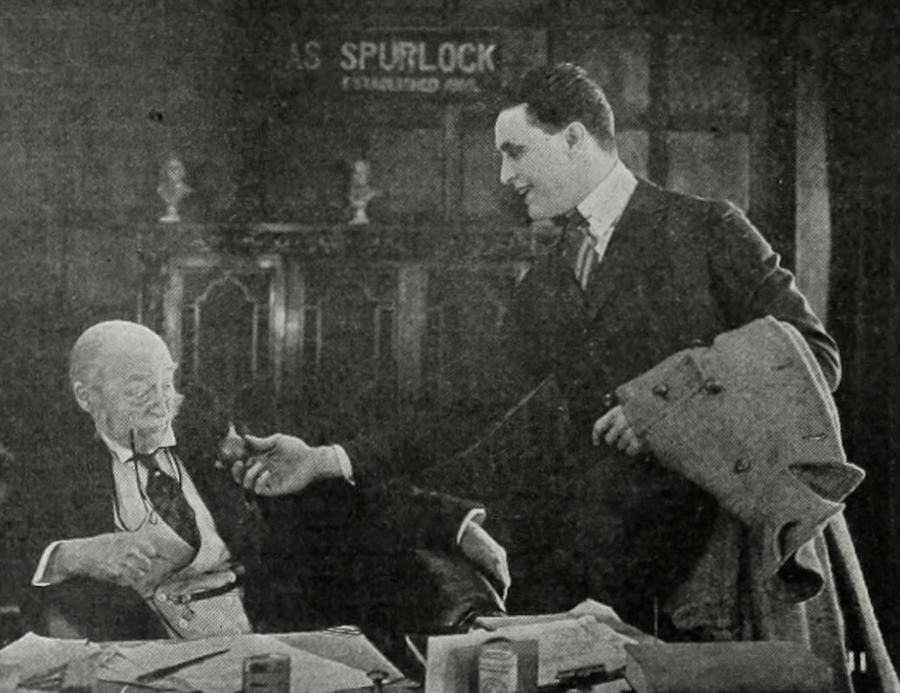
When his formidable father, John Spurlock, Sr., a figure of stern patriarchal authority, compels him into the family's wholesale grocery business, Jack's entry is less an embrace of responsibility and more a reluctant conscription. Yet, it is within this seemingly mundane setting that Jack's latent entrepreneurial genius, however unorthodox, begins to surface. His inexplicable decision to purchase an enormous surplus of onions, initially perceived as a colossal error in judgment, later reveals a peculiar foresight, a characteristic that sets him apart from the staid, conventional business practices of his father. Walsh navigates this evolution with commendable subtlety for a silent film, using body language and facial expressions to convey Jack's internal growth from a wayward son to a man capable of both business acumen and social conscience.
One of the most striking elements of Jack Spurlock, Prodigal is its surprisingly progressive engagement with themes of labor relations and corporate responsibility, especially poignant for a film released in 1917. The narrative pivot around the "Onion Workers' strike" is not merely a plot device but a window into the socio-economic anxieties and burgeoning labor movements of the early 20th century. Jack's initial, seemingly misguided, purchase of the onion surplus inadvertently positions him alongside the very workers who toil to bring these goods to market. When these laborers, driven by demands for fair treatment and recognition, decide to strike, Jack, rather than siding with his father's established corporate interests, throws his support behind them. This act of solidarity is a radical departure for a character ostensibly groomed for a life of privilege within the capitalist framework. It underscores a nascent sense of social justice within Jack, suggesting a moral compass that points beyond mere profit margins.
The film, through this central conflict, portrays the tension between traditional business practices, represented by John Spurlock, Sr., and the emerging demands for worker's rights. The elder Spurlock's eventual, albeit reluctant, recognition of the Onion Workers' Union is a significant narrative beat, reflecting the societal pressures and increasing legitimacy of organized labor during this period. It’s a testament to the film’s understated ambition that it tackles such a contemporary and often contentious issue, presenting it not with overt didacticism but as an integral part of one man's moral awakening and a family's evolving understanding of its place in the larger economic ecosystem. This thematic boldness sets it apart from many contemporaries, perhaps even offering a more grounded perspective than the fantastical stakes of a film like Brewster's Millions, where financial maneuvering is driven by an inheritance rather than social justice. The film subtly argues for a more empathetic capitalism, where the welfare of the workforce is intrinsically linked to the success of the enterprise, a notion that was still fiercely debated in the industrial landscape of the time. The film’s exploration of these themes feels remarkably prescient, anticipating conversations about corporate social responsibility that would become more prevalent decades later. It’s a quiet but firm statement on the power of collective action and the often-unseen humanity within the gears of commerce.
The film’s title, Jack Spurlock, Prodigal, immediately invokes the timeless biblical parable, and indeed, the narrative arc of Jack mirrors this ancient tale of a wayward son’s journey back to his father's good graces. However, this cinematic rendition offers a distinctly modern twist. Jack's "prodigality" isn't solely defined by reckless spending or moral decay, but by his unconventionality and his challenge to established norms. His expulsion from college, his peculiar business decisions, and crucially, his alignment with the striking workers, all mark him as an outsider within his father's rigid world. The elder Spurlock’s decision to fire Jack and cut off his allowance is the ultimate paternal rejection, casting Jack adrift into a world where he must fend for himself. This period of forced independence, working as a waiter, is his metaphorical "rock bottom," a necessary crucible for his transformation. It is here that the film subtly argues that true redemption isn't just about returning home, but about returning with a newfound purpose and a demonstrated capacity for self-reliance and ingenious problem-solving.
The introduction of Anita Grey, Jack's steadfast sweetheart, plays a pivotal role in this redemptive arc. She is not merely a romantic interest but a catalyst, connecting Jack with Professor Jackson and his onion-based health tonic. This seemingly serendipitous encounter is the narrative's turning point, a moment where all of Jack's previous actions, particularly his much-maligned onion purchase and his support for the workers, converge into a stroke of genius. The ensuing demand for the tonic, fueled by the publicity of the strike, allows Jack to strategically buy back his father's original surplus, thus transforming a perceived liability into a massive asset. This act is not just a shrewd business move; it is a profound symbolic gesture. By demonstrating his ability to not only recognize but also capitalize on the interconnectedness of seemingly disparate events – the strike, the tonic, the surplus – Jack proves his worth not by conforming to his father's expectations, but by exceeding them through his own unique vision. His redemption, therefore, is earned through innovation and an understanding of the market and social currents, rather than mere contrition. It’s a compelling reinterpretation of the prodigal son, suggesting that true wisdom can sometimes emerge from the most unconventional of paths, and that a son’s return to favor can be achieved by forging his own path, rather than simply adhering to his father's. The film cleverly uses the humble onion as both the source of his initial folly and the ultimate instrument of his vindication, a testament to the narrative's imaginative construction.
For a film from 1917, Jack Spurlock, Prodigal showcases a commendable level of directorial competence, navigating the inherent challenges of silent cinema with a clear understanding of visual storytelling. The director (though uncredited in the prompt, often a collaborative effort in early cinema) leverages the medium's strengths to convey character, emotion, and plot progression without the aid of spoken dialogue. This required a heightened reliance on expressive acting, clear intertitles, and carefully composed shots. The pacing, while perhaps deliberate by modern standards, effectively builds dramatic tension, particularly during the scenes depicting the labor dispute and Jack's subsequent struggle for independence. The visual humor, such as the initial bear incident, is executed with a light touch, contrasting effectively with the more serious themes that emerge later.
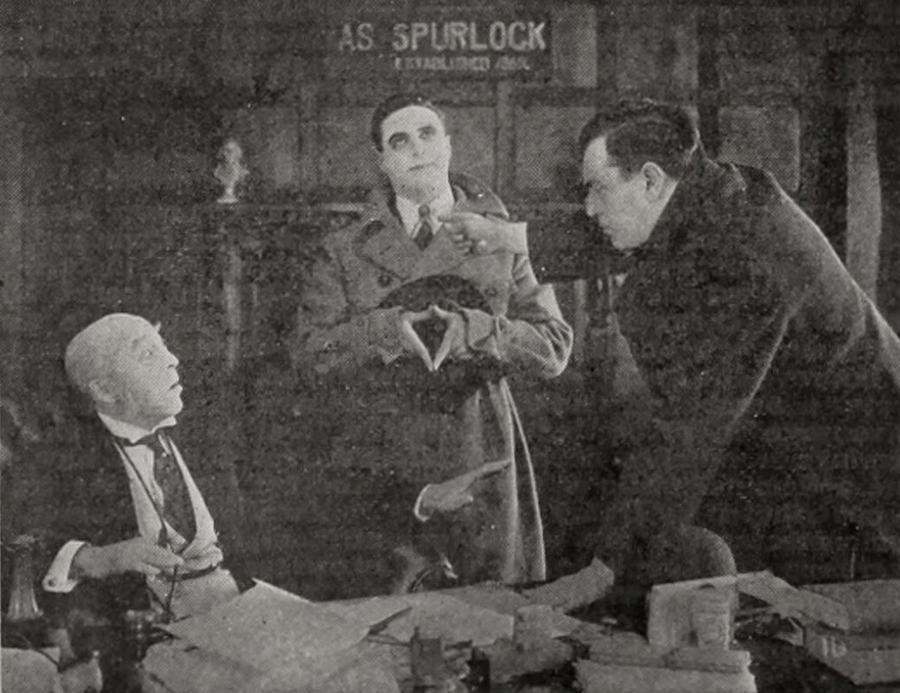
The use of close-ups to emphasize emotional reactions, and wider shots to establish the settings – from the bustling college campus to the somber interior of the wholesale grocery business – demonstrates a nascent understanding of cinematic grammar. The film’s ability to articulate complex themes like corporate ethics and social justice through purely visual means, supported by succinct intertitles, is a testament to the ingenuity of early filmmakers. Unlike some contemporaries that relied heavily on theatricality, Jack Spurlock, Prodigal attempts a more naturalistic approach where possible, allowing the narrative to unfold with a certain authenticity. While it may not possess the grand scale of Under Two Flags (1916) or the intricate visual metaphors found in some European works like Das Skelett (1916), its strength lies in its effective and straightforward communication of a compelling human story, proving that even without sound, a film could resonate deeply with its audience and address pertinent social issues. The visual language, though nascent, is employed with sufficient skill to ensure clarity and emotional impact, making the viewer a participant in Jack's journey rather than a mere observer.
The success of any silent film hinges significantly on the expressive capabilities of its cast, and Jack Spurlock, Prodigal benefits immensely from the performances of its lead actors. George Walsh, in the role of Jack Spurlock, is particularly noteworthy. His portrayal is dynamic, capturing the character's initial recklessness, his moments of doubt and frustration, and ultimately, his resourceful triumph. Walsh utilizes a range of physical comedy and subtle facial expressions to convey Jack's journey, making him both relatable and endearing. He avoids the overly theatrical gestures that sometimes plagued early silent film acting, instead offering a performance that feels grounded and genuine, allowing for a nuanced understanding of his character's internal landscape.
Ruth Taylor, as Anita Grey, provides a steady and supportive presence. Her character is not merely a damsel in distress but an active participant in Jack's redemption, acting as a crucial link to Professor Jackson. Taylor conveys warmth and intelligence, making Anita a credible and appealing love interest who serves as a moral anchor and a practical guide for Jack. Robert Vivian as John Spurlock, Sr., embodies the stern, traditional patriarch with conviction. His performance effectively communicates the father’s exasperation with his son’s antics and his eventual, grudging respect for Jack's unconventional success, portraying a subtle shift from rigid authority to paternal pride. The supporting cast, including Mike Donlin and Dan Mason, contribute to the film's texture, ensuring that even minor characters feel integrated into the narrative fabric. The collective effort of the ensemble, under the direction of the uncredited filmmaker(s), helps to elevate the film beyond a simple morality play, imbuing it with human depth and emotional resonance. Their ability to tell a story without spoken words, relying solely on their craft, is a powerful reminder of the unique artistry of the silent era, where every gesture and glance carried profound meaning.
Released in 1917, Jack Spurlock, Prodigal emerged during a period of profound global and domestic upheaval. World War I was raging in Europe, and America's involvement was becoming increasingly inevitable. Domestically, the nation was experiencing rapid industrialization, urbanization, and significant social changes, including the burgeoning women's suffrage movement and intensified labor activism. Films of this era often served as both escapism and a reflection of these societal currents. The film's setting within a family business, juxtaposed with collegiate antics and labor disputes, paints a vivid picture of American life at the cusp of a new modernity, a far cry from the more idyllic or fantastical portrayals seen in some contemporary works like All for the Movies: Universal City, California, the Wonder City of the World, which celebrated the dream factory itself.
The film's focus on the "Onion Workers' Union" strike is particularly telling. It speaks to the growing power of organized labor and the increasing public awareness of workers' rights and conditions. The recognition of the union by John Spurlock, Sr., even under duress, reflects a broader societal shift towards acknowledging the legitimacy of collective bargaining. This theme would have resonated deeply with contemporary audiences, many of whom were directly impacted by or aware of labor disputes in various industries. While not as overtly political as some propaganda films of the era, Jack Spurlock, Prodigal subtly engages with these issues, framing them within a personal and familial drama. It provides a unique lens through which to examine the social consciousness of the time, revealing how popular entertainment could subtly yet effectively address significant societal challenges, much like the more overtly dramatic Mothers of Men, which explored women's roles.
Furthermore, the concept of entrepreneurship and innovation, embodied by Professor Jackson's tonic and Jack's shrewd business moves, taps into the American spirit of ingenuity and self-reliance. It’s a narrative that champions the individual who can identify opportunities and adapt to changing circumstances, a valuable message in a rapidly evolving world. The film, therefore, is not just entertainment; it's a cultural artifact, offering insights into the values, concerns, and social fabric of early 20th-century America. It demonstrates how cinema, even in its infancy, could both entertain and subtly comment on the world around it, perhaps not with the grand scope of an epic like The Life of Our Saviour; or, The Passion Play, but with a grounded realism that connected with everyday experiences, making it a valuable resource for understanding the past.
Jack Spurlock, Prodigal stands as a compelling and surprisingly resonant piece of early American cinema. Far from being a mere historical footnote, it offers a rich tapestry of themes that continue to hold relevance today: the complexities of family dynamics, the tension between tradition and innovation, the struggle for worker’s rights, and the enduring power of personal redemption through unconventional means. George Walsh delivers a memorable performance as Jack Spurlock, navigating his character's transformation from a reckless youth to a resourceful, socially conscious entrepreneur with charm and conviction, making his journey both believable and inspiring. The film manages to balance its comedic elements, such as the initial bear incident, with more serious narrative beats, creating a well-rounded and engaging experience.
The film’s strength lies in its ability to weave these disparate threads – a collegiate prank involving a bear, a seemingly illogical onion purchase, a labor strike, and an onion-based health tonic – into a cohesive and ultimately uplifting narrative. It's a testament to the ingenuity of its writers, George Horace Lorimer and Ralph Spence, who crafted a story that is both entertaining and thought-provoking. While the silent film era might seem distant, Jack Spurlock, Prodigal serves as a vibrant reminder of its artistic capabilities, proving that compelling storytelling transcends technological limitations. It challenges viewers to consider the value of unconventional thinking, the importance of empathy in business, and the idea that one's true calling might emerge from the most unexpected of circumstances. This film is more than just a historical curiosity; it is a delightful and insightful journey into the heart of early 20th-century American life, and a quiet champion of the unconventional hero. It reminds us that even a simple story about onions can peel back layers of human experience, revealing universal truths beneath. It's a film that, much like its titular character, defies initial expectations to deliver a truly rewarding experience, deserving of renewed appreciation from both film historians and casual enthusiasts seeking to explore the foundational works of cinema, cementing its place as an enduring example of early cinematic artistry and social commentary.
IMDb 7
1930
Community
Log in to comment.