DbcultAccessing Vault...
Cult Review
Senior Film Conservator
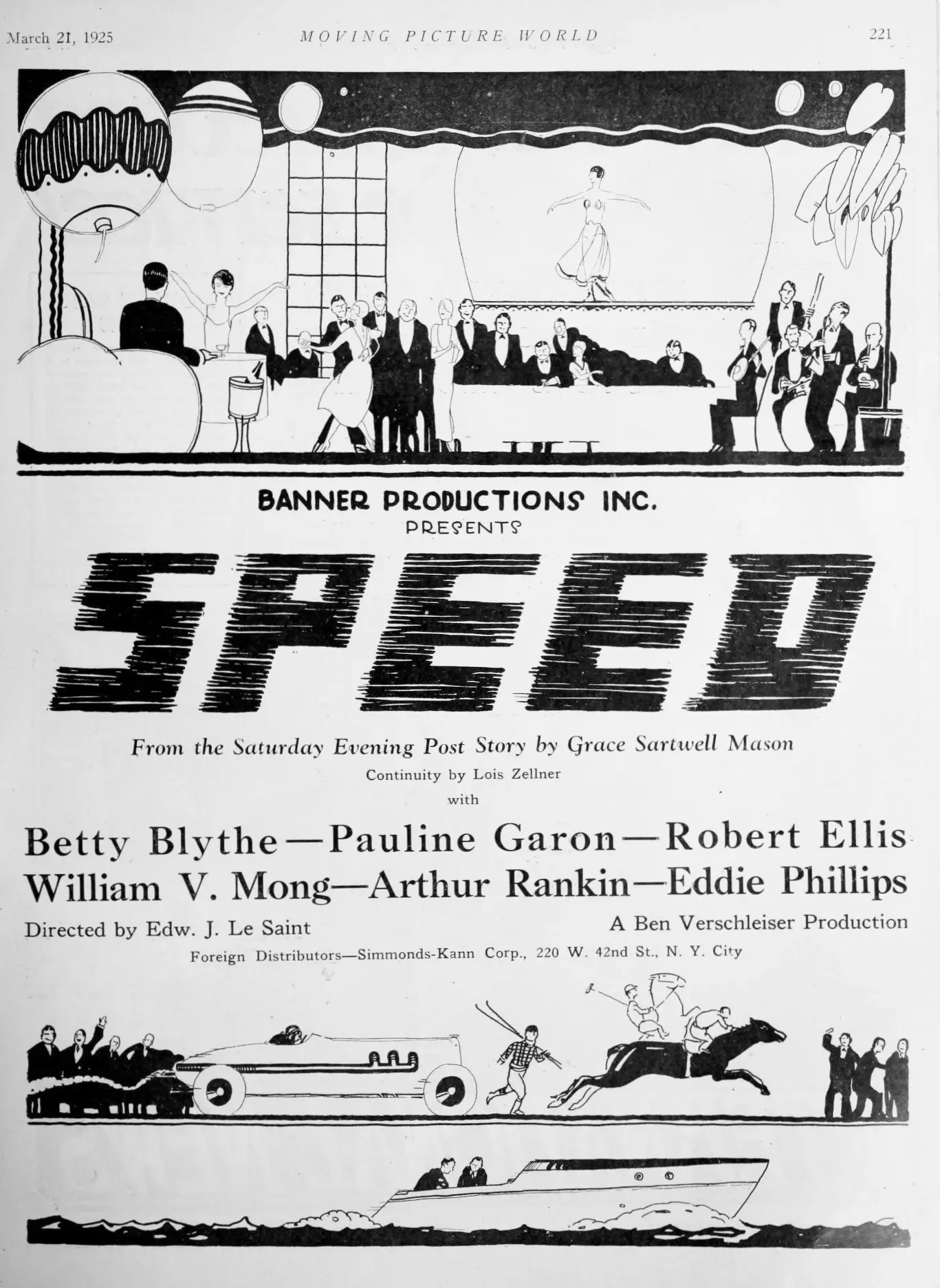
Is Speed (1925) worth your time today? Short answer: Yes, but primarily as a fascinating, high-velocity artifact of 1920s moral anxiety and primitive stunt work. This film is for those who enjoy the collision of social melodrama and early action cinema, but it is certainly not for viewers who demand a nuanced or non-judgmental exploration of youth culture.
1) This film works because the climactic car chase offers a genuine visceral thrill that transcends its silent-era limitations.
2) This film fails because the narrative transition from a domestic 'problem play' to a kidnapping thriller is jarring and lacks connective tissue.
3) You should watch it if you want to see how the 1920s used the automobile as a symbol of both liberation and moral decay.
In 1925, the 'Jazz Age' wasn't just a musical movement; it was a perceived threat to the American family. Speed captures this panic with the subtlety of a sledgehammer. Pauline Garon, playing Wiletta, is the quintessential flapper—vibrant, defiant, and dangerously naive. Her performance is a highlight, capturing that specific 1920s energy where every gesture feels like a rebellion against Victorian restraint. She doesn't just walk; she vibrates with the restless energy of a generation trying to outrun its own shadow.
The film introduces us to the Whipple children as 'jazz-mad,' a term that served as shorthand for moral bankruptcy in the mid-twenties. While Wiletta chases the attention of Jack Cartwright (the 'lounge lizard'), her brother Dick is lost in a bottle. This setup feels remarkably similar to the themes found in The House Built Upon Sand, where the foundation of the modern family is portrayed as crumbling under the weight of new-found social freedoms. It is a classic 'kids these days' narrative, but it’s executed with a frantic pacing that keeps it from feeling entirely like a dry sermon.
The character of Jack Cartwright is particularly interesting. He is the 'lounge lizard'—a term we’ve largely lost—representing the predatory male who thrives in the shadows of the dance hall. He is the antithesis of Nat Armstrong, the 'worthy fellow' played by Robert Ellis. The contrast between the two is stark, almost comical by today’s standards. Nat is the man of action and industry, while Jack is the man of leisure and manipulation. It's a binary choice that the film forces upon Wiletta, reflecting the period's desire to see youth return to traditional values.
The first half of the film plays out like a social drama, not unlike Breaking Home Ties. We see the friction between the generations, the disappointment of the parents, and the aimlessness of the children. But then, the script by Lois Zellner and Grace Sartwell Mason takes a sharp turn into the territory of the crime thriller. The introduction of the Querinos, described as 'Spanish crooks,' introduces a xenophobic element common in films of this era, such as Wild Women.
This shift is where the film earns its title. Suddenly, the champagne and jazz are replaced by gasoline and grit. The kidnapping of Wiletta is the catalyst that forces the 'worthy' Nat and the elder Sam Whipple into a pursuit that defines the film’s legacy. It works. But it’s flawed. The transition is so sudden that you feel like you've accidentally switched reels in the middle of the theater. One moment we are worried about Wiletta’s reputation at a party; the next, we are worried about her life on a mountain road.
However, this tonal whiplash serves a thematic purpose. It suggests that the 'speed' of the jazz life leads inevitably to a different kind of speed—the dangerous, uncontrollable momentum of crime and tragedy. The film argues that if you live fast, you must be prepared for the crash. It’s a heavy-handed metaphor, but in the context of 1925, it was likely seen as a profound observation on the state of the nation.
The cinematography in the final chase sequence is genuinely impressive for its time. Unlike the static shots common in earlier silent films like A Man and His Money, Speed utilizes camera placements that emphasize the velocity of the vehicles. You can almost feel the dust and the precariousness of the mountain passes. When Nat Armstrong snatches Wiletta from the villains' moving car, it’s a moment of pure cinematic adrenaline. There are no digital effects here; it’s a man, two cars, and a very brave stunt coordinator.
The editing during this sequence is also worth noting. It employs a rhythmic cutting style that builds tension, a technique that was still being refined in the mid-twenties. The juxtaposition of the chasing car and the fleeing villains creates a sense of closing distance that is fundamental to the thriller genre. It’s a primitive version of what we see in modern action films, but the DNA is clearly visible. The film understands that the car is the ultimate tool for cinematic tension.
The final moment—where the father, Sam, drives the villains over a cliff—is a brutal piece of frontier justice that feels surprisingly dark. It’s a moment of absolute resolution. There is no trial, no police intervention; just a father literally disposing of the threat to his family. This 'eye for an eye' mentality is a stark contrast to the film's earlier domestic concerns, showing a side of the 1920s patriarch that is both protective and terrifyingly decisive.
If you are looking for a masterpiece of narrative depth, no. If you are looking for a window into the soul of 1925, then absolutely. Speed is a rare example of a film that tries to be two things at once: a moral warning and a popcorn thriller. It doesn't always succeed in balancing these two identities, but the attempt is fascinating to watch.
The film is worth watching for Pauline Garon’s performance alone. She embodies the 'flapper' archetype with more nuance than many of her contemporaries, showing the vulnerability beneath the bravado. Additionally, the final ten minutes of the film are a masterclass in early action direction. It’s a short film, usually clocking in under an hour, which means it doesn't overstay its welcome. It gets in, delivers its message, crashes a car, and leaves.
Pros:
- High-energy performances, particularly by the female lead.
- Innovative stunt work and camera placement during the chase.
- A short, punchy runtime that keeps the energy high.
- Provides a vivid look at 1920s fashion and automotive culture.
Cons:
- The 'Spanish crooks' trope is lazy and xenophobic.
- The moralizing tone can feel patronizing to modern audiences.
- The transition from social drama to action thriller is clunky.
Speed (1925) is a film of contradictions. It preaches against the fast life while simultaneously selling tickets based on the thrill of fast cars. It’s a hypocritical, messy, and wildly entertaining piece of silent cinema. While it lacks the artistic weight of the era's grander epics, it possesses a raw, kinetic energy that many of its more 'respectable' contemporaries lack. It’s a B-movie before the term was fully codified, and in that sense, it’s a trailblazer. Watch it for the history, stay for the stunts, and ignore the sermon.
IMDb 6.4
1932
Community
Log in to comment.