DbcultAccessing Vault...
Cult Review
Senior Film Conservator
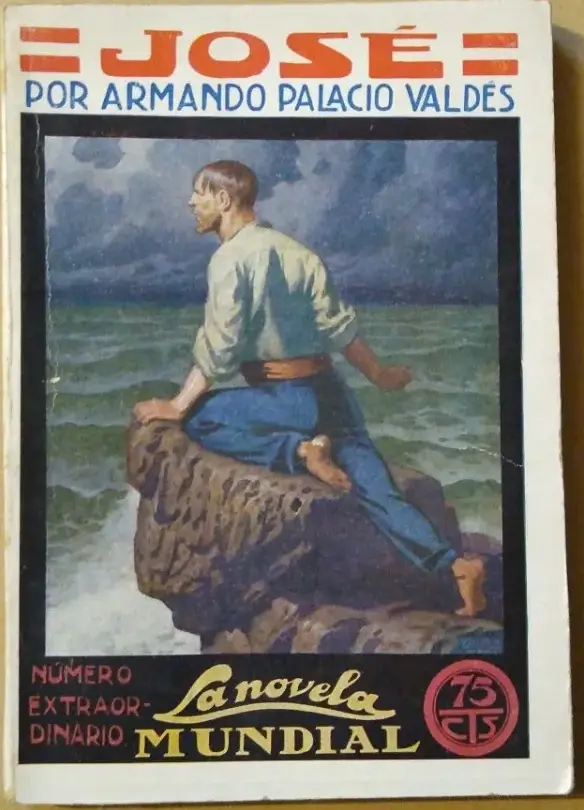
Is José a film you should track down in the digital archives today? Short answer: Yes, but only if you have an appetite for the slow-burning misery of 19th-century regionalism and can appreciate the aesthetic of salt-stained despair. This isn't a swashbuckling adventure; it’s a heavy, grounded drama about how poverty turns families into enemies. It is essential viewing for historians of Spanish cinema and fans of silent realism, but it will likely alienate those seeking the fast-paced escapism of modern romance.
1) This film works because it captures the crushing weight of tradition and the physical labor of the Asturian coast with a tactile, almost documentary-like clarity that was rare for its time.
2) This film fails because its secondary characters—particularly the manipulative parents—are often reduced to one-dimensional caricatures of greed that lack the psychological nuance of the protagonists.
3) You should watch it if you want to see how silent cinema transitioned from stagey theatricality to a more grounded, location-based realism that predates Italian Neorealism by decades.
The true protagonist of José is not the titular fisherman, but the town of Rodillero itself. Director Carlos Primelles, working from the literary foundation of Armando Palacio Valdés, treats the Asturian coastline as a living, breathing antagonist. The cinematography captures the grey, churning waters of the Bay of Biscay with a reverence that borders on fear. Unlike the idealized rural landscapes seen in films like A Boy of Flanders, the world of José is one of sharp rocks, damp interiors, and the constant threat of the horizon.
Consider the scene where José first prepares his boat for the evening tide. There is no swelling orchestral score to romanticize the moment. Instead, we see the grit under his fingernails and the way the wind catches his clothing. It is a sequence that feels remarkably modern in its focus on the mundane details of labor. This commitment to realism elevates the film above the standard melodrama of the 1920s. It moves away from the operatic artifice found in contemporary works like Romeo and Juliet, replacing poison and daggers with the slow, suffocating pressure of debt and social standing.
The town’s geography is used to illustrate the social hierarchy. The rich live on the heights, looking down upon the harbor where the fishermen toil. This spatial storytelling is a hallmark of great silent cinema. It allows the viewer to understand the stakes without the need for excessive intertitles. When José looks up at the villas, we don't need a caption to tell us he feels small; the camera placement does the work for us.
Enriqueta Soler’s performance as Elisa is a masterclass in silent restraint. In an era often defined by grand gestures and eye-rolling theatrics—think of the heightened emotions in Doch Anny Kareninoy—Soler plays Elisa with a quiet, simmering resentment. Her conflict is internal. She is torn between the biological imperative of family loyalty and the burgeoning desire for a life of her own choosing. There is a specific moment in the kitchen where she watches her mother count coins; the camera lingers on her face as the realization dawns that she is just another piece of currency to her parents. It is a heartbreakingly subtle beat.
José, played by José García, is the perfect foil. He is a man of action who is rendered powerless by the invisible lines of class. His struggle isn't against a rival suitor, but against a system that demands he remain in his place. This makes the central conflict far more compelling than a standard love triangle. It’s a battle against the status quo. The families' opposition to the relationship isn't based on an ancient grudge, but on cold, hard mathematics. They need their children to marry into wealth to secure their own futures. This adds a layer of 'Economic Gothic' to the film that feels surprisingly relevant in today’s gig economy.
The supporting cast, while occasionally leaning into the broad strokes of pantomime, serves to populate this world with the various archetypes of a dying village. We see the gossips, the drunkards, and the weary elders. These characters provide the 'texture' that makes Rodillero feel like a place that existed long before the cameras arrived and would continue to suffer long after they left. It reminds me of the atmospheric depth in Miarka, the Child of the Bear, where the environment is inseparable from the character's destinies.
Is José a masterpiece of silent cinema?
Yes, for those who value atmosphere and social commentary. It captures a specific time and place with incredible fidelity. The film uses the natural beauty of Asturias to tell a story that is anything but beautiful. It is a stark, honest look at the human cost of tradition. If you enjoy films that prioritize mood over plot, this is for you. However, if you find silent melodrama tedious, the pacing here will be a significant hurdle. It is a slow climb, but the view from the top is worth the effort.
Carlos Primelles exhibits a surprising level of technical sophistication. The use of natural lighting in the outdoor sequences creates a sense of immersion that was often lost in the studio-bound productions of the mid-20s. The film avoids the flat, stagey compositions that plagued many early Spanish films. Instead, Primelles uses depth of field to keep the sea ever-present in the background of domestic scenes. This serves as a constant reminder of the danger and the opportunity that the ocean represents.
The editing, while traditional, manages to build tension during the maritime sequences. There is a sequence involving a storm where the cross-cutting between the waves and the anxious faces of the women on the shore creates a palpable sense of dread. It’s not quite the avant-garde experimentation you’d see in Soviet cinema of the same period, but it’s highly effective. It’s a far cry from the more comedic or lighthearted editing found in films like Behind the Front. Here, every cut feels heavy with consequence.
“The sea in José is not a backdrop; it is a creditor that eventually comes to collect.”
One of the most surprising observations is the film’s lack of a clear 'villain' in the traditional sense. Even the parents, who are undoubtedly the antagonists, are motivated by a desperate fear of the poorhouse. This moral ambiguity is a bold choice. It suggests that the true enemy isn't a person, but the inescapable poverty of the region. This gives the film a weight that persists long after the final frame. It’s a brutally simple sentence: The system is the monster.
José is a rugged piece of cinema that refuses to offer easy answers or cheap sentimentality. It is a film about the hardness of the earth and the coldness of the sea. While it may lack the technical wizardry of the German Expressionism found in The Oath of Stephan Huller, it makes up for it with a raw, visceral honesty. It works. But it’s flawed. It is a window into a vanished world, captured with a level of detail that makes it feel uncomfortably present. If you can handle the salt and the sorrow, José is a journey worth taking. It stands as a testament to the power of regional storytelling and the enduring conflict between the heart's desires and the stomach's needs.
IMDb 6.7
1937
Community
Log in to comment.