DbcultAccessing Vault...
Cult Review
Senior Film Conservator
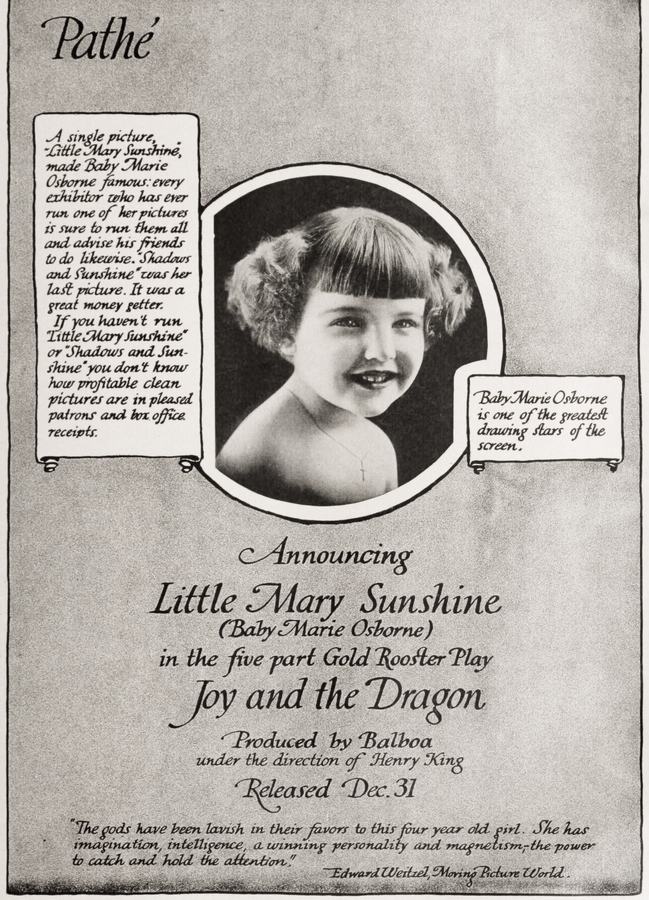
When the projector’s carbon arc first kissed the silver sheet in 1916, audiences had already tasted Fairbanks swashbuckles and Pickford pathos, yet nothing quite prepared them for the tremulous poetry of Joy and the Dragon—a film whose very title feels like a riddle carved on a nursery wall. The “dragon” is no fire-breathing myth; it is the entropy of adult greed encircling a child who radiates the prelapsarian certainty that goodness must, by some cosmic statute, prevail.
The surviving print—scarred, flickering, defiantly alive—opens on a phantasmagoria of maritime distress: negative images of waves double-exposed over a child’s porcelain face, as though the ocean itself wants to adopt her but cannot commit. In this hallucinatory cradle we meet Baby Marie Osborne, Hollywood’s first genuine juvenile star, whose dimpled stoicism here predates Jackie Coogan’s waif in John Barleycorn by a half-decade. Osborne never “acts”; she simply exists in front of the lens, allowing the camera to discover the moral tremor of her lower lip. The result is a performance so understated that it feels like documentary from the dream-side of memory.
Cut to the orphanage—a granite mausoleum whose façade is shot at low angles so the eaves loom like a bishop’s miter. Inside, director Henry King (doubling here as leading man) stages chiaroscuro corridors worthy of The Black Envelope, but swaps that film’s noir nihilism for something more insidious: institutional benevolence weaponized into slow-motion larceny. The matron’s keys jangle with the metallic music of ownership; every bedtime prayer is annotated with a silent footnote—“and forgive us our trespasses on her jewelry box.”
Joy’s midnight escape is orchestrated like a heist in reverse. Instead of cracking safes, she cracks the idea of safety itself, slipping through a dormitory window onto a slate roof, her linen parcel clutched not like loot but like a heart she intends to re-implant in the world. The camera tilts vertiginously downward to the courtyard below, where a single lantern burns—a lighthouse inverted, warning the world of the danger within. At this moment the film’s moral algebra crystallizes: the child must leave behind the very treasure that could purchase her freedom, because to carry it would be to ratify the notion that love is transactional.
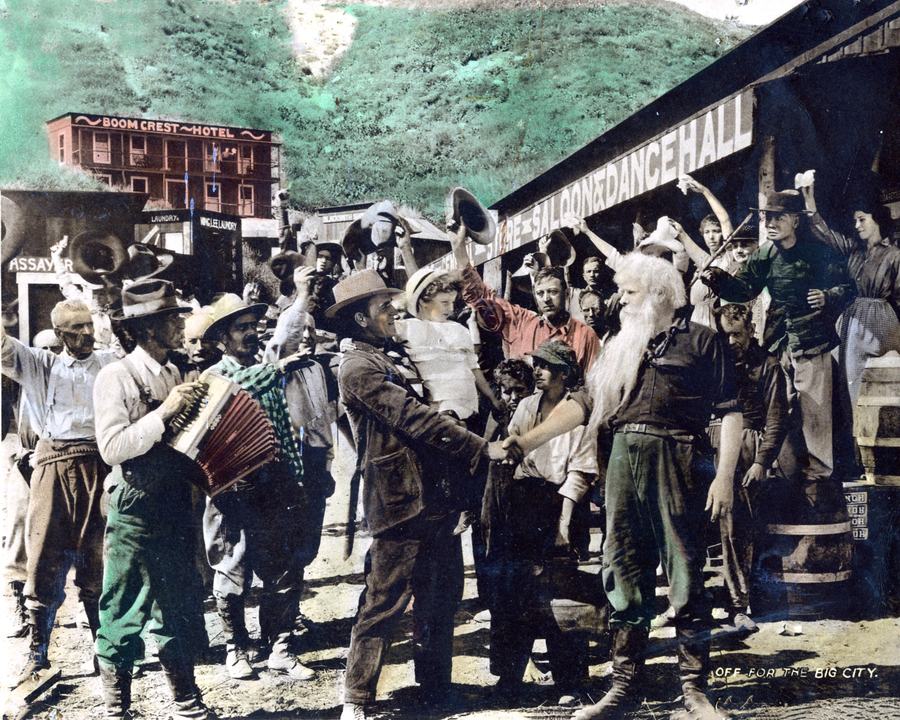
Enter the locomotive, that iron metaphor for Manifest Destiny. King intercuts Joy’s boxcar reverie with shots of the driver rods churning like the pistons of fate, while intertitles—lettered in a jittery scrawl that mimics a child’s handwriting—announce: “Westward, toward the place where broken men go to be whole.” The landscape transitions from sooty urban brick to wheat-swept horizons, the celluloid itself seeming to exhale. In this expansive vacuum Joy meets Hal Lewis, played by King with the weary gait of a man who has read too many social-register dinner menus and not enough constellations. Their meeting is wordless: she offers him a half-eaten biscuit; he offers her a father’s name. The exchange is filmed in a single take, the horizon line bisecting the frame so the two figures appear to balance the world between them like a seesaw.
What follows is a redemption arc, but one that refuses the baptismal ease of most melodramas. Hal’s return to the East Coast ancestral manse is shot in deep focus: foreground, the patriarch’s wheelchair like a throne of arthritis; mid-ground, Hal carrying Joy, her boots caked in prairie soil; background, a portrait of Hal’s dead brother, eyes painted so they track the prodigal like a gargoyle. The father’s forgiveness arrives not as a benediction but as a pragmatic transaction: “Take the child, take the estate, take the burden of being the heir who stays.” The moment is underplayed—King’s shoulders sag two inches, a single tear etches a furrow through the powder on his cheek—yet it lands with the emotional detonation of a third-act battle in any Phantom Fortunes-style potboiler.
Then comes the reclamation raid on the orphanage, a sequence that anticipates the proto-feminist vigor of La Salome but swaps eroticized dance for righteous audit. Hal returns with a sheriff’s posse, ledgers in hand, transforming the chapel into a courtroom. The matron’s collapse is filmed from a high balcony, her ring of keys scattering across the flagstones like metallic dice. Joy’s jewels are restored not in a velvet box but scattered across a sunlight-drenched table, where they refract into kaleidoscopic patterns on the wall—an Impressionist canvas of restitution. The child steps forward, selects the smallest ring, and slips it onto Hal’s little finger: a coronation of the family they have chosen.
Technically, the film is a primer on how budgetary constraint can birth aesthetic innovation. The shipwreck is evoked through a miniature hull bobbing in a studio rain trough, double-printed with footage of actual breakers; the result is surreal enough to pass for German Expressionism. Interior scenes deploy a handheld candle as sole key light, forcing Osborne’s face into a rotating gallery of chiaroscuro moods—now Caravaggio innocence, now Goya dread. Intertitles eschew the flowery verbosity of contemporaries like Tangled Fates; instead they are haiku-brief: “Mother’s lullaby sold by the syllable.”
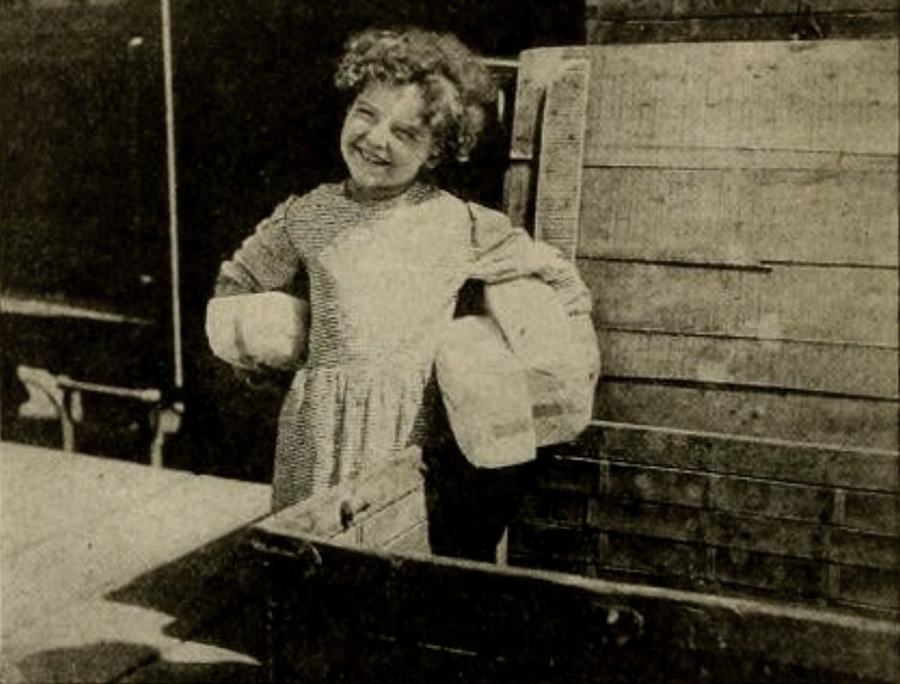
Performances resonate across the century like tuning forks. Cullen Landis, as the teenage orphanage snitch, embodies feral servility—eyes flicking sideways as if perpetual prey. Mollie McConnell’s matron channels a bourgeois Mrs. Danvers decades before Hitchcock, her smile a corset straining against the bulge of secrets. Yet the film belongs to the dyad of Osborne and King. Watch the moment Joy first calls Hal “Papa”—the word is mouthed silently, the intertitle arrives a beat late, allowing the audience to inhabit the tremor of a syllable that re-writes identity. King responds with a blink that lasts three frames longer than physiologically necessary, as though his corneas are buffering the future.
Comparative contextualization enriches the experience. Where The Mystery of the Rocks of Kador leans on landscape as moral metaphor, Joy and the Dragon weaponizes negative space: the absence of parents, of jewels, of belonging, becomes the crucible from which selfhood is distilled. Conversely, Sadounah exoticizes its child protagonist through orientalist spectacle; King keeps his lens tethered to the moral universe of a seven-year-old—tables are mountains, adults are weather systems, justice must arrive before bedtime.
Modern viewers may flinch at the casual class stratification—Hal’s redemption is inseparable from re-inheriting wealth—yet the film pre-empts critique by foregrounding the orphanage as a microcosm of predatory capitalism. The jewels function like Marxist seed-corn: expropriated surplus value returned to the laborer (Joy) only after collective action (Hal’s raid) exposes systemic rot. In 1916 such allegory was seditious; today it feels prophetic.
Restoration status: the third reel remains fragmentary, replaced by a still montage and a live-shimmer piano cue that interpolates “Sweet By-and-By” with dissonant Stravinskian chords. Far from disruptive, the gaps act like bullet-holes through which contemporary imagination seeps. We are compelled to co-author the narrative, much as Joy co-authors her own family.
Why seek it out? Because in an era when algorithmic cinema spoon-feeds catharsis, here is a film that trusts a child’s gaze to indict the adult world and trusts an adult’s repentance to resurrect the child’s faith. It is a pocket-sized epic whose dragon is slain not by sword but by the radical act of claiming responsibility for another human’s wonder. Watch it at midnight, with headphones, letting the crackle of nitrate become the surf that once nearly claimed her. You will exit blinking into dawn, unsure whether what you feel is sorrow for the century we’ve lost or gratitude that such fragile dreams can survive the shipwreck of time.
Verdict: a lustrous, wounded artifact whose every missing frame gleams like a jewel pried from history’s vault. Guard it, screen it, let its hush roar.
IMDb —
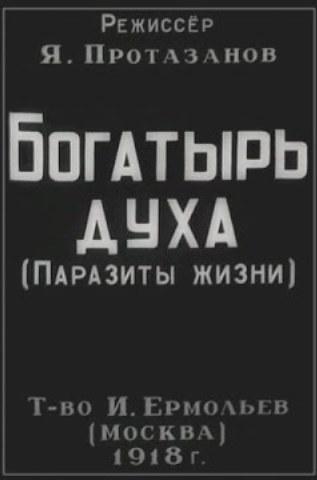
1918
Community
Log in to comment.