DbcultAccessing Vault...
Cult Review
Senior Film Conservator
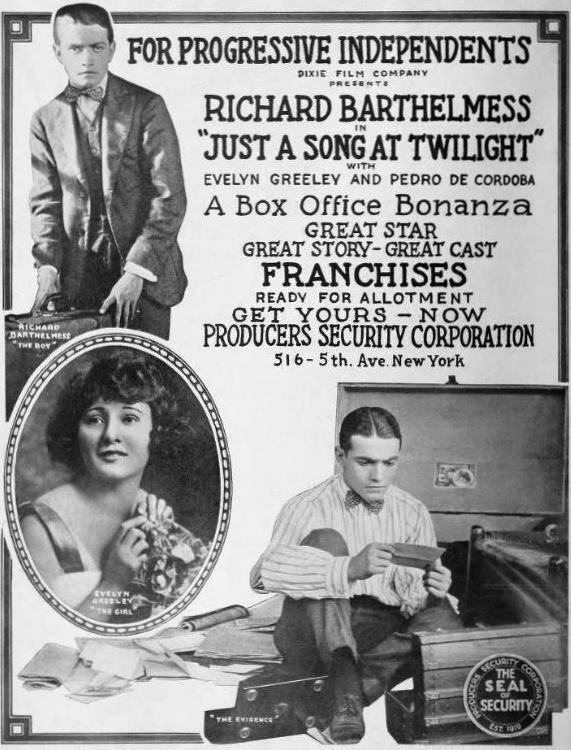
Stepping into the world of "Just a Song at Twilight" is akin to unearthing a forgotten treasure, a cinematic relic from an era when storytelling relied on the eloquent gestures and poignant gazes of its performers. This 1918 silent drama, penned by the insightful Henry Albert Phillips, transcends mere melodrama, delving instead into the intricate tapestry of human ambition, the corrosive nature of betrayal, and the profound, redemptive power of forgiveness. It’s a narrative that, despite its vintage, resonates with an enduring relevance, exploring themes that are as timeless as they are universal. The film doesn't just tell a story; it unravels a generational saga, demonstrating how the sins of the father can cast long, ominous shadows over the destinies of their children, only to be dispelled by a courageous act of reckoning.
The film opens in a seemingly idyllic present, where Lucy Winter, portrayed with a delicate grace by Evelyn Greeley, navigates the gilded cage of her privileged existence. Her father, Stephen Winter (Frank A. Lyons), a man whose financial prowess belies a deeply troubled conscience, has meticulously arranged a suitor for her, a match of convenience and social standing rather than genuine affection. Lucy, however, finds her heart drawn to George Turner (Richard Barthelmess), a young man who arrives at their opulent Southern mansion seeking work as a gardener. Barthelmess imbues George with an earnest sincerity, a quiet determination that immediately sets him apart from the staid world Lucy inhabits. George is not merely seeking employment; he is on a quest, a poignant pilgrimage to uncover the truth about his father, whom he has always believed to be dead. His only tangible link to this enigmatic past is an antique necklace, a piece of peculiar beauty, inherited from his recently deceased aunt. This heirloom, more than just an adornment, serves as a potent symbol of his heritage and the secrets it holds.
The burgeoning romance between Lucy and George is a tender counterpoint to the underlying tension that soon erupts. When George, in a gesture of nascent love, bestows the antique necklace upon Lucy, its distinctive design strikes a chord of unsettling recognition in Stephen Winter. The banker’s composure shatters, replaced by a visceral reaction of alarm and fury. He swiftly dismisses George, his actions driven by a terror that hints at a deeply buried, malevolent history. This pivotal moment, expertly staged, propels Stephen Winter into a troubled sleep, a psychological descent guided by the allegorical figure of Father Time. It is within this dreamscape that the true genius of Phillips's narrative unfolds, revealing the harrowing genesis of Winter’s present-day anxieties.
The dream sequence is where "Just a Song at Twilight" truly distinguishes itself, transforming from a simple romance into a complex psychological drama. We are transported back eighteen years, to a time when Stephen Winter himself was a humble gardener at the grand Turner mansion. Here, he finds himself embroiled in a classic, yet acutely painful, love triangle with his master, Carlysle (Charles Wellesley), and the captivating Lucy Lee (Nellie Grant). The film masterfully portrays the simmering tensions and unspoken desires of this era. Winter, driven by a raw ambition that belies his station, eventually triumphs, eloping with Lucy Lee. Their marriage, however, is far from a fairy tale. It’s a relentless struggle against the crushing weight of poverty, a stark contrast to the opulent lifestyle Winter now enjoys.
It is in this crucible of hardship that the antique necklace reappears, imbued with a fresh layer of tragic irony. Carlysle, still nursing a broken heart, had originally presented this very necklace to Lucy Lee as a wedding gift. Now, in a desperate bid to secure a loan, Lucy Lee places the treasured heirloom into Carlysle’s hands as security, deceiving her husband by claiming the funds came from her mother. Stephen Winter, however, is no fool. He discerns the truth, yet, instead of confronting his wife or Carlysle, he adopts a mask of false friendship, biding his time, meticulously plotting Carlysle’s ruin. This calculated duplicity, brought to life through the nuanced performance of Frank A. Lyons, paints a portrait of a man consumed by a vengeful ambition, a man willing to sacrifice all moral integrity for power and retribution.
The ensuing years witness Stephen Winter’s ruthless ascent. He leverages his cunning and opportunism, climbing the ladder from bank cashier to bank president, systematically dismantling Carlysle’s life in the process. The Turner mansion, once a symbol of Carlysle’s lineage and prosperity, falls victim to Winter’s foreclosure. Carlysle himself, already a shadow of his former self, broken by Lucy Lee’s rejection and the insidious grip of morphine addiction, is then wrongly convicted of murder and condemned to a life in prison. The film doesn't shy away from depicting the devastating consequences of Winter's actions. Lucy Lee, finally realizing the despicable character of the man she married and acknowledging her enduring love for Carlysle, dies of a broken heart. Her tragic demise serves as a potent reminder of the profound human cost of Winter's relentless ambition. This narrative arc shares thematic echoes with films like Destruction, where personal vendettas lead to widespread ruin, or even The Tenth Case, which similarly explores the intricacies of wrongful accusation and the quest for justice. The silent era, in its often stark portrayal of morality, frequently grappled with such weighty themes, making "Just a Song at Twilight" a poignant exemplar.
The return to the present is jarring, as Stephen Winter awakens from his nightmare, his conscience seared by the vivid atrocities of his past. He calls out "Lucy! Lucy!", a desperate plea echoing the haunting memories of his lost love and the irreparable damage he inflicted. It is at this precise, vulnerable moment that George Turner (Pedro de Cordoba in some historical records, though Barthelmess is the primary George Turner) arrives, bearing a collection of letters – among them, a damning missive from his imprisoned father, Carlysle, explicitly accusing Stephen Winter of being the architect of his misfortunes. The revelation is shattering, replacing George’s initial bewilderment with a fierce, righteous anger and a burning desire for retribution.
The impending confrontation at the Winter mansion is fraught with tension, yet the film, with a surprising grace, veers away from a simplistic path of revenge. Upon seeing the old man, now broken and exposed, George’s anger is transmuted into pity. This shift is beautifully handled, underscoring the film’s deeper exploration of the human capacity for empathy and forgiveness. Stephen Winter, stripped of his defenses, confesses his long litany of transgressions, promising to secure Carlysle’s pardon. This moment of raw honesty is the turning point, marking the beginning of Winter’s arduous journey towards atonement.
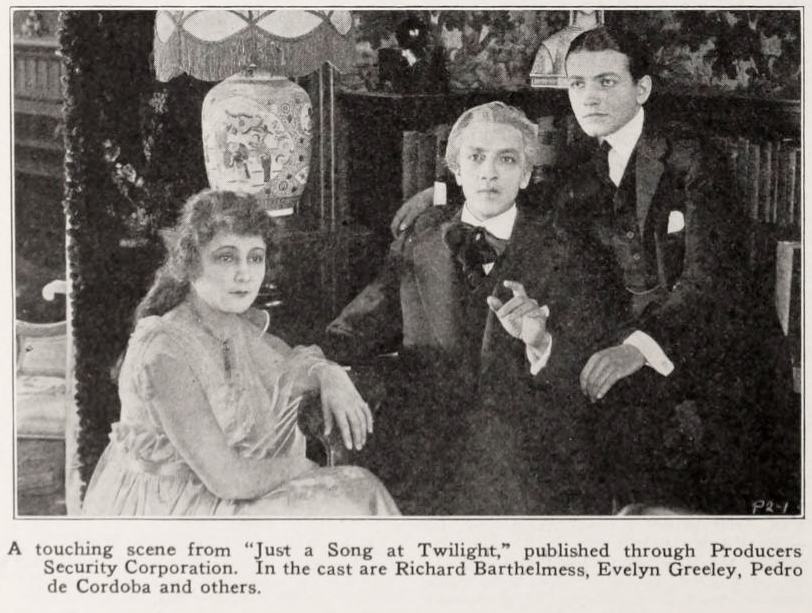
The subsequent scenes are imbued with a profound sense of catharsis. George is able to bring his father, Carlysle, from the grim confines of prison to the unexpected sanctuary of the Winter mansion. The reunion between father and son, and the subsequent efforts by Stephen Winter to make amends with Carlysle, are depicted with a quiet dignity. The image of Winter and Carlysle leaving the room arm-in-arm is a powerful visual metaphor for reconciliation, suggesting that even the deepest wounds can begin to heal. This theme of intergenerational healing and forgiveness, where past wrongs are confronted and overcome, finds resonance in other narratives of the era, such as Pals First, which often explored the bonds forged through adversity and the mending of fractured relationships.
Amidst this landscape of redemption, the young Lucy and George reaffirm their love, their shared promise of "I will" echoing not just their personal commitment but also a hopeful vow for a future untainted by the bitter legacy of the past. Their romance, initially a catalyst for uncovering the truth, now blossoms into a symbol of new beginnings, a testament to love’s enduring power to transcend and heal.
The strength of "Just a Song at Twilight" lies not just in its intricate plot but also in the compelling performances delivered by its cast. Frank A. Lyons, as Stephen Winter, masterfully conveys the character’s transformation from a ruthless opportunist to a man haunted by his conscience. His expressions, subtle yet profound, navigate the complex emotional landscape of guilt, ambition, and eventual remorse. Charles Wellesley, as Carlysle, evokes deep sympathy, portraying a man undone by love and betrayal, his descent into despair and addiction rendered with a tragic authenticity. The physical acting of the silent era demanded a unique skill set, and Wellesley embodies the pathos of his character with striking effect.
Richard Barthelmess and Evelyn Greeley, as the young lovers George and Lucy, provide the film’s emotional anchor. Their innocence and burgeoning affection offer a stark contrast to the dark machinations of the past, making their eventual union feel earned and deeply satisfying. Nellie Grant, as Lucy Lee, is the tragic muse, her choices unknowingly setting in motion a chain of devastating events. Her portrayal captures the vulnerability and ultimately, the heartbreak of a woman caught between two powerful forces.
As a product of the silent era, "Just a Song at Twilight" relies heavily on visual storytelling, intertitles, and the expressive power of its actors. The cinematography, though perhaps rudimentary by today's standards, effectively conveys mood and atmosphere, from the grandeur of the mansions to the starkness of Carlysle's imprisonment. The use of the dream sequence is particularly effective, a common but potent narrative device in early cinema to explore internal states and provide exposition. This technique allowed filmmakers to compress years of backstory into a cohesive, impactful segment, much like the dream narratives seen in films such as Threads of Fate, which similarly used a non-linear approach to reveal character motivations.
The film’s thematic depth is remarkable. It meticulously dissects the destructive nature of unchecked ambition, illustrating how the pursuit of wealth and status can corrupt the soul and devastate innocent lives. Stephen Winter's journey is a cautionary tale, a stark reminder that material gain often comes at an incalculable moral cost. Conversely, the film champions the virtues of empathy, forgiveness, and the courage to confront one’s past. George’s decision to offer pity instead of vengeance is a powerful statement on the transformative potential of compassion. It suggests that true strength lies not in perpetuating cycles of harm but in breaking them.
The antique necklace serves as a potent symbol throughout the narrative, linking generations and acting as a physical manifestation of inherited secrets and unresolved conflicts. Its journey from a wedding gift to a pawn in financial desperation, and finally to a token of new love, mirrors the complex emotional trajectory of the characters. It’s a silent witness to both profound love and bitter betrayal, a tangible thread connecting the disparate timelines of the story.
While perhaps not as widely known as some of its contemporaries, "Just a Song at Twilight" stands as a compelling example of early American cinema’s capacity for sophisticated storytelling. It offers a window into the moral sensibilities and narrative conventions of the late 1910s, a period of immense growth and experimentation in film. Its exploration of class distinctions, the power dynamics between master and servant, and the societal pressures surrounding marriage and financial security are all deeply reflective of the era.
The film's ultimate message of redemption and the breaking of vengeful cycles holds a timeless appeal. In an age often obsessed with retribution, "Just a Song at Twilight" quietly advocates for the more challenging, yet ultimately more fulfilling, path of forgiveness and reconciliation. It posits that true justice is not merely about punishment, but about the restoration of balance and the healing of broken lives. This profound moral compass, coupled with its intricate plot and evocative performances, ensures its place as a noteworthy piece of cinematic history. Its narrative complexity and emotional depth invite audiences to reflect on their own choices and the ripple effects they create across time and generations. The film reminds us that even in the twilight of old wrongs, a new song of hope can always begin.
IMDb 6.3
1931
Community
Log in to comment.