DbcultAccessing Vault...
Cult Review
Senior Film Conservator
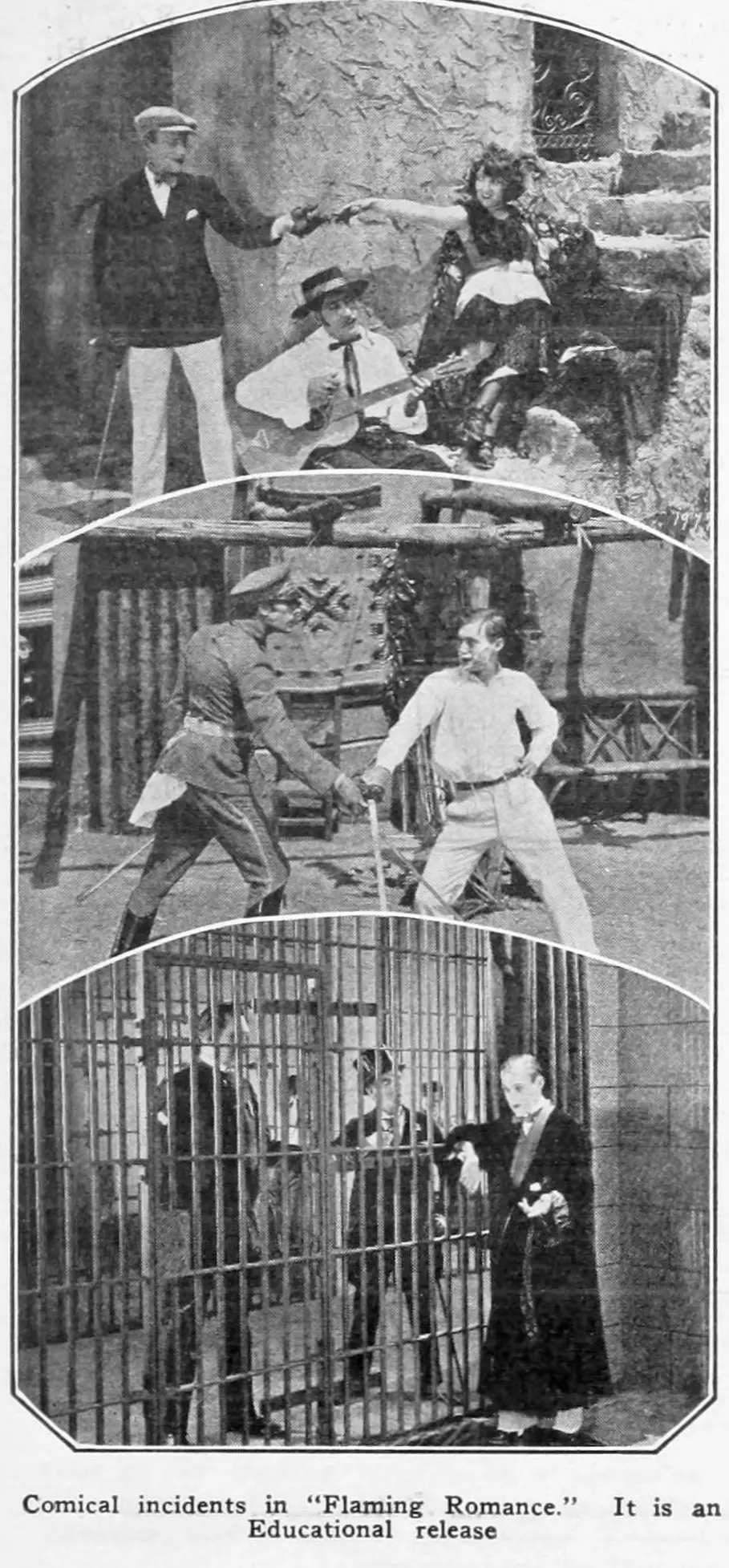
Is Flaming Romance worth watching today? Short answer: yes, but with significant caveats that demand a particular kind of cinematic palate. This silent-era adventure, brimming with political intrigue and an improbable romance, offers a fascinating, if sometimes frustrating, glimpse into early Hollywood's attempt at grand-scale escapism.
It's a film for enthusiasts of silent cinema, those who appreciate the raw energy and narrative conventions of the 1920s, and anyone curious about the foundational elements of the romantic action-comedy. Conversely, those seeking polished modern storytelling, nuanced character development, or high-fidelity visual spectacle will likely find its charms elusive.
The film opens by introducing us to a familiar archetype: the wealthy, undisciplined son, whose father, exasperated by his antics, dispatches him across the sea. This forced exile, intended as a lesson in humility and responsibility, instead plunges him headlong into a whirlwind of royal encounters and revolutionary chaos. His initial interest in a beautiful stranger quickly complicates when she is revealed to be a Princess, a figurehead in a kingdom teetering on the brink of revolt. The ensuing revolution is less a backdrop and more an active participant, forcing our unlikely duo into a series of frantic escapes and desperate measures. It's a classic setup for a caper, where personal stakes are quickly dwarfed by geopolitical turmoil, yet the focus remains squarely on the blossoming, if somewhat contrived, relationship between the scoundrel and the royal.
Let’s get straight to the heart of what works and what doesn't in Flaming Romance, and for whom it might resonate.
This film works because of its undeniable period charm and the energetic performances that manage to convey emotion without a single spoken word. The sheer ambition of its premise, combining romance, adventure, and political upheaval, is commendable for its era.
This film fails because its narrative coherence often falters under the weight of its own melodrama and the somewhat simplistic portrayal of complex themes. The pacing can be erratic, swinging between thrilling chase sequences and drawn-out dramatic stares.
You should watch it if you have a deep appreciation for silent cinema, enjoy seeing the roots of genre filmmaking, or are a fan of Aileen Lopez and Bert Young's early work. It’s a historical artifact that still offers genuine moments of entertainment.
The success of any silent film hinges almost entirely on the expressiveness of its cast, and Flaming Romance largely delivers, thanks in no small part to its leads. Aileen Lopez, as the Princess, embodies a captivating blend of regal dignity and vulnerable humanity. Her wide, expressive eyes and carefully modulated gestures convey a spectrum of emotions, from initial aloofness to genuine fear and burgeoning affection. There's a particular scene where she gazes out a palace window, her face a canvas of concern, that speaks volumes without a single intertitle. This isn't just acting; it's a masterclass in non-verbal communication, a skill often lost in modern cinema's reliance on dialogue.
Bert Young, as the titular scoundrel, brings a roguish charm that is both endearing and occasionally exasperating. His physicality is key; he’s agile in the chase scenes and capable of a convincing smirk that belies his underlying good nature. While his character arc feels somewhat rushed – a reprobate turning hero almost instantly – Young’s performance sells the transformation adequately. The chemistry between Lopez and Young is palpable, a crucial element that elevates the film beyond its often-simplistic plot. Their stolen glances and hesitant touches are genuinely affecting, a testament to their ability to connect with an audience across the chasm of time and silence. This magnetic pull reminds me of the effortless charm seen in films like Bobbie of the Ballet, where the leads carried the emotional weight.
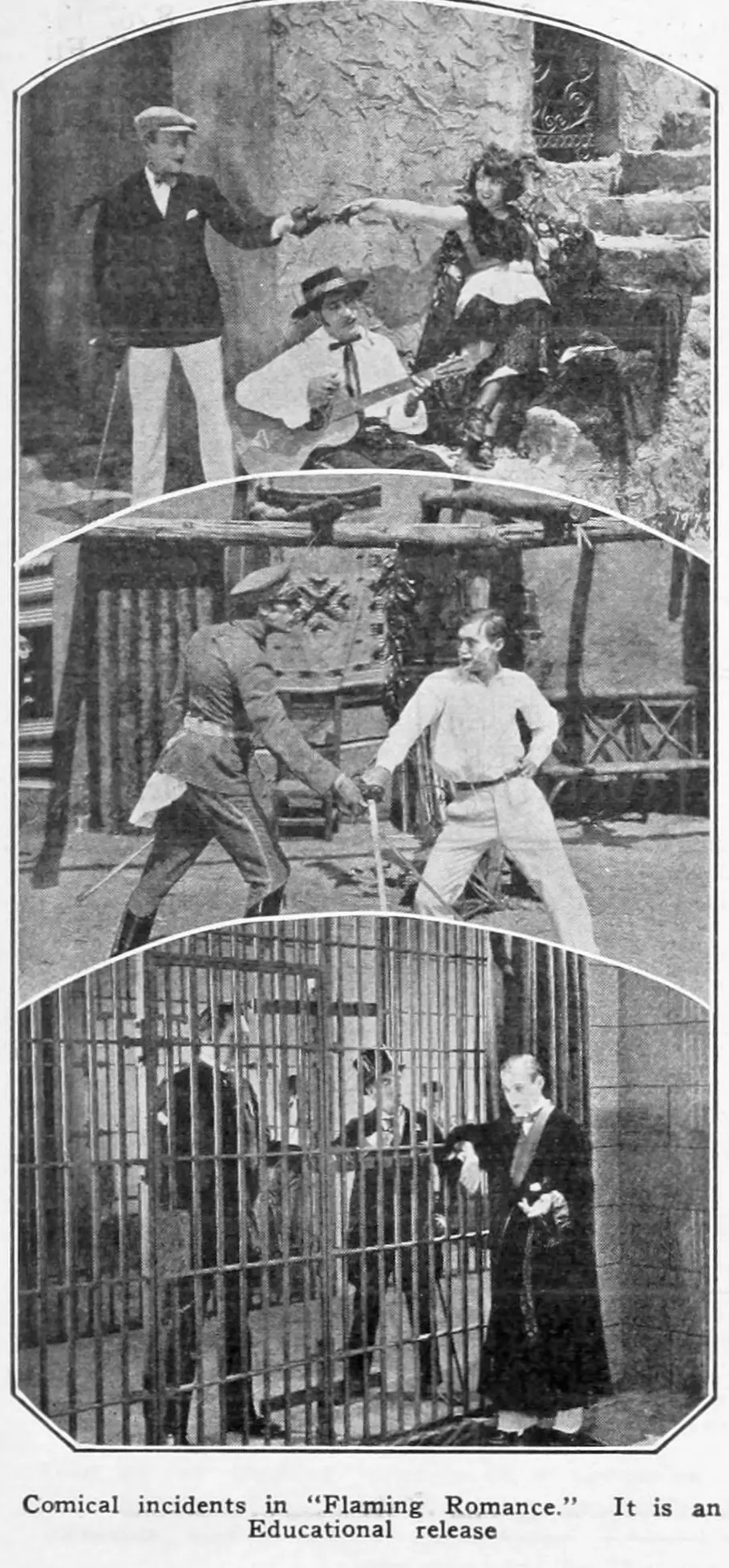
The supporting cast, including Otto Fries and Al St. John, provide solid, if somewhat stereotypical, performances that anchor the more dramatic elements. Fries, often cast as a heavy, brings a certain gravitas to his role, even if it's broadly painted. St. John, known for his comedic turns, injects moments of levity, though his more serious scenes sometimes lack the depth of the leads. It’s a competent ensemble, even if the silent film era's penchant for broad strokes means few secondary characters achieve true nuance.
The direction of Flaming Romance, while not groundbreaking, is effective in its storytelling. The film demonstrates a clear understanding of sequential action, particularly during the revolutionary sequences. There's a notable chase scene through cobbled streets and across rooftops that, despite some choppy editing by modern standards, generates genuine excitement. The camera work, while mostly static, occasionally uses dynamic angles to emphasize tension or intimacy, a subtle touch that elevates certain moments.
However, the film sometimes struggles with its tone. It oscillates between lighthearted romantic comedy and serious political drama, occasionally jarring the viewer. The revolutionary uprising, for instance, feels a bit too convenient, a plot device rather than an organic threat. This tonal inconsistency is a common pitfall of early cinema, where genre boundaries were still being defined. Yet, for all its narrative unevenness, the director manages to maintain a sense of urgency, especially in the latter half of the film as the escape unfolds. This balance, however precarious, keeps the audience invested in the protagonists' fate, much like the compelling, albeit flawed, narrative drive in The Corner.
The cinematography in Flaming Romance, while technically rudimentary by today's standards, possesses a certain raw beauty. The use of natural light in many exterior shots lends an authenticity that's often missing from heavily stylized modern films. There’s a particular shot of the Princess and the scoundrel silhouetted against a setting sun during their escape that is surprisingly poignant and aesthetically pleasing. It speaks to a time when filmmakers relied on the environment to enhance their visual storytelling, rather than elaborate special effects.
Indoor scenes, though often lit more starkly, still manage to convey the opulence of the royal setting or the grittiness of the revolutionary underground. The clarity of the image, considering the age of the film, is often remarkable, allowing the intricate details of costumes and sets to shine through. While it lacks the groundbreaking visual experimentation of contemporary German Expressionist films like Die rote Nacht, it holds its own as a competently shot piece of American cinema.
Pacing is arguably one of the most challenging aspects of re-evaluating silent films. Flaming Romance, like many of its contemporaries, operates on a rhythm that demands patience from modern viewers. Early scenes establish the characters and their circumstances with a deliberate, almost languid pace, building the world before the chaos erupts. Once the revolution ignites, the film shifts gears dramatically, accelerating into a series of frantic chases and narrow escapes. This sudden shift can be jarring, but it also serves to heighten the sense of urgency. The intertitles, while sometimes lengthy, are generally well-placed, guiding the narrative without overwhelming the visual storytelling.
The tone, as mentioned earlier, is a curious mix. It begins almost as a lighthearted romantic comedy, transitions into a perilous adventure, and flirts with serious political drama. This blend gives the film a unique flavor, though it occasionally feels like two different movies stitched together. The lighthearted moments, often involving Bert Young's character's antics, provide much-needed relief from the tension of the revolution. It’s a balancing act that, while not always perfectly executed, prevents the film from becoming overly grim or entirely frivolous. It’s this tonal ambiguity that makes it a fascinating case study, much like the genre-bending that can be observed in The Yankee Consul.
Absolutely, if you approach it with the right expectations. Flaming Romance is more than just a historical curiosity; it's a vibrant, if imperfect, piece of early filmmaking that showcases the enduring power of silent storytelling. It's a testament to the fact that compelling narratives and charismatic performances can transcend the absence of sound.
For silent film aficionados, it's an enjoyable romp, offering a glimpse into the transitional period of the 1920s. For casual viewers, it might require a mental adjustment to its pacing and storytelling conventions, but the payoff is a charming, often thrilling, adventure that reminds us of cinema's humble, yet ambitious, beginnings. It works. But it’s flawed. The raw energy of Aileen Lopez and Bert Young alone makes it a worthwhile experience, a genuine connection that cuts through the decades.
Flaming Romance is a spirited, if uneven, journey into the heart of silent-era adventure. It’s a film that demands a generous spirit and an appreciation for the conventions of its time. While its plot might feel simplistic and its tonal shifts occasionally jarring, the undeniable charisma of its leads, Aileen Lopez and Bert Young, carries it through its weaker moments. It’s a testament to the power of pure performance and visual storytelling that, even a century later, still manages to ignite a spark. For those willing to immerse themselves in its unique charm, Flaming Romance offers a rewarding, often thrilling, experience. It's not a forgotten masterpiece, but it's certainly a film worth rediscovering for its historical significance and its enduring, if imperfect, entertainment value.
IMDb —
1923
Community
Log in to comment.