DbcultAccessing Vault...
Cult Review
Senior Film Conservator
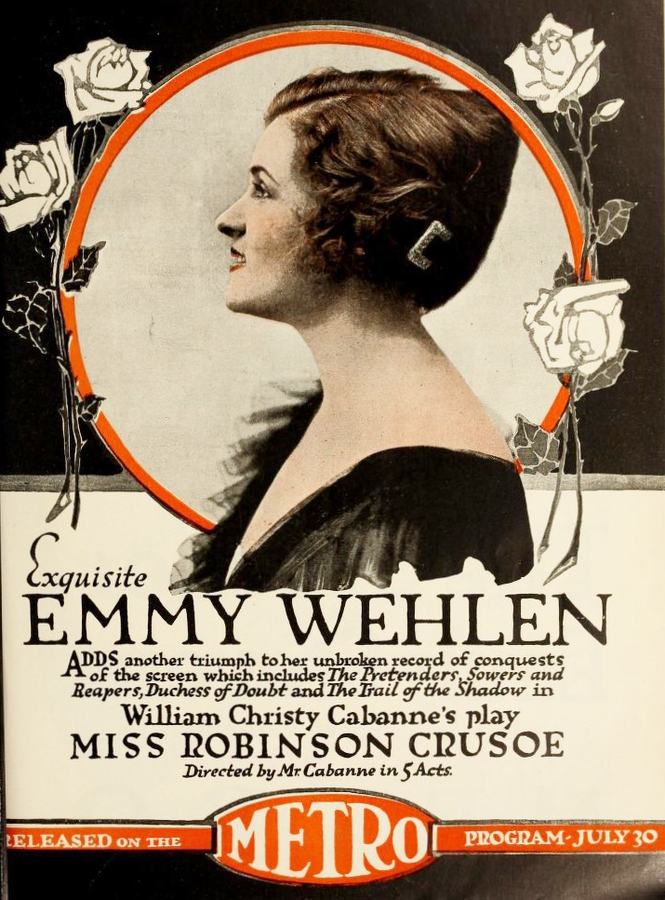
In the bustling cinematic landscape of 1917, where the nascent art form was rapidly evolving, a film like Miss Robinson Crusoe emerges as a fascinating artifact, a romantic comedy that, despite its seemingly lighthearted premise, delves into the complex interplay of societal expectations, personal desires, and the often-unforeseen repercussions of romantic machinations. Directed by the prolific Christy Cabanne, and penned by the talented June Mathis, this silent picture offers a window into the romantic sensibilities of an era grappling with modernity while still clinging to certain ingrained social structures. It's a tale that, at first glance, might appear to be a straightforward narrative of a spoiled socialite and her romantic entanglements, but upon closer inspection, it reveals layers of commentary on character, class, and the elusive nature of true affection.
At the heart of this narrative is Pamela Sayre, portrayed with an effervescent charm by Emmy Wehlen. Pamela is not merely rich; she is the epitome of the pampered social butterfly, her existence cushioned by immense wealth and the doting, almost enabling, attention of her two maiden aunts. Her life is a carefully curated tapestry of leisure and luxury, a world where inconvenience is a foreign concept and desires are met with swift obedience. Wehlen imbues Pamela with a captivating blend of vivacity and a certain, perhaps unintentional, cruelty. She is a woman accustomed to having her way, and this privilege has, predictably, fostered a rather capricious nature. Her romantic ideals are, to put it mildly, rather specific and somewhat superficial. She pines for the 'daredevil' type, a man of muscular prowess and audacious spirit, a figure straight out of the adventure novels of the time. This romanticized ideal, however, sets her on a collision course with reality, and more specifically, with the genuine affection offered by Bertie Holden.
Pamela's character is a fascinating study in the limitations of wealth. While she possesses everything money can buy, she lacks a certain emotional maturity, mistaking outward bravado for genuine strength of character. Her journey, if one can call it that, is less about external adventure and more about an internal reckoning, a metaphorical 'desert island' of self-discovery where her carefully constructed world of privilege might just be challenged. Her initial actions are driven by vanity and a desire for a particular kind of thrill, rather than a deep understanding of love. This makes her a compelling, if sometimes exasperating, lead, perfectly embodying the societal expectations and pressures placed upon women of her standing, even as she attempts to subvert them in her own peculiar way. Her performance is reminiscent of the spirited heroines found in other contemporary silent films, such as the titular character's complex journey in The Princess's Dilemma, where social standing dictates much of the romantic landscape.
Enter Bertie Holden, played by Walter Miller, a young man who is, by all accounts, a catch on paper: wealthy, from a good family, and deeply, genuinely in love with Pamela. However, Bertie suffers from a fatal flaw in Pamela's eyes: he is no daredevil. He's somewhat of a slacker, lacking the muscular physique and the adventurous spirit that Pamela so ardently seeks. Miller portrays Bertie with a sympathetic vulnerability, his quiet devotion contrasting sharply with Pamela's more flamboyant desires. He represents the 'nice guy' archetype, often overlooked in favor of more outwardly exciting, if potentially less stable, alternatives. His struggle is a universal one: how to win the heart of someone who seems to desire a version of you that you are not.
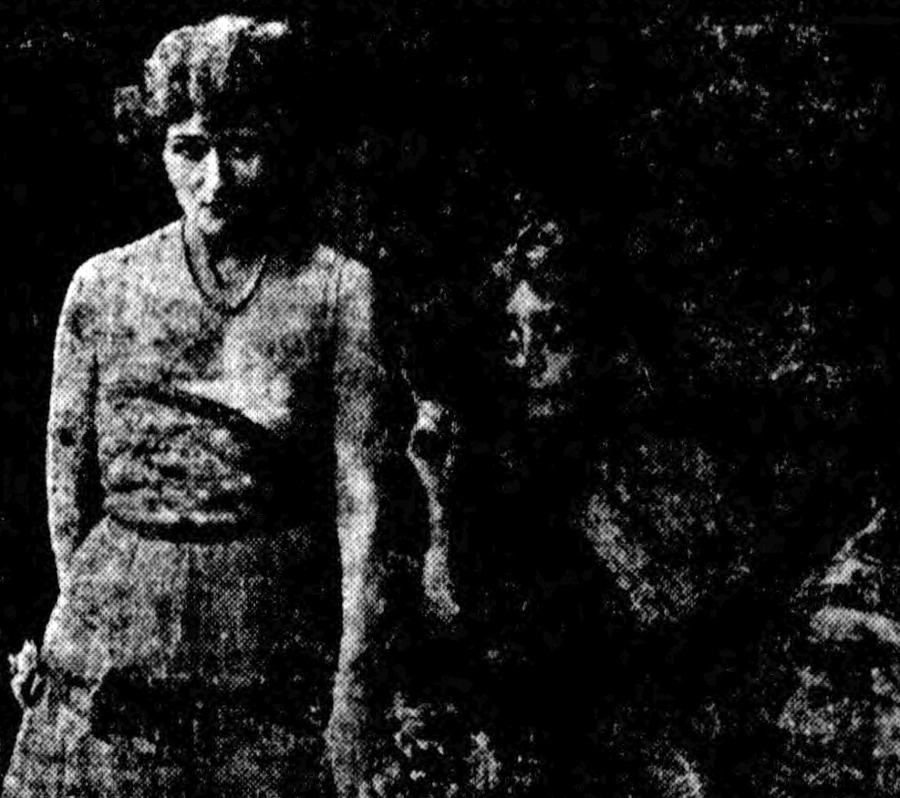
The other key player in this romantic triangle is Charles Van Gordon, brought to life by Augustus Phillips. Van Gordon is everything Bertie is not, at least in Pamela's initial, superficial assessment. He is wealthy, older, and presumably possesses a certain gravitas and worldliness that Bertie lacks. Pamela's decision to flirt with Van Gordon is a calculated, almost cynical, move. It's a desperate attempt to prod Bertie into transforming into her idealized hero, a testament to her immaturity and her inability to appreciate the sincere affection already at her disposal. Phillips plays Van Gordon with a measured dignity, making him a plausible object of Pamela's strategic affections, but also hinting at the potential for a more profound, perhaps less desirable, reality beneath the veneer of his wealth and status. This dynamic echoes the complex romantic entanglements seen in films like The Love Thief, where characters often use others as pawns in their emotional games, only to discover the true cost of such manipulations.
The core conflict of Miss Robinson Crusoe hinges on Pamela's misguided attempt to manipulate Bertie through jealousy. Her flirtation with Van Gordon is not born of genuine interest in the older man, but rather as a tool, a catalyst to ignite a competitive fire in Bertie. This strategy, as the plot reveals, is fraught with peril. The phrase 'her plan seems to backfire' is an understatement, hinting at the delightful complications that ensue. Such narrative devices were common in silent comedies, where misunderstandings and misguided intentions often drove the humor and propelled the plot forward. The audience is invited to witness Pamela's schemes unravel, providing both comedic relief and a subtle moral lesson.
This 'backfiring' mechanism is crucial to the film's thematic resonance. It forces Pamela to confront the consequences of her actions, potentially leading her to a more mature understanding of love and relationships. The film, in its own quiet way, critiques the superficiality of judging individuals solely by their physical attributes or perceived 'heroic' qualities. It suggests that true value lies in sincerity and genuine affection, qualities that Bertie embodies, but Pamela initially dismisses. The title itself, Miss Robinson Crusoe, takes on a metaphorical significance here. While Pamela isn't literally stranded on a deserted island, her actions effectively maroon her in a sea of her own making, forcing a kind of self-reliance and introspection that her pampered life has previously denied her. This internal isolation, this moment of reckoning, is her 'desert island' experience, a necessary crucible for growth.
Christy Cabanne, the director, was a prolific figure in the early days of Hollywood, known for his ability to craft engaging narratives across various genres. In Miss Robinson Crusoe, Cabanne demonstrates a keen understanding of comedic timing and character development within the silent film framework. His direction is fluid, allowing the emotional beats of the story to resonate through the actors' expressions and body language, which were paramount in an era without spoken dialogue. The pacing, while perhaps slower by modern standards, allows for a deliberate unfolding of the romantic entanglements and the gradual realization of Pamela's errors.
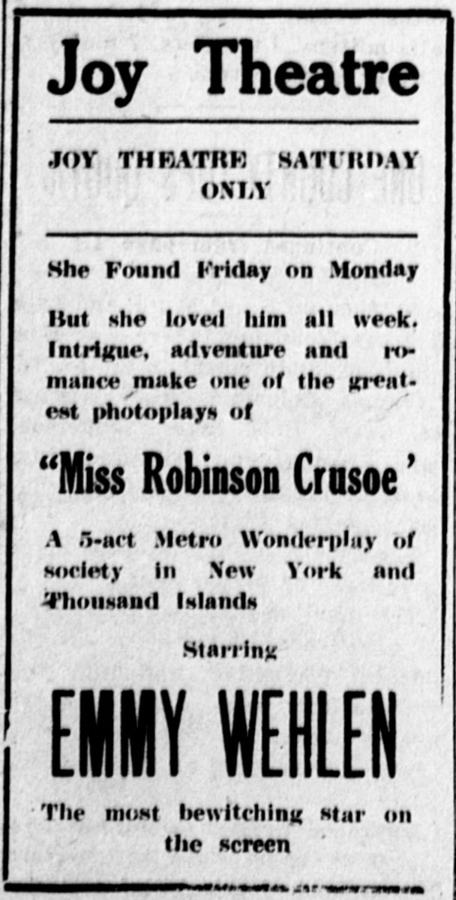
June Mathis, the screenwriter, was a powerful and influential voice in early cinema, celebrated for her narrative prowess and her ability to adapt complex stories for the screen. Her contribution to Miss Robinson Crusoe is evident in the well-structured plot and the nuanced characterizations. Mathis, known for her ability to infuse her stories with both dramatic tension and emotional depth, ensures that Pamela's journey from spoiled socialite to a potentially more self-aware individual feels earned, rather than simply imposed. The script deftly balances the comedic elements of Pamela's schemes with the underlying emotional sincerity of Bertie's love, creating a narrative that is both entertaining and subtly thought-provoking. Her work here, much like her more dramatic efforts, showcases a talent for understanding human motivations and translating them into compelling cinematic narratives, a skill that made her a trailblazer in a male-dominated industry. We can see a similar thoughtful approach to character psychology in films such as Ludi i strasti, where the human condition is explored with profound depth, albeit in a different dramatic context.
Beyond the central trio, the supporting cast plays a crucial role in bringing Pamela's world to life. Ethel Hallor and Margaret Seddon, as Pamela's maiden aunts, provide a delightful counterpoint to her youthful impulsiveness. Their doting, slightly old-fashioned sensibilities offer a glimpse into the societal norms of the time, highlighting how Pamela's generation was beginning to challenge, however subtly, the expectations of their elders. Harold Entwistle, Daniel Jarrett, and Sue Balfour round out the cast, each contributing to the rich tapestry of early 20th-century society that the film depicts. Their performances, though often brief, add authenticity and texture to the narrative, grounding the more melodramatic elements in a believable social context. The collective efforts of the cast ensure that even a seemingly minor character adds to the overall atmosphere and thematic weight of the film, a characteristic often found in well-crafted ensemble pieces of the era, such as Children of the Stage; or, When Love Speaks, where every player contributes to the unfolding human drama.
Watching Miss Robinson Crusoe today is not merely an exercise in historical appreciation; it's an opportunity to engage with a form of storytelling that relies on visual eloquence and the power of suggestion. The absence of spoken dialogue forces a different kind of engagement, where the viewer becomes more attuned to the nuances of performance, the symbolism of mise-en-scène, and the emotional resonance conveyed through gestures and expressions. The film, like many of its contemporaries, asks its audience to actively participate in the narrative, filling in the unspoken gaps with their own imagination. This active engagement is part of the enduring magic of silent cinema, an art form that, despite its technological limitations, achieved profound emotional and narrative complexity.
In conclusion, Miss Robinson Crusoe may not be as widely celebrated as some of the more iconic silent films, but it holds its own as a delightful and insightful romantic comedy. It offers a charming glimpse into the romantic ideals and social dynamics of its time, while also delivering a timeless message about the true nature of love and the perils of superficiality. The performances, particularly Emmy Wehlen's spirited portrayal of Pamela Sayre, anchor the film with a captivating energy. Christy Cabanne's direction, coupled with June Mathis's intelligent screenplay, ensures that the film is more than just a period piece; it's a testament to the enduring power of storytelling, regardless of the technological constraints. For enthusiasts of early cinema or anyone interested in the evolution of romantic comedies, Miss Robinson Crusoe is a film well worth rediscovering, a charming narrative that reminds us that even a spoiled socialite can, in her own unique way, embark on a journey of self-discovery, much like a castaway finding her true bearings on an unexpected shore. It reminds us that sometimes, the greatest adventures are not external feats of daring, but internal voyages of the heart. Much like the intricate character studies found in The Isle of the Dead, this film's power lies in its ability to reveal the inner lives of its characters, even amidst the backdrop of a seemingly simple plot.
IMDb —
1918
Community
Log in to comment.