DbcultAccessing Vault...
4.8/10
Senior Film Conservator
A definitive 4.8/10 rating for a film that redefined the boundaries of cult cinema. Kaloshi 18 remains a cornerstone of transgressive art.
Is Kaloshi 18 worth watching today? Short answer: yes, but only if you have an appetite for the rhythmic, often punishing precision of Soviet silent cinema. It is a film that demands your attention not through emotional sentimentality, but through its intellectual wit and visual geometry. This film is for the dedicated cinephile and the history buff who finds beauty in industrial gears; it is decidedly not for anyone looking for a lighthearted evening of escapism or modern narrative pacing.
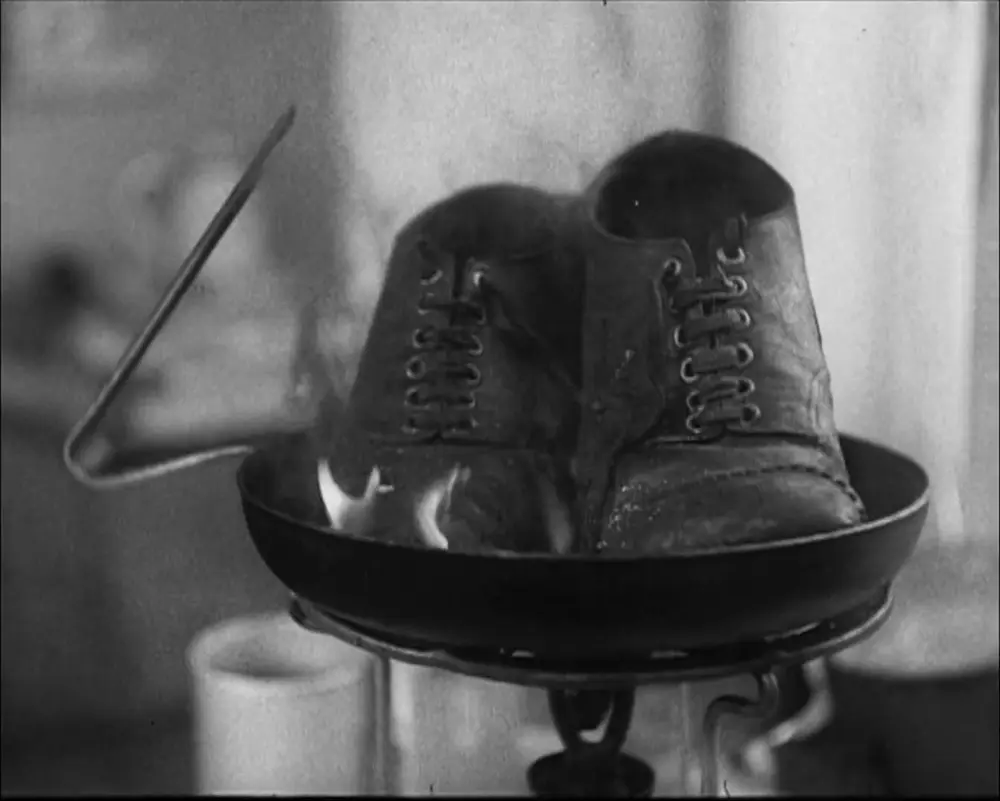
1) This film works because it uses a single, mundane object—a rubber galosh—to expose the massive, grinding gears of an impersonal bureaucracy.
2) This film fails because its commitment to rhythmic repetition, while thematic, can feel like a test of the viewer's patience in the second act.
3) You should watch it if you want to see how early filmmakers used montage to turn factory life into a form of mechanical ballet.
Nikolai Anoshchenko, alongside writer N. Osinskaya, creates a world where the human element is frequently dwarfed by the product. In the opening sequences, the camera lingers on the assembly line with a fervor that borders on the religious. We see the raw rubber, the heat, and the sweat of the workers, including the expressive N. Mirzoian and the luminous Nina Nikitina. Unlike the glamorous escapism of Ladies Prefer Brunettes, Kaloshi 18 finds its drama in the friction of the workplace.
The direction is precise. Every cut feels intentional, mirroring the very machinery the characters are meant to serve. There is a specific moment where a worker pauses to wipe their brow, and the camera holds for a beat too long, highlighting the fatigue that the system tries to ignore. It’s a small, human rebellion in a film dominated by objects. This is where Anoshchenko shines—in the gaps between the machine's pulses.
The performances here are a fascinating study in early Soviet acting theory. N. Mirzoian provides a grounded presence, playing the everyman with a mix of bewilderment and stoicism. He isn't a hero in the traditional sense; he is a cog that has suddenly become aware of the machine. His physical comedy is restrained, far removed from the slapstick found in The Tired Business Man, opting instead for a subtle, weary irony.
Nina Nikitina brings a necessary brightness to the screen. Her interactions with the other factory workers provide the film's only real warmth. However, the film intentionally keeps its characters at a distance. We don't learn their deep secrets or their childhood dreams. They are defined by their relationship to the 'Kaloshi 18.' This might frustrate some, but it is a bold, uncompromising stance on the nature of the collective.
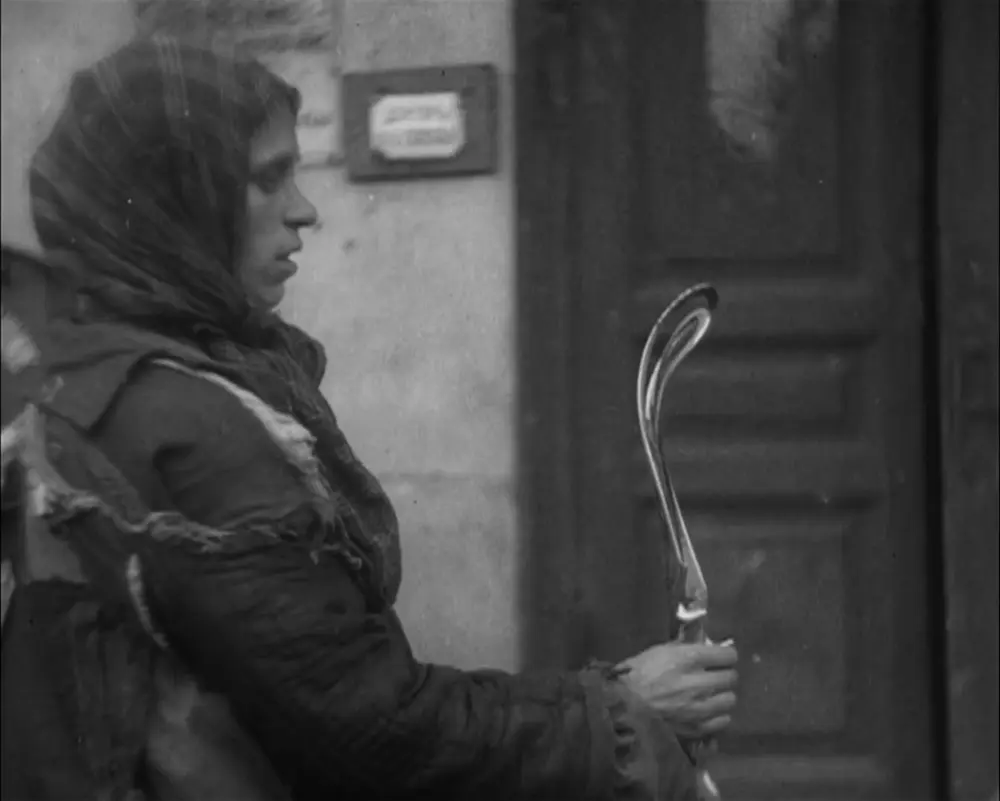
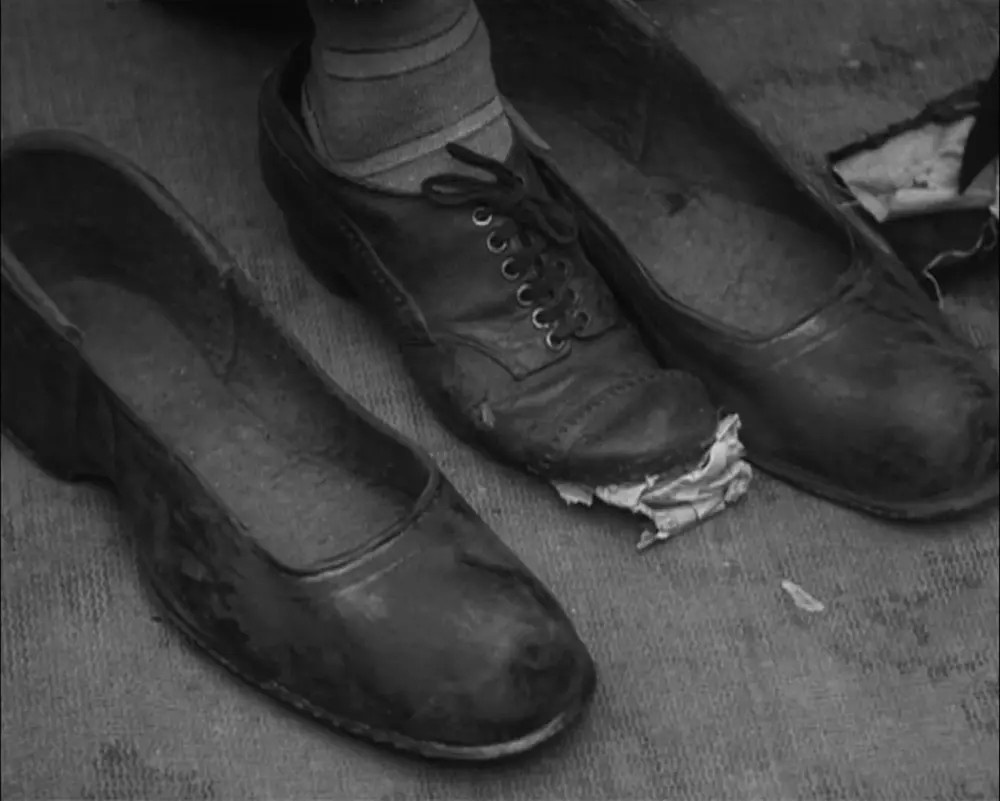
The visual language of Kaloshi 18 is stark and high-contrast. The cinematography uses the deep blacks of the rubber galoshes against the harsh, white lights of the factory to create a world that feels both tangible and surreal. There is a sequence involving a lost shoe in a vast warehouse that feels almost like a precursor to the suspense found in Number 13. The way shadows stretch across the concrete floors transforms a simple search into an existential crisis.
The editing is the real star here. Soviet montage is often discussed in terms of revolution and war, but here it is applied to the mundane. The rhythmic cutting between the ticking of a clock, the stamping of a machine, and the blinking eyes of a tired clerk creates a sense of mounting anxiety. It works. But it’s flawed. The repetition, while making a point about the soul-crushing nature of bureaucracy, eventually begins to crush the audience's soul as well.
Kaloshi 18 is worth watching if you are interested in the evolution of cinematic satire and the historical context of the 1920s. It provides a unique window into how the Soviet Union viewed its own industrial progress—simultaneously celebrating the worker and mocking the inefficiency of the state. It is a visually striking piece of media that proves comedy doesn't always need a punchline to be effective. For those who enjoy the raw, unpolished energy of silent film, it is a significant, if challenging, experience.
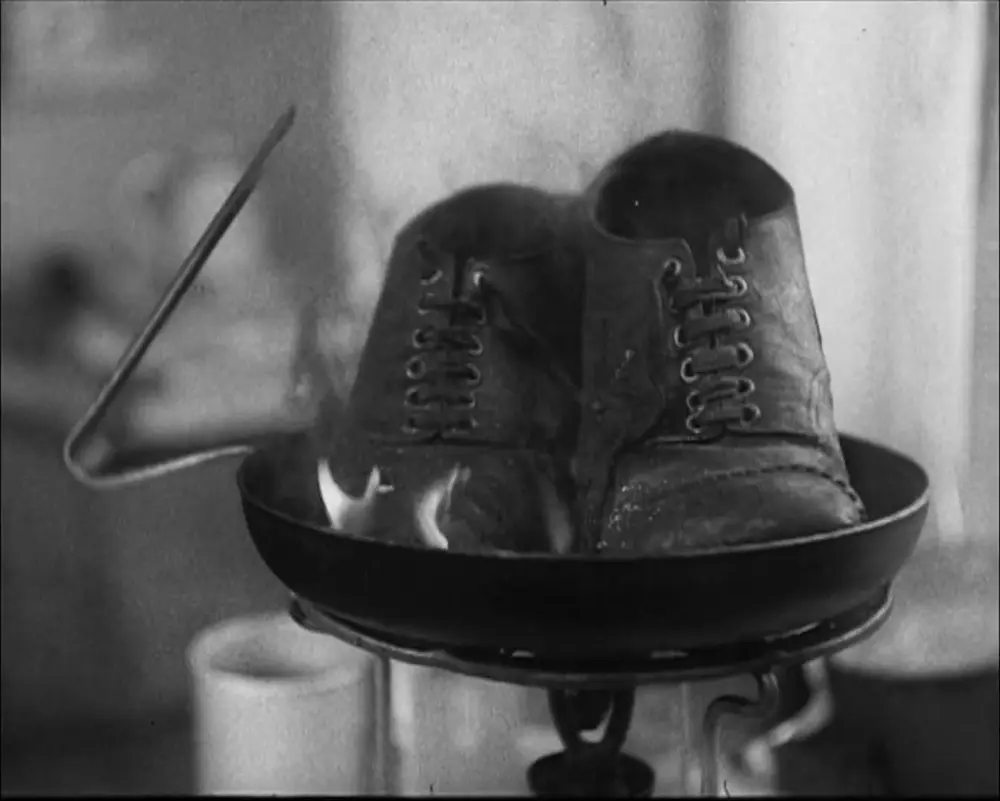
What sets Kaloshi 18 apart from other films of its era, like the more straightforward adventure of Call of the Wild, is its willingness to be ugly. It doesn't romanticize the struggle. When the galosh is lost, it isn't a tragedy; it's a nuisance. The film captures that specific, universal frustration of dealing with people who are more concerned with the 'process' than the 'person.' In one scene, a clerk refuses to look up from his ledger even as a minor catastrophe unfolds behind him. It is a moment of pure, observational genius that feels as modern as any workplace comedy today.
The film also touches on the concept of the 'ideal' versus the 'real.' The galosh 'Number 18' is presented in posters as a miracle of engineering, yet in reality, it is just a piece of rubber that can be easily lost in a puddle. This gap between propaganda and reality is a dangerous territory that Anoshchenko walks with surprising grace. He manages to critique the system from within, using the system's own language against it.
Kaloshi 18 is a fascinating relic that still has teeth. While it lacks the broad appeal of The Yankee Girl, it offers a much richer intellectual meal. It is a film about the weight of things—the weight of rubber, the weight of paper, and the weight of expectations. It is occasionally brilliant, frequently exhausting, and entirely unique. It is a cold film, but one that burns with a quiet, satirical fire. If you can move past the silence and the age, you will find a mirror reflecting the same bureaucratic absurdities we face today. It works. But it is a labor of love for the audience.
IMDb 6.1
1930
Community
Log in to comment.