DbcultAccessing Vault...
6.6/10
Senior Film Conservator
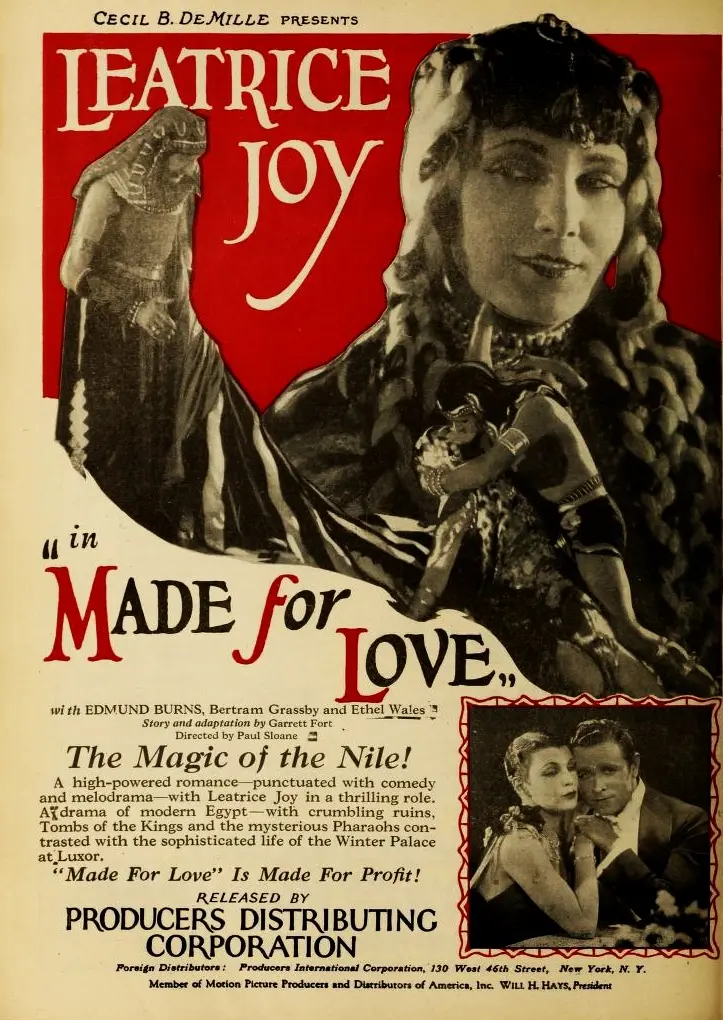
A definitive 6.6/10 rating for a film that redefined the boundaries of cult cinema. Made for Love remains a cornerstone of transgressive art.
Is this 1926 silent drama still worth watching today? Short answer: Yes, but primarily as a masterclass in silent-era expressive acting and as a fascinating cultural artifact of 1920s 'Egyptomania.' This film is for viewers who enjoy slow-burn character studies and the visual language of the 1920s, but it is certainly not for those who require high-octane action or contemporary pacing.
1) This film works because Leatrice Joy delivers a nuanced performance that conveys years of marital neglect in a single glance.
2) This film fails because the secondary male characters lack distinct motivations beyond their immediate attraction to the protagonist.
3) You should watch it if you are interested in how early Hollywood portrayed the intersection of archaeology and romance.
The premise of Made for Love is deceptively simple, yet it taps into a universal anxiety: being ignored by the person you love most. When Joan arrives in Egypt, she isn't just fighting for her boyfriend's attention; she is fighting against history itself. Her fiancé is so enamored with the past that he has no room for the present. This creates a palpable tension that director Paul Sloane exploits through tight framing and dusty, claustrophobic set pieces.
In one particularly striking scene, Joan stands directly between her fiancé and a newly discovered sarcophagus. The lighting, provided by flickering torches, casts long shadows that seem to swallow her whole. It is a visual metaphor for her entire existence at the dig site. She is a living, breathing woman competing with a wooden box, and the tragedy is that the box is winning. It works. But it’s flawed.
The film mirrors some of the thematic weight found in A Cumberland Romance, where the environment dictates the emotional limits of the characters. However, where that film found solace in the mountains, Made for Love finds only isolation in the dunes.
Leatrice Joy was a powerhouse of the silent era, and here she proves why. Without a single spoken word, she communicates a descent from hopeful excitement to bitter resentment. Her chemistry with the cast, including the reliable Bertram Grassby and the comedic Snitz Edwards, is what keeps the film grounded. While the plot could easily have veered into a tawdry melodrama, Joy’s grounded performance keeps the emotional stakes feeling real.
Compare her performance here to the more stylized acting in Borrowed Clothes. In the latter, the costume does much of the work; in Made for Love, it is all in the eyes. When she watches her fiancé brush dust off a bone while ignoring the dust on her own cheek, the heartbreak is visceral. It is a brutally simple realization: she is just another object to him.
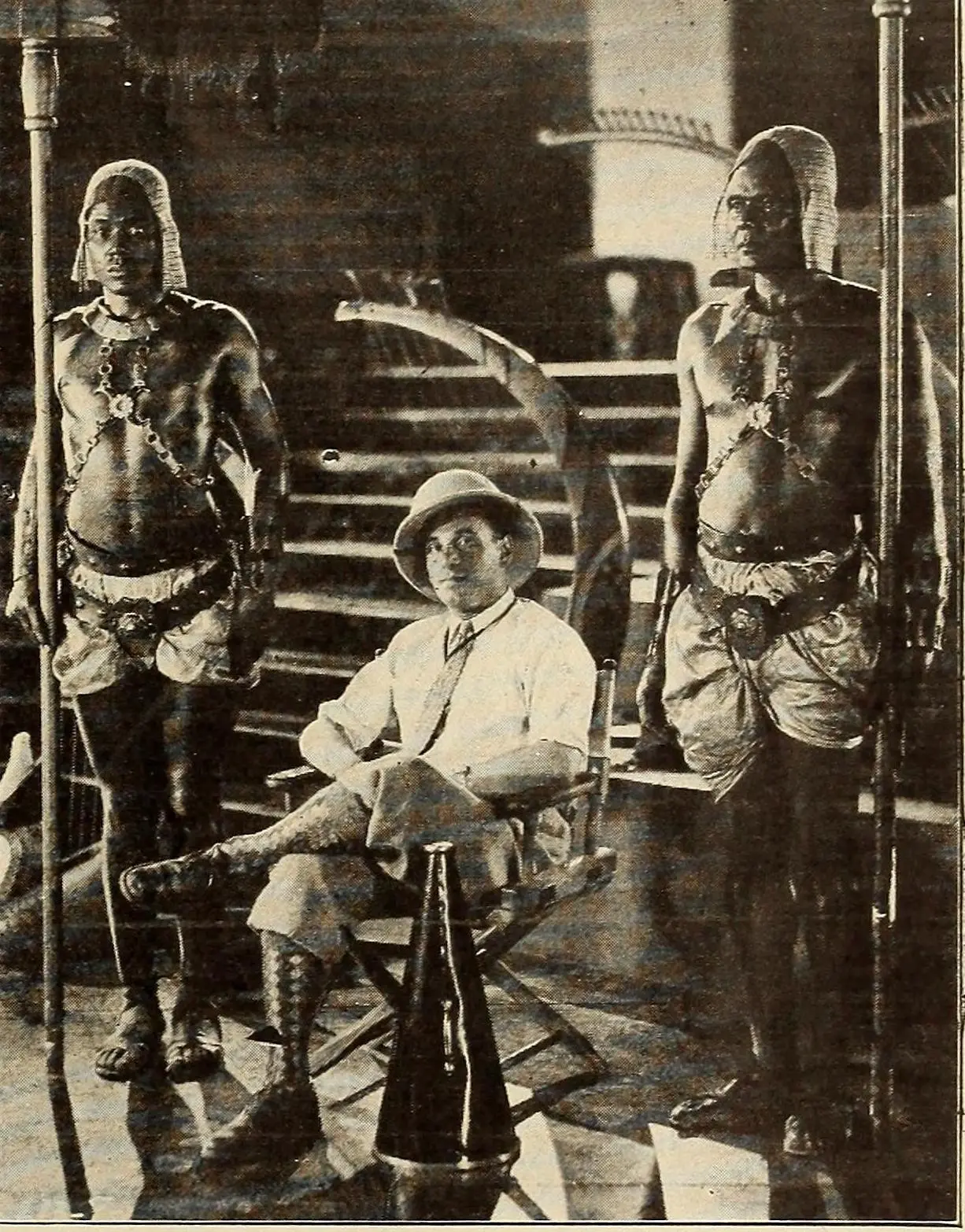
The introduction of the three other men at the site provides the necessary conflict to move the plot forward, but it also introduces the film's most debatable element. Are these men genuinely interested in Joan, or are they merely bored opportunists? The script, penned by George Marion Jr. and Garrett Fort, plays with this ambiguity, though it occasionally falls into the trap of making Joan seem like a prize to be won rather than a person making a choice.
This dynamic is reminiscent of the power struggles seen in Politics, where personal desires are often sidelined by the larger machinations of the group. In the desert, social norms are stripped away, and the predatory nature of the three suitors becomes a dark mirror to the fiancé's neglect. One man offers wealth, another offers excitement, and the third offers a listening ear. None, however, offer the respect Joan actually craves.
Made for Love is a solid example of mid-1920s filmmaking that prioritizes atmosphere and emotional resonance over complex plotting. While it may feel dated to those used to modern romantic tropes, its core message about the dangers of emotional neglect remains surprisingly poignant. The production design is top-tier for the era, successfully transporting the viewer to a romanticized, albeit colonialist, version of Egypt.
Visually, the film is a treat. The cinematography captures the vastness of the Egyptian landscape, contrasting it with the cramped, candle-lit interiors of the archaeological tents. This contrast heightens Joan's sense of being trapped in a wide-open space. The use of shadow and light in the tomb sequences is particularly effective, predating the high-contrast look that would later define film noir.
The pacing, however, is where the film struggles. There are long stretches where the plot seems to stall, much like the dig itself. These moments are filled with character beats that, while interesting, don't always contribute to the forward momentum. It lacks the tight narrative structure found in Der verlorene Schuh, which managed to keep its momentum despite its fairy-tale trappings.
Pros:
- Stunning set design that captures the 1920s fascination with Egypt.
- Strong lead performance that transcends the silent format.
- Effective use of visual metaphors to represent emotional neglect.
Cons:
- Secondary characters are somewhat one-dimensional.
- The pacing slows significantly in the second act.
- The resolution feels slightly rushed compared to the slow build-up.
Made for Love is an evocative piece of cinema that deserves more recognition than it currently receives in the pantheon of silent films. It isn't a perfect film, but it is a deeply human one. It captures the specific ache of being alone while standing right next to the person you love. While the 'three suitors' subplot feels like a relic of a different kind of movie, the central conflict between a woman and her husband's obsession is timeless.
If you can look past the era's cultural biases and the occasional lull in action, you will find a story that is as much about the excavation of the soul as it is about the excavation of the earth. It is a quiet, dusty tragedy that eventually finds its way to a flicker of hope. For those who appreciate the history of the medium, it is a must-watch. For everyone else, it is a fascinating, if occasionally frustrating, window into the past.
IMDb —
1926
Community
Log in to comment.