DbcultAccessing Vault...
5.7/10
Senior Film Conservator
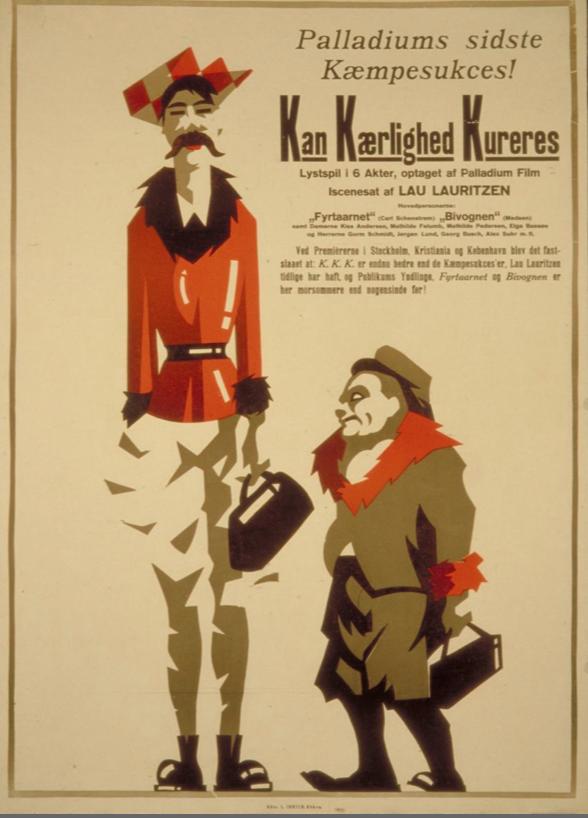
A definitive 5.7/10 rating for a film that redefined the boundaries of cult cinema. Kan Kærlighed kureres? remains a cornerstone of transgressive art.
The film opens with a lingering shot of the high school's iron‑clad façade, a visual metaphor for the rigid structures that will soon be challenged by the tumultuous hearts of its pupils. Else, portrayed with a fragile earnestness, navigates the institutional corridors with a notebook full of half‑scribbled verses, each line a testament to her burgeoning devotion to the charismatic yet inscrutable teacher Petersen. The screenplay, penned by Lau Lauritzen, eschews conventional exposition; instead, it relies on fragmented dialogues and lingering silences that allow the audience to inhabit Else’s inner turbulence.
The supporting characters—her friends, each a distinct archetype of adolescent yearning—serve not merely as background but as a chorus that amplifies Else’s obsession. Their collective infatuation creates a feedback loop, a communal echo that magnifies the intensity of the central romance. This narrative choice underscores a recurring motif: love, when filtered through the lens of peer validation, becomes both a sanctuary and a prison.
Emil Henriks, embodying Petersen, delivers a performance that oscillates between pedagogical authority and vulnerable humanity. His measured gestures—an absent‑minded adjustment of spectacles, a lingering stare at a chalk‑dusted blackboard—communicate an inner conflict that the script never overtly states. Gorm Schmidt, as one of Else’s confidantes, provides a counterpoint with a sardonic wit that both lightens and sharpens the film’s emotional tenor.
Elga Bassøe’s portrayal of Else is a study in restrained passion. She conveys a spectrum of feelings through subtle facial micro‑expressions: a fleeting smile that hints at hope, a clenched jaw that betrays anxiety. The chemistry between Bassøe and Henriks never lapses into melodrama; instead, it hovers in a delicate equilibrium, reflecting the precariousness of a love that is both nascent and fatal.
The ensemble cast—Frantz Stybe, Louis Melander, Carl Schenstrøm, among others—populate the school’s ecosystem with a realism that feels almost documentary‑like. Their interactions are punctuated by authentic gestures: a shared cigarette in the courtyard, a whispered confession behind the gymnasium doors. These moments, while seemingly peripheral, enrich the film’s texture and reinforce its central thesis: love, in its rawest form, infiltrates every crevice of communal life.
Lauritzen’s directorial eye is evident in the film’s chiaroscuro lighting, a deliberate interplay of shadows that mirrors the characters’ internal ambiguities. The use of deep focus shots, particularly during the climactic scene where Else confronts Petersen in the empty auditorium, creates a visual tension that feels both intimate and expansive. The camera often lingers on mundane objects—a rusted locker, a wilted daisy—imbuing them with symbolic weight.
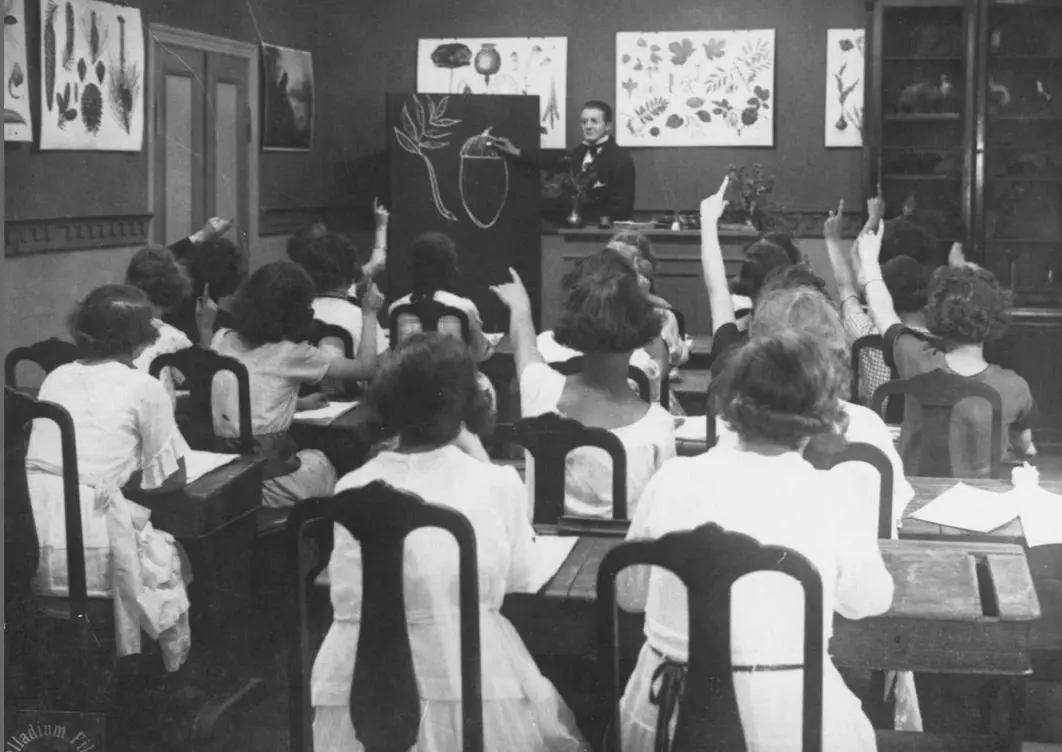
The editing rhythm is deliberately measured, allowing scenes to breathe. Long takes dominate the narrative, granting the audience the temporal space to contemplate the psychological undercurrents. When the film cuts to a montage of Else’s daydreams—her imagination rendered in soft focus, bathed in a warm amber hue (#C2410C)—the audience is invited into a realm where reality and fantasy coalesce.
Sound design plays an understated yet pivotal role. The ambient hum of the school’s heating system, the distant clatter of train wheels, and the occasional rustle of notebook pages create an auditory tapestry that grounds the story in a palpable reality. The score, sparse and piano‑driven, surfaces only in moments of heightened emotional stakes, allowing silence to speak louder than any orchestral swell.
Released in the interwar period, the film reflects a society grappling with shifting gender norms and the burgeoning concept of adolescent agency. Else’s defiance of conventional propriety—her unabashed expression of love toward an authority figure—mirrors a broader cultural questioning of hierarchical structures. In this regard, the film can be juxtaposed with Ladies Must Live, which also interrogates the expectations placed upon young women, albeit through a different narrative lens.
The motif of love as a curative force is examined with a critical eye. While the title suggests a therapeutic potential, the narrative reveals love’s duality: it can both heal and wound. Else’s fatal devotion ultimately leads to a poignant reckoning, prompting viewers to contemplate whether the pursuit of affection can ever truly mend the fractures it exposes.
When placed alongside contemporaneous works such as Felix Turns the Tide and The Girl Philippa, Kan Kærlighed kureres? stands out for its unflinching focus on internal emotional landscapes rather than external action. Whereas Felix’s narrative leans on comedic misadventure and Philippa’s on melodramatic sacrifice, Else’s story is a quiet, simmering study of yearning that never erupts into grand gestures but instead lingers in the everyday.
The film also shares thematic DNA with Lulu, particularly in its exploration of a young woman’s agency within a patriarchal framework. Both protagonists navigate a world that simultaneously idolizes and restricts them, and both narratives culminate in a moment of self‑realization that redefines their relationship to love and autonomy.

The film’s pacing is deliberately languid, mirroring the slow burn of Else’s affection. This measured tempo allows the audience to savor the minutiae: the way Petersen’s hand trembles as he writes on the blackboard, the rustle of Else’s skirt as she rushes down the hallway. The structure is circular; the opening shot of the school’s façade reappears in the final frame, now bathed in twilight, suggesting a cyclical return to the same institutional constraints, albeit with altered emotional stakes.
The screenplay’s dialogue is sparse yet potent. Each line is weighted with subtext, a technique reminiscent of the austere scripts of the era’s European art cinema. When Else finally confesses her feelings, the words are simple—"Jeg elsker dig"—but the surrounding silence amplifies their significance, rendering the moment both intimate and universal.
Upon its release, critics lauded the film for its psychological depth and the daring portrayal of a teenage girl’s agency. Modern scholars often cite it as an early exemplar of feminist undercurrents in Scandinavian cinema. Its influence can be traced in later works such as The Beautiful Adventure, where the interplay of youthful desire and societal expectation continues to be explored.
The film’s restoration in the digital age has sparked renewed interest, particularly among cinephiles who appreciate its nuanced cinematography and timeless thematic concerns. Its inclusion in retrospectives of Lau Lauritzen’s oeuvre underscores its enduring relevance and the director’s mastery of subtle storytelling.
Kan Kærlighed kureres? is a masterclass in restraint, a cinematic poem that captures the volatile alchemy of adolescent love without resorting to melodramatic excess. Its visual language, anchored by a muted palette punctuated with strategic bursts of dark orange, yellow, and sea blue, creates an aesthetic that feels both period‑specific and timeless. The performances, especially Bassøe’s nuanced portrayal of Else, linger long after the credits roll, inviting repeated viewings to uncover hidden layers.
In an era saturated with overtly sensationalist romance, this film offers a contemplative alternative: love as a quiet, sometimes painful, catalyst for self‑discovery. It asks whether affection can truly be a cure or whether it merely illuminates the wounds it seeks to heal. The answer, left intentionally ambiguous, resonates with viewers across generations, confirming the film’s place as a seminal work in the canon of Danish cinema.

IMDb —
1929
Community
Log in to comment.